
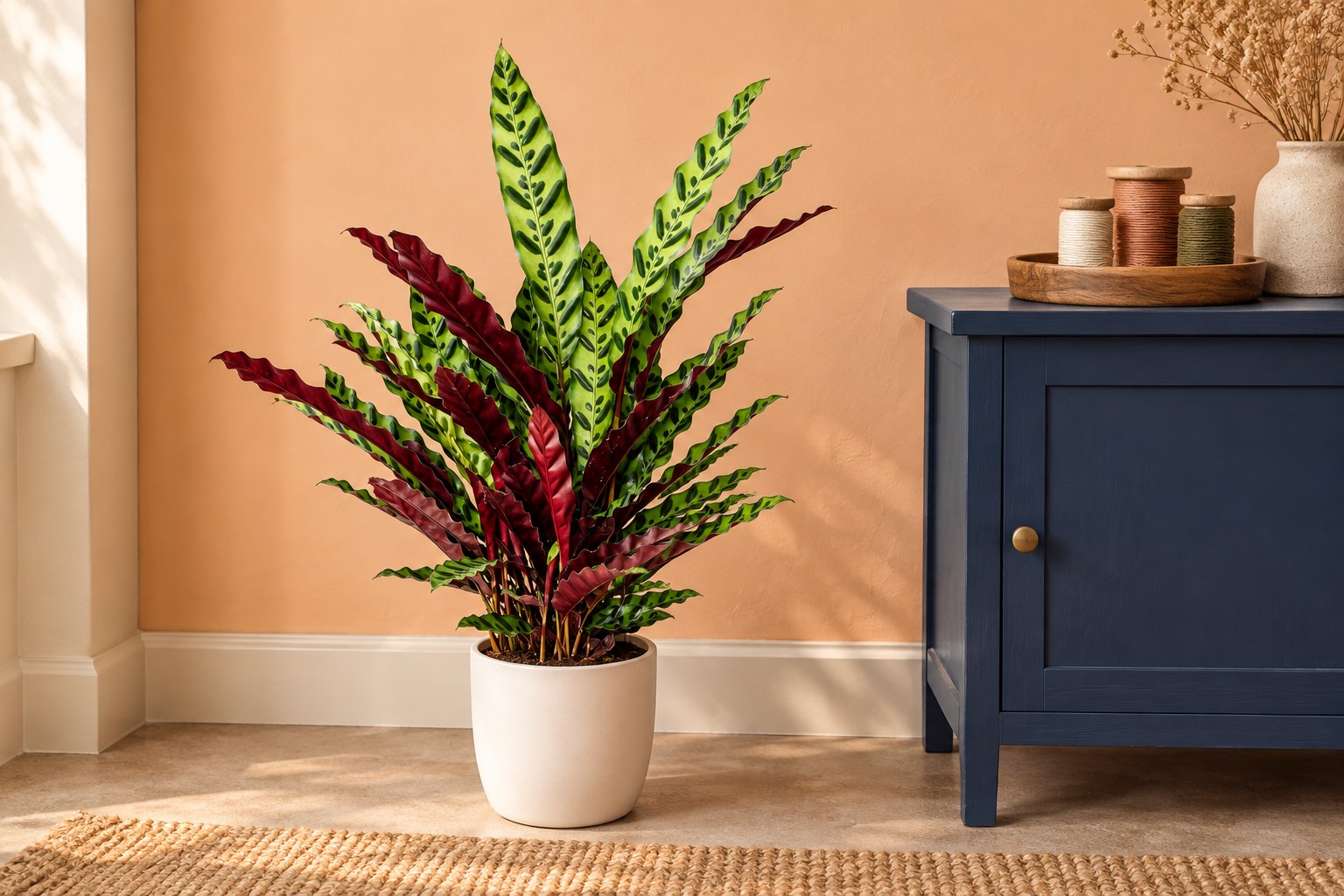
This plant at Exotenherz
Check the shop offer for current availability, price and what is included.
The linked shop is in German. Product details, availability and delivery information are provided in that shop.
Your care table
| Topic | What to do | Why it helps |
|---|---|---|
| Light | Bright to partially shaded position with indirect light. | Avoid hot full sun and corners without light. |
| Water | Keep the root ball evenly slightly moist, allowing the surface to dry a little. | Remove excess water; do not give a completely dry rest. |
| Compost | Loose, humus-rich mixture with good drainage. | Moist roots still need air. |
| Feed | Feed sparingly during growth according to the product instructions. | Consider salt build-up and existing fertiliser. |
| Climate | Even warmth, with around 18–24 °C as a guide. | Avoid cold draughts and large temperature swings. |
| Humidity | Higher humidity and gentle air exchange. | Pay particular attention during dry periods caused by heating. |
| Leaves | Water the compost and dust foliage carefully. | Do not flatten the wavy edges or bend them unnecessarily. |
| Checks | Check the root ball and inspect undersides when leaves turn yellow. | Too little and too much water can cause similar symptoms. |
Check the compost and pot weight. The care table explains how far the compost may dry.
Water only when needed. The water should reach the root ball without spilling over the rim.
Remove surplus water from the saucer or cachepot. Then return the plant to a suitable position.
A pattern of waves and spots
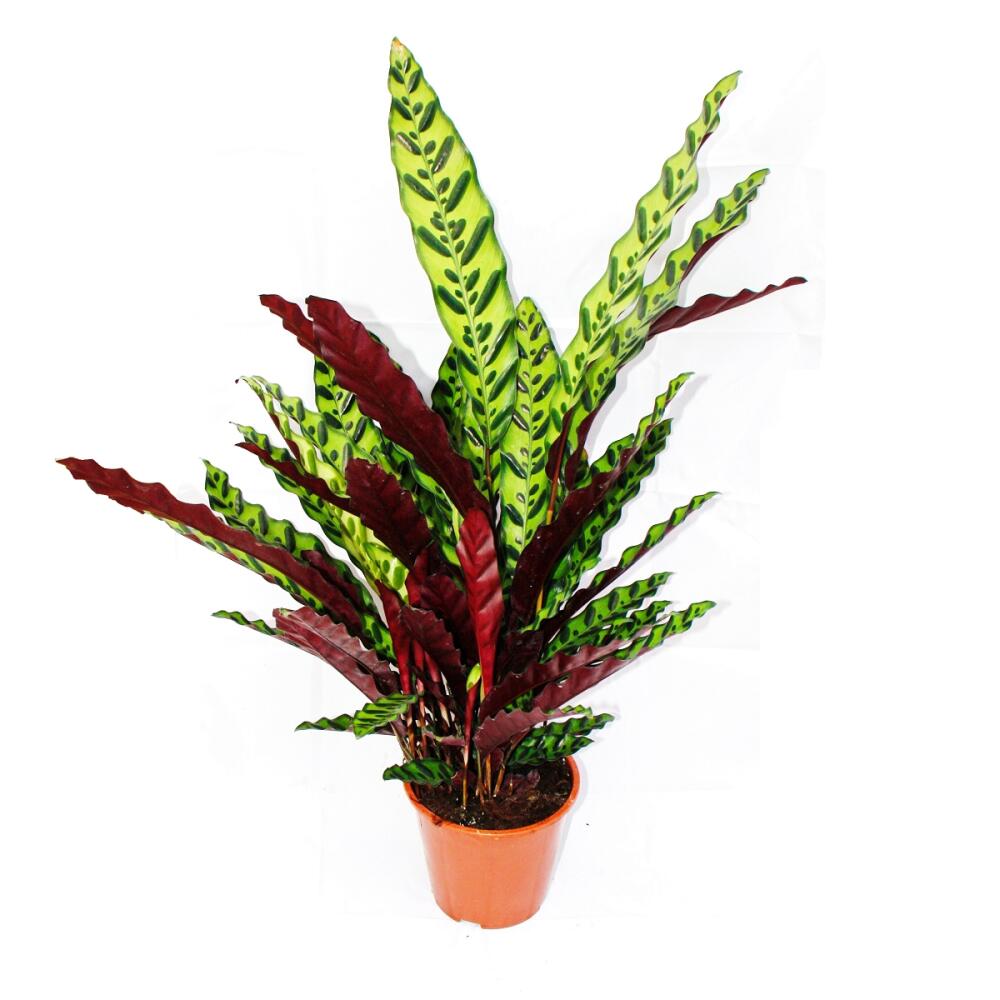
Goeppertia insignis is known under the trade name Calathea lancifolia. Its long, narrow leaf blades have distinctly wavy edges. Dark-green oval spots of alternating sizes sit along the midrib on a pale-green background. The undersides show strong purple to burgundy tones. The English name Rattlesnake Plant refers to the pattern, rather than any danger posed by the plant. It belongs to the Marantaceae family and comes from tropical woodland areas in south-eastern Brazil.
Leaf movement reveals both sides
Throughout the day, the prayer plant changes its leaf position. Depending on the viewing angle, this reveals more pale upper surfaces or dark backs. This lively effect is particularly easy to observe when the plant stands freely without constant contact with nearby objects. The offer states approximately 60–70 cm in overall height in a 17 cm pot. Indoors, it is grown mainly for its foliage. The yellowish flowers mentioned in botanical descriptions rarely appear indoors and are not promised here.
Warm woodland light as a guide
A bright to partially shaded position with indirect light is suitable. Avoid hot full sun, cold draughts and large temperature changes. Even warmth around 18–24 °C and higher humidity make cultivation easier. This makes the plant more demanding than particularly drought-tolerant houseplants. Humid air does not make a dark corner suitable. Especially during the heating season, it is worth checking temperature and humidity directly around the leaves and carefully improving the position if needed.
Even moisture with room for air
Keep the compost slightly moist and allow only the surface to dry a little. Water slowly as needed so that the root ball is evenly supplied, then remove excess water. A loose, humus-rich mixture helps combine moisture and air around the roots. Usually give less water in winter without introducing a completely dry rest. Water the compost rather than the leaves. Leaf surfaces remaining wet for a long time can encourage spots, particularly where there is little air exchange.
Feed gently and support the clump
Feed sparingly during growth according to the product instructions and avoid salt build-up. Suitable low-salt water supports consistent growing conditions for sensitive prayer plants. Repot carefully when roots have clearly filled the pot; an unnecessarily large container stays wet too long. Large healthy clumps can be divided during good growing conditions, with each division retaining enough roots of its own. Dust the narrow leaves carefully without bending them during cleaning. Their wavy edges are part of the normal shape and should not be pulled flat.
Waves are normal; lasting damage is not
The natural waves along leaf edges differ from strong, lasting curling caused by water stress or unsuitable air conditions. Yellow leaves can develop with either too little or too much water. Check the compost before taking action. Inspect undersides for spider mites, mealybugs, scale insects or aphids. New healthy leaf tips provide a useful sign after conditions improve. Old brown edges, however, remain damaged. Calm, regularly observed growing conditions preserve the striking pattern most reliably.
One plant, several views
Good to know
Why is it also called Calathea lancifolia?
That is a widespread trade name. The botanical specialist profile used lists it as Goeppertia insignis.
Are wavy leaf edges a care problem?
No, the waves belong to the species. Strong lasting curling or brown edges should be checked separately.
Is it as easy to care for as a ZZ plant?
It needs more even moisture and higher humidity. The two plants suit different care conditions.
Why do some leaves look almost red?
Their position can reveal more of the purple to burgundy undersides. Leaf position changes throughout the day.
Sources and editorial note
Sources checked: 15 September 2026. Product information and the contents of delivery follow the linked shop offer. Care advice was checked against the cited specialist sources and should still be adapted to the plant’s condition, position and season.