This plant at Exotenherz
Check the shop offer for current availability, price and what is included.
Product and delivery details are given in the individual offer.
Your care table
| Topic | What to do | Why it helps |
|---|---|---|
| Position | Place in bright filtered daylight protected from hot direct sun. | The fine network needs light without overheating through glass. |
| Temperature | Keep evenly warm and not below about 16 °C. | RHS describes Network as warmth-loving culture under glass. |
| Water | Keep slightly moist in growth; allow surface to dry more in winter. | Need follows growth, but the ball should not dry entirely. |
| Water quality | Use room-temperature preferably soft water. | Sensitive prayer-plant roots and leaves benefit from less unnecessary salt. |
| Drainage | Empty remaining water and ensure open holes. | Moisture must not become lasting airless wetness. |
| Humidity | Choose sheltered positions away from direct radiator air. | Dry warm air can burden edges and favour pests. |
| Feed | Supply moderately in active growth by suitable label. | Small clumps need no concentrated nutrients instead of light. |
| Repotting | Give slightly more room when well rooted in spring or early summer. | Loose humus-rich soil holds moisture while releasing water. |
Check the compost and pot weight. The care table explains how far the compost may dry.
Water only when needed. The water should reach the root ball without spilling over the rim.
Remove surplus water from the saucer or cachepot. Then return the plant to a suitable position.
The leaf mosaic opens up close
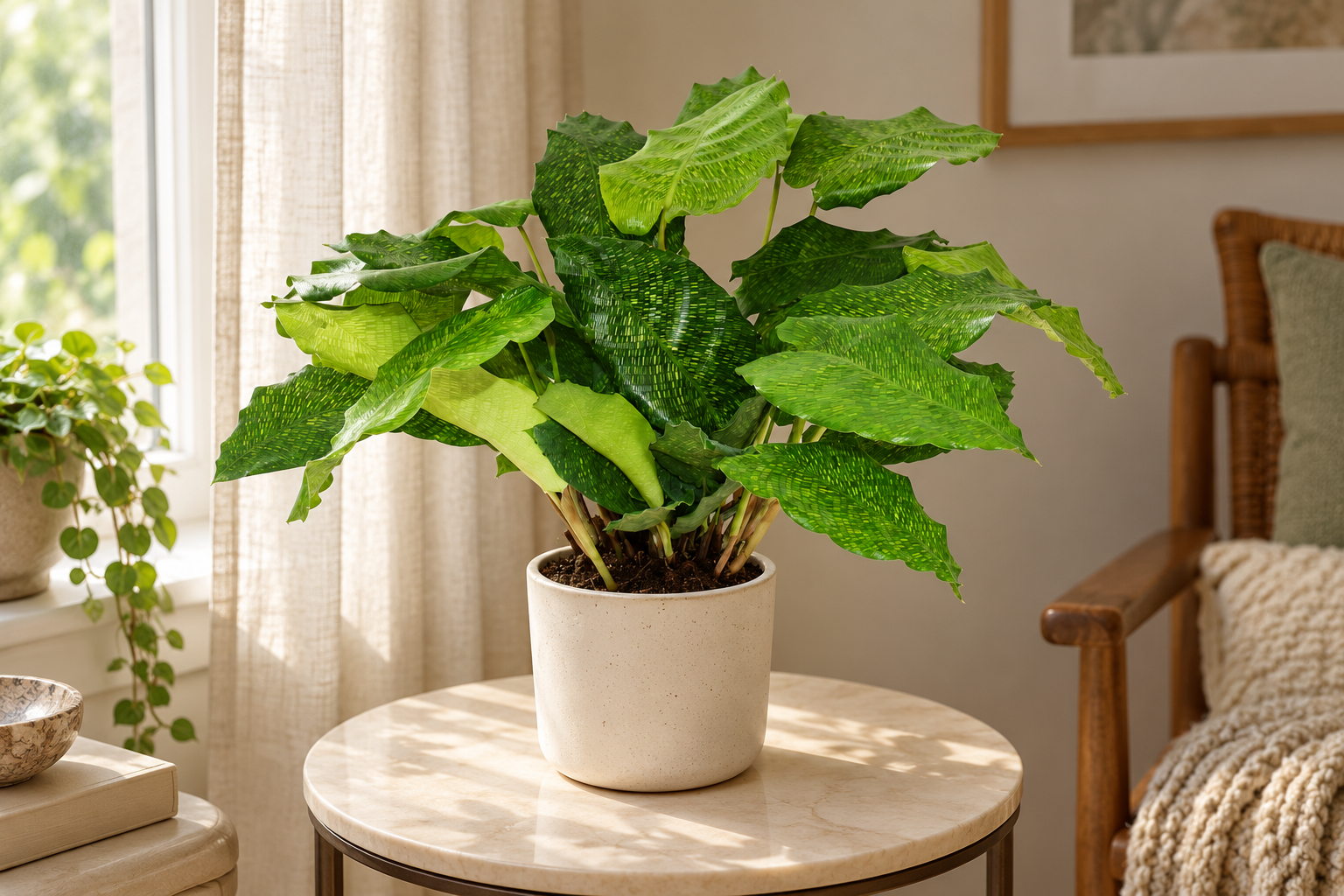
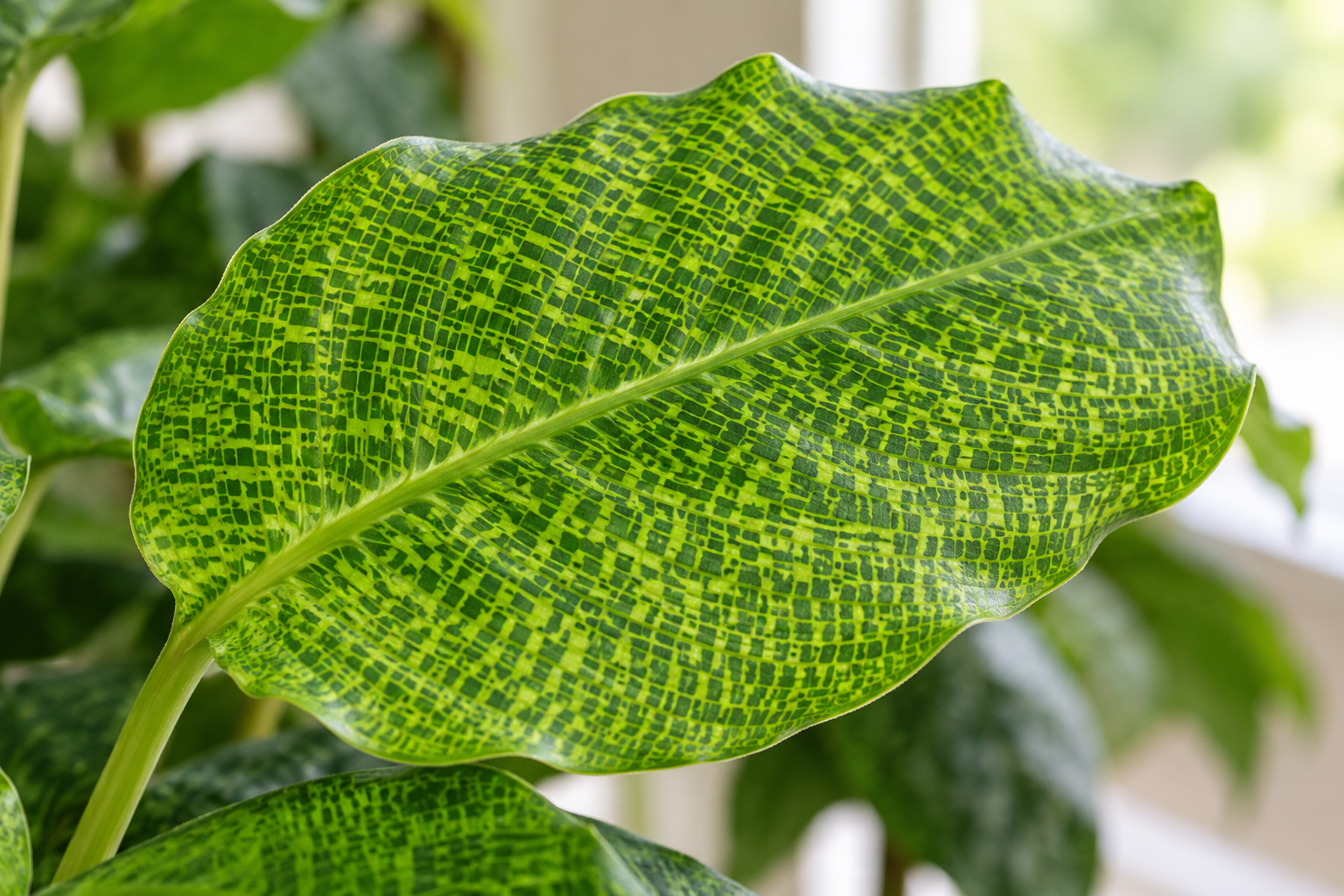
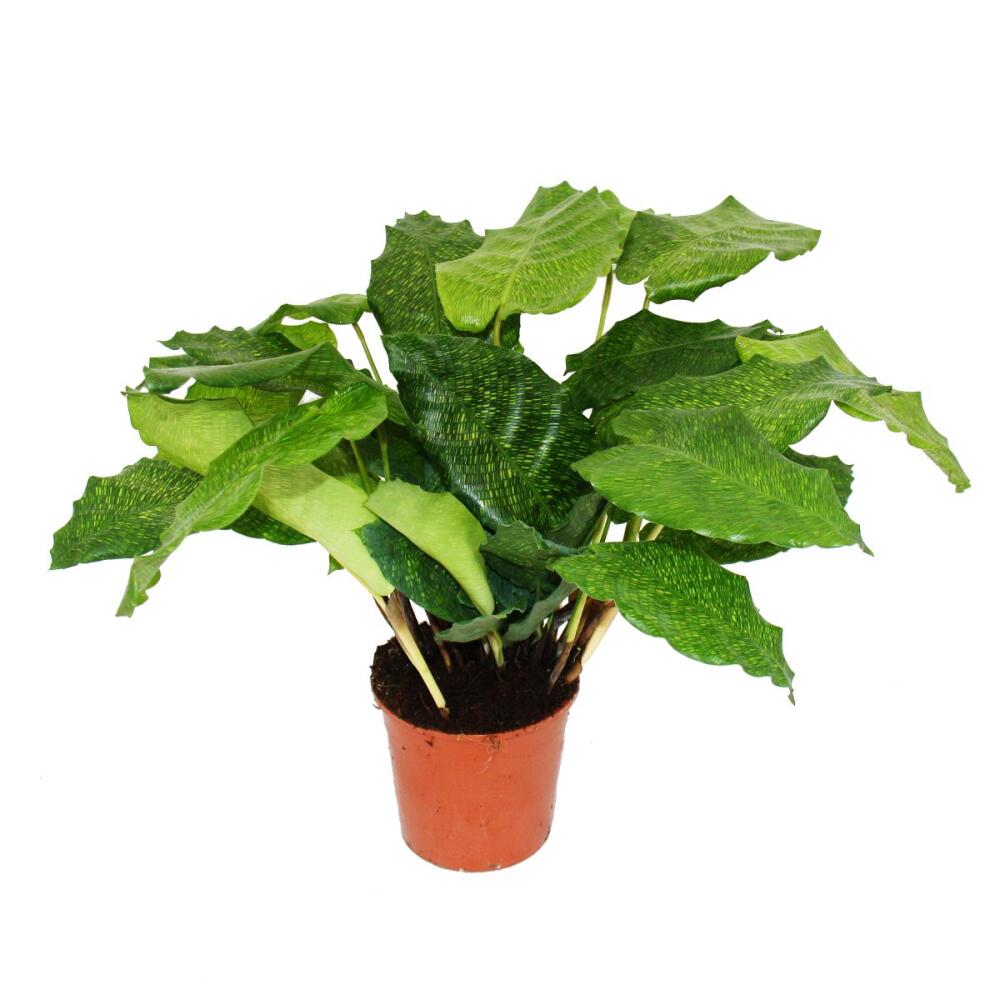
From afar Network looks a quietly green foliage plant. Close up, a very fine darker network encloses many small pale yellow-green areas. The pattern lies on broader elongated to oval leaves with slightly wavy edges. Surfaces look firmer and shinier than delicate leaves of some other prayer plants. A simple pale decorative pot leaves the mosaic room without pushing extra colour forward. On an accessible table you can inspect each leaf and check soil simultaneously. Young leaves already carry markings when unfolding. Ornament comes from foliage; flowers are neither necessary nor promised for delivery.
Connect trade name to present assignment
The shop calls it Calathea musaica Network. Kew lists Calathea musaica as a synonym of Goeppertia kegeljanii. RHS describes the named trade selection as Goeppertia kegeljanii [Network] with selection name Pp0005 and marks Network as trade name. These assignments are together so the familiar product is recognised, not additional identities created. The species belongs to Marantaceae and originates in Brazil’s Espírito Santo state. The network is a leaf feature of this selection, not printed pattern. Species assignment and documented trade name are more exact than broad Calathea, used for many different prayer plants.
From delivery clump to later leaf group
The current offer stands in a 14-cm pot and describes around 35 to 45 cm total height. The unchanged clean original shows young green patterned leaves. Leaf count, position and exact height vary in living plants. RHS gives Network a roughly 50 to 100 cm class; this guides later development, not a fixed indoor maximum or timing promise. Suitable care can widen the clump and produce larger leaves. Carefully work between stalks when unpacking, hold the pot and do not pull new rolled leaves open. Check moisture and position first. An immediate huge pot does not help young roots.
Filtered daylight and warm air
Network suits a bright position in indirect or filtered daylight. Hot direct summer sun through glass can burden leaves while a dark room corner slows growth. A well-lit east position or lightly shaded bright console is usually easier than extreme summer glass. Keep evenly warm; RHS gives around 16 °C as lower cultivation guidance. Avoid cold draughts and strongly chilling windows. Good humidity helps without replacing daylight. A bright bathroom can suit; windowless rooms need suitable added light. Distinguish normal day-night movement from clear prolonged rolling.
Moist soil is not wet soil
Keep the ball evenly slightly moist in growth. Check the surface and water thoroughly when it starts drying. In winter with less light upper soil can dry a little further before the next supply; the whole ball should still not repeatedly dry out. Room-temperature preferably soft water and free drainage support culture. Remove decorative-pot remnants. Loose humus-rich substrate combines moisture holding with root air. A constantly shining wet surface is not a care goal. Lift the pot occasionally and check deeper when surface is uninformative. Brown edges or rolled leaves call for combined assessment of ball, air and water.
Accompany clumps in small steps
When clearly rooted through in spring or early summer give only slightly more pot room and keep previous depth. Much unused wet soil complicates checking. A strongly developed healthy clump can be properly divided; every part needs roots and enough leaves. Do not prematurely dismantle a small delivery. Moderate nutrition follows active growth and a suitable product label, considering pre-fertilised soil. A damaged leaf can be cleanly removed without needless cutting of the healthy group. Gently dust with a soft slightly damp cloth while supporting the surface. The network stays naturally intact while loose dirt disappears.
Winter care by actual need
Continue as bright and warm as possible during heating season, away from direct hot airflow. Very dry room air can burden edges and favour spider mites. Improve the environment if needed; one spraying does not establish lasting suitable humidity. With less growth, water follows ball checks and is often less frequent. Network needs no cold winter rest. Check undersides and leaf bases for webbing, feeding traces or odd deposits. Older changes do not immediately vanish after each care correction. What matters is the next healthy leaf and good patterned development. Observation helps more than a fixed watering and intervention calendar.
One plant, several views
Good to know
Are musaica and kegeljanii two different species?
Not for this plant. Kew lists Calathea musaica as a synonym of Goeppertia kegeljanii.
Is Network a botanical species name?
No. RHS marks Network as trade name of selection Pp0005 within Goeppertia kegeljanii.
Does it have Makoyana’s purple undersides?
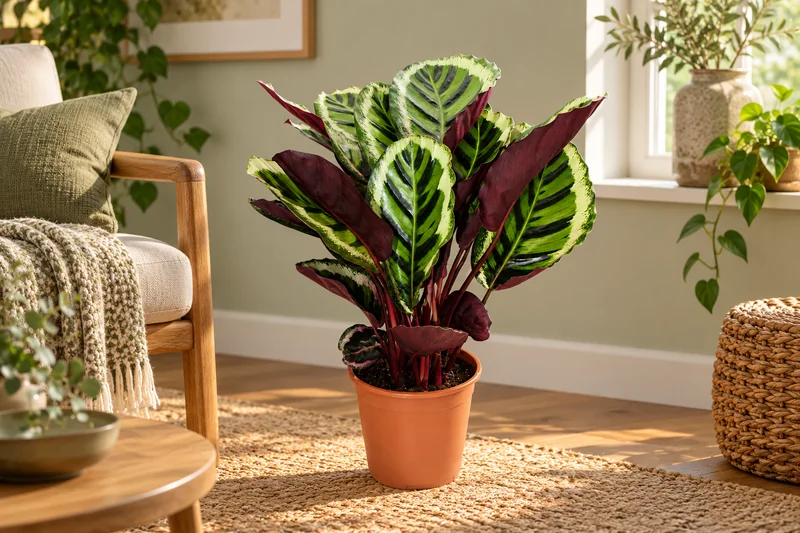
The documented Network offer shows mainly green finely netted leaves. Makoyana has different patches with purple undersides.
Does it stay 45 cm high?
That is current delivery guidance. Clumps can develop further; RHS class is not a fixed indoor upper limit.
How moist should soil be?
Evenly slightly moist in growth. In winter surface may dry more, but not the entire ball.
Does a decorative pot without a hole suit?
As a cover yes, with a draining nursery pot inside and remnants emptied. Roots must not stand constantly in water.
Can I intensify the pattern with feed?
More fertiliser is no suitable shortcut. Proper light and balanced culture help the natural pattern.
How do I propagate Network?
A strongly developed healthy clump can be properly divided. Each part needs roots and enough leaves.
Sources and editorial note
- Exotenherz: offer and original photographs (03.10.2026)
- RHS: Network trade name, Pp0005 selection and cultivation (03.10.2026)
- RHS: current prayer-plant cultivation (03.10.2026)
- Kew: Goeppertia kegeljanii, accepted name and origin (03.10.2026)
Shop offer, product number, GTIN, availability and originals directly checked on 03.10.2026. Specialist sources directly read. Kew accepted kegeljanii and musaica synonym directly web-read. RHS Network trade name/Pp0005 transparent. Green undersides faithful to original, no Makoyana purple transfer.