This plant at Exotenherz
Check the shop offer for current availability, price and what is included.
Check the selected shop offer for price, availability and delivery contents.
Your care table
| Topic | What to do | Why it helps |
|---|---|---|
| Position | Place brightly in indirect daylight without hot direct sun. | Suitable light makes patterns visible; direct heat may harm leaf surfaces. |
| Watering | Check after surface dries slightly and supply water evenly. | Tropical rootball should neither dry completely nor stay permanently wet. |
| Water quality | Prefer clean rainwater or suitable low-mineral room-temperature water. | Unsuitable water quality can stress sensitive margins. |
| Drainage | Let drain after watering and empty decorative pot. | Slight moisture needs air around roots instead of hidden leftover water. |
| Room climate | Keep evenly warm with good humidity, without drafts or immediate heating proximity. | Large thin leaves respond to dry heat and sudden cold. |
| Substrate | Choose humus-rich moisture-retentive yet well-drained potting soil. | Good structure combines water reserves and aeration. |
| Feeding | During active growth supply moderately by suitable houseplant fertiliser label. | Little winter growth and pre-fertilised soil lower extra need. |
| Repotting | When pot is filled carefully move slightly larger in spring or summer. | Actual root need determines container, not broad crown alone. |
| Leaf care | Gently remove dust, check undersides and do not open fresh rolled leaves. | Sensitive surfaces unfold themselves; regular checks reveal pests earlier. |
Check the compost and pot weight. The care table explains how far the compost may dry.
Water only when needed. The water should reach the root ball without spilling over the rim.
Remove surplus water from the saucer or cachepot. Then return the plant to a suitable position.
Green feather strokes on moving leaf surfaces
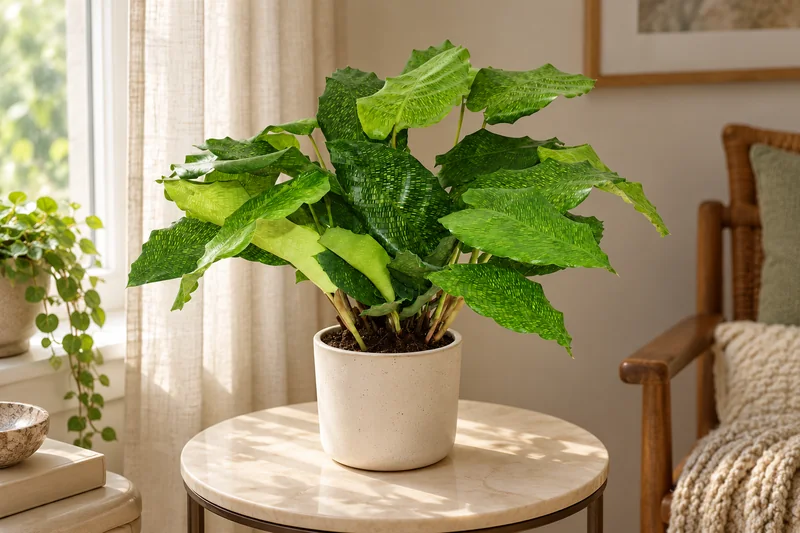
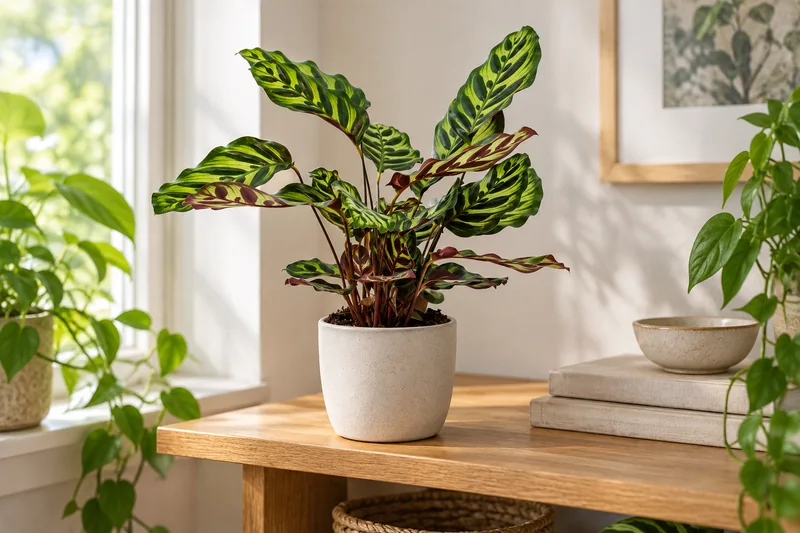
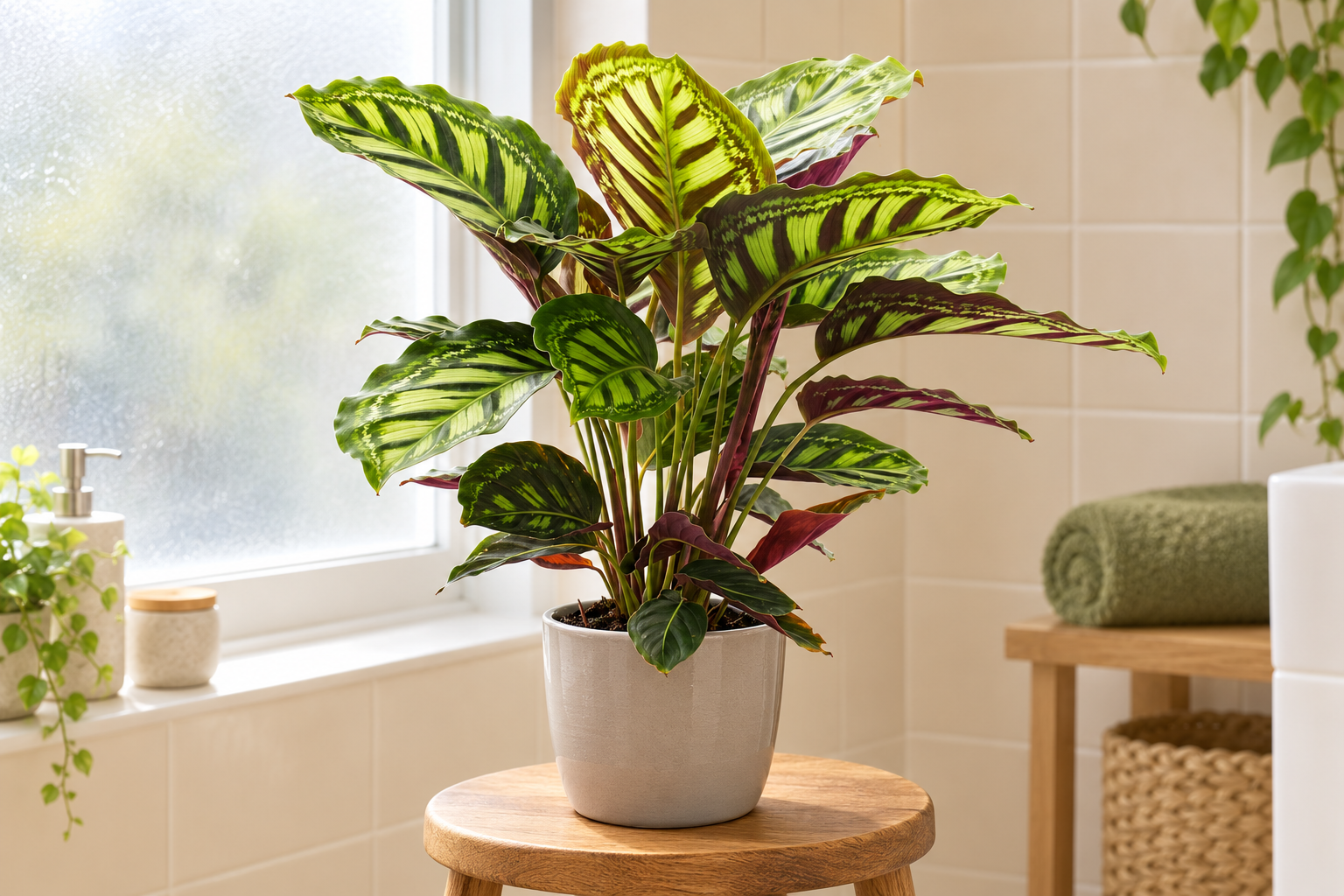
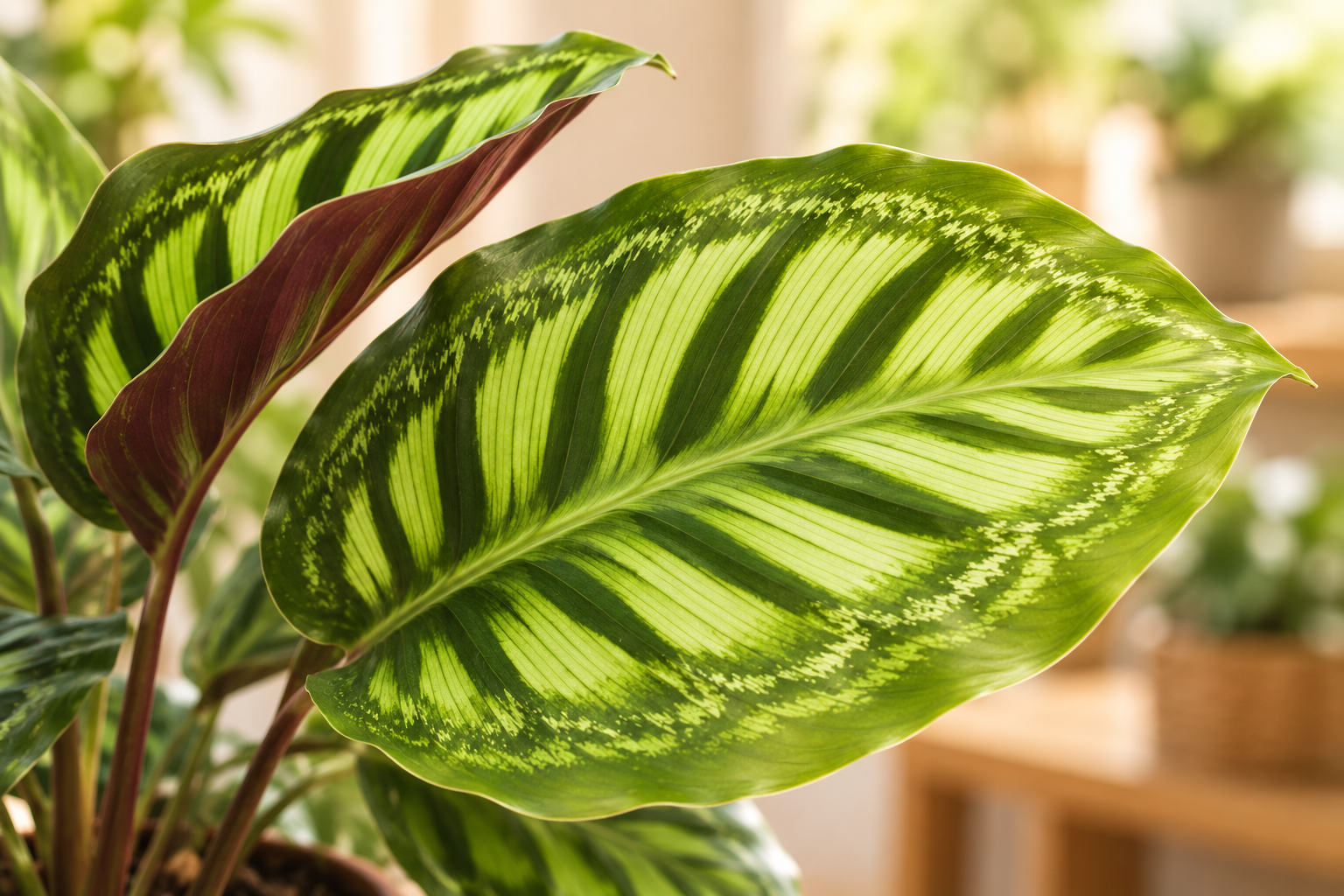
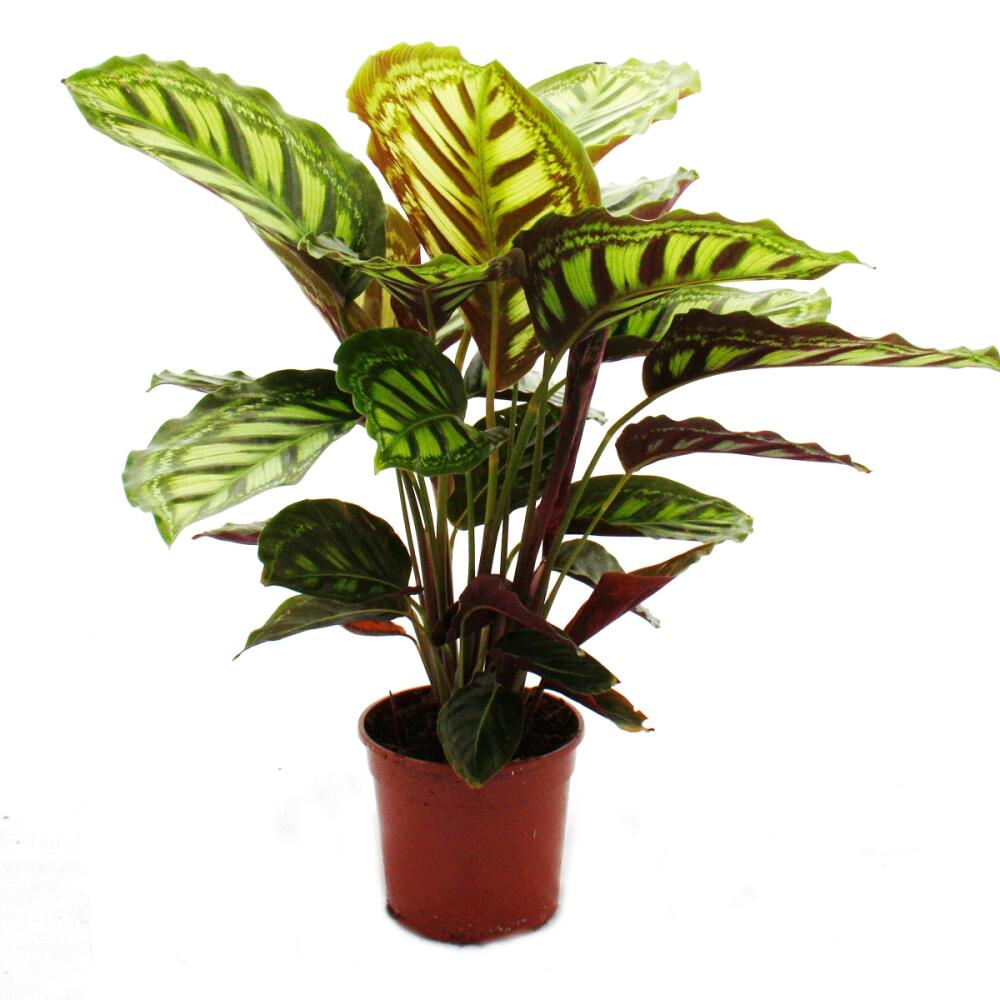
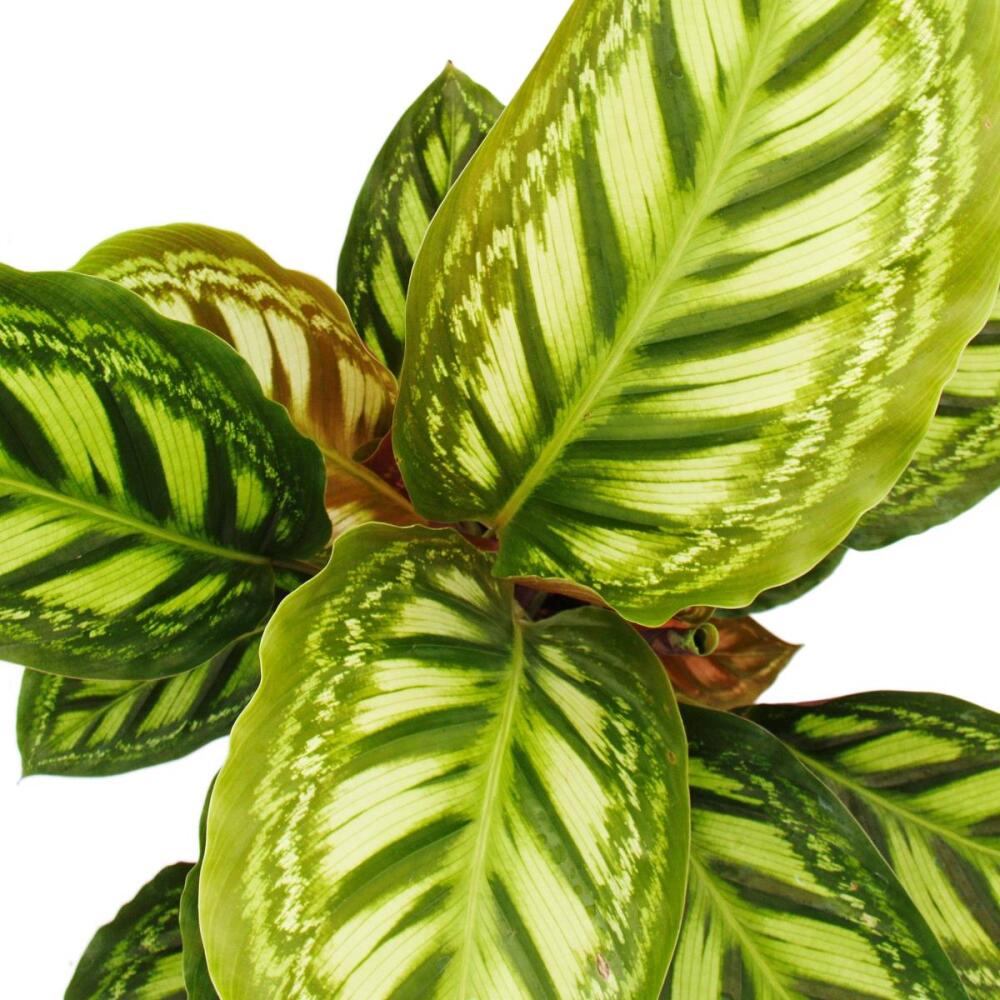
This prayer plant’s leaves invite a closer look. Dark elongated feather strokes run outwards from midrib; paler green to green-yellow fields lie between. Pattern becomes finer and more irregular towards edges. Broad oval surfaces end in a point and may wave slightly. A tilted leaf shows reddish-purple underside while others stand nearly horizontal. The same plant thus looks different from side and above. On a low plant position you can enjoy both. Leave enough side room for movement without leaves rubbing a wall or cabinet edge.
Calathea and Goeppertia lead to the same species
Shop uses spelling Calathea roseapicta. Accepted botanical name is Goeppertia roseopicta; Calathea roseopicta is the older name of the same species. It belongs to Marantaceae and comes from wet tropical western South America into western Brazil. There it lives in warm sheltered surroundings below larger vegetation. As a houseplant too it remains a herbaceous perennial foliage plant. New leaf stalks arise near ground instead of a woody trunk carrying a crown. Leaf position may change through the day. Surfaces raised more in evening are initially an observation, not an automatic watering command.
Protect the leaf crown on arrival
Offer is one plant in a fourteen-centimetre pot at about fifty centimetres total height including container. This starting size fixes no later final height. For the species about thirty to sixty centimetres height and width is horticultural guidance; actual structure depends on cultivation and development. Carry delivery by pot, not long leaf stalks. Slowly release wrapping so rolled or sideways leaves do not catch. Then check rootball moisture and drainage. Existing pot may initially remain. A decorative pot adds design but must allow lifting and checking the nursery pot.
A bright sheltered position with pleasant room air
Choose soft indirect daylight. Hot direct sun behind glass can harm leaves; a permanently dark niche is equally unsuitable. A bright room with somewhat higher humidity is favourable, for example a bathroom with good window light. Humid room feel does not replace rootball checks. Even warmth without cold drafts or a radiator directly beneath leaves eases care. Move plant out of cold airflow when ventilating in winter. Suitable humidification may help very dry rooms. Continually wet leaves or enclosed dark glass are no useful shortcut. Choose position through light, temperature and room humidity together.
Consider water quality and rootball moisture together
During growth soil remains evenly slightly moist. After surface dries slightly feel inside rootball too and water slowly as needed until roots are supplied. Excess then drains and is removed from decorative pot. Suitable care lies between total dryness and standing wetness. Prefer clean rainwater or suitable low-mineral water at room temperature. Margins respond sensitively to poor water quality; dry air and irregular supply may also cause brown edges. A rolled leaf is therefore not immediately answered with extra water. A heavy wet pot needs a different response from a dried light rootball. Observing fresh leaves helps further adjustment.
Root space grows with the leaf group
Humus-rich moisture-retentive yet well-drained houseplant soil combines supply with air at roots. If clump fills pot well carefully move to slightly more space in spring or summer growth. Plant stays at previous depth. Oversized container would supply unnecessary soil remaining moist too long. During active growth moderate doses of suitable houseplant fertiliser by label suffice; existing pre-fertilisation counts. Later a strong group may be divided when repotting if every piece retains roots and several leaves. This is no necessary starting measure for a newly arrived plant. New rolled leaves should unfold themselves; pulling or opening damages sensitive surface.
Observe more closely through seasons
When days shorten prayer plant stays warm and as bright as possible. Surface may dry somewhat more before next watering but entire rootball is not kept completely dry. Less growth also means less fertiliser. Remove dust with soft damp cloth supporting leaf surface. Check undersides and stalk bases for fine webbing or cottony deposits. One older leaf may gradually age; rapidly increasing spots or soft shoots instead require moisture, air and root checks. Small white to pale-violet flowers are possible in species but rare indoors. Changing leaf position and a healthy unfolded new shoot offer much more to discover daily.
One plant, several views
Good to know
Why Goeppertia instead of Calathea botanically?
Goeppertia roseopicta is accepted name; Calathea roseopicta describes the same species under older genus name.
What size is offered?
14 cm pot and about 50 cm total height including pot. Sideways crown also needs some free space.
Is a purple underside normal?
Yes. Reddish-purple leaf undersides are visible on originals.
Does evening lifting always mean thirst?
No. Changed leaf position belongs to observation. Check rootball moisture and overall condition before watering.
Can it stand in a dark bathroom?
It needs sufficient indirect daylight there too. Higher humidity does not replace window light.
Why do leaf tips brown?
Check water quality, rootball moisture and dry room air together. One brown tip cannot safely determine cause.
Should I open a newly rolled leaf?
No. It unfolds itself; pulling can damage tender surface.
Does it need a dry cool winter?
No. Keep warm and bright. Water less with lower consumption without completely drying whole rootball.
Sources and editorial note
- Exotenherz: SKU, GTIN, dimensions, InStock and originals (direct retrieval 03.10.2026)
- Kew POWO: accepted name, synonym and natural distribution (04.10.2026)
- NC State Extension: Goeppertia roseopicta, leaf pattern, movement and cultivation (04.10.2026)
- RHS: calatheas, water, warmth, humidity and repotting (04.10.2026)
Shop offer, article number, GTIN, availability and originals checked in saved direct retrieval of 03.10.2026. Specialist sources directly read. Unnamed species offer, no Medallion/Kennedy/Angela/Dottie attribution invented. All three complete Canon texts and native originals plus both exact current originals actually compared: distinct green-yellow feather geometry and fine green edge versus Kennedy silvery mottling/Angela broad white margins/Dottie dark pink. Kew accepted species name and synonym directly read. Shop14cm/approx50cm consistent; HTML unchanged from complete direct retrieval 03.10.2026. No repeated product HTTP. Both builtin native motifs actually immediately viewed with originals1/2.