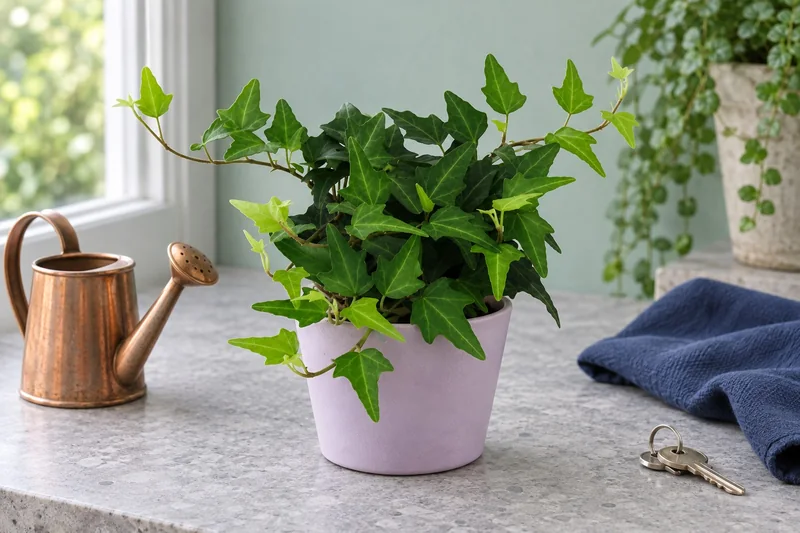
This plant at Exotenherz
Check the shop offer for current availability, price and what is included.
Product and delivery details are given in the individual offer.
Your care table
| Topic | What to do | Why it helps |
|---|---|---|
| Light | Choose sun, partial shade or shade by soil supply. | Even shade beneath woody plants can be dry. |
| Soil | Prepare humus-rich draining ground without permanent waterlogging. | Roots need moisture and air. |
| Planting time | Use mild days with frost-free workable soil. | Small balls can connect to surroundings then. |
| Spacing | Use roughly 50 cm as shop guidance for groundcover. | Spacing describes planting, not limits later shoots. |
| Water | Check new balls and water thoroughly during drought. | Young ivy has not explored a large ground space yet. |
| Feed | Assess soil and growth, feed only as needed. | Quick closure does not justify blanket high supply. |
| Pruning | Regularly limit edges and unwanted climbing shoots. | The strong species does not stay a small pot or edge plant. |
| Handling | Wear gloves and keep cuttings inaccessible to pets. | Ivy can irritate skin and is harmful when eaten. |
| Winter | Protect containers and check dryness frost-free. | Evergreen leaves use water outside main growing season too. |
For young plants, feel the soil directly at the root ball. The surface and deeper soil may have different moisture levels.
Water thoroughly after planting; later, water according to the soil, weather and establishment rather than a fixed calendar.
Avoid standing water. For plants in containers, also check that water runs out of the drainage hole.
A broad leaf sets the direction
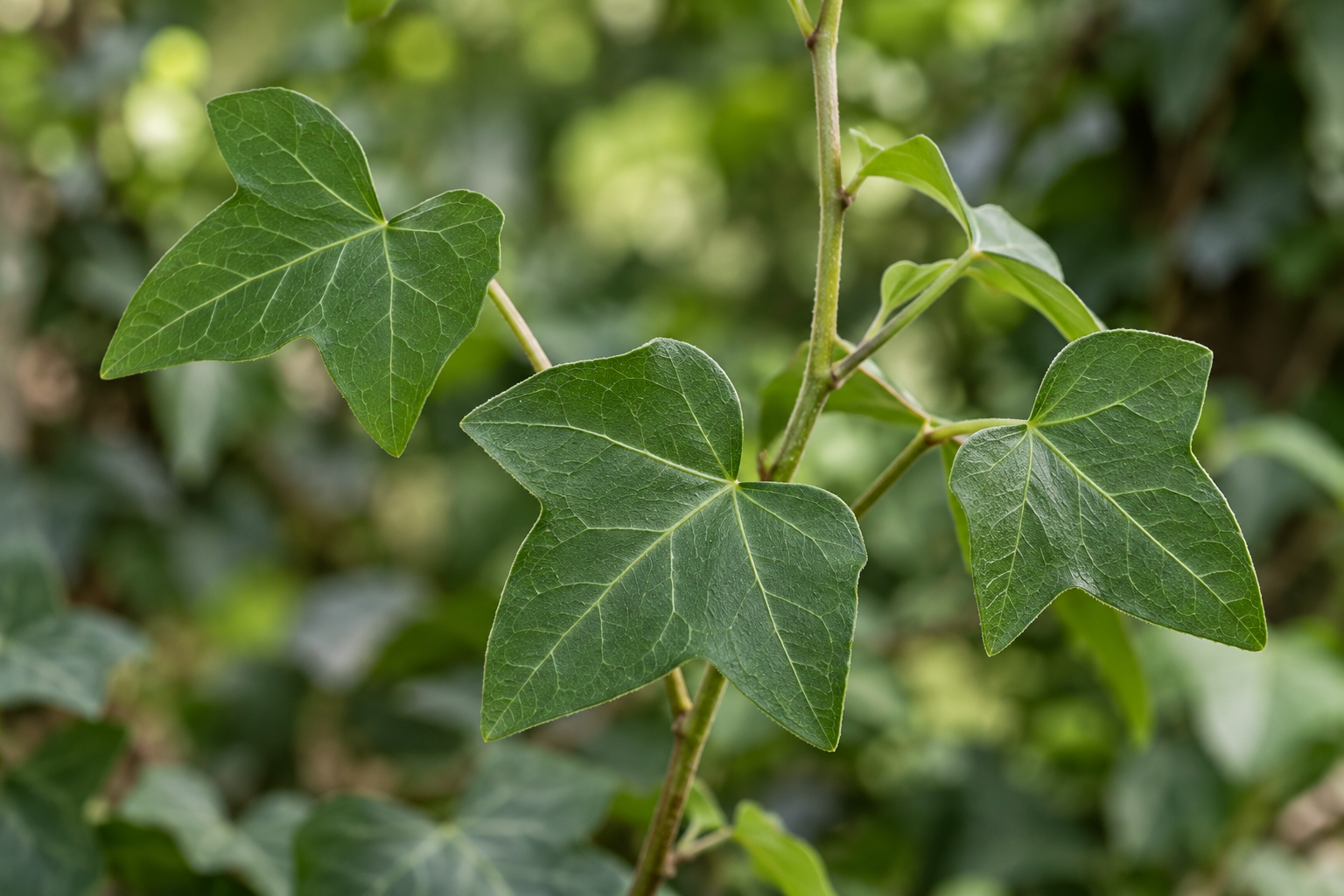
Irish ivy makes an impression with a single leaf. Dark green juvenile leaves are broad and usually five-lobed; on developed shoots they can reach about 12 cm width. Hedera hibernica is a botanically independent species. Older names include Hedera helix Hibernica or a Hedera helix subspecies. They do not count several plant identities. This portrait concerns its own broad green leaf appearance without pale edges of variegated ivy cultivars. The evergreen can cover ground or climb with attachment roots when reaching a suitable surface.
A small set can start a long path
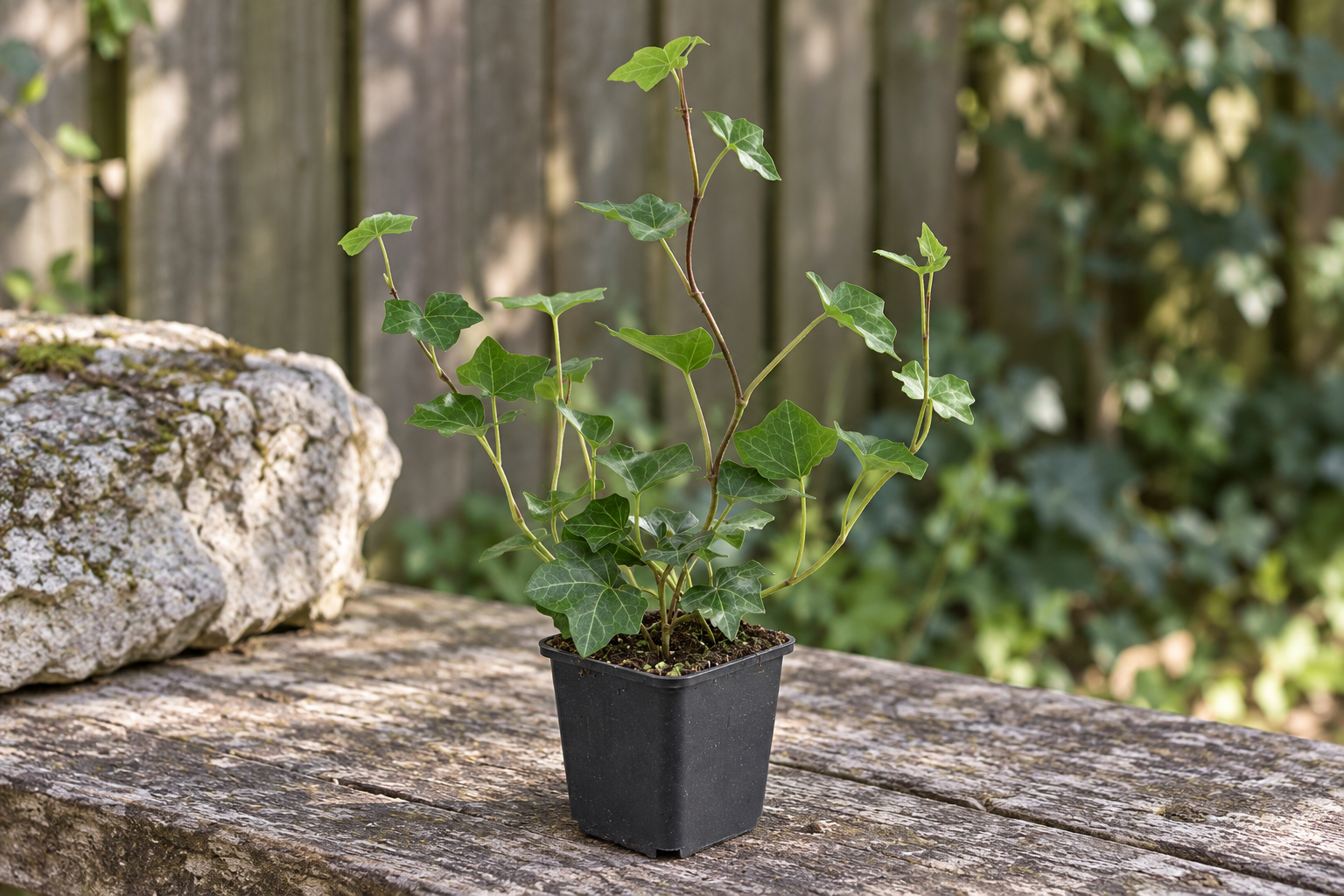
The offer describes young plants in 9-cm pots at around 10–25 cm total height including pot. Quantity follows orderable set choice. At unpacking you initially see short upright and trailing juvenile shoots, not a ready wall. Check balls and gently release young vines. Developed climbing species can reach around 8–12 m height and several metres width long-term. Ground-guided planting stays lower but retains the drive to spread shoots. Plan area boundaries and places ivy should not go from the beginning.
Shade is tolerated, wet roots are not
Hedera hibernica can use sun, partial shade and shade. A bright to shaded position with humus-rich draining soil is often easy to supply for young planting. Beneath woody plants light is not the only concern: tree and shrub roots take water, making soil dry despite shade. Check before planting and during establishment. Fertile humus-rich ground suits; the species tolerates various soil reactions. Permanently saturated ground is no better alternative to dry shade. The root zone must store water and release the excess.
Plant groundcover with deliberate spacing
Mild spring or early autumn days in frost-free soil are favourable. Loosen ground and release nursery pots without pulling shoots. Set balls at previous height, carefully firm and water. The shop gives around 50 cm guidance for groundcover use. This promises neither closure timing nor limits later climbing width. Lay shoots towards intended direction and keep competing growth away initially. Small new balls explore surroundings gradually; older planting’s resilience cannot be assumed immediately.
Attachment roots turn ground growth into a climbing path
An ivy shoot reaching support can continue along it with small attachment roots. This is practical on selected climbing surfaces but unwanted on downpipes or where windows and paths must stay clear. Guide early and cut encroachments before thick interwoven growth forms. Regularly bound groundcover edges. Container roots need holes and space for longer-term growth. Young hanging plants are not permanently small cultivars. Check ties, pots and accessible neighbouring surfaces as shoots increase.
Watering and pruning belong to the same planting
Check original balls during establishment and water thoroughly when dry. Established plants handle fluctuations better; prolonged drought or containers can still need extra supply. Feed follows soil and visible need, not desire to close areas fast. Cut troublesome shoots as needed and prefer spring for major shaping. Inconspicuous flowers are no excuse for careless handling: ivy can irritate skin and is harmful if eaten, including to various pets. Wear gloves and dispose of cuttings where animals cannot reach them as food.
Juvenile leaves and adult shoots tell different phases
Lobed leaves belong to climbing juvenile appearance. Later flowering-capable adult shoots can carry less-lobed leaves and small greenish autumn umbels, followed by possible black berries. Young ground-guided plants need not show this yet. Leaves basically remain in winter but wind, sun and frozen ground can hinder supply. Protect small containers from hard freezing and check moisture frost-free. With unusual leaves look at soil, undersides and shoot bases together. Broad green foliage stays the thread while form and tasks change with age.
One plant, several views

Good to know
Is Hedera hibernica a new Hedera helix cultivar?
It is listed as its own species. Older names link it to Hedera helix without additional portraits. This one covers broad-leaved Irish ivy.
How large are offered plants?
Each 9-cm pot is about 10–25 cm total height including container. Quantity follows currently orderable set.
How can groundcover grow 8–12 m high?
Without climbing surfaces it stays near ground. Shoots reaching support can climb long-term with attachment roots.
How much bed spacing should I leave?
The offer gives roughly 50 cm groundcover guidance. Water, soil and care determine later closure.
Must young ivy flower in autumn?
No. Flowers appear on developed adult shoots. Lobed juvenile groundcover shoots can stay flowerless a long time.
What care is needed around pets?
Do not let plants or cuttings be eaten. Ivy is harmful when ingested and can irritate skin; gloves help while pruning.
Sources and editorial note
- Exotenherz: parent offer read directly, delivery dimensions and original gallery (03.10.2026)
- Specialist reference: hedera-hibernica (read directly 03.10.2026)
- Specialist reference: ivy-growing (read directly 03.10.2026)
- Exotenherz: checked 6-plant child offer directly (03.10.2026)
- Exotenherz: checked 12-plant child offer directly (03.10.2026)
- Exotenherz: checked 20-plant child offer directly (03.10.2026)
- Exotenherz: checked 40-plant child offer directly (03.10.2026)
Identity and independent profile checked against canonical 642 and shared/isolated portraits and orders. Parent offer and all associated child offers directly read on 03.10.2026 with clear URL/file hashes. Delivery and later growth height separated; sets not counted additionally. Specialist sources directly read. Text and image comparison checked separately; PDF and page acceptance bound to actual file hashes. No publication acceptance: Root checks shared page build.