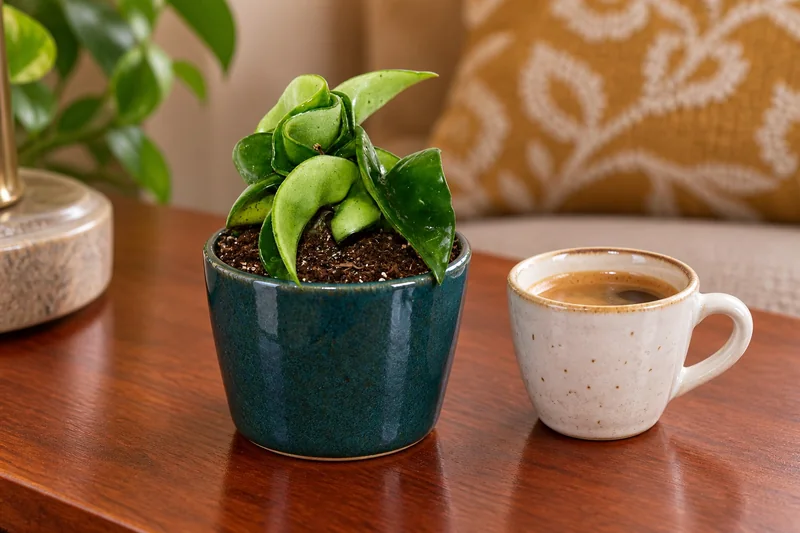
This plant at Exotenherz
Check the shop offer for current availability, price and what is included.
Check the shop for the price, current availability and what is included.
Your care table
| Topic | What to do | Why it helps |
|---|---|---|
| Light | Bright with filtered light. | Even a single rooted leaf needs light. |
| Water | Let compost dry noticeably between waterings. | A single leaf uses little water. |
| Drainage | Remove excess from the small outer pot. | Permanent wetness can damage roots. |
| Compost | Loose and freely draining. | Air in the small root space supports healthy roots. |
| Temperature | Warm without cold draughts. | Cool wet conditions are unsuitable. |
| Feed | Very sparingly, during active growth according to the product. | Feed does not replace stem tissue missing for new shoots. |
| Repotting | Only when needed, not preventively into a large pot. | Large wet compost volumes dry too slowly for one leaf. |
| Expectations | Distinguish a single leaf from a fully climbing Hoya. | New vines cannot reliably be expected without suitable stem tissue. |
Check the compost and pot weight. The care table explains how far the compost may dry.
Water only when needed. The water should reach the root ball without spilling over the rim.
Remove surplus water from the saucer or cachepot. Then return the plant to a suitable position.
A heart-shaped leaf is not automatically a complete vine
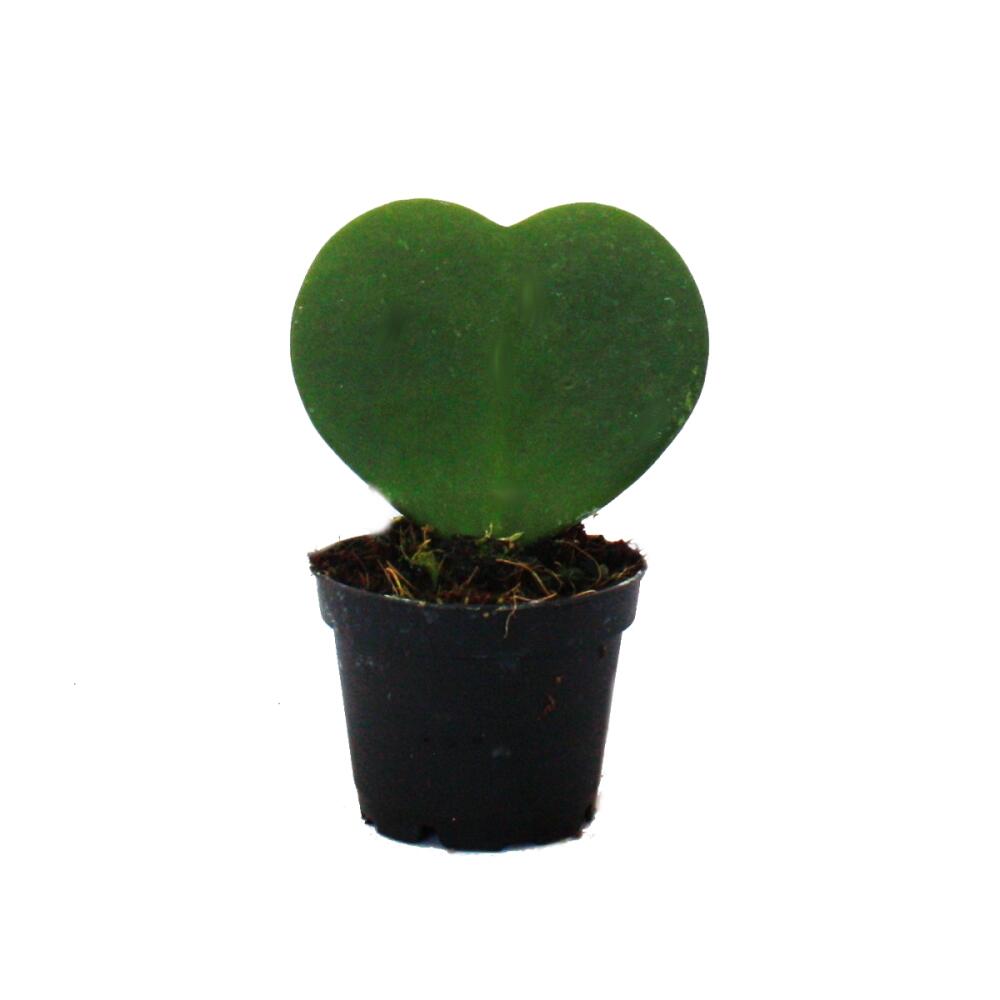
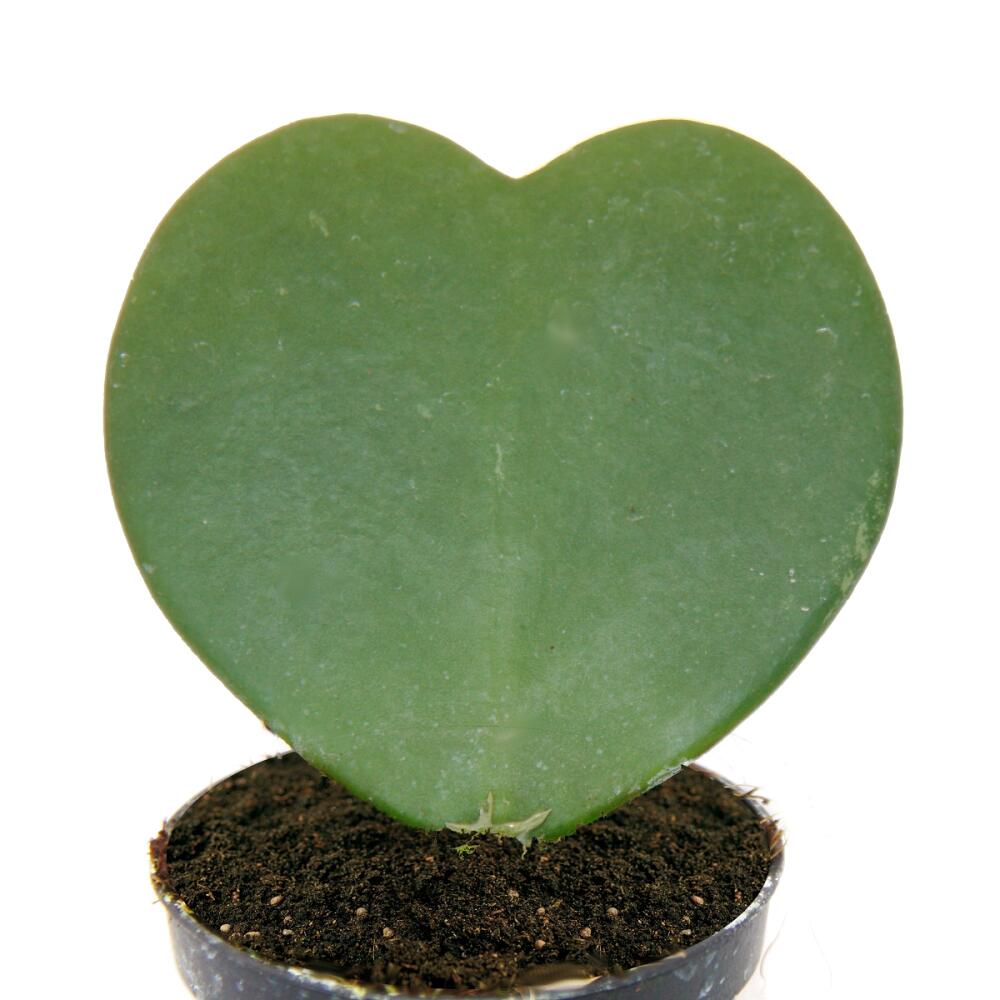
Hoya kerrii is botanically a climbing wax plant with thick heart-shaped leaves. This offer, however, shows a single rooted leaf. Such leaves may survive a long time but do not reliably develop new vines without suitable stem tissue capable of producing a shoot. A leaf remaining unchanged for a long time therefore does not automatically mean a care mistake. For us, this distinction belongs to honest plant advice. Anyone expressly seeking a Hoya that will later climb should look for an offer with a recognisable shoot and node, rather than the attractive heart shape alone.
A small gift with clear size
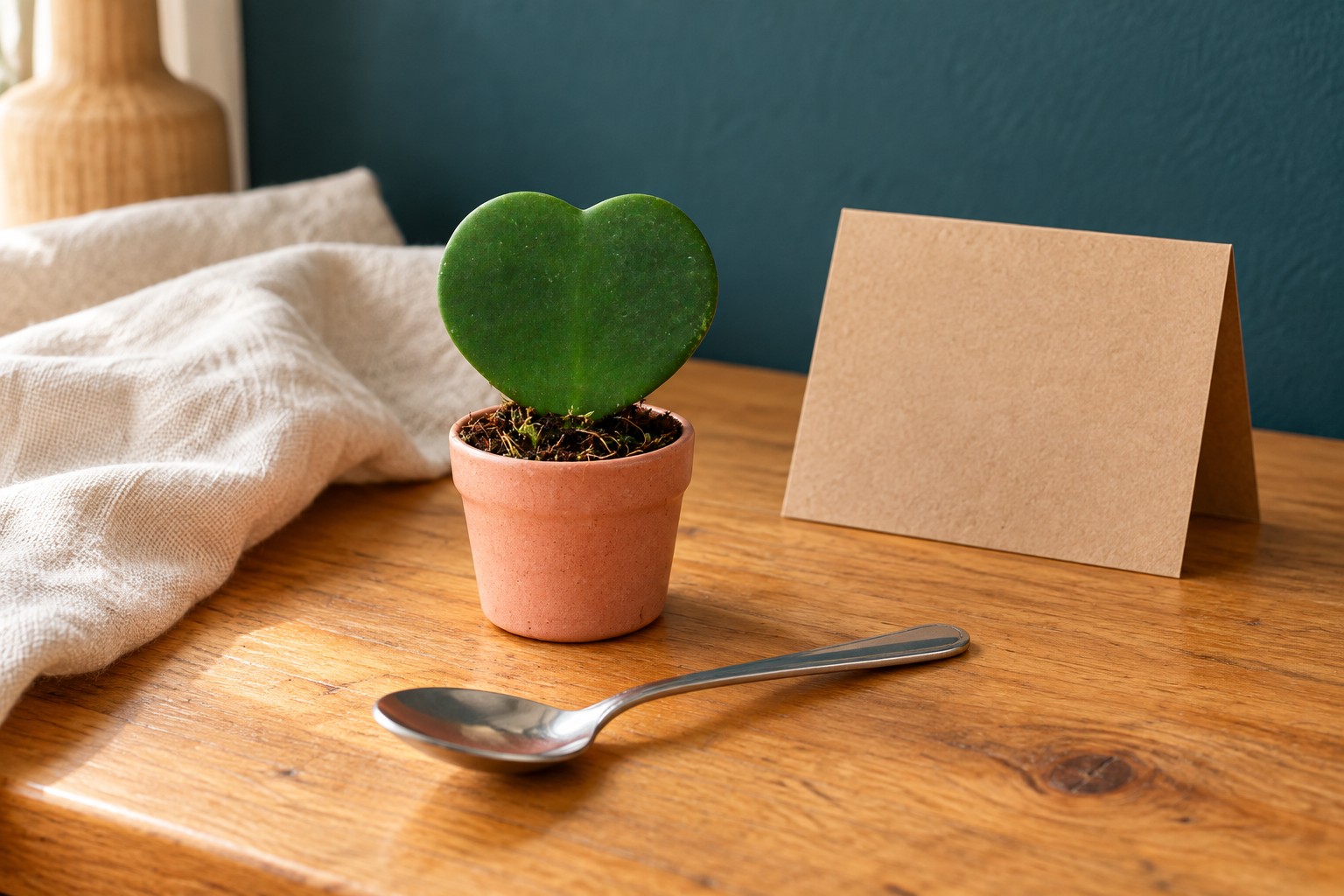
The shop states a pot of around 6 cm and around 8 to 10 cm overall height. The leaf is therefore a small table gift, not a large floor feature. A simple personal card may complement the shape without concealing the plant behind excessive decoration. In the plant book, the portrait can be combined with a dedication. Card, outer pot and further decoration are not automatically included in the plant offer. Stand the small container where it will not be knocked over in passing and remains accessible for watering.
Bright and warm instead of dark gift wrapping
After gifting, remove the plant from closed decorative packaging. A bright position with filtered light suits it; initially avoid hot direct sun after shipping. Consistent warm room temperatures support cultivation. A cold pot base or draughts are unsuitable. The leaf need not stand directly at a heater simply because it is thick and stores water. Infrequent watering alone cannot compensate for a very dark desk. The shape stays attractive long-term only if the living leaf receives light and its roots remain healthy.
Low use does not mean no water
A single succulent leaf uses little water. Check the compost and let it dry noticeably between supplies. Then gently water the small root ball and allow excess to drain. A permanently full miniature outer pot is particularly risky because little air reaches roots. If the root ball dries completely for a long period, this robust leaf may shrivel too. With a soft leaf, first check whether compost is dry or wet. Extra water does not cure root damage caused by wetness.
Preserve the small root space
Loose freely draining compost and pot drainage holes make care easier. A single leaf does not need a large reserve pot that stays wet a long time. Repot only for a clear reason, such as compacted compost or genuinely exhausted root space. Support the leaf without pulling it out by the base. Use feed very sparingly and do not try to force a missing shoot through frequent applications. With visible active growth, give suitable fertiliser moderately according to the product. Carefully damp-wipe dust from the smooth leaf surface.
If a shoot actually appears
If suitable stem tissue is present, a shoot may develop with patience. This begins a different care situation with growing leaf mass and possibly later climbing support. Do not hastily cut long initially bare exploratory shoots on a complete Hoya; leaves may develop there later. Flowers belong to the mature climbing plant and should not be expected from the single heart leaf. Check regularly for mealybugs or other small sucking pests. Brown soft areas at the base call for a root-ball check. Leaf thickness alone does not guarantee many years of life.
One plant, several views
Good to know
Why has no second leaf grown for months?
Many heart-leaf offers are single rooted leaves. Without suitable stem tissue, new vines are not reliably possible.
Can I produce new shoots with more feed?
Feeding cannot replace missing stem tissue capable of sprouting. Too much feed can stress roots.
Does the heart leaf need no water?
It does. Use is low, but prolonged complete drying may damage it. Supply sparingly according to compost condition.
Will it definitely become a flowering Hoya?
No. The offer shows a single leaf in a 6 cm pot. Flower-capable vine growth is not guaranteed.
Sources and editorial note
- Product and delivery contents: Exotenherz
- NC State Extension: plant profile
- Royal Horticultural Society: plant and care information
Sources checked: 15 September 2026. Product information and the contents of delivery follow the linked shop offer. Care advice was checked against the cited specialist sources and should still be adapted to the plant’s condition, position and season.