This plant at Exotenherz
Check the shop offer for current availability, price and what is included.
Check the selected shop offer for price, availability and delivery contents.
Your care table
| Topic | What to do | Why it helps |
|---|---|---|
| Position | Place outdoors in sun to partial shade. | Ilex crenata is not a tropical indoor bonsai for a permanently warm position. |
| Water | Check the shallow bowl attentively and keep the root ball evenly moist. | Little substrate dries faster in sun and wind. |
| Drainage | Water thoroughly and allow excess to drain. | Fine roots need moisture and air together. |
| Substrate | Use a loose, well-draining, rather acidic bonsai mixture. | An alkaline root zone may encourage leaf yellowing. |
| Feeding | During active growth, feed sparingly according to the bonsai fertiliser label. | A small root space needs no heavy reserve applications. |
| Pruning | Selectively shorten long young shoots to the existing shape. | Small steps preserve foliage and make further development visible. |
| Repotting | Check root space and fixings; plan root work to suit plant development. | A bonsai may be wired into its bowl; do not pull it out by the trunk. |
| Winter | Protect bowl and roots from severe freezing through and cold wind. | Hardiness of the woody plant does not mean unlimited frost safety for a small bowl. |
Check the compost and pot weight. The care table explains how far the compost may dry.
Water only when needed. The water should reach the root ball without spilling over the rim.
Remove surplus water from the saucer or cachepot. Then return the plant to a suitable position.
Small leaves reveal the trunk
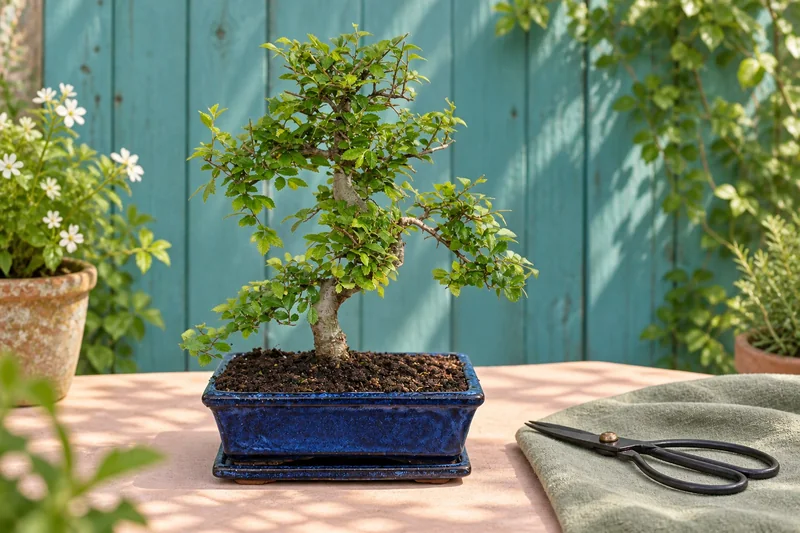
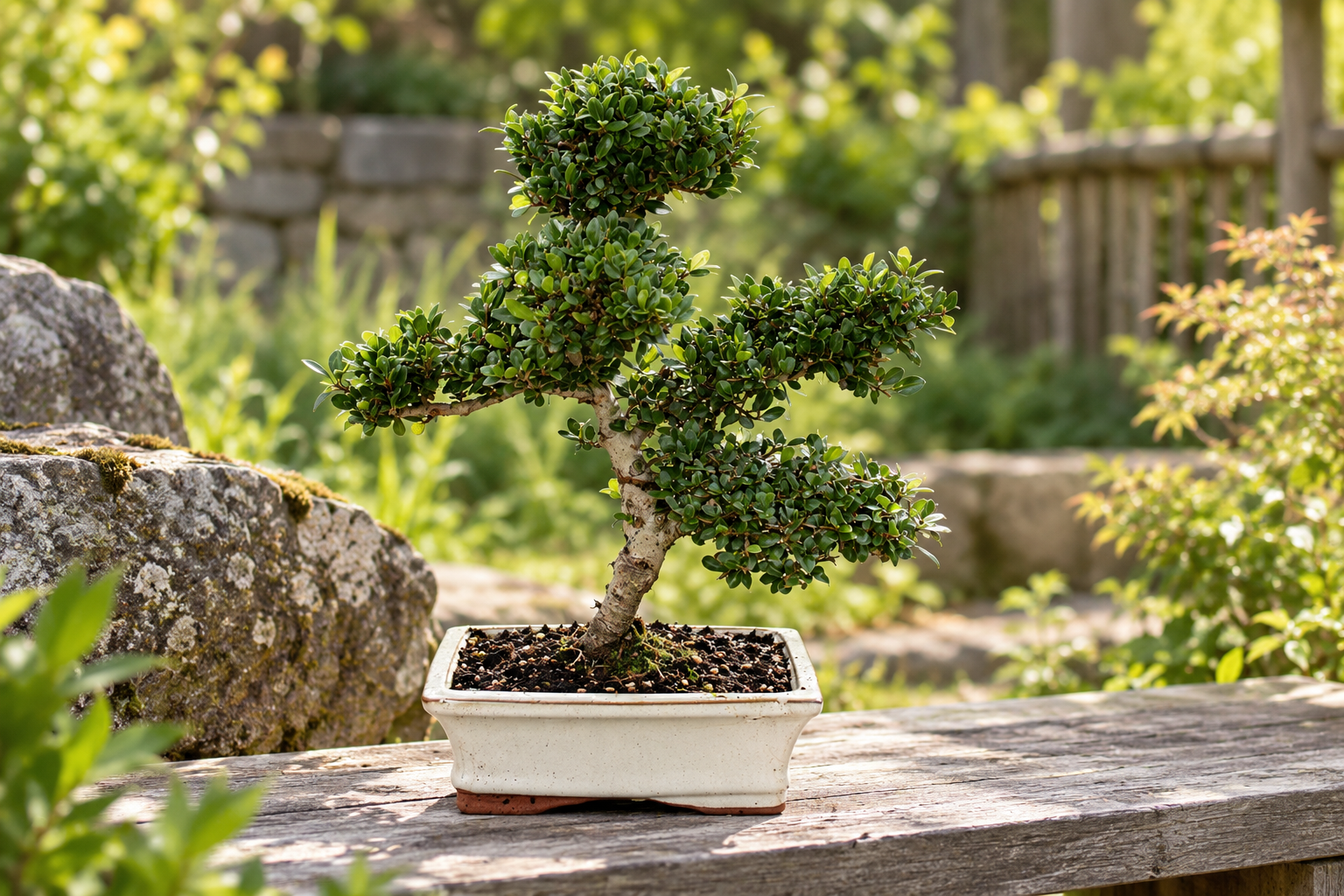
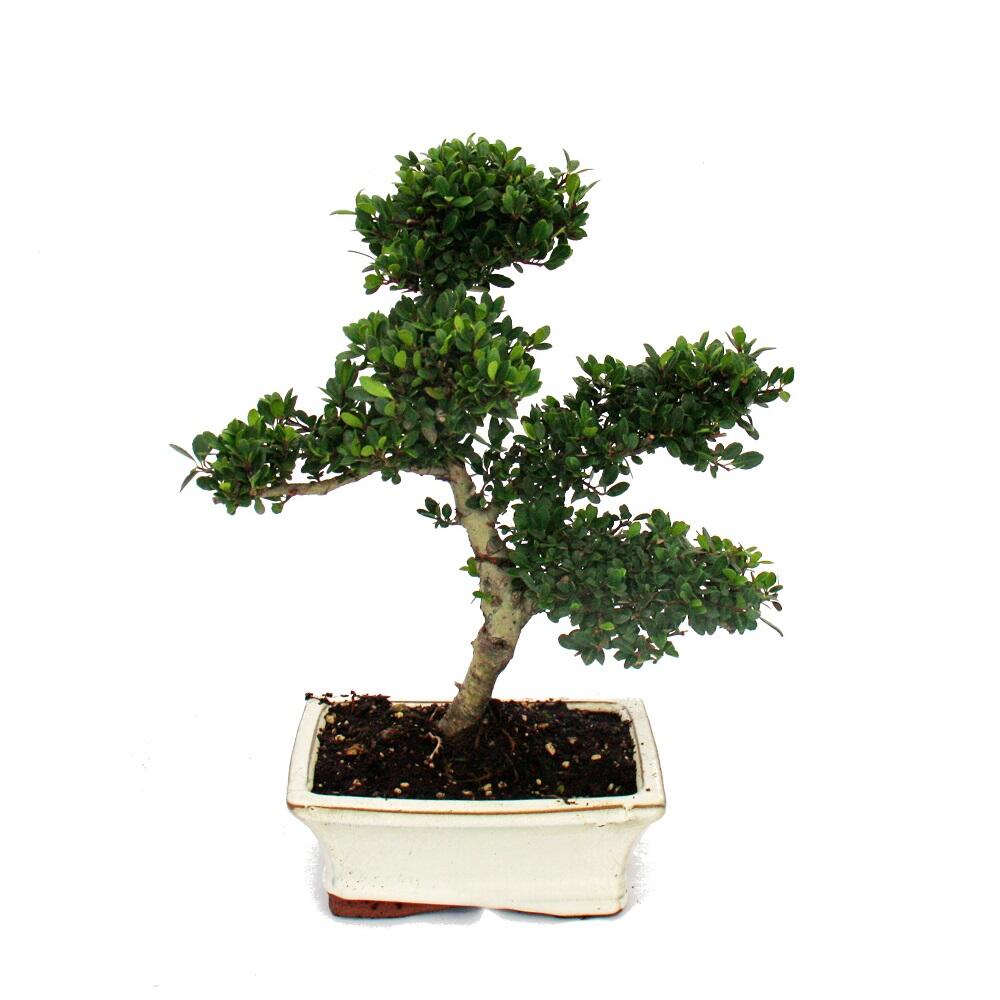
What we like about the Ilex bonsai is the relationship between fine foliage and shaped trunk. Small firm leaves form manageable green areas, with the wood’s movement remaining visible between them. On a garden shelf, the plant can be viewed from different directions. Not every crown is identical; the bonsai continues to grow as a living woody plant. The original photograph shows the offered form. Japanese holly has small rounded leaves with fine notches along their edges. It looks different from the large-leaved spiny holly initially suggested by the German common name.
The small bowl brings its own tasks
The offer lists a fifteen-centimetre bowl and an overall height of about twenty-five to thirty centimetres. Its age is described as about six years; we add no exact dating. Height includes the container. Bowl colour and the individual trunk outline may vary. Hold the bowl when lifting rather than pulling the trunk. A bonsai may be secured inside its container for stability. The decorative garden surroundings of the scene are not supplied. Initially position the existing plant calmly before planning major shaping or root work.
An outdoor position with light and shelter
Ilex crenata belongs outdoors. Sun to partial shade, air and natural seasons suit it better than a permanently warm indoor position. On a garden shelf, we protect the shallow bowl from strongly drying wind. In hot summer sun, check the root ball more frequently and provide suitable protection against overheating. Gradually accustom the plant to stronger sunlight after transport. A beautiful display table must also be accessible. This lets us see new foliage and water without constantly pushing the small crown through a narrow surround.
Little soil calls for precise moisture checks
Check the surface and bowl weight before watering. The root ball should remain evenly supplied and not dry out completely. Sun, wind and fresh growth may make it use water much faster than a large garden pot. Water thoroughly and gently until the root ball is reached, then let excess drain. A dry surface alone does not always tell the condition of deeper roots. Use soft water where possible and keep drainage clear. Check moisture on suitable frost-free days in winter too. Winter rest does not mean forgetting the root ball for months.
Acidic structure and moderate feeding
An airy, well-draining bonsai mixture with a rather acidic reaction suits Ilex crenata. A root zone becoming alkaline may encourage yellow leaves. With such changes, first consider water, soil and rooting instead of simply feeding more heavily. During active growth, feed sparingly according to a suitable fertiliser label. Allow for pre-fertilised substrate. Plan root work according to plant condition and development; a fixed annual radical cut is unnecessary. Look for possible securing wires before lifting the plant out. Major interventions in roots and crown are not carried out together as a quick repair for one discoloured leaf.
Accompany the form in small steps
Long young shoots can be selectively shortened to keep the existing shape clear. Work with clean tools and retain leaf areas that supply further development. Check existing wire regularly for constriction. A new form cannot be forced through ever tighter wrapping. The bonsai is not a cut-out decorative object but a woody plant developing in its own way. Small black fruits are possible but not guaranteed on this supplied plant; fruiting depends partly on sex and pollination. Fruits do not belong on a dinner plate. Green foliage remains the reliable focus of this portrait.
Protect roots through winter
The outdoor bonsai keeps its seasonal rhythm. In winter, shelter it from strong wind and protect the small bowl against severe freezing through. The hardiness of an established garden plant cannot be transferred unchanged to a shallow pot. A permanently hot living room is no suitable winter solution. Occasionally inspect leaves and twig tips and check moisture in suitable weather. Note major care work and new growth. Over the years, the shaped Japanese holly becomes more understandable: a small tree with green leaf cushions and care that accounts for its bowl.
One plant, several views
Good to know
Is Ilex crenata an indoor bonsai?
No. A suitable outdoor position with light, air and seasons is the foundation.
What size is offered?
A 15 cm bowl and an overall height of about 25–30 cm including the container.
Does the small bowl need frequent checks?
Yes, particularly in sun and wind. Decide by moisture, not a rigid watering schedule.
May I pull the trunk out of the bowl?
No. A fixing may be present; check the bowl and root space carefully.
Are black berries guaranteed?
No. Fruiting depends partly on sex and pollination; do not eat the fruits.
Is the bonsai frost-proof without limits?
No. Protect the small bowl and its roots from severe freezing through and cold wind.
Sources and editorial note
- Exotenherz: offer and original images (02.10.2026)
- NC State Extension: Ilex crenata (02.10.2026)
- RHS: bonsai cultivation (02.10.2026)
Shop offer, article number, GTIN, availability and original images checked directly on 02.10.2026. Specialist sources read directly. Outdoor cultivation and small root space considered separately; no fruit or unlimited frost-hardiness promise.