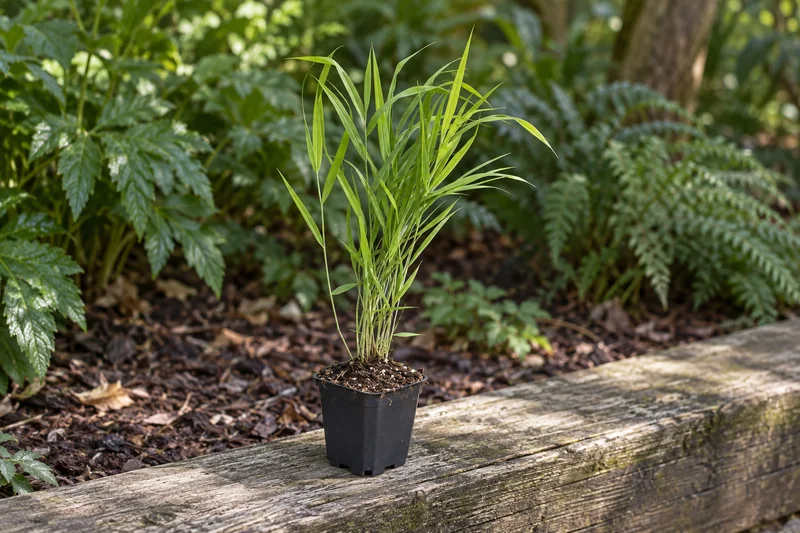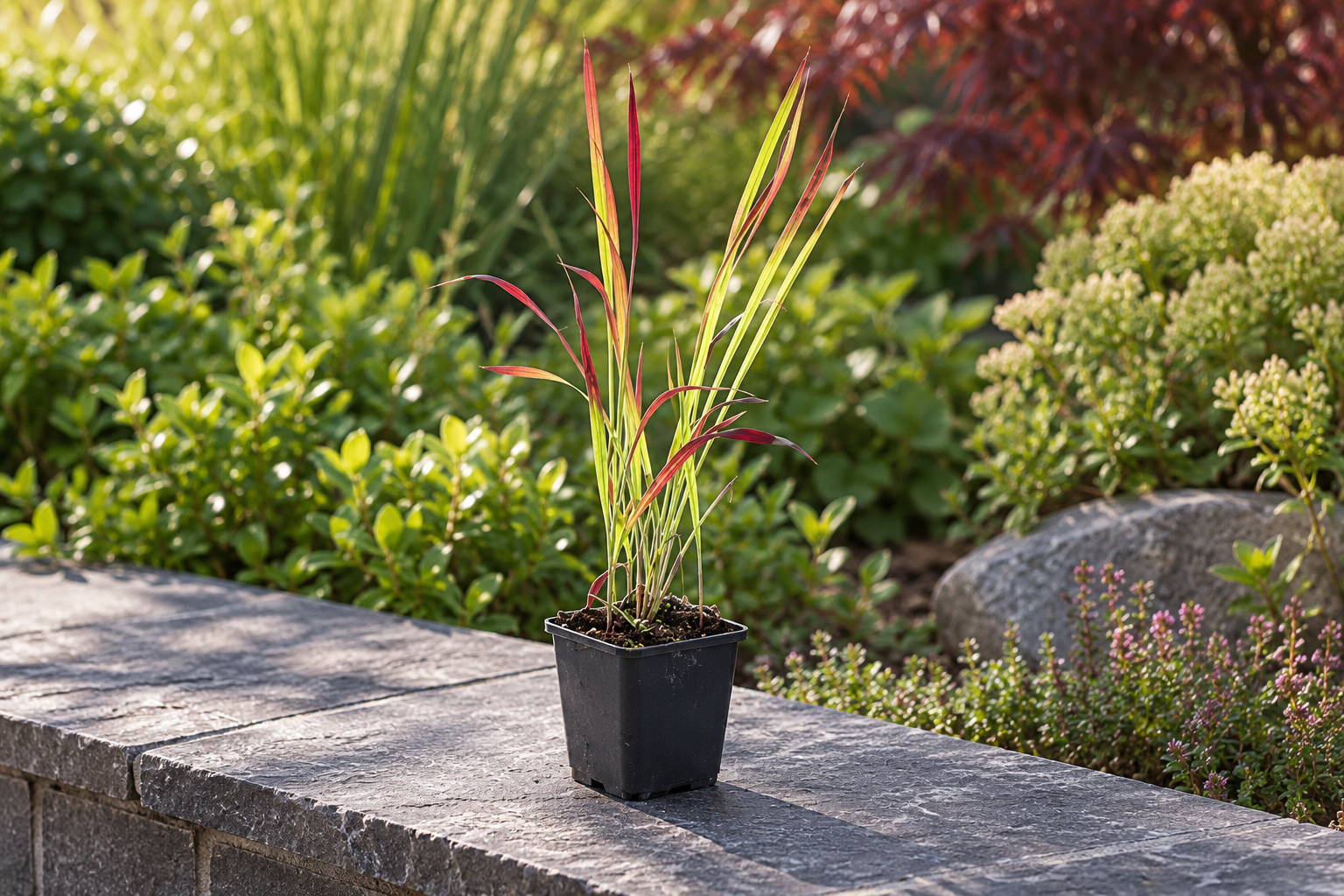
This plant at Exotenherz
Check the shop offer for current availability, price and what is included.
Check the shop for the current price, availability and offer contents.
Your care table
| Topic | What to do | Why it helps |
|---|---|---|
| Light | Choose bright to sunny conditions, or partial shade with suitable moisture. | Colour and rootball supply need to work together. |
| Soil | Use fresh humus-rich soil with drainage. | This coloured cultivar is not a grass for permanently dry cultivation. |
| Planting | Preferably plant young rootballs in spring after harder frosts. | The following growing season helps new roots develop. |
| Spacing | 30–40 cm as shop guidance; continue checking the edges. | Underground shoots can widen the planting. |
| Water | Water deliberately as soil dries and remove surplus. | Fresh soil does not mean standing water in a container. |
| Feeding | Feed moderately during growth according to need and product instructions. | Extra nutrients do not force red leaf colour. |
| Pruning | Remove dead foliage in spring while protecting new shoots. | The grass is deciduous and renews its leaves. |
| Winter | Use a sheltered spot and protect small containers from hard frost. | Small rootballs are more exposed to cold than border soil. |
| Reversion | Remove persistently fully green, different shoots with their connection. | They can displace the coloured planting; young green bases are normal. |
For young plants, feel the soil directly at the root ball. The surface and deeper soil may have different moisture levels.
Water thoroughly after planting; later, water according to the soil, weather and establishment rather than a fixed calendar.
Avoid standing water. For plants in containers, also check that water runs out of the drainage hole.
Red starts at the leaf tip
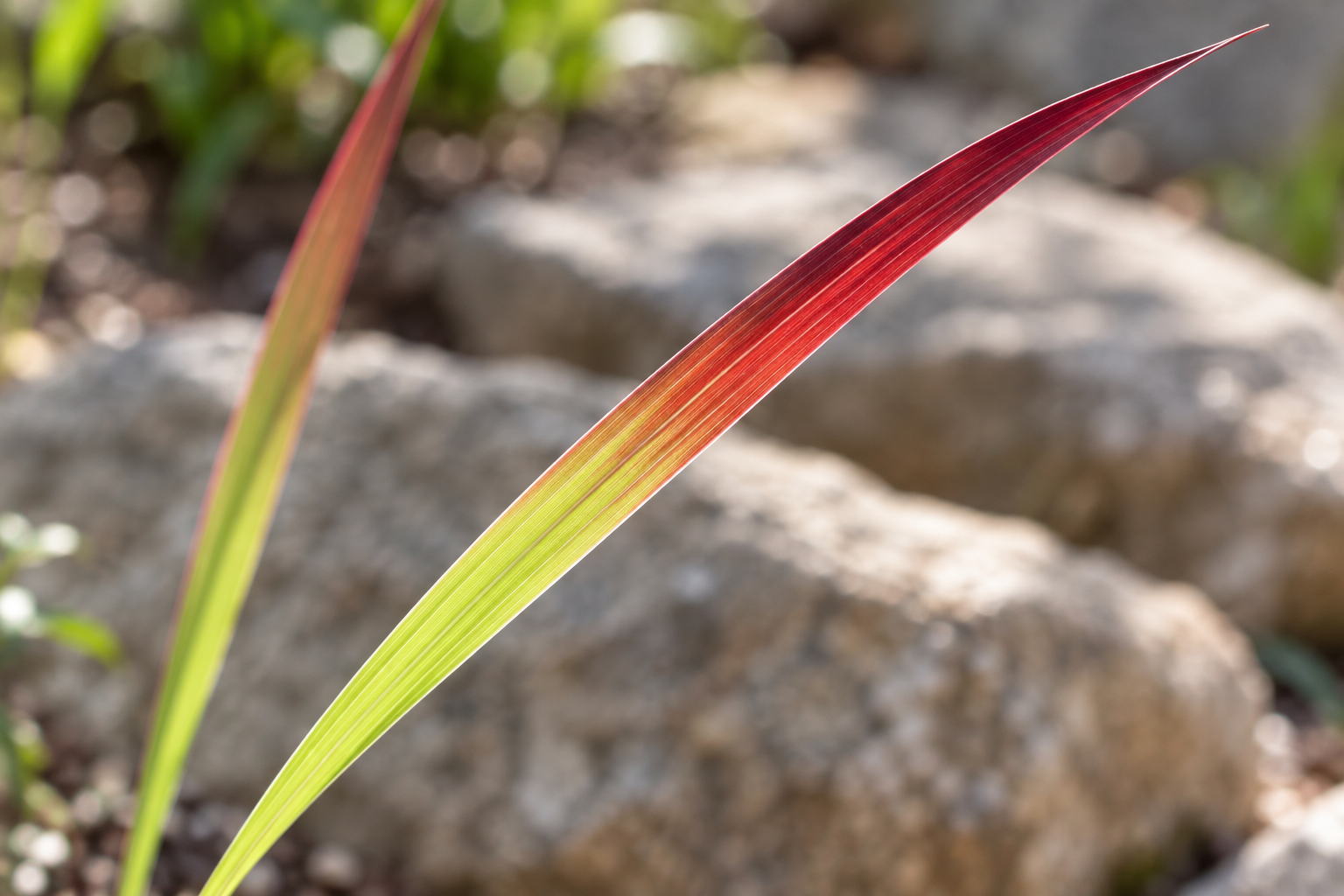
A single leaf explains why this grass is chosen: fresh green below, with red to burgundy tones appearing higher up. Side light makes the transition especially clear. The leaves remain narrow and upright rather than forming a soft arching tuft. The RHS profile lists Red Baron as a synonym of Imperata cylindrica 'Rubra', so these are not two different cultivars. I would place the colourful clump against a calm green backdrop where the leaf tips remain visible without needing a large display of flowers.
A few leaves at first do not mean a missing plant
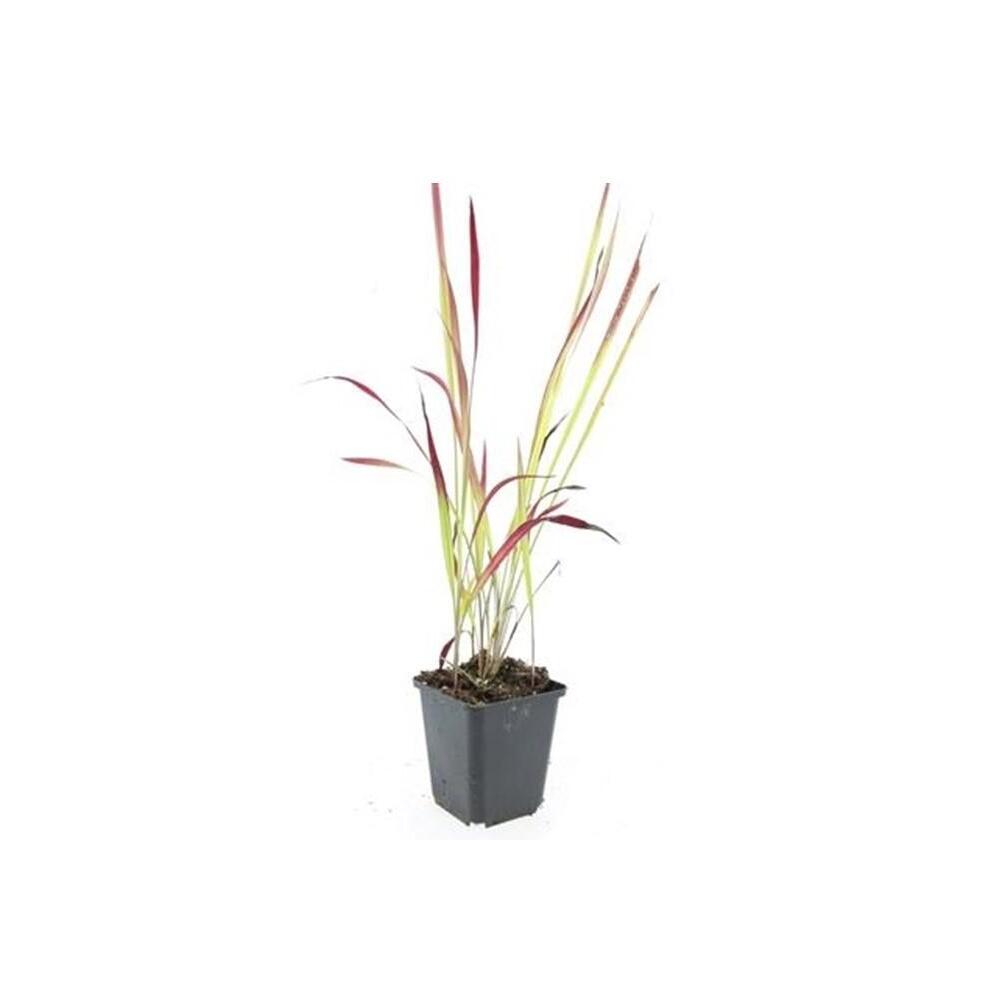
The young delivered plant may consist of just a few thin leaves. Each selected plant comes in a 9 cm pot, included in the approximate total height of 10–25 cm. A developed clump is considerably larger, around 30–50 cm tall and, depending on garden conditions, sometimes within the shop’s indicative 40–60 cm range. The red foliage changes with development and season. When unpacking, avoid sharply bending the upright leaves and check the small rootball for dryness. A dense, uniformly red mature grass area is neither the delivery size nor a guaranteed immediate effect.
Light needs fresh soil here
A bright sunny to partially shaded spot is suitable if the soil is humus-rich, adequately supplied and remains fresh. Ornamental grass does not automatically mean a dry gravel bed. In a small container or beside hot stone, the rootball can dry quickly. Water must also drain away so winter moisture does not remain around the base. I look for a slightly sheltered spot where colour and root supply work together. Warmth is welcome, but does not justify putting a young plant into hot dry soil and assuming it will need little water.
Give it a good spring start
For young plants, spring after harder frosts is a good starting point. In unfrozen workable soil, the rootball can establish roots through the following growing season. Moisten it before planting, set it at its previous level and water in. The shop gives 30–40 cm spacing. Later underground spreading shoots still need monitoring. Beside small sensitive companions, I allow an edge that is easy to control. Give an outdoor container more root space when needed; the 9 cm pot is a starter container rather than a permanent garden home for a developed clump.
Keep it fresh without constant watering
During establishment and warm dry weeks, check the soil directly. When it has dried, water deliberately and remove surplus from saucers or outer pots. Do not treat this plant like drought-loving blue fescue. Conversely, repeated small waterings must not quietly accumulate in a container without drainage. Weak growth first calls for checking light, warmth and rootball moisture. During visible growth, moderate feeding in a container may be useful according to product instructions. Stronger feeding neither reliably produces red tips nor compensates for poor root condition.
Deciduous foliage means a spring tidy-up
Red Baron is deciduous. Foliage turning brown towards the end of the season does not automatically indicate insufficient watering. Remove dead leaves and old stems in spring without damaging new shoots. Wear gloves when working with the narrow foliage. Silvery flower panicles are possible under suitable warm conditions, but are not the focus of this cultivation. Protection may be needed in a cold winter, especially for a small outdoor container. I would not add water to a frozen wet rootball, but improve drainage and shelter instead.
Watch fully green reverting shoots
Underground shoots can widen the planting. Persistently fully green shoots with distinctly stronger, different growth also warrant checking. Remove them with their underground connection before they displace the coloured planting. A green leaf base or young green spring shoot alone is not proof of reversion. I watch later development to distinguish normal colouring from persistently different growth. This cultivar is described neither as guaranteed sterile nor as unable to spread. Careful monitoring keeps the red grass accent in its intended garden area.
One plant, several views
Good to know
Are Rubra and Red Baron different grasses?
The RHS profile lists them as synonyms of the same coloured cultivation.
Why are lower leaf parts green?
The colour transition is part of its appearance. Reds occur especially in the upper leaf and change with the season.
Can I keep it very dry like blue fescue?
No. Red Baron prefers fresh humus-rich soil; water the small delivered rootball deliberately when it dries.
Does the red foliage stay alive through winter?
The cultivar is deciduous. Remove dead foliage in spring before it obstructs new shoots.
Is it guaranteed sterile and without spreading shoots?
That is not promised. Monitor underground spreading and persistently fully green reverting shoots.
Must every green spring shoot be removed?
No. Young foliage and leaf bases can normally be green. Look for persistently fully green, vigorous shoots with different growth.
Sources and editorial note
- Exotenherz: parent offer, measurements and original photographs (accessed 03.10.2026)
- Specialist reference: imperata-rhs (read directly 03.10.2026)
- Specialist reference: imperata-nc (read directly 03.10.2026)
- Specialist reference: grasses-cutting (read directly 03.10.2026)
- Specialist reference: grasses-growing (read directly 03.10.2026)
- Exotenherz: checked 6-plant child offer (accessed 03.10.2026)
- Exotenherz: checked 12-plant child offer (accessed 03.10.2026)
- Exotenherz: checked 20-plant child offer (accessed 03.10.2026)
- Exotenherz: checked 40-plant child offer (accessed 03.10.2026)
- Exotenherz: checked 60-plant child offer (accessed 03.10.2026)
Parent offer and all associated child offers read directly on 03.10.2026; article numbers, GTIN where present in the child offer, availability and files documented separately. Delivery height of 10–25 cm including the 9 cm pot is explicitly separated from later garden height. Quantity variants do not count as new plant identities. Specialist sources read directly; complete reference portraits fargesia-rufa-guide and heidelbeere-jersey-guide compared. Clean original view retained unchanged; stamped views and montages excluded. The scene shows one young reference plant regardless of set quantity. Draft; joint page and browser acceptance still pending.