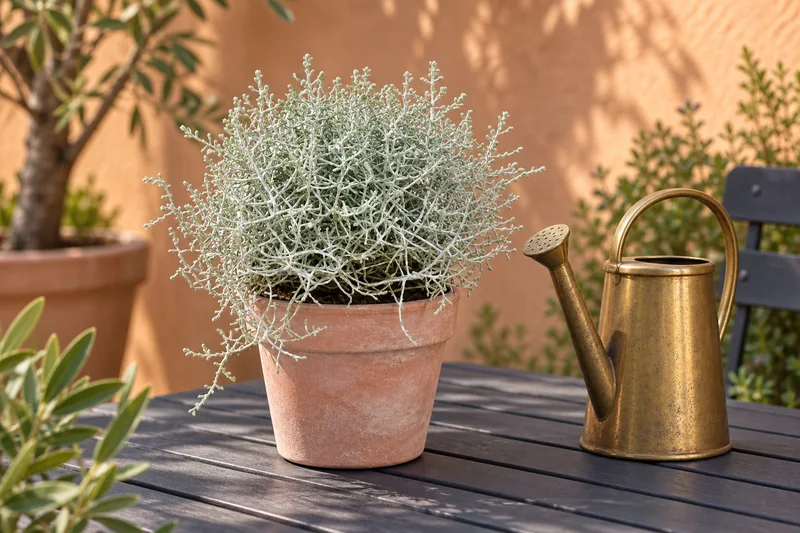
This plant at Exotenherz
Check the shop offer for current availability, price and what is included.
Link to the offer in German. Check the shop for the current price, availability and delivery contents.
Your care table
| Topic | What to do | Why it helps |
|---|---|---|
| Light | Sunny to partly shaded outdoors. | Heavy shade can lengthen growth. |
| Water | Supply the root ball according to need and remove surplus. | Neither let it dry completely nor keep it constantly wet. |
| Soil | Well-drained container compost or garden soil. | Persistent wetness encourages root and stem rot. |
| Fertiliser | Sparingly following product instructions for longer cultivation. | Heavy feeding is not required for decorative foliage. |
| Winter | Keep the small potted offer bright, cool and frost-free. | Regional frost tolerance is no reliable container guarantee. |
| Care | Remove dead leaves and old flower stems. | An airy tidy structure makes observation easier. |
| Checks | Watch for slugs, rusty spots and soft areas. | Check position and wetness first when problems occur. |
| Handling | Wear gloves and prevent ingestion. | Ingestion is toxic; skin irritation is possible. |
Check the compost and pot weight. The care table explains how far the compost may dry.
Water only when needed. The water should reach the root ball without spilling over the rim.
Remove surplus water from the saucer or cachepot. Then return the plant to a suitable position.
Leaves take the leading role
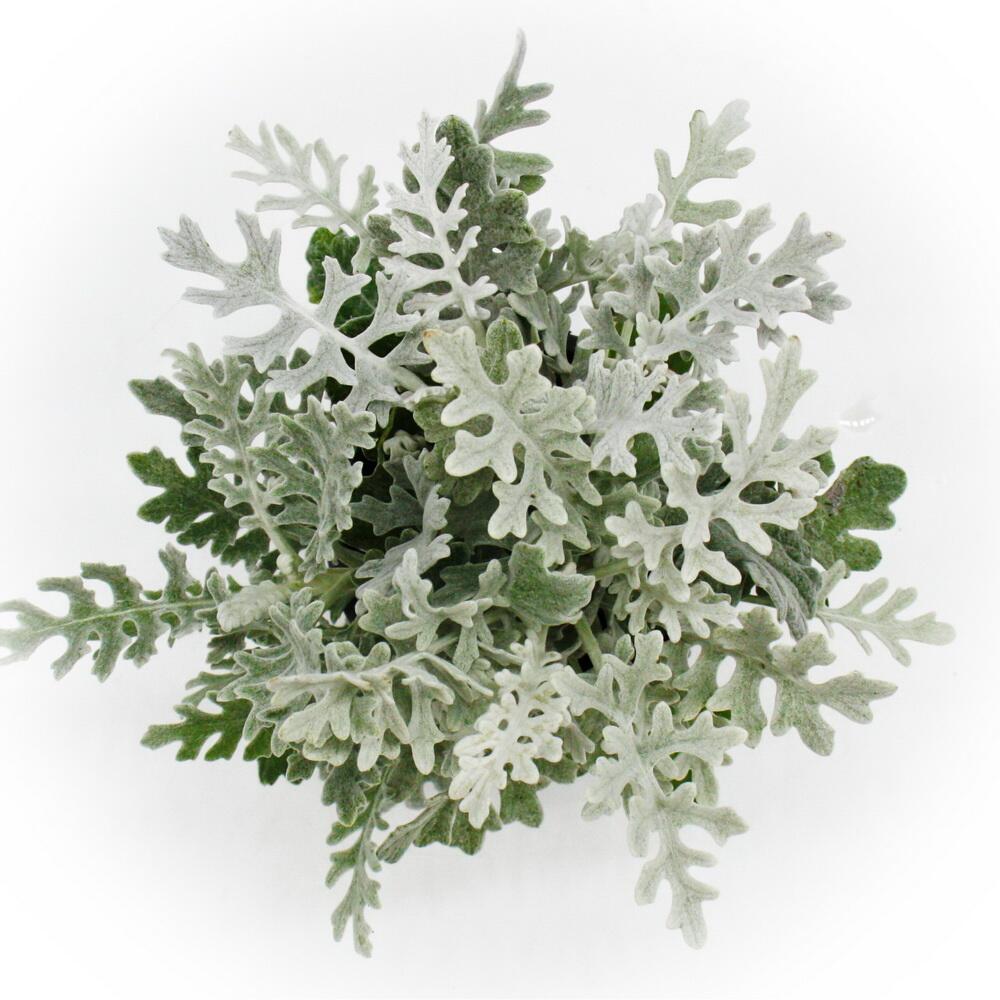
Jacobaea maritima is a foliage plant in the daisy family. The names Senecio cineraria and Senecio maritima remain common in trade. Its velvety impression comes from the fine hairs on its lobed leaves. Among dark green, red or violet, the silver creates a calm pause. Older plants may form yellowish flower heads. The young specimen presented here is used mainly for its foliage. It is not a kitchen plant and does not belong among edible herbs.
Small size, clear contrast
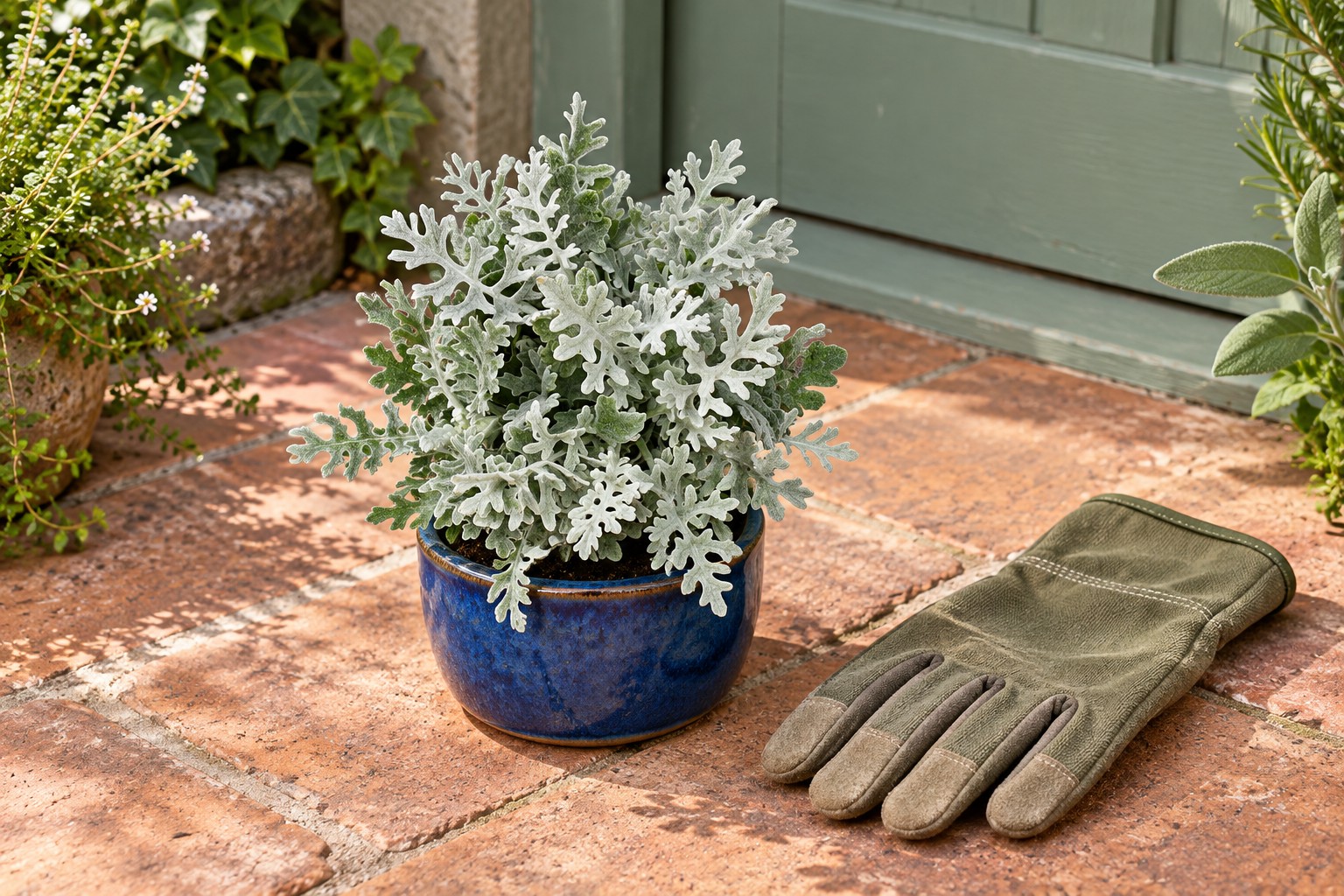
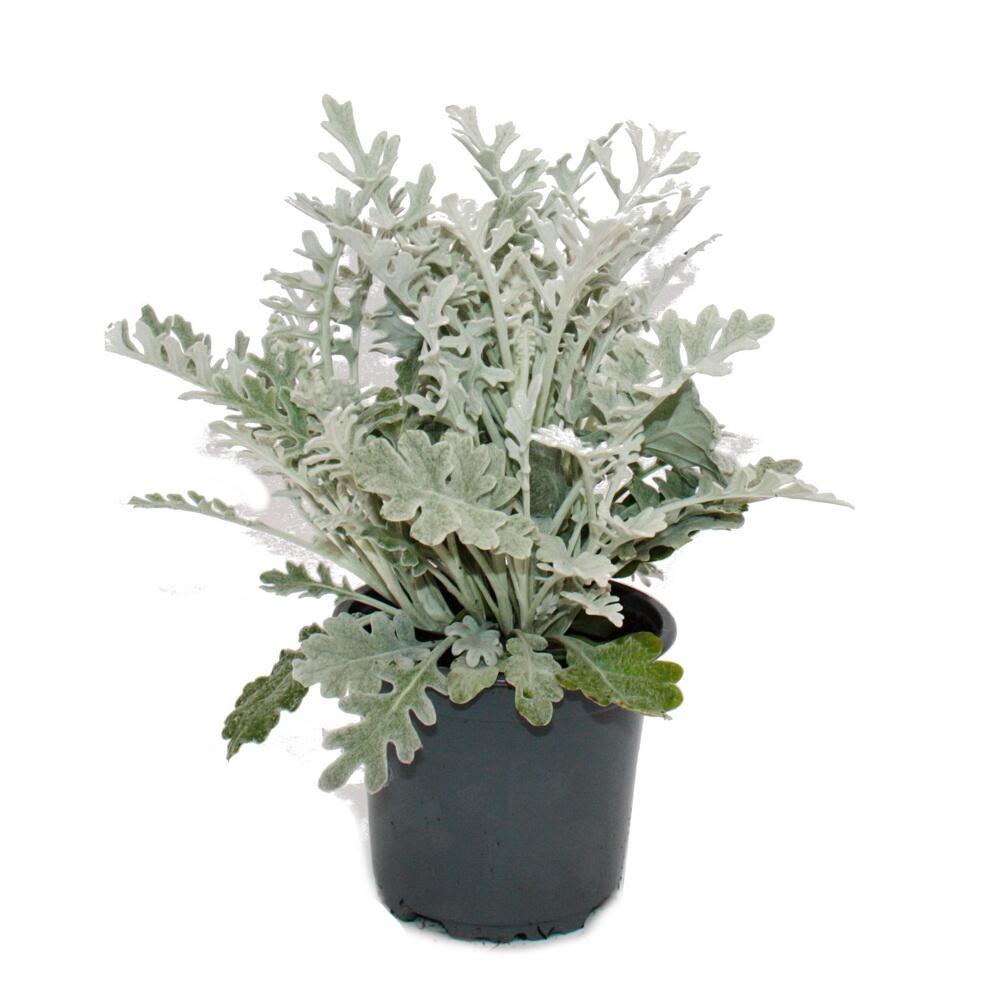
The offered plant comes in an 11 cm pot at about 15 cm overall height. Its fine patterning is especially rewarding to view closely. A dark or colourful outer pot strengthens the contrast, provided excess water can drain away. In mixed bowls, leaves should retain room and not disappear beneath larger companions. The scene shows one possible arrangement; the container and glove are not included in delivery. Leaf colour varies with age and natural hair coverage, and not every leaf looks equally white.
Sun helps dense growth
A bright sunny to partly shaded outdoor position suits its Mediterranean character. In heavy shade, shoots may stretch and the plant looks looser. Choose well-drained soil and avoid permanently wet ground. In a container, free drainage matters as much as the mix itself. Gradually acclimatise newly purchased plants to very intense sun. Especially in summer, small containers dry faster than their pale surface suggests. A sheltered airy position makes care easier.
Water according to need and keep foliage dry
Check the root ball before watering. Soil may dry a little at the surface but should not dry completely in a small pot. Preferably water onto the compost and allow surplus to drain away. Constantly wet soil can encourage root and stem rot. Well-established plants cope with drier periods in borders better than freshly planted specimens. Adapt watering to establishment, weather and container size. A fixed weekly timetable is less useful than a brief regular check.
Multi-year cultivation needs a suitable winter position
The species can survive winters in mild regions, but that does not guarantee frost resistance for this small potted offer. For reliable continued cultivation, we recommend bright, cool, frost-free overwintering. Water less during this time as growth and evaporation decline, while still avoiding a completely dry root ball. Check for pests and dead leaves before bringing it in. Healthy new growth in spring determines subsequent shaping care. Not every seasonal autumn bowl can remain unchanged as a permanent winter position.
Keep it tidy and handle thoughtfully
Remove dead leaves and spent flower stems when needed. For longer container cultivation, feed sparingly according to fertiliser instructions; heavy nutrient applications are not needed for the silver effect. Slugs may damage young parts, while rusty spots or soft shoots need closer investigation. Dusty miller is toxic if ingested by people and animals. Wear gloves when pruning or handling intensively, since skin irritation is possible. Position it so curious children and pets cannot nibble it.
One plant, several views
Good to know
Is “Silberblatt” the same plant as Lunaria?
No. The German name is used for different plants. Here it refers to Jacobaea maritima with silvery felted foliage.
Can I overwinter it outside?
That is sometimes possible in mild positions. For the small potted offer, a bright, cool, frost-free position is the more reliable recommendation.
Is the plant edible?
No. It is toxic if ingested and should be eaten neither by people nor by pets.
Why is my dusty miller growing so long?
Too little light can encourage loose, stretched growth. Choose a brighter outdoor position and check other causes such as excessive feeding.
Sources and editorial note
Sources checked: 15 September 2026. Product information and delivery contents follow the linked shop offer. Care has been checked against the stated specialist sources and remains subject to plant condition, position and season.