This plant at Exotenherz
Check the shop offer for current availability, price and what is included.
Product details, availability and delivery information are provided in the shop offer.
Your care table
| Topic | What to do | Why it helps |
|---|---|---|
| Light | Very bright; increase sunlight carefully. | Good light supports colour and shape. |
| Watering | After the root ball has dried. | The broad leaves store water. |
| Drainage | Remove residual water. | Persistently damp leaf bases and roots are at risk. |
| Compost | Loose and free-draining. | Heavy compost dries too slowly. |
| Leaves | Protect the coating; do not polish. | The matt surface belongs to the plant. |
| Fertiliser | Moderately during growth, following the label. | Overfeeding is unnecessary. |
| Winter | Bright and frost-free; water less. | Cold and wet are an unfavourable combination. |
| Inspection | Observe leaf bases and side shoots. | Distinguish ageing, new growth and rot. |
Check the compost and pot weight. The care table explains how far the compost may dry.
Water only when needed. The water should reach the root ball without spilling over the rim.
Remove surplus water from the saucer or cachepot. Then return the plant to a suitable position.
Broad leaves instead of small flower clusters
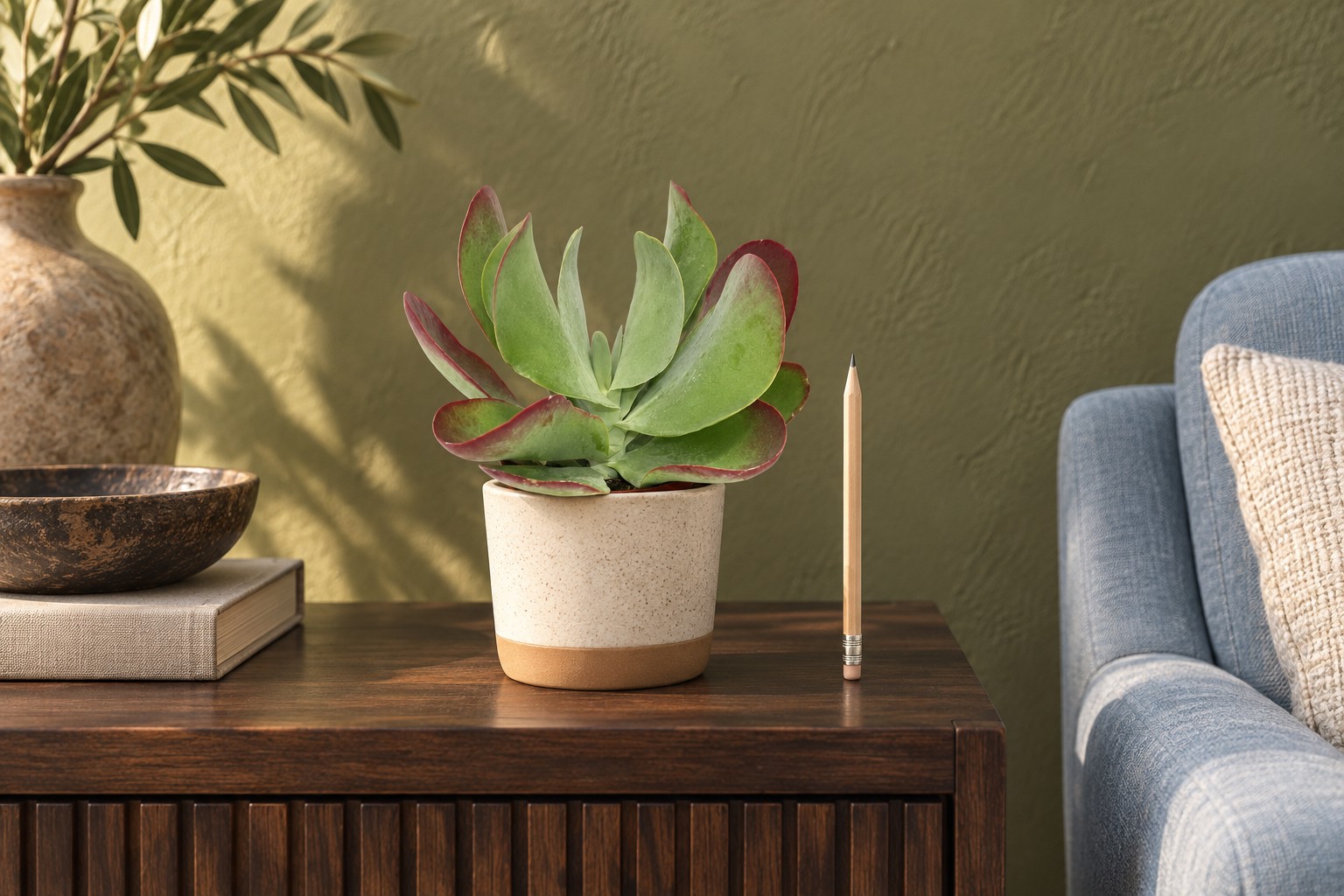
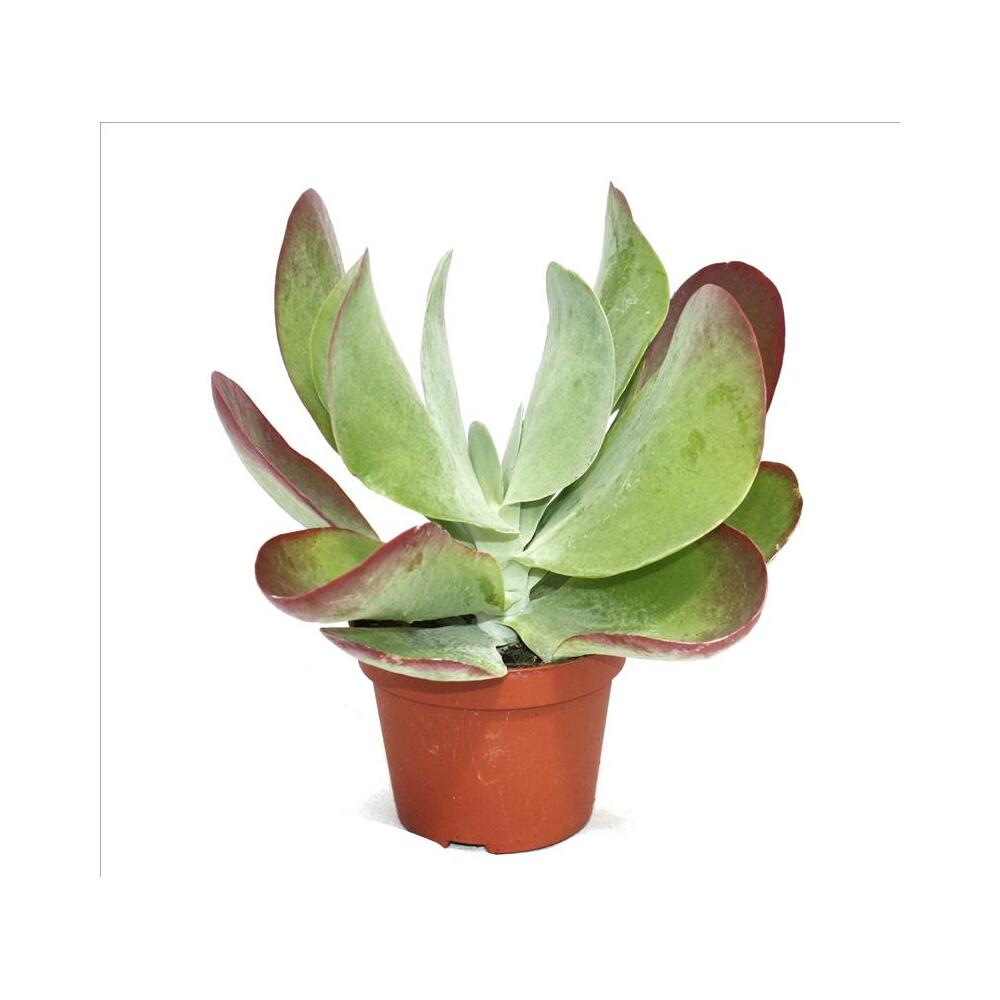
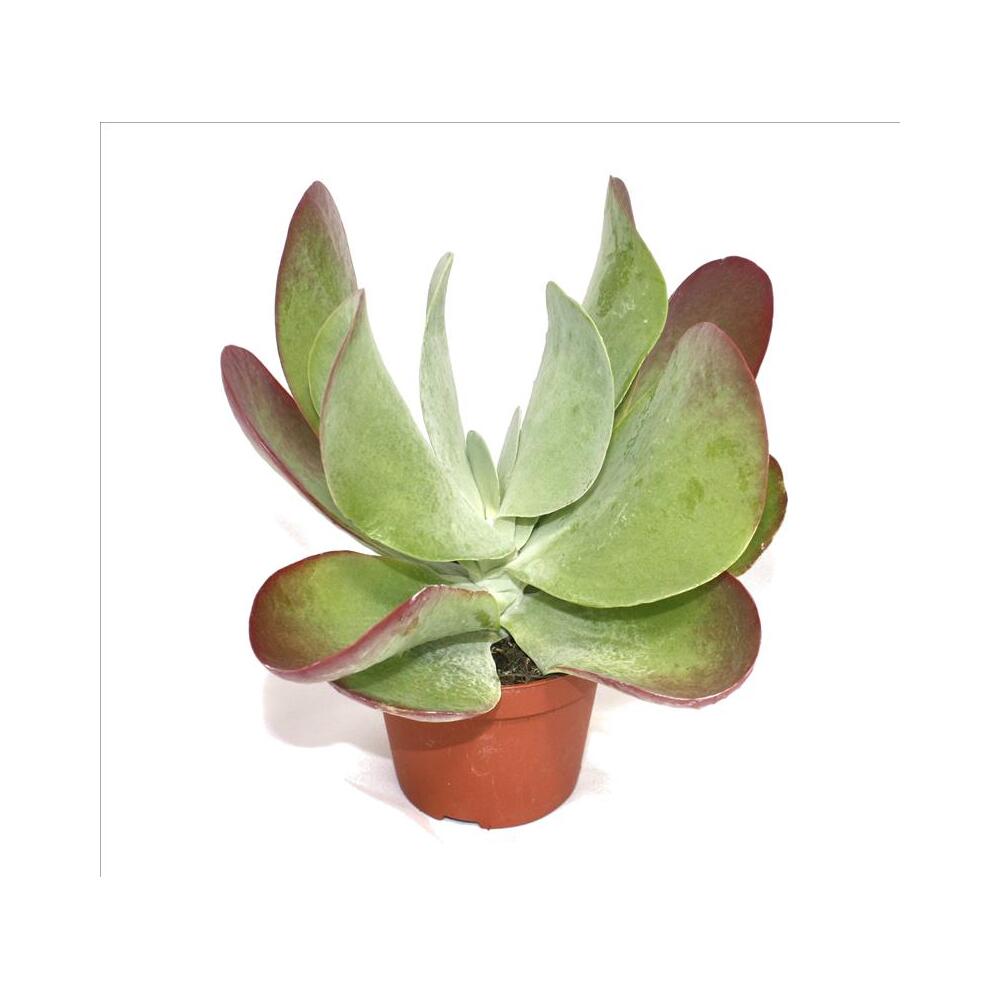
This kalanchoe looks different from the classic flowering kalanchoe. Its large fleshy leaves stand upright and form an open rosette. Red edges stand out against the matt green surface. The shop lists a 10.5 cm pot and approximately 20–25 cm total height. The scene shows this young size rather than a mature tall flower stem. Different leaf positions and colour intensities are normal in living plants.
Explain the name without hasty renaming
The shop lists Red Lips under Kalanchoe thyrsiflora. The RHS also lists a Red Lips entry under this species, associated with the cultivar name Ubilips. This additional cultivar code is not confirmed in the shop offer. Kalanchoe luciae is often confused with thyrsiflora; leaf colour alone is therefore insufficient for a certain renaming. This portrait stays with the documented offer and describes the visible paddle shape. Both botanical backgrounds belong to the Crassulaceae family. The German name Wüstenkohl is merely an image for the shape, not a recommendation to eat it.
Light supports the red edge
A very bright position helps compact structure and natural colouring. After protected growing conditions, increase sunshine gradually. A sudden change can cause burns, particularly behind hot glass. The plant does not need to be artificially dried out or chilled to show red edges. A summer position outdoors sheltered from rain is possible while nights remain warm. In a dark room, colouring may be weaker and new growth less compact.
Give water at suitable intervals
Allow the compost to dry between waterings. Then water evenly and remove residual water. A rigid weekly rhythm is not necessary. In warmth and good light, the plant uses more than in cool winter quarters. The surface alone can mislead, so also consider pot weight and moisture inside the root ball. Direct water onto the compost where possible. There should be no persistent wetness between closely spaced leaf bases. Do not routinely mist the leaves.
Treat roots and leaf surfaces gently
Do not alter the matt surface with leaf shine or vigorous wiping. When repotting, work with the root ball and do not use broad leaves as levers. Use loose, free-draining succulent compost in a pot with a drainage hole. Provide a little more root space only when needed; an oversized container stays moist for a long time. A few moderate nutrient applications following the label are sufficient during growth. Carefully remove completely dry lower leaves and leave firm green ones in place.
Manage winter and signs of ageing correctly
Keep it bright and frost-free, preferably above approximately 10 °C for indoor conditions that are easy to monitor. Water less during cool rest. A mature flowering rosette may decline later while side shoots carry the plant on; look for new rosettes before discarding it hastily. Flowers are not promised for this young offer. Soft, dark leaf bases in wet compost require a rot inspection. Individual dry lower leaves may instead be part of its natural development. Watch for mealybugs between leaf bases.
One plant, several views
Good to know
Can this plant, called Wüstenkohl, be eaten?
No. It is an ornamental plant, not a cabbage species.
Is a greener plant incorrect?
Light and cultivation influence the amount of red. Less red alone does not prove that it is the wrong plant.
Is the delivered specimen already flowering?
Flowers or buds are not promised here. The offer is shown as a young foliage plant.
Should I chill the plant to make it red?
No. Good light is useful; deliberate cold stress is not part of the recommended care.
Sources and editorial note
- Product and delivery contents: Exotenherz
- Royal Horticultural Society: plant and care information
- SANBI PlantZAfrica: plant profile and cultivation
Sources checked: 15 September 2026. Product information and the contents of delivery follow the linked shop offer. Care advice was checked against the cited specialist sources and should still be adapted to the plant’s condition, position and season.