This plant at Exotenherz
Check the shop offer for current availability, price and what is included.
Check the selected shop offer for price, availability and delivery contents.
Your care table
| Topic | What to do | Why it helps |
|---|---|---|
| Light | Position very brightly and accustom gradually to direct sun. | A position too dark encourages long weak stems. |
| Water | Let the root ball dry well between waterings. | Fleshy leaves store water; persistent wetness stresses roots. |
| Drainage | Water slowly onto soil, then allow complete drainage. | Water does not belong as a reserve in a closed cachepot. |
| Soil | Use permeable succulent soil with mineral structure. | The small pot must let air reach roots. |
| Feeding | During visible growth, feed sparingly according to the label. | Slow growth needs no heavy continuous feeding. |
| Repotting | Choose a slightly larger pot only once roots densely fill the ball. | A large reserve pot retains unnecessary damp soil. |
| Leaf care | Preserve the hairs; neither polish nor mist constantly. | The velvety surface is a natural feature. |
| Winter | Keep very bright and frost-free; water much less often during little growth. | Short days and a cooler position reduce water use. |
Check the compost and pot weight. The care table explains how far the compost may dry.
Water only when needed. The water should reach the root ball without spilling over the rim.
Remove surplus water from the saucer or cachepot. Then return the plant to a suitable position.
Velvet to look at
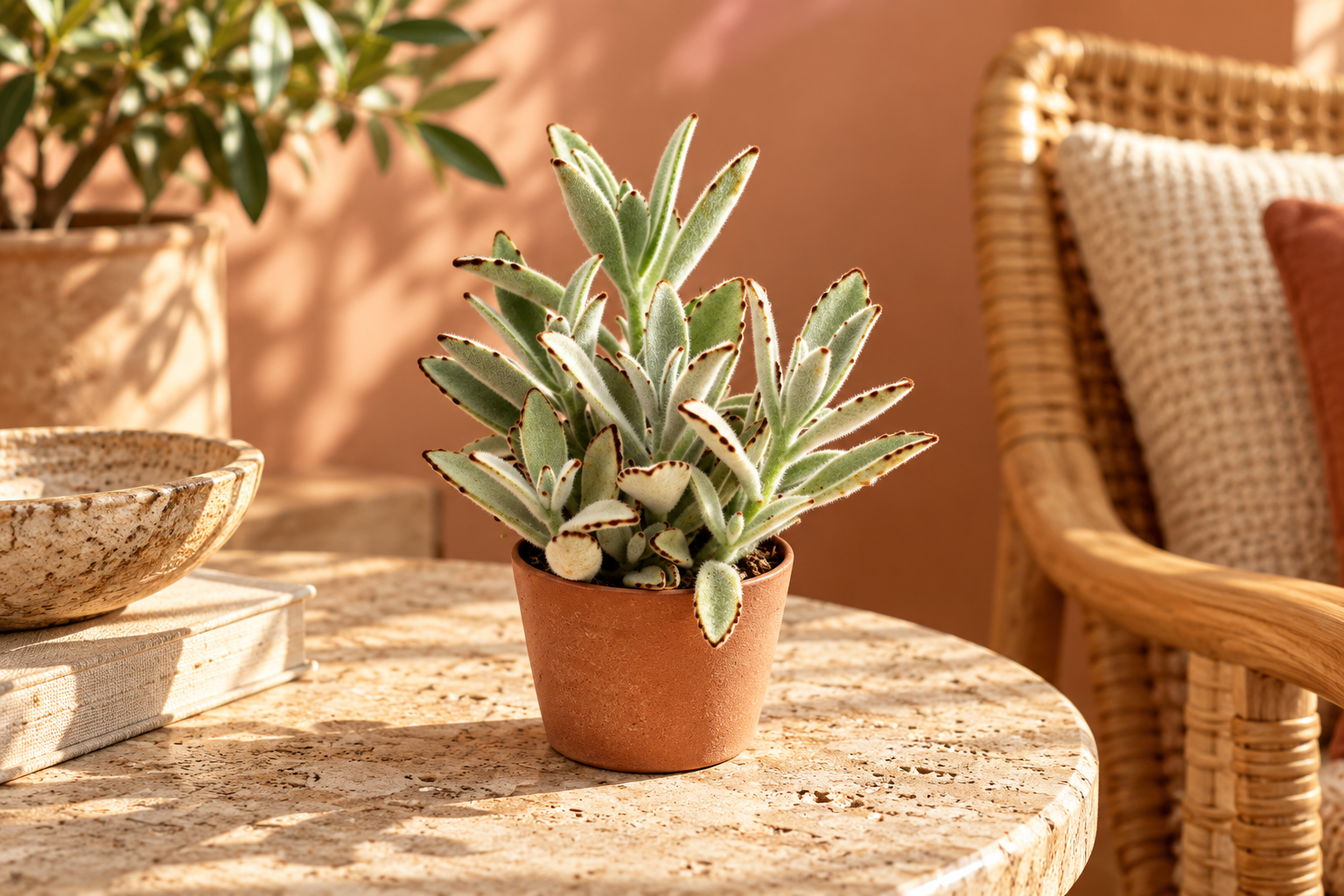
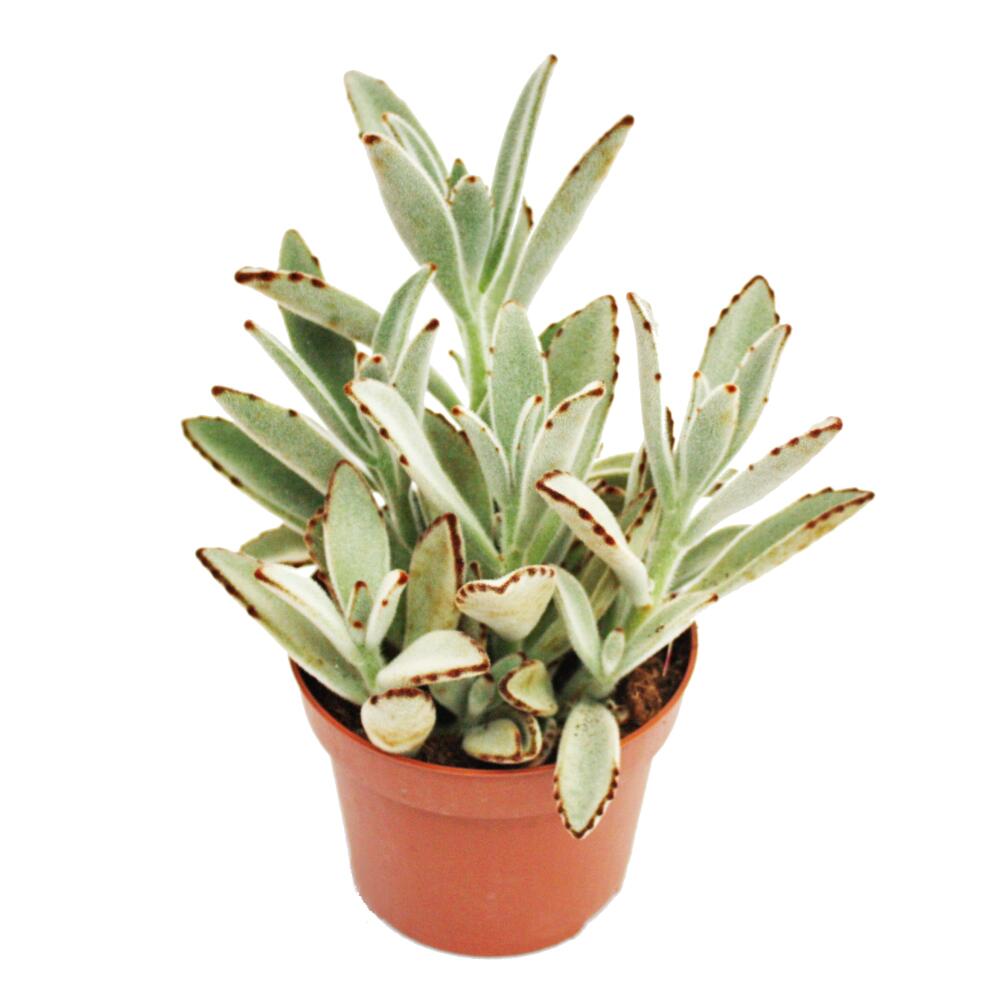
Panda plant invites a closer look. Its elongated fleshy leaves are densely covered in fine light hairs, with brown dots and marks along the upper edges. In soft side light, this creates an appealing contrast between silver and dark tips. We like placing the small plant on a bright side table where it does not disappear between larger leaves. Its unusual German name, meaning little rabbit ears, describes its appearance; the hairs are not dust and the regular brown edge markings are not a dried leaf that needs cutting away.
The small supplied plant may develop
In the linked offer, Kalanchoe tomentosa sits in a 5.5 cm pot and is about 6 to 8 cm tall including the pot. This begins a small plant portrait, not a finished large shrub. The species is perennial and grows slowly but can develop significantly more height and branching over years. A low shelf will therefore need reassessment eventually. The original image helps place the young form in context; the scene’s decorative cachepot shows a styling idea. Flowers are not the focus here and are not guaranteed on the young plant.
Plenty of light, more sun carefully
A very bright position supports short stem gaps and firm leaves. Directly after shipping or moving from protected cultivation, we do not put panda plant immediately behind hot south-facing glass. Increase sunshine hours gradually and observe the illuminated leaf surfaces. In strong summer heat, a light curtain can soften the strongest hours. A well-lit place beside the window is better than a dark corner beneath a shelf. If new stems grow conspicuously long and lean strongly towards light, first improve the position rather than merely supplying more fertiliser.
Dry phases really belong
Before watering, we check more than the surface. A light inner pot and largely dried soil show that water is needed again. Then water slowly onto the soil, supply the root ball and let all excess drain. In the tiny pot, water accidentally collected in the cachepot is easy to overlook. Thick leaves provide a reserve, but roots tolerate no persistent wetness. Soil may therefore become distinctly drier between waterings than for a fern. A fixed weekday accounts for neither sun nor temperature and is no good guide here.
Roots like a manageable pot
Airy succulent soil with mineral components makes drying easier. When moving it later, give only a little more room and retain the planting depth. Do not heap new soil high against the stem. As long as roots do not strongly fill the ball, the plant needs no large reserve container. During visible growth, feed sparingly according to the fertiliser label and account for pre-fertilised soil. Healthy compact stems do not need regular shortening. If individual branches grow out of shape over time, selective work with clean tools is possible later.
Leave the soft surface in peace
We handle foliage gently and avoid leaf shine or strong rubbing. Daily misting is not necessary care for this succulent either. Check leaf bases and stem forks for small cotton-like deposits different from the even natural hairs. New soft or glassy areas also do not match healthy firm leaves and call for checks of soil and drainage. Wrinkled leaves may indicate water shortage; nevertheless, do not water again if the root ball is wet. First look at actual conditions and change only the recognisable cause.
A quiet winter position
Good daylight and protection from frost still matter in winter. With slower growth and cooler surroundings, the root ball stays damp longer, so watering intervals increase. Do not try to compensate for dark weeks through extra fertiliser. The plant is intended for looking at and belongs out of reach of children or pets that might nibble leaves. For our care, the best measure is a new firmly unfolded stem with its typical velvety markings. The little panda plant then remains an individual character among other plants.
One plant, several views

Good to know
Are brown dots along the edge damage?
The typical brown edge markings belong to the plant. Compare newly appearing soft, glassy or irregularly dry areas with care conditions.
Must I wipe off the silver coating?
No. These are natural fine hairs. Strong rubbing or leaf shine damages the surface.
Can it stay as damp as a fern?
No. The root ball should dry well between waterings. Persistent moisture and water in the cachepot are unsuitable.
Does it remain just 6 to 8 cm tall?
This is delivery size including the pot. The perennial grows slowly onwards and may branch over the years.
Does it need a larger pot immediately?
Only if roots clearly fill the existing ball. A slightly larger pot makes further care easier.
May a pet eat the leaves?
No. Kalanchoe tomentosa must not be nibbled or eaten. Choose a suitably protected position.
Sources and editorial note
- Exotenherz: offer and original images (02.10.2026)
- RHS: Kalanchoe tomentosa (02.10.2026)
- NC State Extension: Panda Plant (02.10.2026)
Shop offer, article number, GTIN, availability and original images checked directly on 02.10.2026. Specialist sources read directly. No fixed flowering time adopted: sources differ; indoor flowering rare. Non-consumption warning supported by NC State. Detail image shows hairs, no invented flower.