This plant at Exotenherz
Check the shop offer for current availability, price and what is included.
Check the shop for the price, current availability and what is included.
Your care table
| Topic | What to do | Why it helps |
|---|---|---|
| Light | Bright filtered light without hot direct sun. | Strong sun may damage textured leaves. |
| Water | Evenly slightly moist, with a little drying only at the top. | Complete drying stresses fine roots. |
| Compost | Humus-rich, moisture-retentive and airy. | Persistently wet, compacted compost displaces oxygen. |
| Drainage | Pot with drainage holes, no water remaining in the outer pot. | Moist is not the same as waterlogged. |
| Temperature | Steadily warm without cold draughts. | Strong fluctuations make acclimatisation harder. |
| Humidity | Combine higher humidity with ventilation. | A cabinet needs air exchange too. |
| Feed | Very moderately during active growth according to the product. | The slow grower does not need strong reserve feeding. |
| Leaves | Do not press, polish or frequently touch. | Pressure marks and damaged raised areas stay visible. |
Check the compost and pot weight. The care table explains how far the compost may dry.
Water only when needed. The water should reach the root ball without spilling over the rim.
Remove surplus water from the saucer or cachepot. Then return the plant to a suitable position.
Leaf relief that does not need smoothing
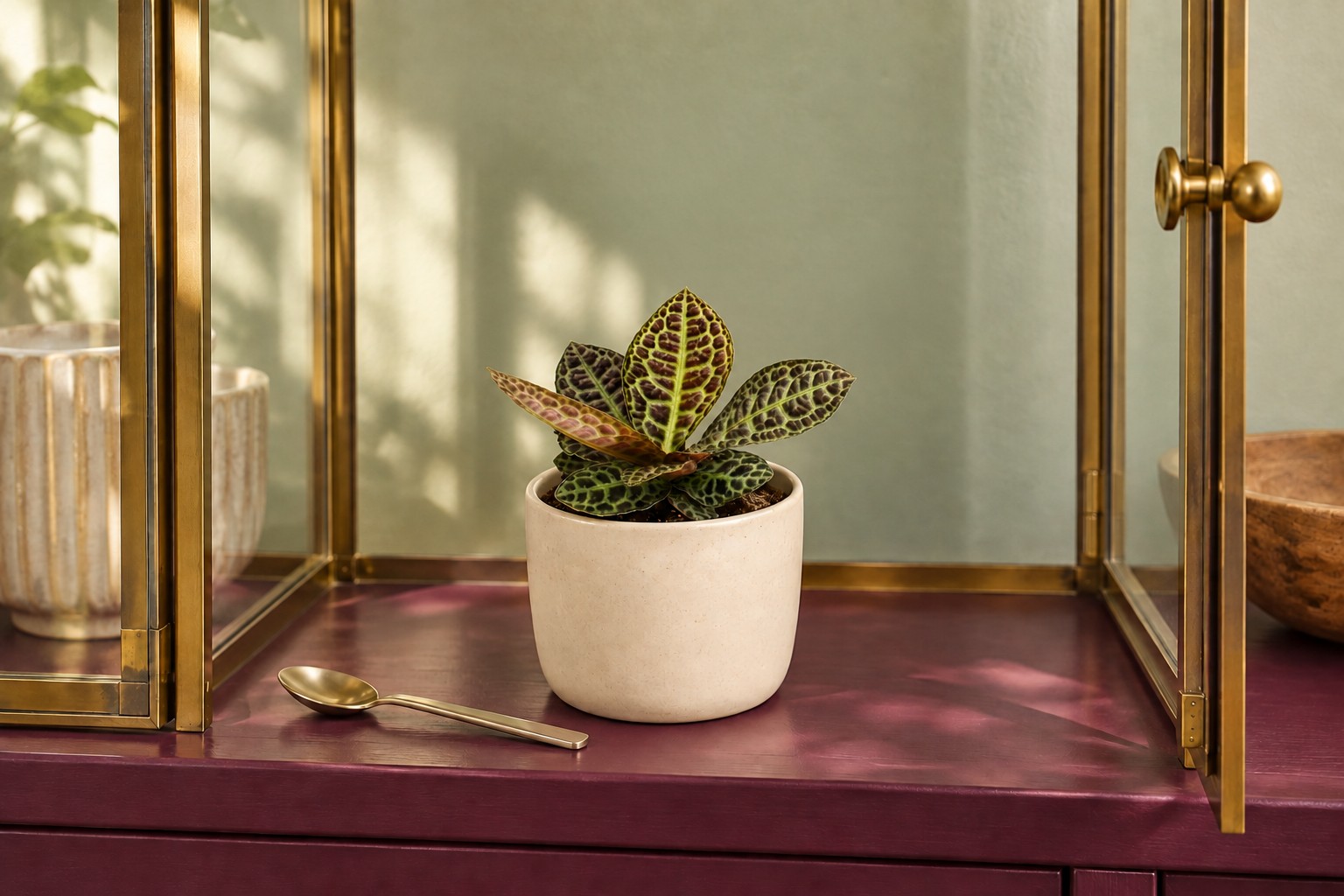
Oval leaves have dark fields bordered by a clearly paler network of veins. The surface between veins is raised. This three-dimensional impression resembles a tortoiseshell and explains the name Turtle Back. The plant belongs to the primrose family. The shop names it Labisia beccarii, while specialist trade sometimes more cautiously lists the form as Labisia sp. We therefore do not adopt conclusive species identification solely from the trade name. The natural structure is not pest damage and should not be changed by rubbing or polishing.
The offered young plant initially stays small
The offer states a 12 cm pot and around 15 to 20 cm overall height. It is a compact young plant with a few striking leaf surfaces. A large tropical ground plant is not guaranteed. A suitably equipped small cabinet allows close observation without frequent touching. The plant needs enough distance from glass and other objects. New leaves should unfold freely. Cabinet, decorative pot and technical equipment serve as design examples in the scene and are not automatically part of plant delivery.
Filtered light and a stable warm environment
A bright place without harsh direct sun suits this tropical understorey plant. Hot sun may damage leaf surfaces even if the vein network looks particularly contrasting in a photograph. Steady warmth is better than large daily fluctuations. Avoid cold draughts and a cooling surface beneath the pot. Growth is relatively slow, so a healthy new leaf is a good achievement. More light does not always mean more growth if humidity or root supplies are unsuitable simultaneously. Consider the position as a whole instead of increasing individual conditions separately.
Higher humidity still needs air exchange
Labisia Turtle Back is more demanding in very dry indoor air than many ordinary foliage plants. A plant cabinet or suitable terrarium may help keep higher humidity stable. Permanently misted panes and stagnant damp air are not the aim, however. Arrange ventilation for regular air exchange without directing cold or dry airflow at the small plant. A bathroom is suitable only with appropriate light and temperature. Occasional isolated spraying does not create reliably sustained higher humidity.
Combine moisture reserves with air in compost
The root ball should remain lightly and evenly moist, not dry completely. Before watering, let only the top layer dry a little and check the condition below. A loose humus-rich mix with enough structure retains moisture while supplying air to fine roots. Water must be able to drain out of the pot. Avoid a wet reserve in the outer pot. During active growth, feed very moderately according to suitable product instructions; hold back without growth. Repot gently only when needed so roots are not unnecessarily disturbed often.
Protect new leaves and inspect changes early
Young growth may initially appear redder and later darken. Colour and vein patterns vary individually. When moving, grasp the pot rather than leaves where possible; pressure marks on the raised surface stay visible. Dry brown areas after stronger sun, soft leaves in wet compost or unusual deposits call for targeted examination. Check leaf undersides and the base regularly for pests too. Remove damaged parts only once it is clear they cannot continue healthily. This ornamental plant is not recommended as food or medicinal plant; reliable safety for nibbling pets is not established.
One plant, several views
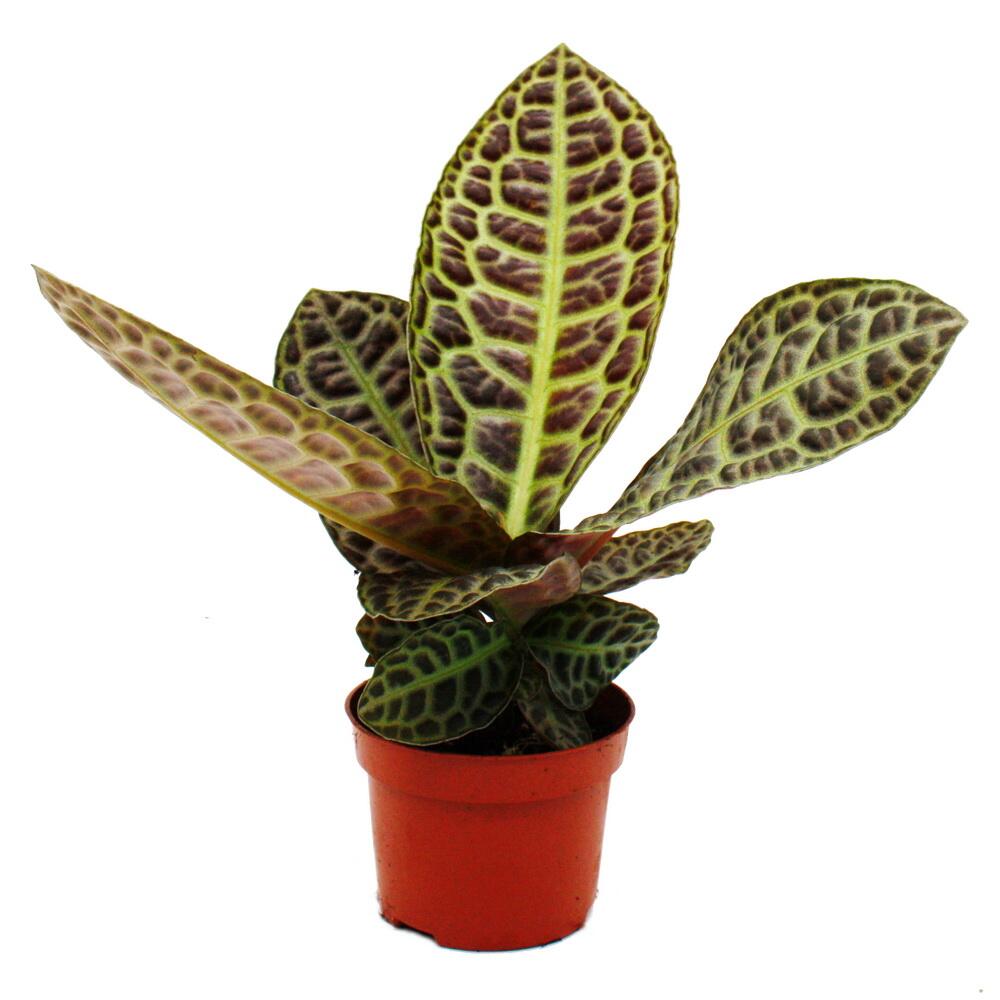
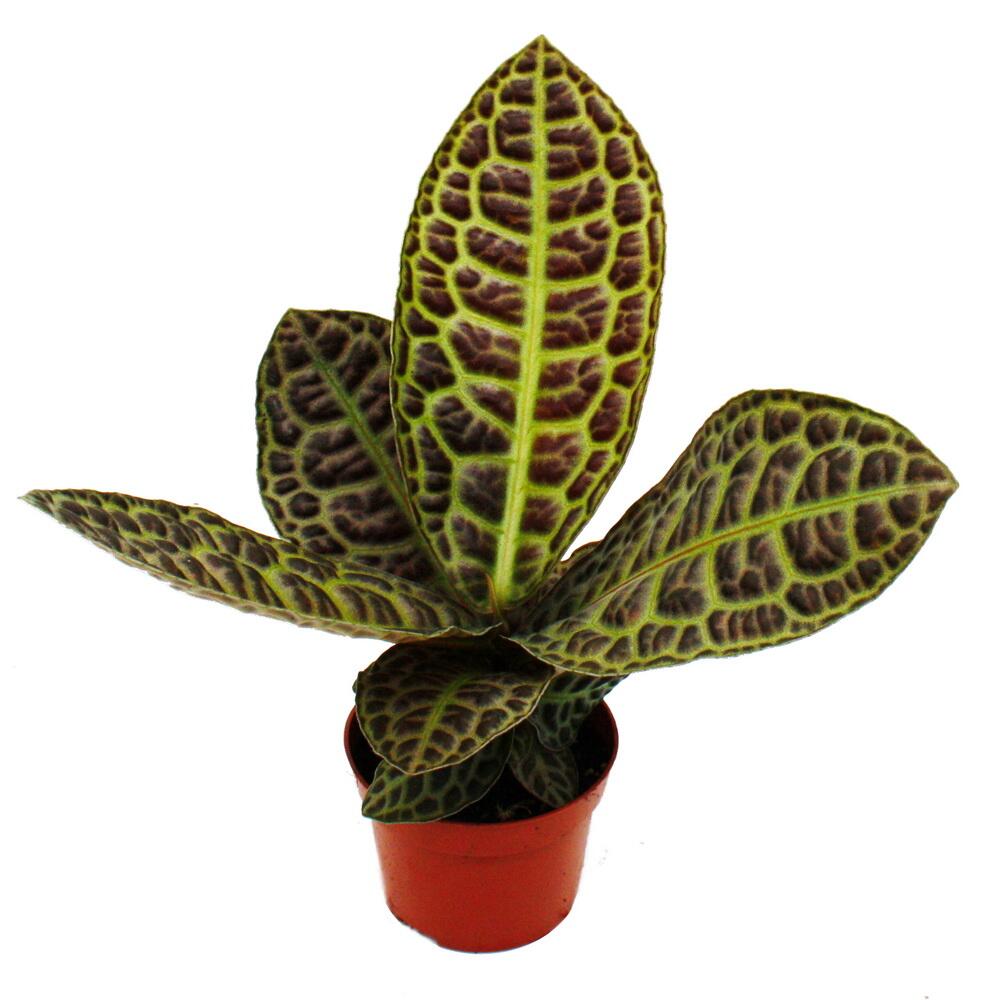
Good to know
Is the species definitely Labisia beccarii?
The shop uses that name. As Turtle Back is also traded without certain species identification, the portrait retains Labisia sp. Turtle Back.
Must it have a cabinet?
A cabinet is one way to stabilise warmth and higher humidity. Actual conditions including ventilation matter. Very dry indoor air is demanding.
Are raised leaf fields pest damage?
The relief pattern belongs to Turtle Back. New soft, brown or coated areas need separate inspection.
Can it permanently stand in water?
No. The root ball should stay lightly moist but receive air. Water must drain and not constantly collect in the outer pot.
Sources and editorial note
- Product and delivery contents: Exotenherz
- The Tropic Gardener: plant and cultivation information
- Foliage Factory: trade identification and growing advice
- Royal Horticultural Society: plant and care information
Sources checked: 15 September 2026. Product information and the contents of delivery follow the linked shop offer. Care advice was checked against the cited specialist sources and should still be adapted to the plant’s condition, position and season.