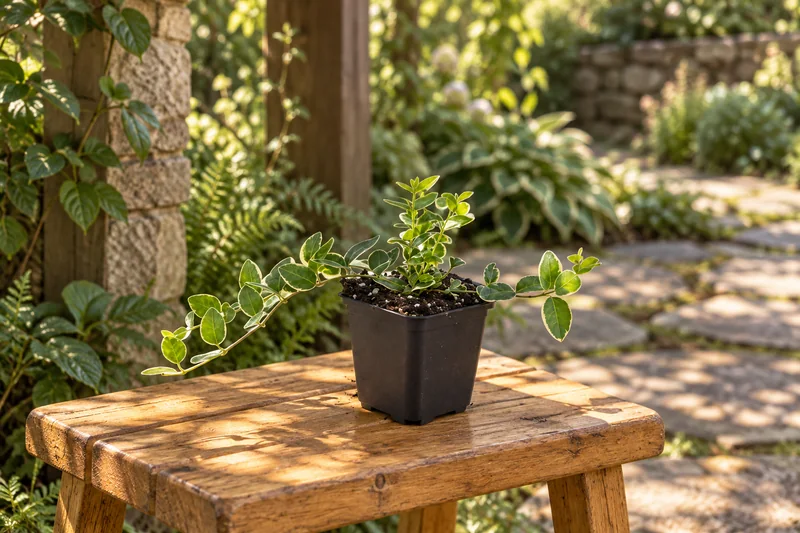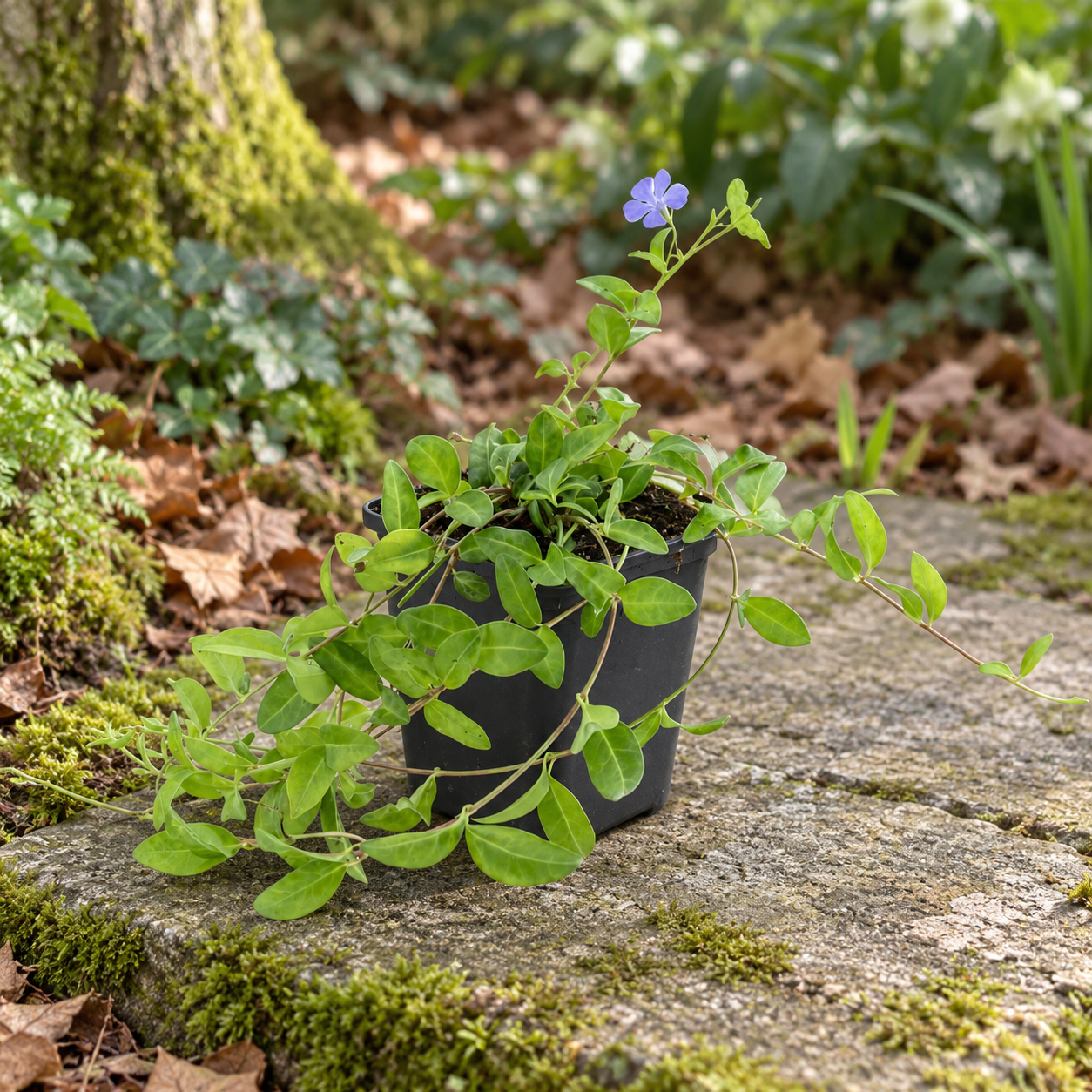
This plant at Exotenherz
Check the shop offer for current availability, price and what is included.
Check the shop for the current price, availability and offer contents.
Your care table
| Topic | What to do | Why it helps |
|---|---|---|
| Position | Choose partial shade or shade; assess sunny sites by moisture. | Root competition under woody plants can dry even a cool spot. |
| Arrival | Check rootball and carefully untangle long stems. | Fine stems should not carry root soil’s weight. |
| Soil | Prepare humus-rich permeable soil, avoiding constant wetness. | Roots need moisture as well as air. |
| Planting | Set at the previous level, lay stems loosely and water in. | Good soil contact helps a young plant start. |
| Spacing | Use 25–30 cm as group guidance and keep edges accessible. | A low carpet may occupy large areas sideways. |
| Water | Check directly in the former pot rootball; inspect containers regularly. | Moisture beside it does not reliably describe its interior. |
| Feeding | In good soil, feed sparingly according to need. | More fertiliser replaces neither water nor suitable root space. |
| Boundaries | Completely remove unwanted rooted stems. | An already rooted detached piece may keep growing. |
| Winter | Protect containers and check moisture in frost-free weather. | Evergreen leaves may lose water outside flowering time too. |
For young plants, feel the soil directly at the root ball. The surface and deeper soil may have different moisture levels.
Water thoroughly after planting; later, water according to the soil, weather and establishment rather than a fixed calendar.
Avoid standing water. For plants in containers, also check that water runs out of the drainage hole.
Blue flowers and two directions of growth
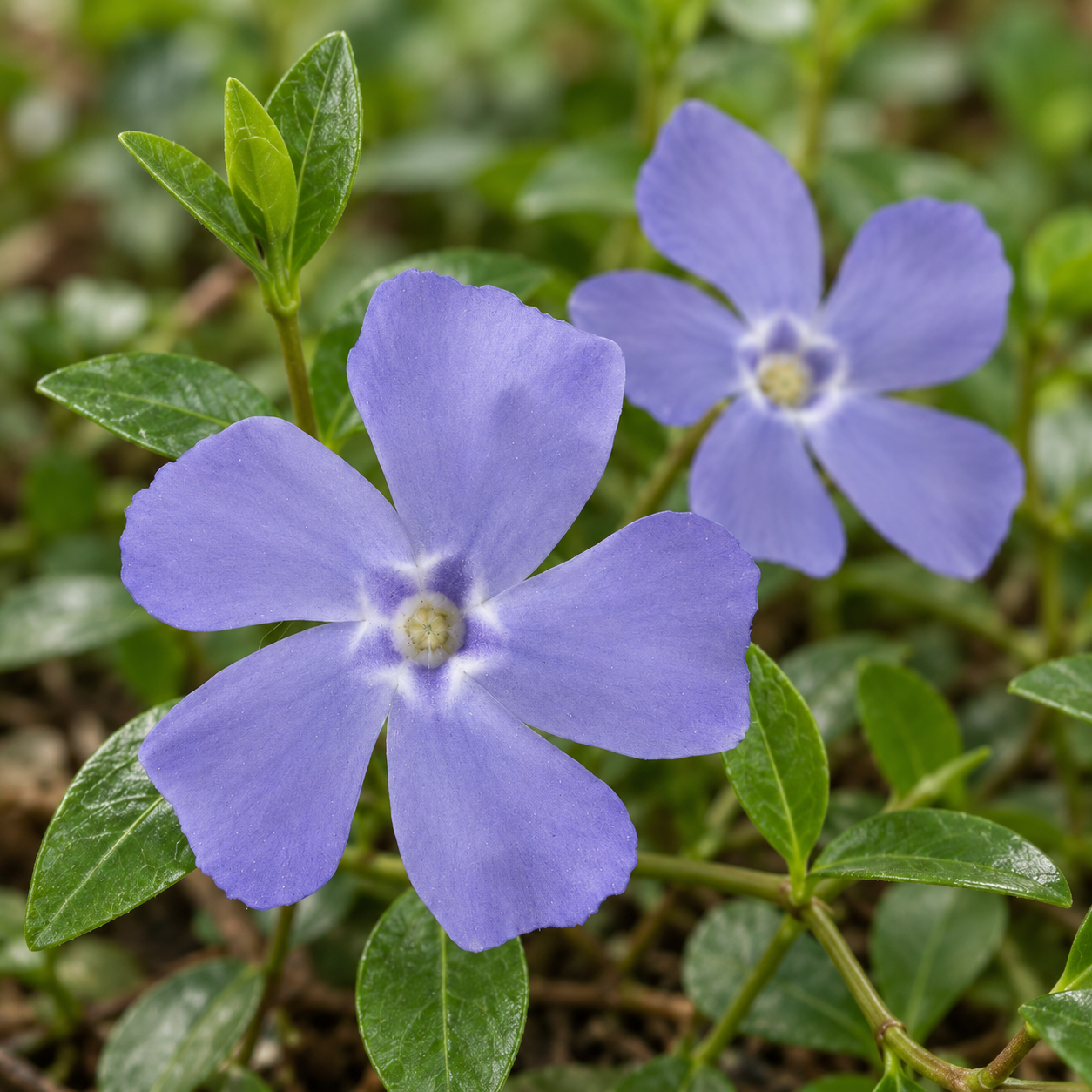
Lesser periwinkle forms a low green stand with thin stems reaching far sideways. Small oval leaves sit in pairs, with smooth edges and glossy surfaces. Flowering young stems rise slightly. Simple blue to blue-violet flowers have five slightly twisted-looking lobes and a small pale centre. Vinca minor is the botanical species under which the current selection is offered. Main flowering is in spring; occasional later flowers are possible. A dense green carpet may remain in deep shade while producing fewer flowers there.
Stems are longer than the small root space
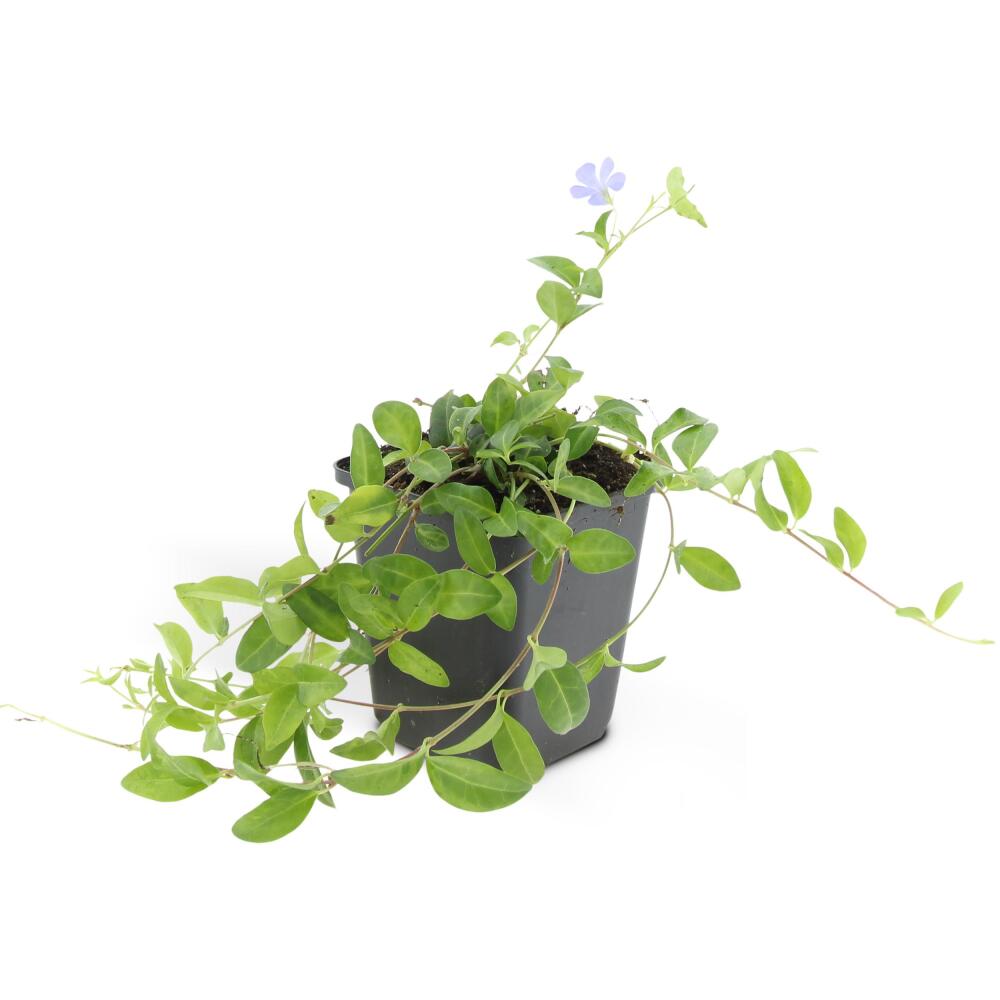
The current selection includes single plants and sets of six or twelve, each in a 9 cm pot. Stated approximate total height of 10–25 cm includes the pot. Individual stems may extend significantly beyond it sideways. The clean original view shows this young structure with a few long stems and one flower. This state is an example, not a promise of flowers at delivery. Gently untangle stems after unpacking and check the rootball. Hold root soil when unpotting. A fine stem must not serve as a handle for the weight of soil. Only in the garden do new roots explore a larger area.
Assess shade and soil moisture separately
Partial shade and shade work well. Sun is also possible with sufficient moisture. Under woody plants their roots may strongly dry soil while air stays pleasantly cool. Humus-rich permeable soil with sufficient moisture makes starting easier. A continuously wet place is unsuitable. Observe the site through the day and check how much rain reaches it too. Sunny wind-exposed winter sites may affect evergreen leaves more. More light may improve the flower display; a suitable root zone matters just as much as brightness.
A continuous area develops gradually
The shop suggests approximately 25–30 cm spacing for groups. Lay out pots first, keeping path edges, neighbours and watering places accessible. Extra-deep planting does not close young gaps. Slowly moisten a dry rootball and set at its previous height in frost-free workable soil. Spring and early autumn make starting easier when there is neither strong heat nor constant wetness. Water well, bring soil into contact and lay long stems loosely. Before a dense area forms, watch unwanted plants between young specimens. Remove their roots carefully without pulling out fine periwinkle stems.
Check water at the rootball, not just beside it
During early establishment, check directly at the former pot position. If the rootball dries, slowly water thoroughly. Moist soil farther beside it does not reliably show supply inside. An older rooted stand withstands temporarily drier spells better. Long drought may still affect leaves, growth and flowers. Reduced later watering needs do not mean a maintenance-free area. In good humus-rich garden soil, feed sparingly as needed. For weak growth, check root competition, moisture and plant condition first. An outdoor container’s water supply remains limited; inspect regularly and avoid standing water.
Manage edges early and follow rooted stems
Lateral stems may root in soil and expand the stand. Where they leave the intended area, follow them to those roots and completely remove unwanted parts. Cutting the connection alone does not remove an already rooted segment. Watch small neighbouring perennials especially. Selectively thin very dense old areas; fresh stems may then become more visible. For a flower display, do not indiscriminately remove all healthy young stems. Healthy rooted parts can fill gaps. Such new planting again needs careful moisture care until new roots establish contact.
Watch evergreen stands in winter too
Leaves remain visible for many months, although individual old ones are replaced. Winter sun, dry wind and frozen soil may strain leaves. Give outdoor containers shelter with free drainage. Check moisture in frost-free weather; do not add water to frozen soil. Inspect larger brown or suddenly wilting areas together with stem bases and roots. Especially in continually wet soil, extra watering is no suitable first response. Selectively remove diseased or dead parts and seek specialist assessment if damage progresses. Wear gloves for planting and cutting; plant parts are not food.
One plant, several views
Good to know
Does lesser periwinkle stay permanently very small?
It stays low, but long lateral stems may cover large connected areas. An accessible boundary belongs in the plan.
Does it grow in deep shade?
A green stand is possible there, but flowering is often weaker. Also assess soil moisture and root competition.
Does the plant definitely arrive with blue flowers?
The original view shows an illustratively flowering young pot. Current delivery state may differ depending on cultivation and season.
What does 10–25 cm delivery height mean?
This approximate total height includes the 9 cm pot. Lateral stem length and later low carpet height must be distinguished.
Does lower water need mean no maintenance?
No. Check young plants during establishment, watch long droughts and keep monitoring boundary runners.
Is cutting along a path sufficient?
Stem parts already rooted outside remain. Remove them with their roots.
What should I do with brown winter leaves?
Check soil moisture, stems and new shoots. Individual weather marks do not automatically require a strong cutback of the whole healthy stand.
Sources and editorial note
- Exotenherz: parent offer, originals and delivery form (directly read 03.10.2026)
- Directly read specialist source vinca-tso (03.10.2026)
- Directly read specialist source vinca-ncsu (03.10.2026)
- Directly read specialist source vinca-morton (03.10.2026)
- Exotenherz: directly read 6-plant child offer (03.10.2026)
- Exotenherz: directly read 12-plant child offer (03.10.2026)
Current parent/child offers directly read publicly on 03.10.2026; unchanged HTML hashes and original files saved separately. Specialist sources directly read, clean original views actually opened. Delivery form and garden development separated. Shared page view and publication need Root acceptance.