This plant at Exotenherz
Check the shop offer for current availability, price and what is included.
Product and delivery details are given in the individual offer.
Your care table
| Topic | What to do | Why it helps |
|---|---|---|
| Arrival | Check every small ball for moisture and keep protected until planting. | Rain or a wet surface does not prove interior moisture. |
| Position | Choose sun to partial shade with humus-rich draining soil. | Water checks remain important on sunny slopes after planting. |
| Planting | Plant at previous pot depth in spring or autumn and water thoroughly. | Ball and garden soil need evenly moist contact. |
| Spacing | Around 45–50 cm as shop guidance; additionally plan edges and access. | Low branches develop a broad footprint over time. |
| Watering | Check ball and adjacent soil; water slowly at the base in dryness. | Established drought tolerance does not automatically apply to young plants. |
| Nutrients | Maintain humus-rich soil; additional feeding by soil need or product dosage. | Garden bed and limited container have different reserves. |
| Pruning | After flowering selectively reduce troublesome branches and edge overhangs. | Strong frequent cutting may reduce formation on older wood. |
| Spread | Control ground-rooted branches beyond the wanted surface. | A side shoot may form its own roots. |
| Winter and containers | Ensure drainage and inspect moisture on frost-free days. | Small containers react faster to frost, drying and soaking. |
For young plants, feel the soil directly at the root ball. The surface and deeper soil may have different moisture levels.
Water thoroughly after planting; later, water according to the soil, weather and establishment rather than a fixed calendar.
Avoid standing water. For plants in containers, also check that water runs out of the drainage hole.
Green branches become acquainted with soil
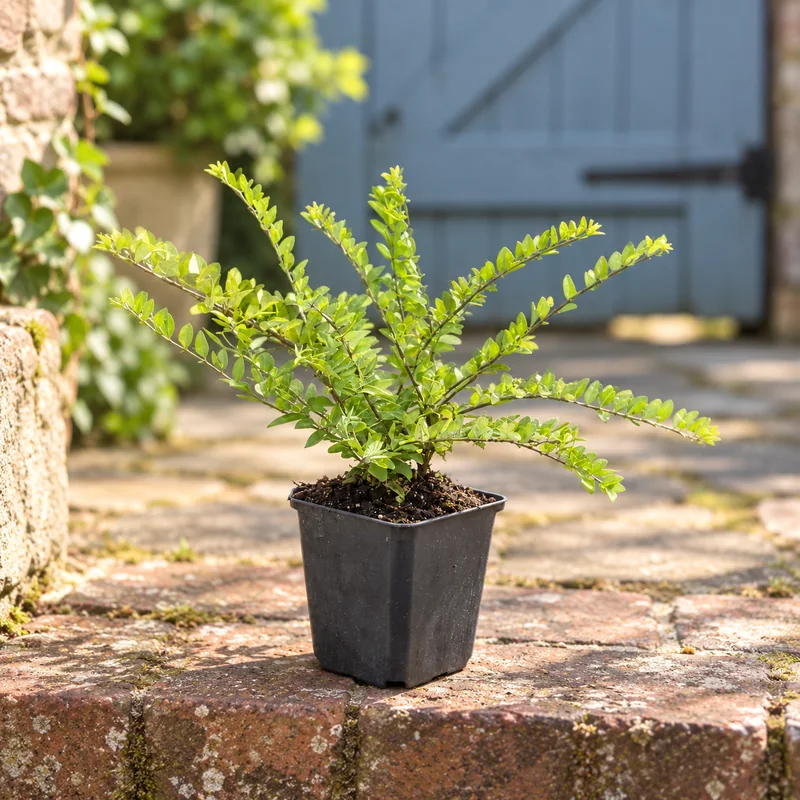
Lonicera pileata builds its surface through many small leaves and laterally sweeping branches. Foliage is opposite in pairs, elongated to narrowly oval with smooth edges. Young tips often look lighter. Alongside common Lonicera pileata today you find classification Lonicera ligustrina var. pileata. It is a low shrub of Caprifoliaceae, not a twining climbing honeysuckle. Compared with tiny-leaved nitida forms, pileata grows more horizontally and has longer leaves. Where branches meet moist soil additional roots may form. Beds therefore change through gradual sideways contact as well as taller shoots.
The small pot begins a broad surface
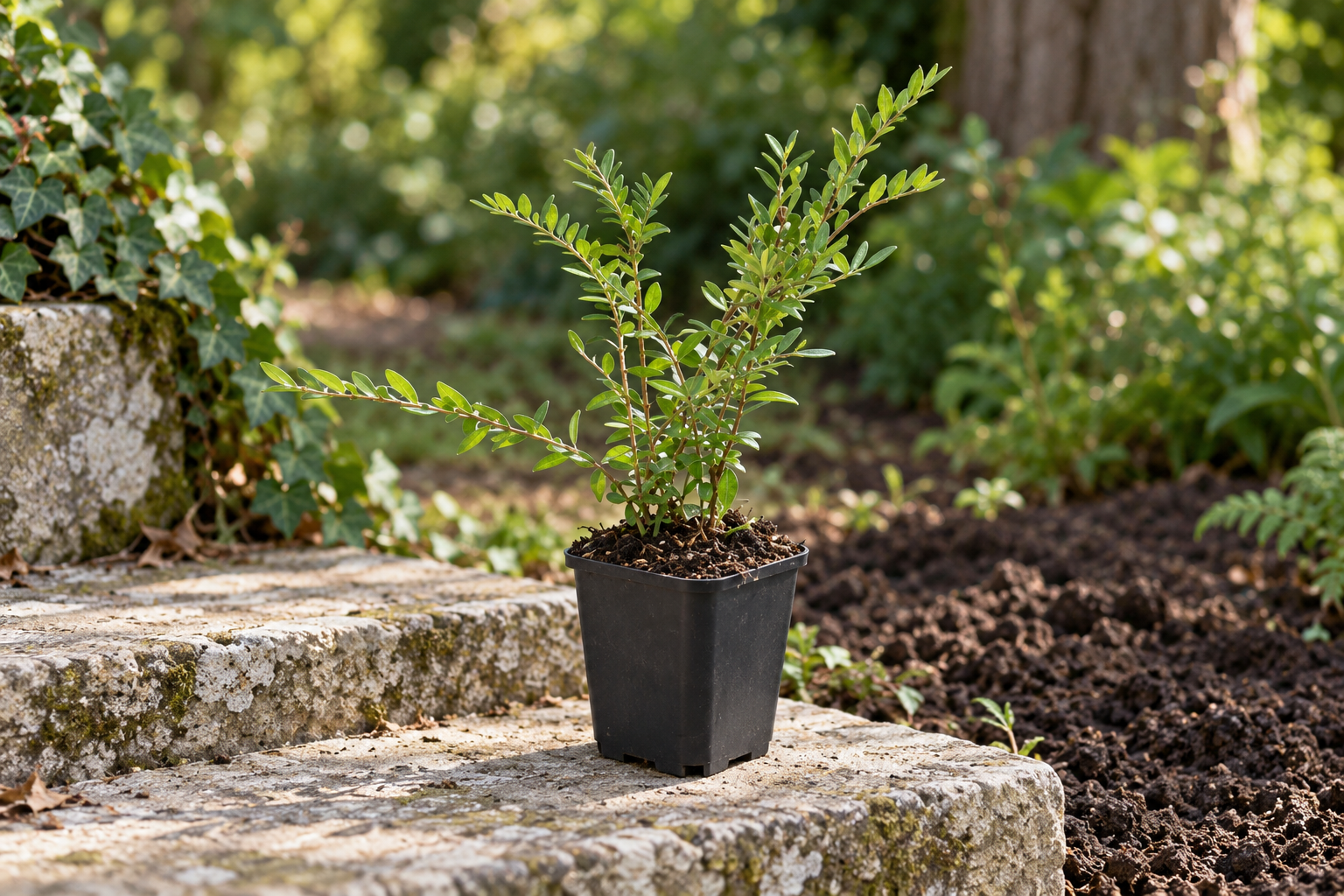
The linked offer gives 9 cm pots and 10–25 cm total height including pot. Several young plants are intended according to set choice. The original shows a loosely branched green plant; covered slopes in later garden pictures are another phase. Check each ball separately on unpacking. A small pot may be dry at the edge and moist centrally, so do not judge by surface alone. For garden planning approximately 60–90 cm height and 1.5–2.4 m width guide freely growing plants. Specialist figures describe years of development. A low-maintained stand stays compact through pruning and requires recurring work.
Consider light and soil together before planting
Sun to partial shade suits it if soil holds moisture and releases excess. Beneath open trees low growth often fits calm green surface design. Still check root competition and dryness. A sunny slope dries faster than protected level ground; established drought tolerance does not replace water monitoring there. Loosen compaction across the planting area so roots can leave the small ball. Humus-rich soil helps, permanently soaked depressions are unfavourable. Also plan future edges: paths, low walls and nearby perennials should remain accessible as branches spread.
Plant in rows without expecting instant cover
Prefer spring or autumn in frost-free workable soil. Cooler weeks ease moisture supply; warm spring planting may quickly encounter dryness. Moisten a dry ball before setting at previous pot depth. The offer gives around 45–50 cm spacing or four to five plants per square metre. Use these as surface guidance and consider space for paths and edge checks. Water roots thoroughly after planting. A thin loose mulch may accompany open soil without burying shoot bases. Gaps remain visible initially; closing depends on establishment, site and care.
Find the original ball again when watering
During first months it needs even supply. In dry weather check both old pot ball and adjacent garden soil. A shower can wet the slope surface while small balls stay dry. Water slowly at the base to enter soil instead of running downhill. If roots are already wet first improve drainage and wait. Established plants, particularly in protected partial shade, tolerate drier periods better; young plants and sunny sites still need attention. Do not automatically feed weekly. Humus-rich garden space differs from a limited planter; add nutrients by soil demand or used product dosage.
Pruning chooses between shape and small flowers
A low hedge or tidy bed edge can be shaped after flowering. Paired whitish to yellow-white flowers appear late spring to early summer on older wood. Frequently cutting all tips therefore limits possible flowers too. Prefer specifically removing troublesome overhanging branches rather than strongly reducing the whole surface each visit. Check shoots lying on soil: once rooted outside the desired space, superficial cutting may not suffice. Carefully remove unwanted rooted sections too. Flowers may produce purple to dark berries. These ornamental fruits are not a snack harvest; plan young children’s access accordingly.
A green winter still needs functioning soil
The shrub is mostly evergreen; some leaves may decline in unfavourable cold sites. Protected ground differs from small exposed containers. Container plants need sufficient root space and free drainage holes; the 9 cm delivery pot is only the start. Protect against persistent winter soaking and check moisture on frost-free days. Brown tips after dry or cold spells first prompt ball, drainage and site checks. Wait for living new growth to become clear before gently reducing damaged branches. In time width control belongs to the annual cycle: dense green carpet remains only where edges are maintained.
One plant, several views
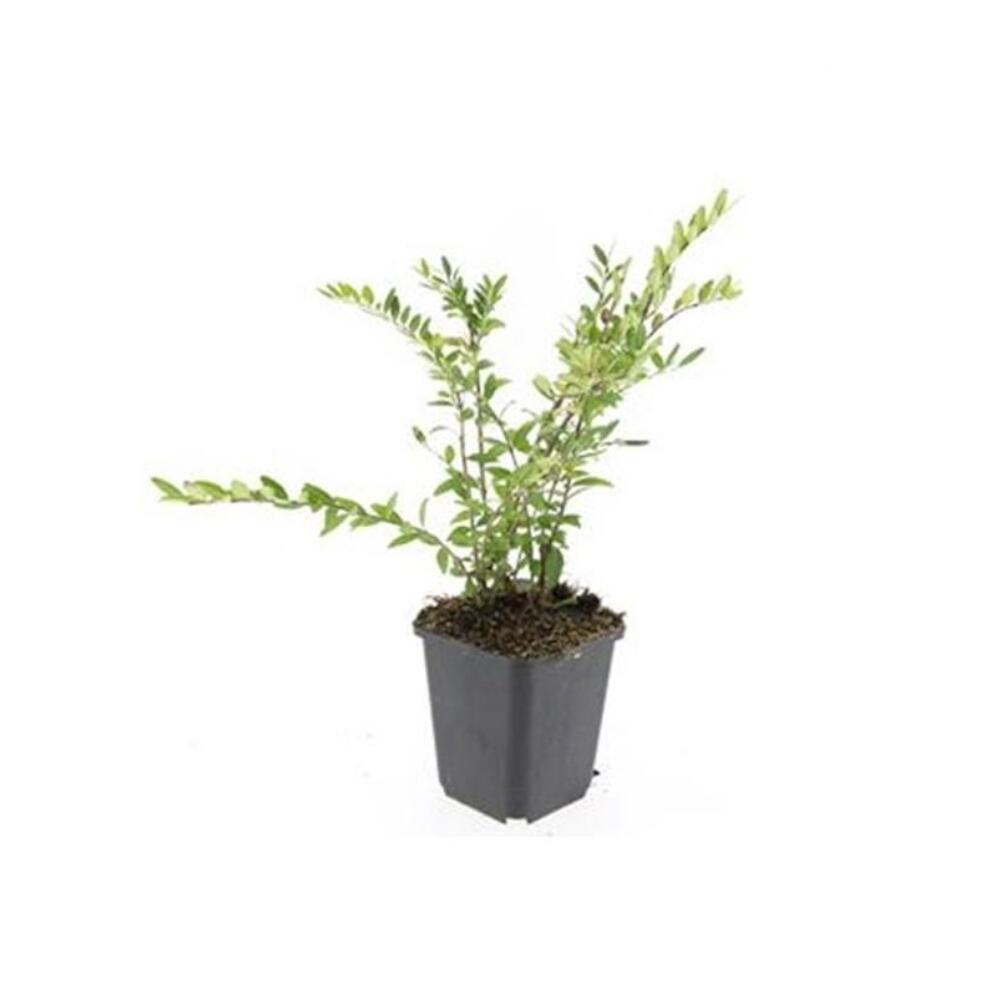
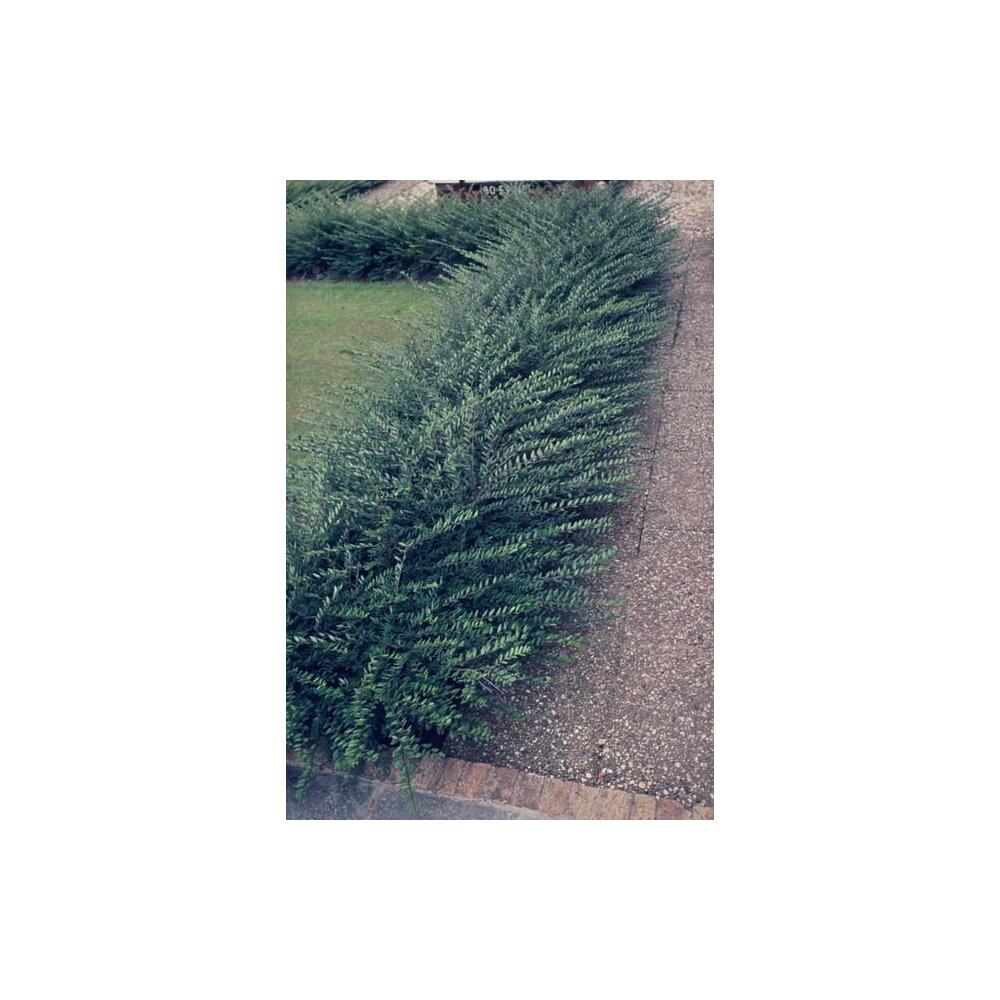
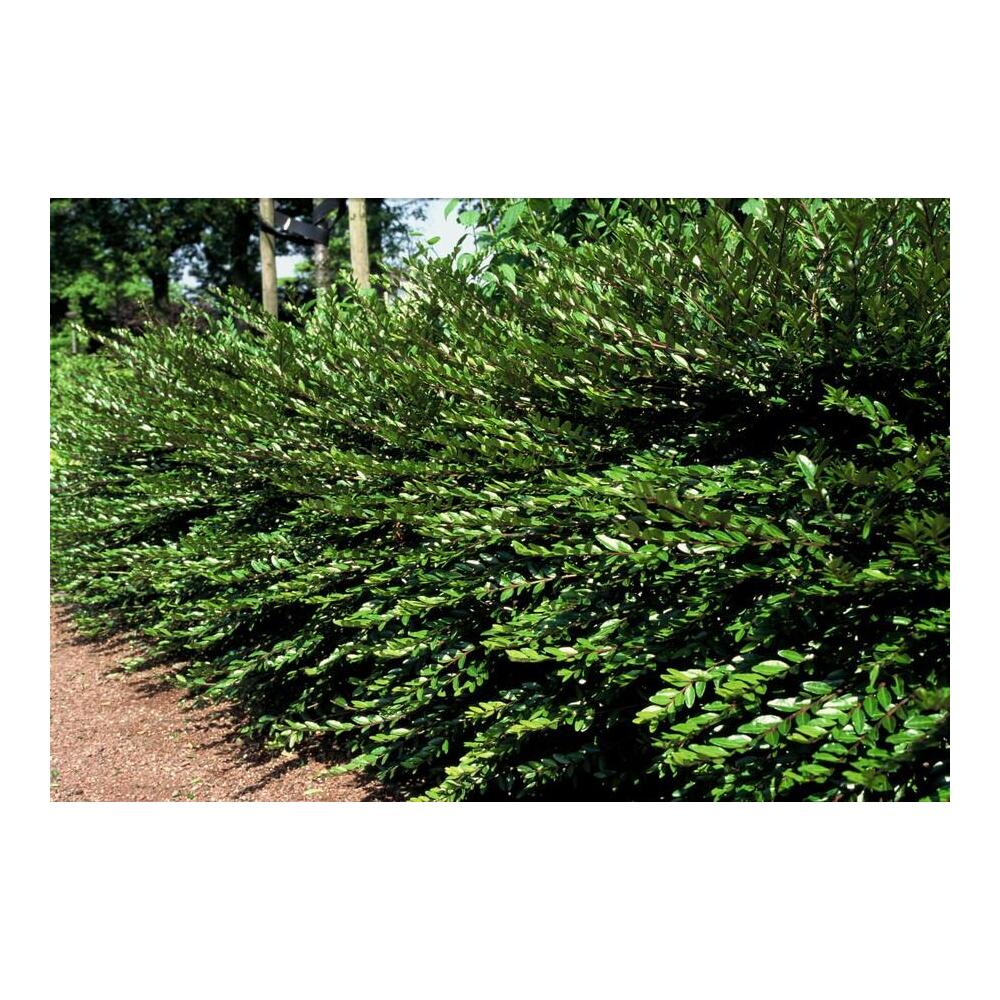
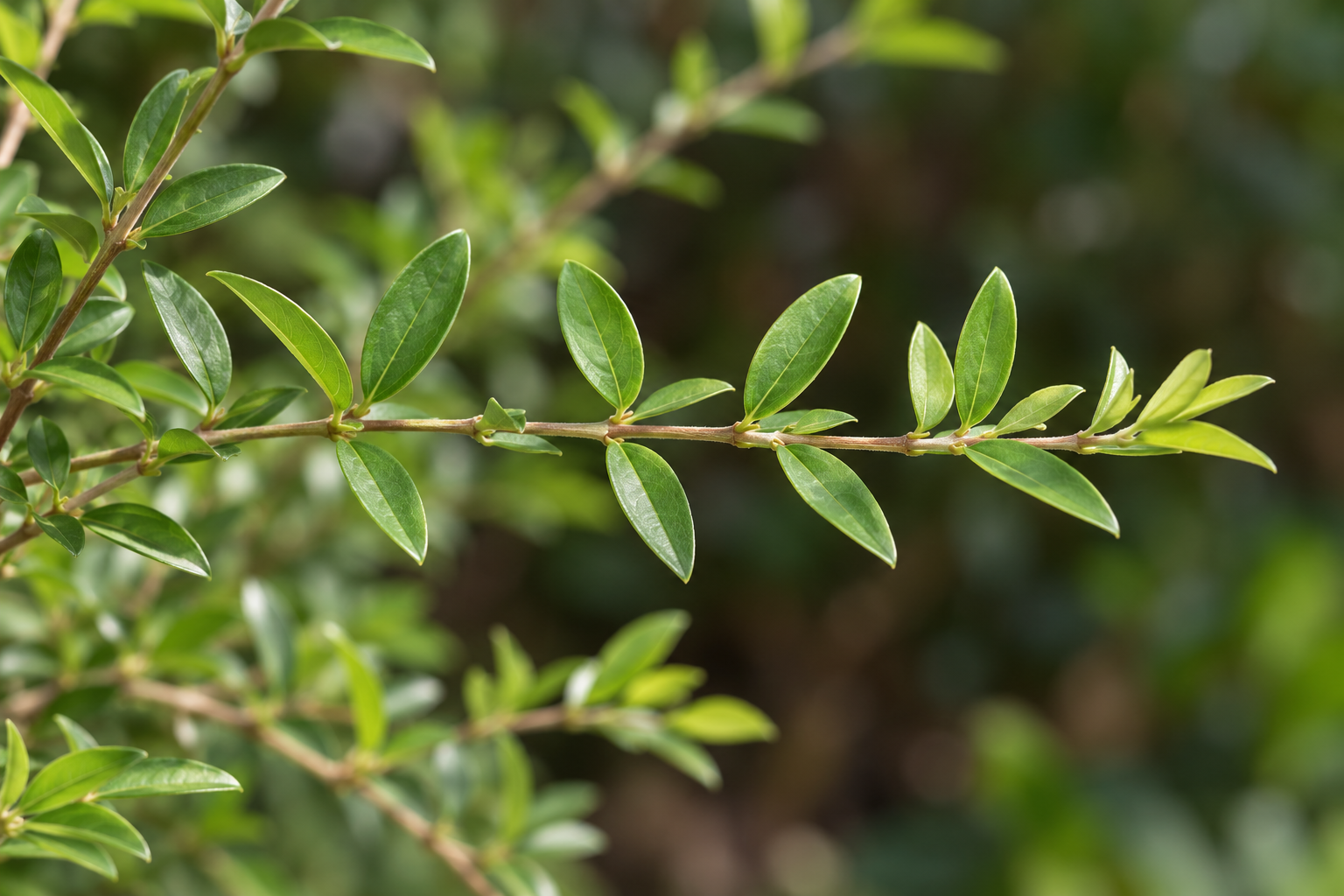
Good to know
Is it a climbing plant?
This pileata form grows as a low sideways-spreading shrub. Branches can root on soil; it needs no climbing support.
Is 10–25 cm its later garden height?
No. This denotes young total delivery height including pot. Free plants may reach around 60–90 cm and much more width.
Why do individual plants dry despite rain?
Soil between plants may be wet while an original small pot ball remains dry. Check both and slowly water root space if needed.
Can I plant in full sun?
Yes, with draining soil and reliable moisture. A sunny slope needs more water checks than protected partial shade.
When do I prune a low hedge?
Selective shaping after flowering preserves more possible flowers. Frequent severe shortening removes older flowering wood too.
Are purple berries edible?
No. They are ornamental berries, not a snack harvest. Young children should not taste them.
Why do branches continue beyond the bed edge?
Ground-touching shoots may form roots. Control overhanging and already rooted sections outside the area and remove if needed.
Sources and editorial note
- Exotenherz: delivery offer and original photographs
- Kew: current botanical classification
- NC State: Lonicera pileata and care
- Oregon State: leaf and habit comparison
Delivery size and later garden development described separately. Check shop availability and set selection.