
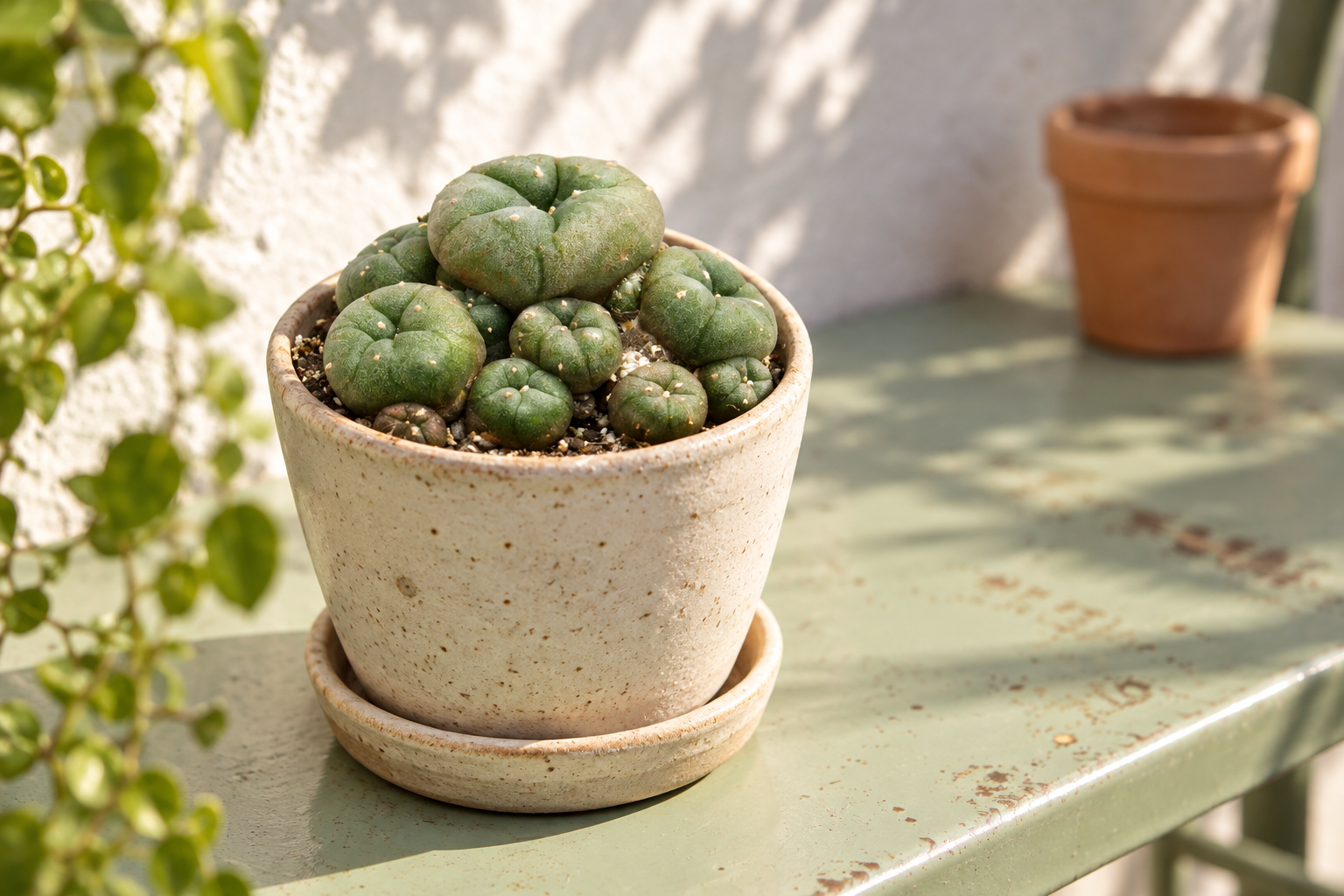
This plant at Exotenherz
Check the shop offer for current availability, price and what is included.
Check the selected shop offer for price, availability and delivery contents.
Your care table
| Topic | What to do | Why it helps |
|---|---|---|
| Light | Bright filtered daylight or gentle partial sun after acclimatisation. | Spineless body should not abruptly face hot midday sun. |
| Water | During active growth sparingly, letting rootball dry between supplies. | Storage organs need roots regaining air. |
| Drainage | Remove all excess and keep hole free. | Permanent wetness may damage lower parts particularly. |
| Soil | Well-draining gritty cactus compost. | Attractive gravel alone does not dry actual rootball. |
| Repotting | Only as needed in spring, protecting fleshy root. | Low upper form does not mean absence of root space needs. |
| Feed | Moderate cactus fertiliser by label during visible growth. | Strong feeding does not reliably accelerate slow growth. |
| Winter | Bright frost-free; markedly less water with low activity. | Light and consumption fall, wet roots dry slower. |
| Checks | Inspect ribs, hair tufts and base regularly without pressure. | New sticky or cottony patches can be distinguished from natural hairs. |
Check the compost and pot weight. The care table explains how far the compost may dry.
Water only when needed. The water should reach the root ball without spilling over the rim.
Remove surplus water from the saucer or cachepot. Then return the plant to a suitable position.
A cactus whose shape appears close up
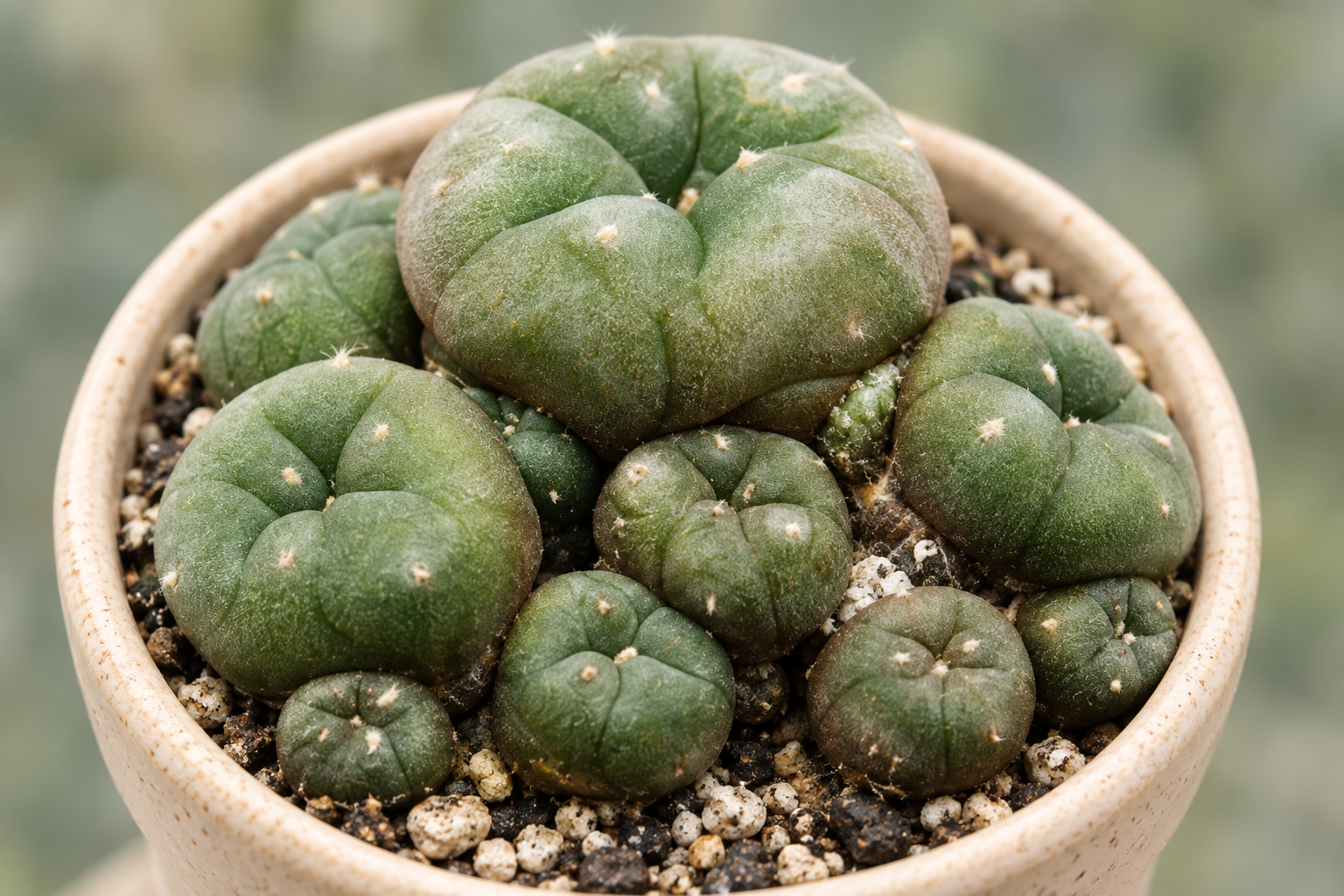
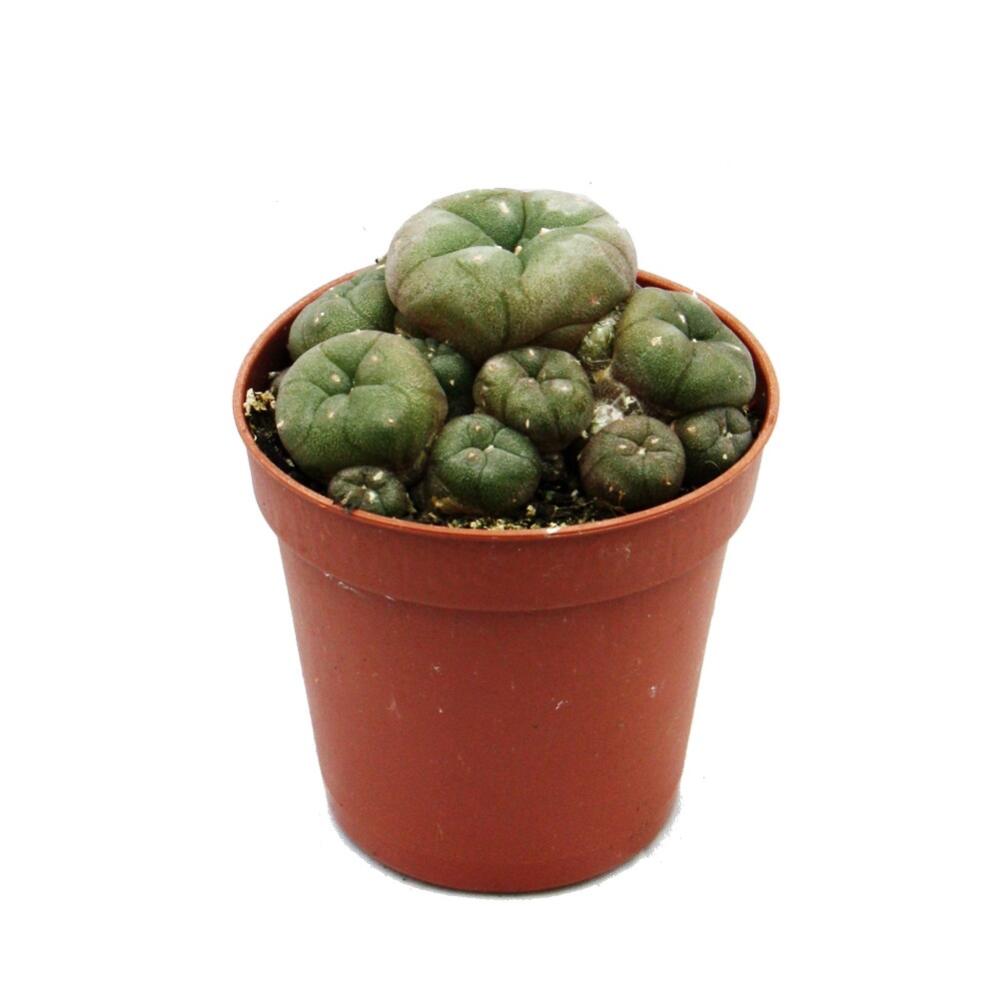
Surface initially looks quiet. Close grey-green bodies carry shallow rounded ribs toward a sunken-looking centre. Small pale tufts mark points without a spine network. Original shows larger body with several little neighbours, giving living variation without promised count. Bright clear planting bench permits overhead view. Hold container and open wrapping sideways; soft surface is no handle. Check stability and free drainage before lasting position.
Several older names for the species
Offer lists Lophophora williamsii and Ariocarpus williamsii. Names denote same botanical identity; Kew accepts Lophophora williamsii. Cactaceae from Texas and Mexico, supplied in five-and-a-half-centimetre pot and about six to eight centimetres total height including pot, not height of one body. Grouped original yields no extra cultivar or named subspecies. Slow widening is possible for individual specimen. Flower-capable wording fixes no delivery bloom.
Plenty of light without heat shock
Bright filtered indoor daylight suits. It need not disappear behind large neighbours, but must not jump from shipping into hot direct midday sun. Acclimatise slowly, observing surface. Warm rain-sheltered summer position can suit with gradual light change and protection from cold wet weather. Avoid directly opened cold winter window indoors. Plan circulating air and accessible rootball. Closed humid glass vessel is unsuitable permanent cultivation.
Visible body does not replace root checks
Before water check lighter pot and dry soil beneath surface. Water sparingly during active growth and remove excess. Mineral topping may look dry while moisture remains below; constant little sips obscure assessment. Storage does not mean low plant needs no observation all warm season. Assess slight shrinking with root condition. Dark or notably soft area in wet soil calls first for checking root and base; more water is no automatic response.
Protect lower structure when repotting
Species has fleshy roots despite little visible height. Keep intact delivery ball initially while room and drying fit. Spring later suits repotting. Use gritty draining cactus soil and freely draining container matching roots. Very shallow decorative bowl does not fit simply through low body. Work at ball without pulling or squeezing green ribs, base at previous depth. Moderate cactus feed by instructions during growth; more nutrients replace neither light nor healthy lower parts.
Winter and flowers with patience
Shorter days and resting growth markedly lower supply. Bright frost-free place helps; dark warm corner makes checks harder. Actual needs depend on room temperature and condition rather than rigid calendar for every home. Developed plants may produce small whitish to pink central flowers. Assigned original shows no open flowers and new images retain that view. No age or first-flower deadline promised. Even without bloom rounded ribs, new small bodies and pale hair tufts invite observation.
Surface remains for looking
Do not wipe or press bodies repeatedly to test firmness. Retain natural small hairs. New sticky spots or cottony nests warrant closer inspection, pot rim too. Species is ornamental here, not consumed. Care access must still remain beyond small children. Cutting is not regular care for this low structure. Original gallery shows specific grouped pot specimen and detail enlarges surface. Delivery and later development stay understandable without turning little container into huge display or permanently blooming cactus.
One plant, several views
Good to know
Why no typical cactus spines?
Species has spineless to barely spined body, rounded ribs and small pale hair tufts.
Are Lophophora and Ariocarpus williamsii two plants?
No. Ariocarpus is older synonym for same species.
What size is this version?
5.5 cm pot and about 6–8 cm total including pot.
Is body count fixed?
No. Original shows grouping; count and sizes may vary.
Is open flower promised?
No. Photographed specimen has none; flower capability is not fixed current condition.
Does low form always suit shallow bowls?
Fleshy root needs suitable space and outlet; above-ground height alone does not decide pot.
Sources and editorial note
- Exotenherz: specific variant, dimensions, identifiers and availability (03.10.2026)
- Kew POWO: accepted species, origin and synonyms (03.10.2026)
- NC State Extension: directly read whole profile and horticultural care (03.10.2026)
- RHS: draining pot culture, repotting and rest (03.10.2026)
Offer and direct whole sources compared03.10.2026. Identity, synonyms and SKU checked against Canon742 and shared/isolated parallel portraits; Kew read, Ariocarpus/Anhalonium/Echinocactus/Mammillaria-williamsii deduplicated. Clean whole original viewed. Grouping proves no extra cultivar. Whole NC profile read; US law/use not transferred to Germany. Horticultural ornamental portrait only, no medicinal effects or use instructions.
