This plant at Exotenherz
Check the shop offer for current availability, price and what is included.
Product details, availability and delivery information are provided in the shop offer.
Your care table
| Topic | What to do | Why it helps |
|---|---|---|
| Summer position | Bright to sunny outdoors after acclimatisation | Mediterranean foliage needs a good light supply |
| Water | Water thoroughly after slight drying | The container has less reserve than garden soil |
| Drainage | Do not leave water in the saucer | Constant wetness encourages root problems |
| Winter | Bright, cool and frost-free, approximately 5–10 °C | Evergreen foliage needs light without strong warmth |
| Winter watering | Water less often, but keep checking the root ball | Even at rest it must not dry completely |
| Pruning | Selectively shorten long new shoots while retaining foliage | Small steps protect reserves |
| Repotting | As needed in spring, with moderate root work | A healthy root ball is the basis of maintaining shape |
| Fertiliser | Follow growth and the label, pausing at rest | Extra nutrients should match demand |
Check the compost and pot weight. The care table explains how far the compost may dry.
Water only when needed. The water should reach the root ball without spilling over the rim.
Remove surplus water from the saucer or cachepot. Then return the plant to a suitable position.
Fine leaflets give the trunk space
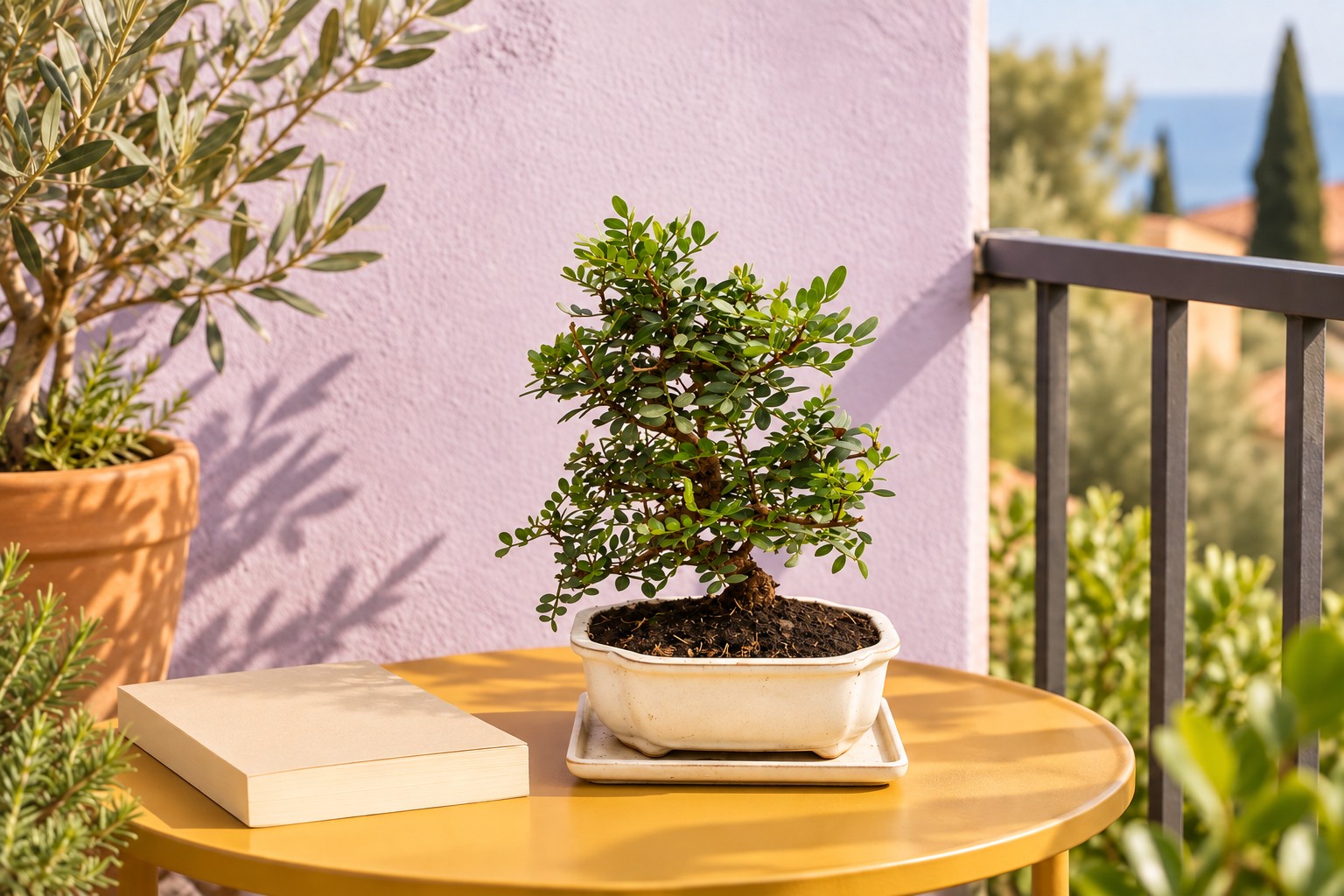
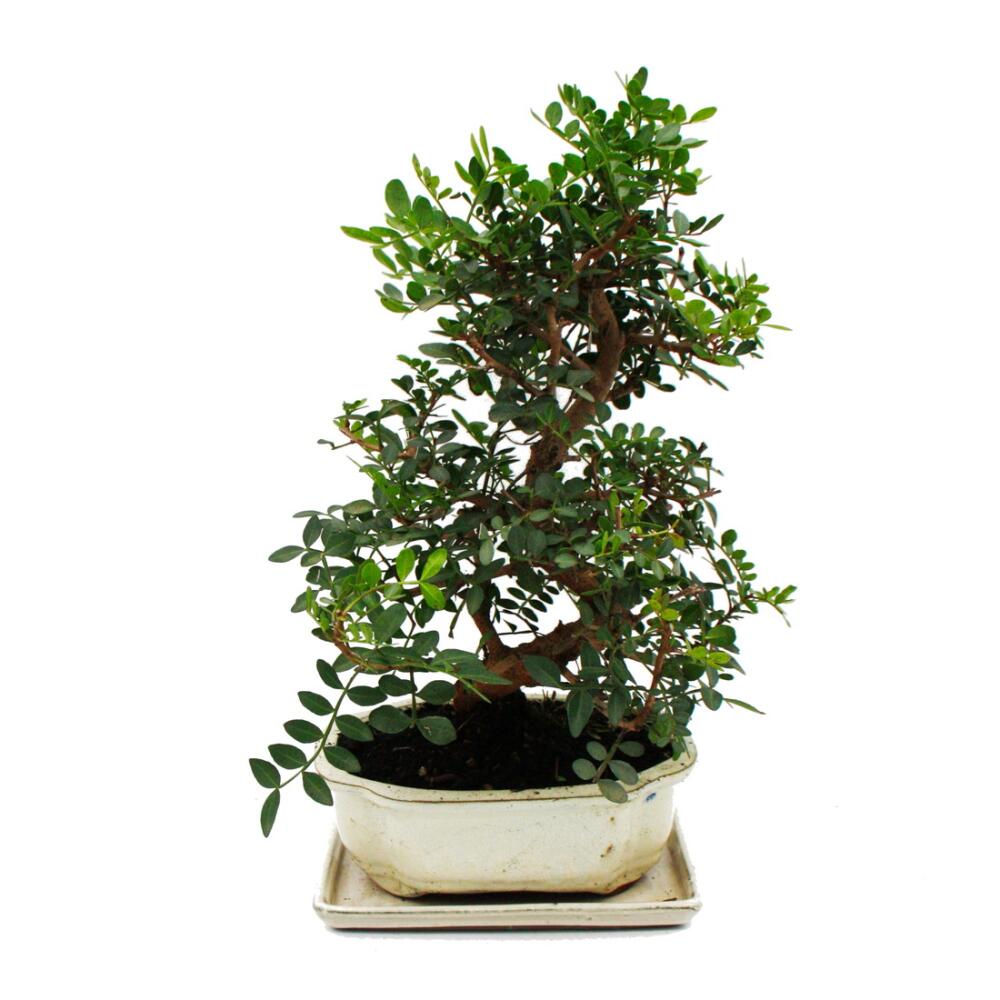
The mastic tree bears small leathery leaflets arranged into pinnate leaves. The movement of the trunk remains visible between them. The shop offer describes an approximately ten-year-old bonsai in a container around 21 × 15 cm, approximately 30 to 35 cm high overall. Container and tree shape can vary. Fresh growth and older leaves need not have the same green shade. These fine differences give the plant its appearance, without promising a particular red or blue colour permanently.
Wild pistachio is not the familiar edible pistachio
Pistacia lentiscus belongs to the sumac family and is widespread in the Mediterranean region. It is sold as mastic tree or wild pistachio. The edible pistachio belongs to a different species, Pistacia vera. Resin has historically been obtained from mastic trees; this does not recommend cutting into this small ornamental bonsai or using it medicinally yourself. The species has separate male and female plants. Fruit therefore cannot be expected on every specimen or without suitable pollination. The trunk and evergreen foliage are the focus of this offer.
Bright and sunny outdoors, protected in winter
A sunny sheltered outdoor position suits it while conditions remain frost-free. After a prolonged period indoors, acclimatise slowly to direct sunshine. On hot days, check whether the small root ball heats intensely or dries too quickly. For winter, the plant needs a bright cool frost-free room; approximately 5 to 10 °C is practical guidance for sheltered overwintering. A dark cellar does not suit evergreen foliage. A heated living room is also less favourable than an appropriate cool shelter with plenty of light.
Do not confuse drought tolerance with freedom from care
A Mediterranean shrub planted in the ground has considerably more root space than a bonsai. The small container must therefore not dry completely for days without attention. After slight drying of the upper compost, water thoroughly and remove surplus. Demand falls in winter, but continue checking regularly. Drooping or shed foliage can be associated with either drought or damaged wet roots. The soil condition and sequence of changes help distinguish them. A routine weekly water bath is not necessary.
Coordinate repotting and pruning gently
A well-drained, structurally stable bonsai mix supports healthy roots. Repot in spring as needed, reserving strong interventions for a vigorous tree. Do not unnecessarily expose all roots. Selectively shorten long new shoots while retaining enough green foliage. A complete change of shape uses reserves and need not happen immediately after purchase. Check existing wire for constriction. Feed during active growth according to need and the label; reduce substantially or pause during cool low-light winter rest.
Use new growth to assess care
Healthy new growth shows whether position and supply suit the plant better than a single older discoloured leaf. If growth fails, first check light, temperatures, moisture and possible root damage. Wet soil with declining foliage requires a different response from a dry light root ball. Watch for scale insects and other unusual deposits without damaging the natural leaf surface. Some time after moving is normal. Steady conditions support this Mediterranean plant more reliably than frequent position changes and ever-new supplementary treatments.
One plant, several views

Good to know
Will I harvest edible pistachios?
No. This is Pistacia lentiscus, not the edible pistachio Pistacia vera. The offer is treated as an ornamental bonsai.
Can the mastic tree overwinter outside?
A bright cool frost-free winter position is recommended for this bonsai. The small container should not freeze unprotected.
Does it lose all its leaves in winter?
The species is evergreen. Major leaf loss should prompt checks of light, water, temperature and root condition.
Is a warm room better than a cool one?
A bright cool winter room generally suits it better than a heated living room. In warmth, winter daylight is often insufficient.
Sources and editorial note
- Product and delivery contents: Exotenherz
- Royal Horticultural Society: plant and care information
- Royal Horticultural Society: plant and care information
Sources checked: 15 September 2026. Product information and the contents of delivery follow the linked shop offer. Care advice was checked against the cited specialist sources and should still be adapted to the plant’s condition, position and season.