This plant at Exotenherz
Check the shop offer for current availability, price and what is included.
Check the shop for the price, current availability and what is included.
Your care table
| Topic | What to do | Why it helps |
|---|---|---|
| Light | Bright with filtered light. | Dark positions encourage weaker long shoots. |
| Water | Let the top compost layer dry somewhat, then water thoroughly. | Even moisture without permanently wet roots. |
| Drainage | Empty the outer pot after watering. | Drainage holes only help if water can actually leave. |
| Compost | Loose and freely draining. | Moisture and air must reach the root space. |
| Vines | Allow to hang or guide loosely on a support. | The climber needs more space over time. |
| Feed | During growth according to suitable product instructions. | Reduce according to need in the dim winter. |
| Propagation | Use healthy stem sections with nodes. | An individual leaf without a node does not form a complete new plant. |
| Checks | Inspect leaf undersides and axils regularly. | Distinguish natural leaf holes from pest damage. |
Check the compost and pot weight. The care table explains how far the compost may dry.
Water only when needed. The water should reach the root ball without spilling over the rim.
Remove surplus water from the saucer or cachepot. Then return the plant to a suitable position.
Leaf holes that belong to healthy leaves
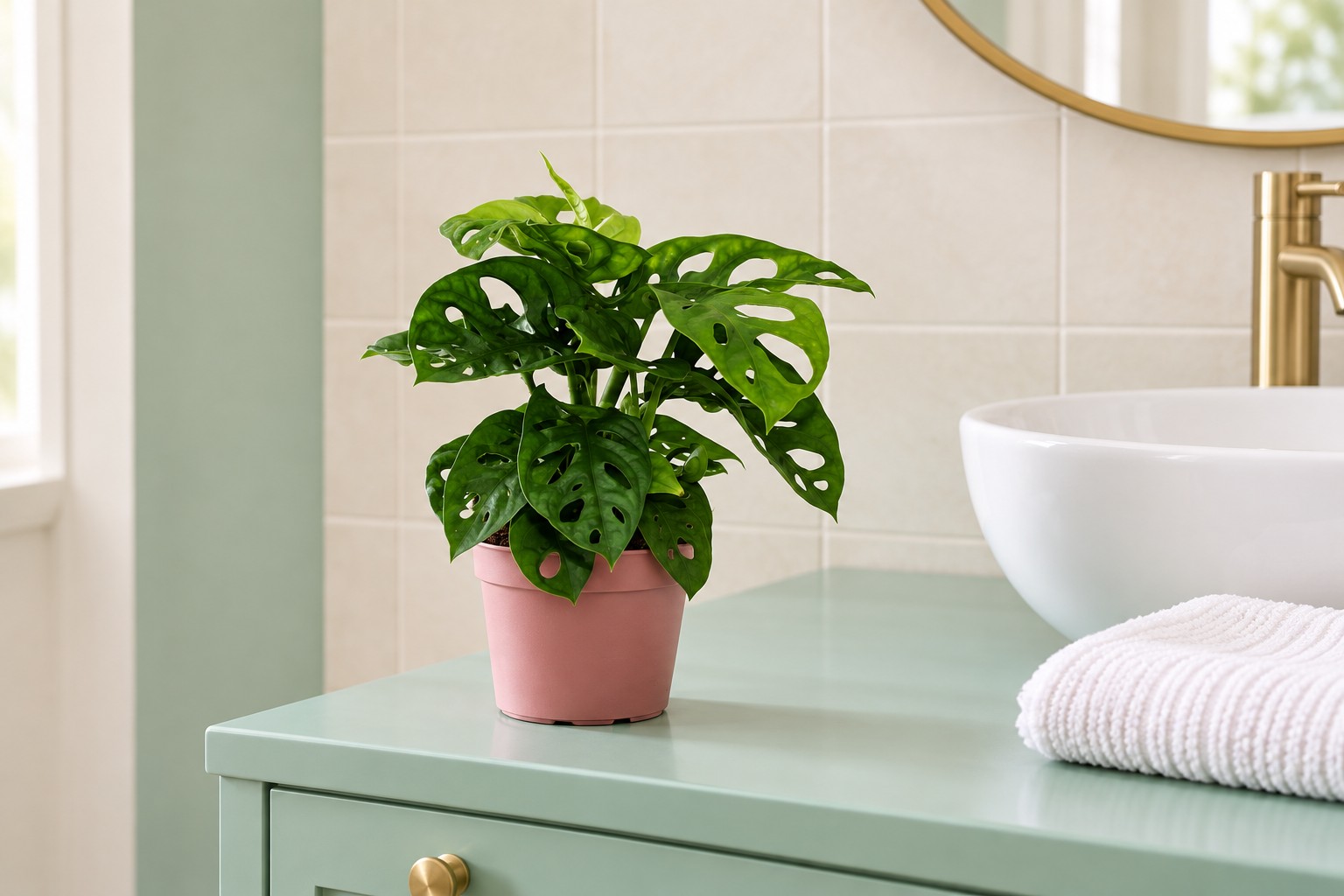
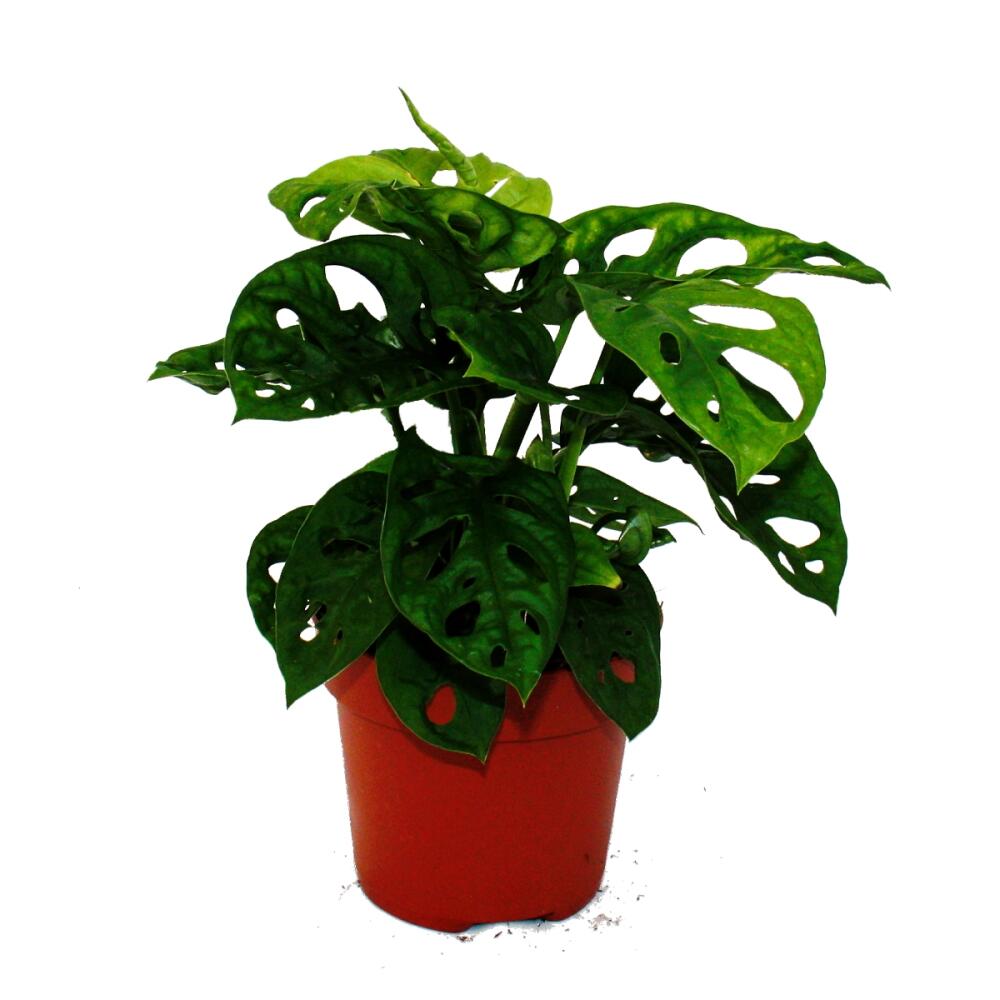
Monstera adansonii bears characteristic openings within its leaf blade. These develop as the leaf grows and are not eaten-out areas. The edge of the typical young leaf remains largely closed. This gives it a different appearance from strongly split older leaves of Monstera deliciosa. In the trade it is often called Monkey Mask. That does not automatically make it Monstera obliqua, which needs quite different identification. The form and number of openings vary with development and cultivation. Each new leaf may look slightly different without losing its form identity.
A young compact plant as a starting point
The offer describes a 12 cm pot and around 25 cm overall height. Several short shoots give it a compact appearance initially. A hanging plant already metres long is not guaranteed in this format. A bright small table or suitable shelf keeps leaf surfaces and growth visible. Allow space or a support for later vines in good time. A bright bathroom can also suit it if air exchange and daylight are present. Avoid constant contact with splashing water, cleaning products or a wet basin surface.
Light and warmth encourage strong leaves
Bright filtered light is a good starting point. Hot direct sun can damage sensitive leaves after transport or moving. Too little light often causes long gaps between leaves and weaker growth. The plant is happier in warmth than at a cold draughty window. Slightly higher humidity can support leaf development but does not replace a healthy water supply. Foliage should not stay constantly wet. Do not pull a very tender rolled leaf apart with fingers; unfolding needs time and suitable conditions.
Keep the root ball evenly moist and airy
A loose freely draining mix for tropical foliage plants lets water leave while retaining enough moisture. Let the upper layer dry somewhat before watering. Then water thoroughly until the root ball is supplied and remove the surplus. Small pots in particular may dry faster in summer, while the same pot stays moist longer in darker winter conditions. Check regularly instead of watering on an unchanged calendar. If leaves droop, check moisture first. Both a dry root ball and damaged roots in wet compost can cause limp foliage.
Guide vines, prune and feed moderately
Monstera adansonii can trail or climb a suitable support. Fasten shoots loosely and do not tie leaf stalks tightly. Long shoots may be shortened with clean tools if needed. Healthy sections with a node suit vegetative propagation attempts; a loose leaf alone is not enough. During active growth, use suitable foliage feed according to product instructions. Repot when the root ball is well rooted or compost seems spent. A pot only slightly larger with drainage holes is usually more sensible than a large persistently damp reserve container.
Distinguish natural patterns from damage
Regular, cleanly developed openings belong to the leaf. New irregular feeding damage, silver scraping marks, webbing or sticky deposits instead call for inspection of undersides and axils for pests. Individual old leaves can age; many leaves turning yellow together require checks of light, roots and watering. Remove dust gently with a soft damp cloth without tearing thin hole edges. The plant contains irritating calcium oxalate crystals. It is not food and should stand out of reach of small children and nibbling pets. Avoid sap contact with skin when pruning.
One plant, several views

Good to know
Are leaf holes damage?
Typical openings within the blade belong to Monstera adansonii. Also check for pests with new irregular damage.
Is Monkey Mask the same as Monstera obliqua?
The trade name Monkey Mask is used here for Monstera adansonii. That does not establish equivalence with Monstera obliqua.
Can it grow without climbing support?
Yes, its shoots can also hang. A suitable support helps with upright climbing growth.
Is a bathroom suitable?
A bright warm bathroom with daylight and air exchange may suit it. A windowless room or constant contact with cleaning products is unsuitable.
Sources and editorial note
Sources checked: 15 September 2026. Product information and the contents of delivery follow the linked shop offer. Care advice was checked against the cited specialist sources and should still be adapted to the plant’s condition, position and season.