This plant at Exotenherz
Check the shop offer for current availability, price and what is included.
Link to the offer in German. Check the shop for the current price, availability and delivery contents.
Your care table
| Topic | What to do | Why it helps |
|---|---|---|
| Light | A bright position with mostly indirect light; test new sunny positions gradually. | A dark position slows growth. Sudden intense sun can damage leaves. |
| Water | Only water once the upper layer of growing medium has clearly dried. Check deeper down and consider the pot’s weight. | Dry compost on top does not prove the root ball is dry. Waterlogging deprives roots of air. |
| Growing medium | Stable, airy houseplant compost; a pot with clear drainage holes. | Water should reach the root ball and then be able to drain. Compacted compost stays unevenly wet. |
| Nutrients | When growth is visible, use houseplant fertiliser at an appropriate dose according to the label. | More fertiliser does not replace light. If growth stalls, check position and roots first. |
| Conditions | A warm room without cold draughts or direct heat from a radiator. | Extreme changes stress the leaves and alter water use. |
| Support | Plan a stable support when repotting; fasten the main stem loosely. | Leaf stalks must remain movable. The plant does not stay a compact bush permanently. |
| Repotting | In spring, if roots densely fill the root ball, move only to a moderately larger pot. | A lot of unrooted compost dries more slowly; a huge pot does not automatically improve supply. |
| Autumn and winter | Observe water needs afresh and adjust feeding to actual growth. | Less daylight often means less consumption, even if the room remains warm. |
Check the compost and pot weight. The care table explains how far the compost may dry.
Water only when needed. The water should reach the root ball without spilling over the rim.
Remove surplus water from the saucer or cachepot. Then return the plant to a suitable position.
A monstera with room to develop
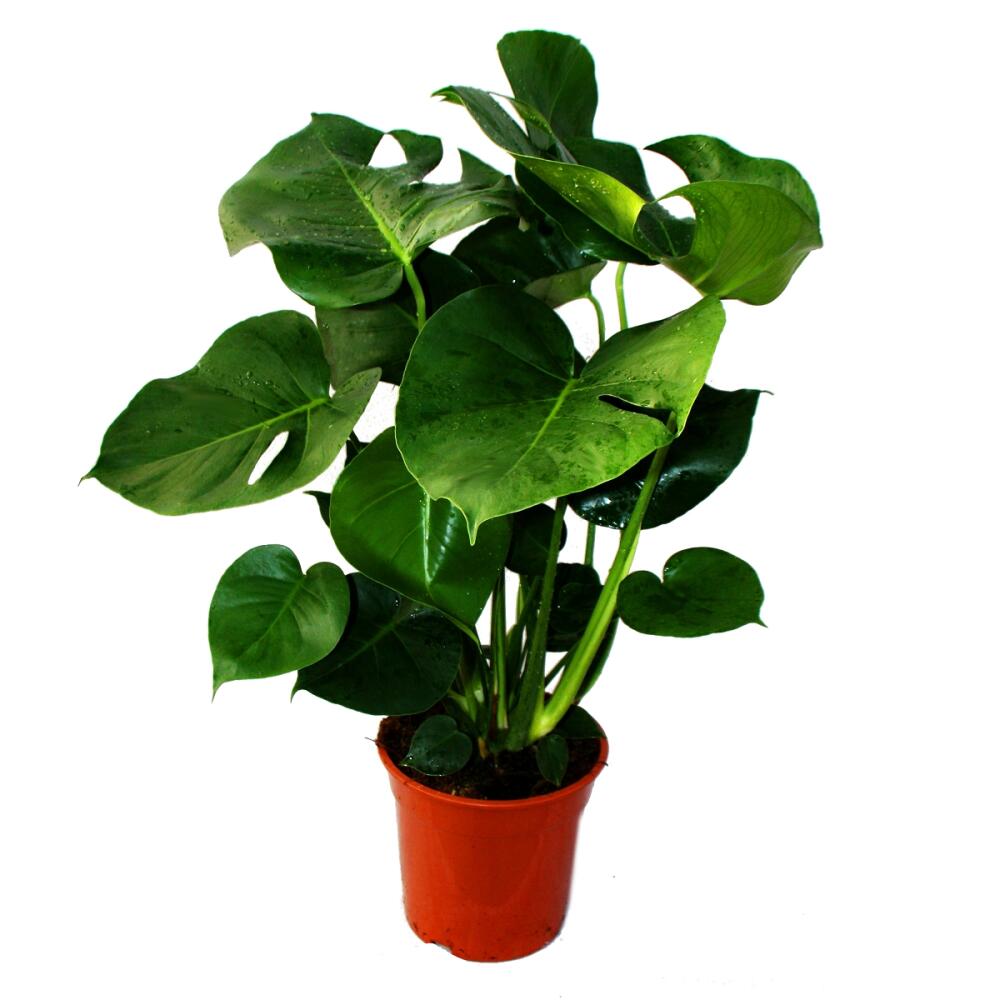
Monstera deliciosa belongs to the arum family and grows as a climber in its tropical homeland. Its familiar name, Swiss cheese plant, describes the leaves that later often become deeply split and perforated. A young plant may still have much less divided leaves. This is initially a matter of development, rather than proof of a care mistake. The Exotenherz specimen presented here comes in a 21 cm pot with a stated height of approximately 50 to 60 cm. Allow some room at the sides from the start: new leaves should be able to unfold without constantly bumping into curtains, furniture or walkways.
Choose the position from the plant’s perspective
An attractive spot in the room is not always a bright spot for the plant. Look at the window first and choose the decorative pot afterwards. A monstera is usually easier to care for in front of a bright window with filtered light than in a dark corner. When moving it from a shadier position to a sunny window, make the adjustment gradually. Watch the leaf surfaces facing the window in particular. A place right beside a radiator often combines dry air with a warm root ball. A metre of distance may be more useful there than daily misting. The next leaves and the speed at which the compost dries show whether the new position suits the plant.
Watering: check first, then moisten the whole root ball
Check the compost with a finger or wooden stick and briefly lift the pot. If the upper area still feels moist and the root ball is heavy, waiting is often the right care decision. Once it has dried sufficiently, water the growing medium slowly so that water also reaches the inside. Allow all excess water to drain and empty the decorative pot. Many small sips can leave moist areas outside and dry areas inside. A dried-out, water-repellent root ball instead needs several gentle watering rounds, followed by good drainage as well. With a new plant, make two or three observations. This lets you recognise its rhythm in your specific position without turning it into a rigid weekly rule.
Plan support and aerial roots sensibly
The bigger a monstera becomes, the more important a secure position and a strong support are. Fasten the main stem loosely with plant-friendly material; do not tie leaf stalks tightly. Check ties during new growth so they do not cut in. Aerial roots are part of the growth habit. Accessible roots can be gently guided towards the growing medium or support without kinking them. They are not a reason to plant the monstera more deeply. When repotting, position the support at the same time instead of pushing it into a rooted ball without control later. Afterwards, check that the nursery pot and decorative pot remain stable even with a leaf extending sideways.
Care for leaves with a gentle hand
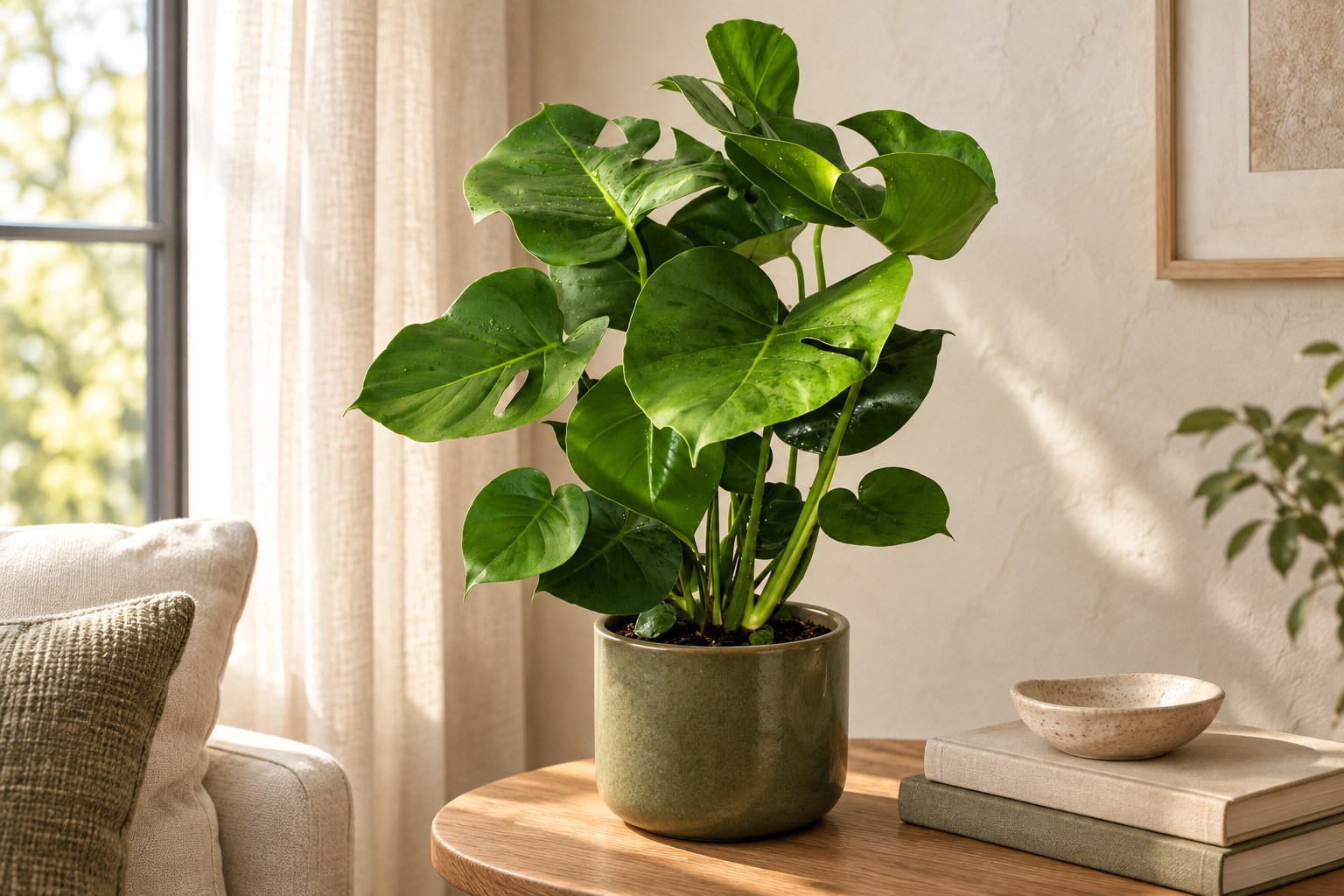
Remove dust with a soft, damp cloth. Support the leaf from underneath with one hand and work without pressure. Leaf-shine sprays are unnecessary. Use this short care moment to look under the leaves and along the leaf stalks: sticky patches, fine webbing or moving dots deserve closer inspection. A fresh leaf initially unfolds soft and often paler. Do not pull it apart with your fingers. The original images below show the actual sale form; the home scene offers a decorating idea. Size and leaf divisions develop individually.
Interpret yellow leaves correctly
A single old leaf may be ageing. Several yellow leaves together with constantly wet compost, however, suggest checking the root area and drainage first. Drooping leaves can occur with a dry root ball or with damaged, overly wet roots. Leaf colour alone therefore does not tell you whether more water is needed. Brown, dry patches can have different causes, including sun damage, dry air or uneven watering. Change one thing at a time where possible and assess the new growth in particular. Dead leaf tissue will not turn green again with improved care.
Autumn care and a considered start
In September, it is worth reviewing the summer position. Shorter days and closed curtains can substantially reduce the amount of light. Do not automatically keep watering as you did in high summer. After buying, first check root-ball moisture, drainage holes and the intended position; an immediate move to a larger pot is not always necessary. Keep the monstera out of reach of nibbling pets and small children, as plant parts can cause irritation if swallowed. Avoid skin contact with sap when cutting. Following these simple basics makes room for a plant whose appearance can continue developing for years.
One plant, several views

Good to know
Why does my monstera not have split leaves yet?
Young leaves are often only slightly divided. Maturity, sufficient light and good growing conditions influence development. Extra fertiliser cannot force a particular pattern of holes.
Do I have to cut off aerial roots?
Normally not. If needed, guide them gently towards the support or growing medium. Cutting them for purely visual reasons does not replace suitable management of the growth habit.
How often does it need water?
That depends on light, temperature, pot and growing medium. Check moisture and pot weight instead of adopting a fixed number of days.
Sources and editorial note
- Product and delivery contents: Exotenherz
- RHS: Swiss cheese plants – growing and care
- NC State Extension: Monstera deliciosa
Sources checked: 14 September 2026. Based on shop information and the linked specialist sources. Always adapt care to the plant’s condition, position and season.