This plant at Exotenherz
Check the shop offer for current availability, price and what is included.
Check the selected shop offer for price, availability and delivery contents.
Your care table
| Topic | What to do | Why it helps |
|---|---|---|
| Light | Sunny, warm and sheltered summer position. | Light supports vigorous growth and flower formation. |
| Watering | Water thoroughly during growth; do not let the rootball dry out completely. | A leafy flowering shrub loses a great deal of water in summer. |
| Pot | Drainage holes and a water flow that is easy to check. | Permanently waterlogged roots are unsuitable for container growing. |
| Soil | Nutrient-rich container compost that retains its structure. | Roots need support, air and stored moisture. |
| Feeding | During active growth, follow the product instructions; stop in winter. | Flowers and new shoots need nutrients. |
| Overwintering | Bright, cool and frost-free; reduce moisture considerably. | Demand falls with less light, but the rootball must still not dry out completely. |
| Pruning | Thin selectively rather than routinely shortening every shoot tip. | Developing flowers also sit at the ends of shoots. |
| Safety | Wear gloves when pruning; do not burn the cuttings. | Plant parts and leaking sap require caution. |
Check the compost and pot weight. The care table explains how far the compost may dry.
Water only when needed. The water should reach the root ball without spilling over the rim.
Remove surplus water from the saucer or cachepot. Then return the plant to a suitable position.
Flowers above narrow leaves
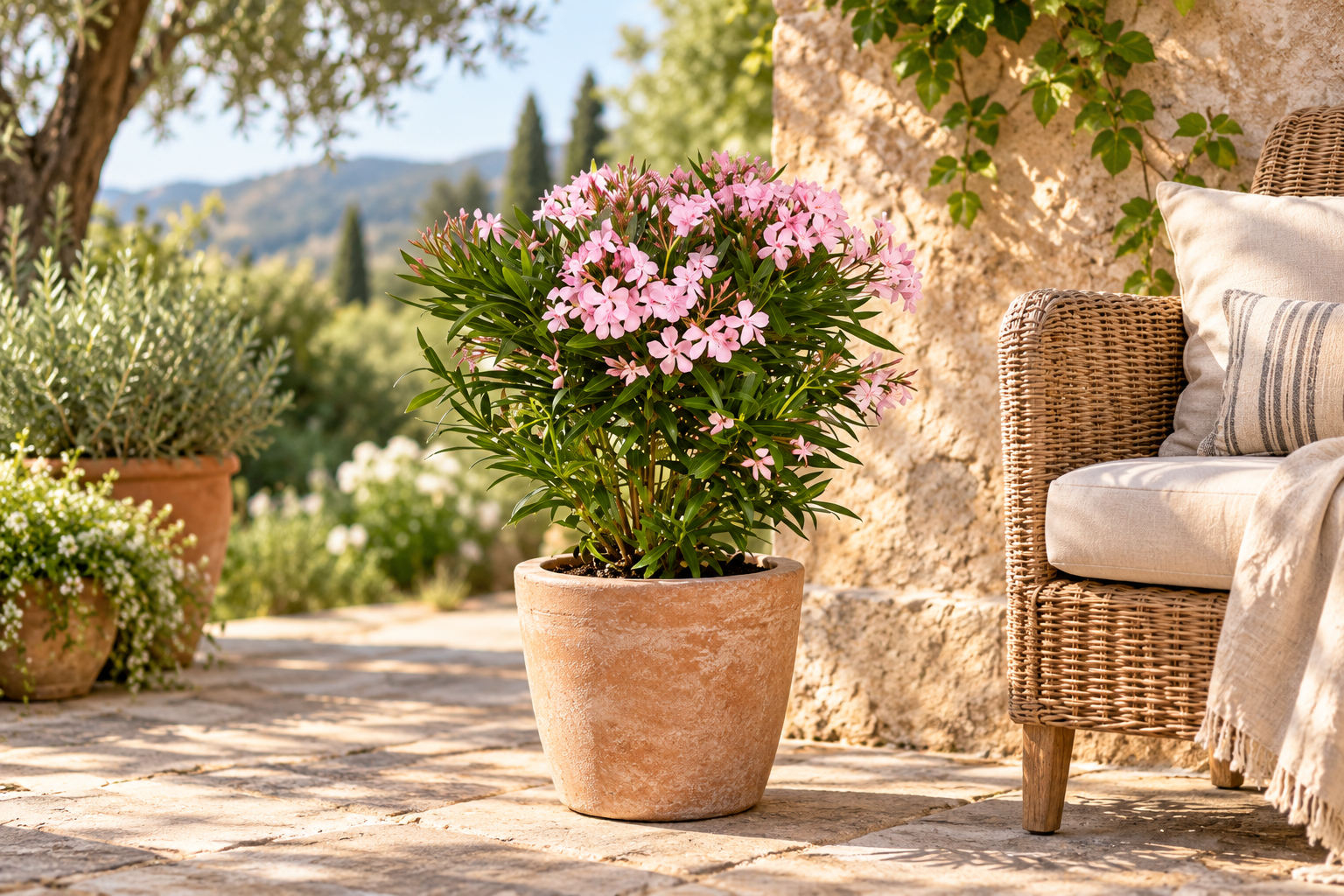
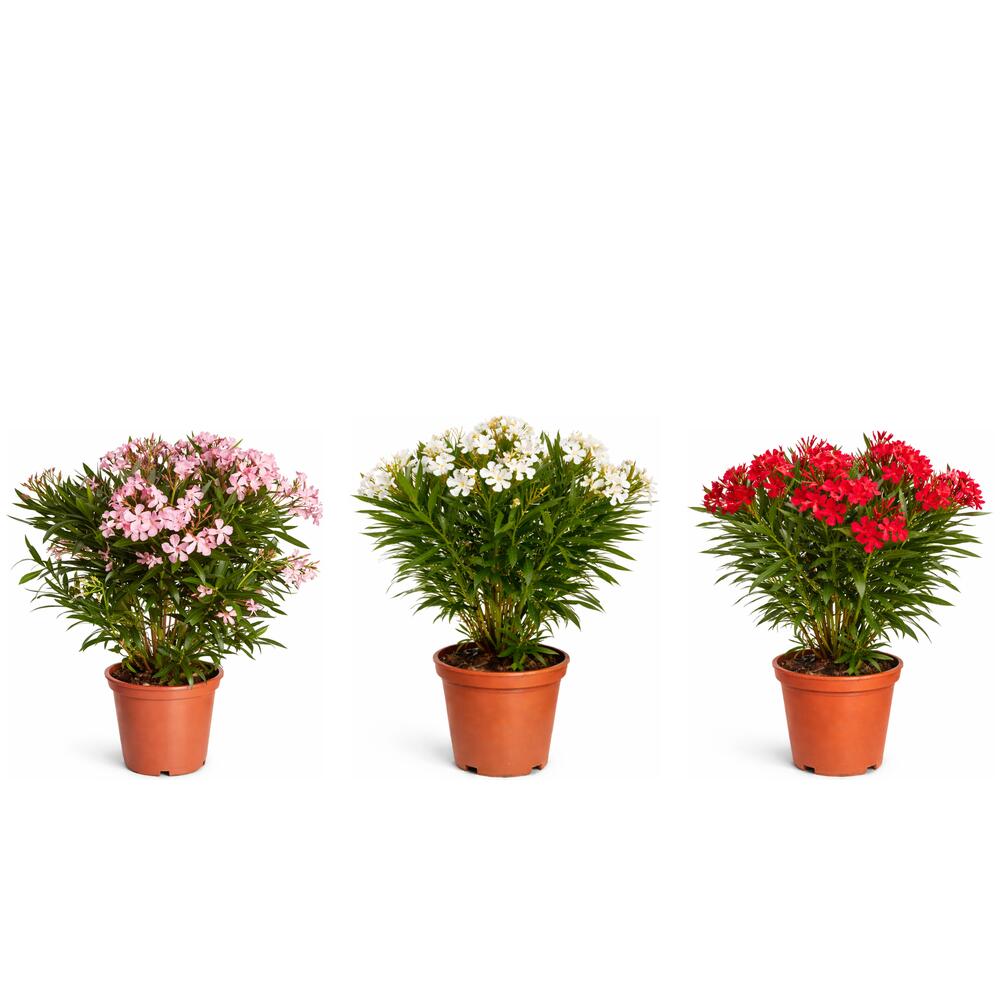
An oleander immediately changes the feel of a summer spot. Its long, narrow leaves carry flower clusters like little bouquets above the green framework. Nerium oleander is a perennial shrub, not a short-lived seasonal flower. The plant offered in a 20 cm pot reaches approximately 70 to 80 cm total height. Flowers are pink, red or white depending on the chosen variant; the scene shows a pink example. Before choosing the prettiest terrace spot, settle two things: where will the container overwinter, and where can this poisonous plant stand safely?
The summer position can be warm
Oleander loves a sunny, sheltered position. A warm terrace or bright balcony suits it if the air does not stagnate completely and the container remains stable. After transport or overwintering, introduce strong sunshine gradually. This gives the leaves time to adjust to the changed exposure. Indoors, distant proximity to a window is no substitute for a bright outdoor spot. Also check whether people brush past the branches: oleander does not belong beside a cramped play area or where pets nibble leaves.
A flowering shrub needs water
On warm days, many leaves are working at once. The pot’s rootball can therefore dry quickly, even though the plant is familiar from Mediterranean landscapes. Check the soil and water thoroughly before the whole rootball dries out. A suitable saucer makes checking easier but does not replace unobstructed drainage holes. Remove standing water in cool weather. Famous sunshine alone does not make a good oleander position: the roots must be able to match the crown’s water use. Drooping leaves are a reason to examine the rootball, not blindly refill the watering can.
Soil and nutrients support flowering
Nutrient-rich container compost that holds its structure supports the roots and stores usable moisture. When repotting later, the new container should be only reasonably larger. A huge volume of soil stays wet for a long time around a small root mass. During active growth, feed according to the instructions of the product used. This is particularly useful when new shoots and flowers are forming. Do not feed a dry rootball. If flowers fail to appear, first check light, season and pruning; a double dose is not a good answer to every problem.
Remember the shoot ends when pruning
Oleander forms its flower clusters at shoot ends. Regularly clipping the whole shrub to the same length therefore removes flowering opportunities too. Remove dead wood and thin selectively if the plant becomes too dense. Hard pruning may be necessary, but it changes the course of flowering. Wear gloves and clean the tools afterwards. Keep poisonous sap away from skin, eyes and food. Collect cuttings safely and do not burn them. Even a beautifully flowering plant remains the same plant with the same safety requirements.
A bright winter is part of the care
Before the first harder frosts, move the oleander into a bright, cool, frost-free room. A young container plant is not made winter-hardy by a Mediterranean species’ general reputation. In winter it grows more slowly and needs much less water. Still do not forget the rootball completely, as the foliage remains. Ventilate on suitable days and check shoots and leaf undersides for pests. A constantly warm, poorly lit room is usually more difficult than a cool bright spot. As days lengthen, water demand gradually rises again.
Assess yellow leaves thoughtfully
Individual older leaves may yellow without the shrub being lost. Many yellow leaves, soft shoots or poor new growth, however, call for a look at roots, light and moisture. Ask what has changed recently: a new cachepot, a cold night, strong sunshine after winter? Then address the cause specifically instead of changing soil, fertiliser and position all at once. With well-supplied roots, enough light and a planned winter place, oleander remains a summer companion. Flower quantity depends on the plant and cultivation, not a promise on its label.
One plant, several views
Good to know
Is oleander poisonous?
Yes. All plant parts are dangerous if eaten; place it safely out of reach of children and pets.
Which flower colour will I receive?
The variant selected in the offer determines this. The scene shows pink as an example.
Why is it not flowering?
Check light, development, season and previous pruning; cut shoot tips may mean missing flowers.
Can it overwinter outdoors?
The young container plant should overwinter in a bright, cool and frost-free place.
Does it need water daily?
In hot weather, a daily check may be needed. Water according to rootball moisture, not automatically every day.
Can I shorten all the branches?
That removes potential flower clusters. It is better to thin selectively unless rejuvenation pruning is needed.
What should I do with the cuttings?
Collect them safely, out of reach of children and animals; do not burn them.
Sources and editorial note
Shop offer, SKU, GTIN and availability checked live on 01.10.2026. Original photograph unchanged. Independently researched horticultural texts and an individually reviewed scene.