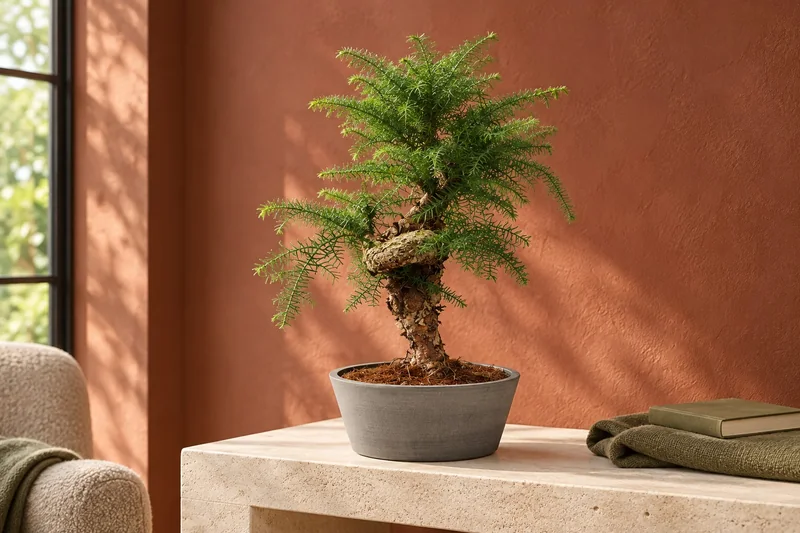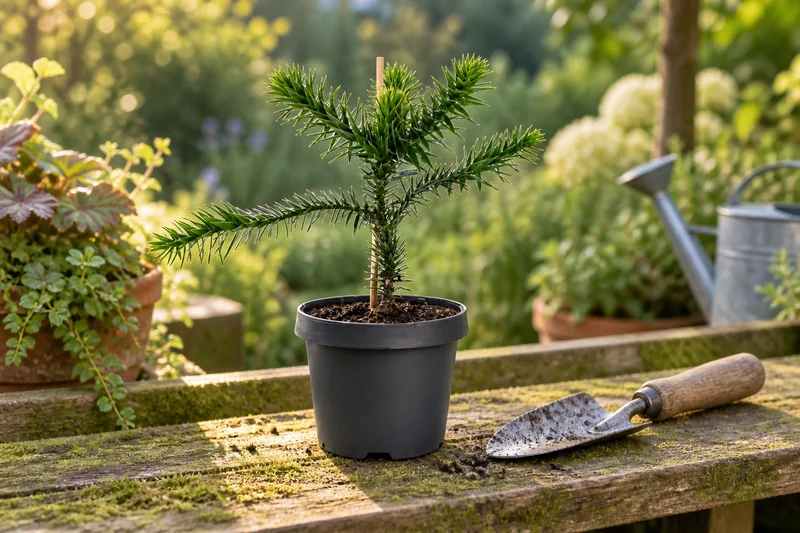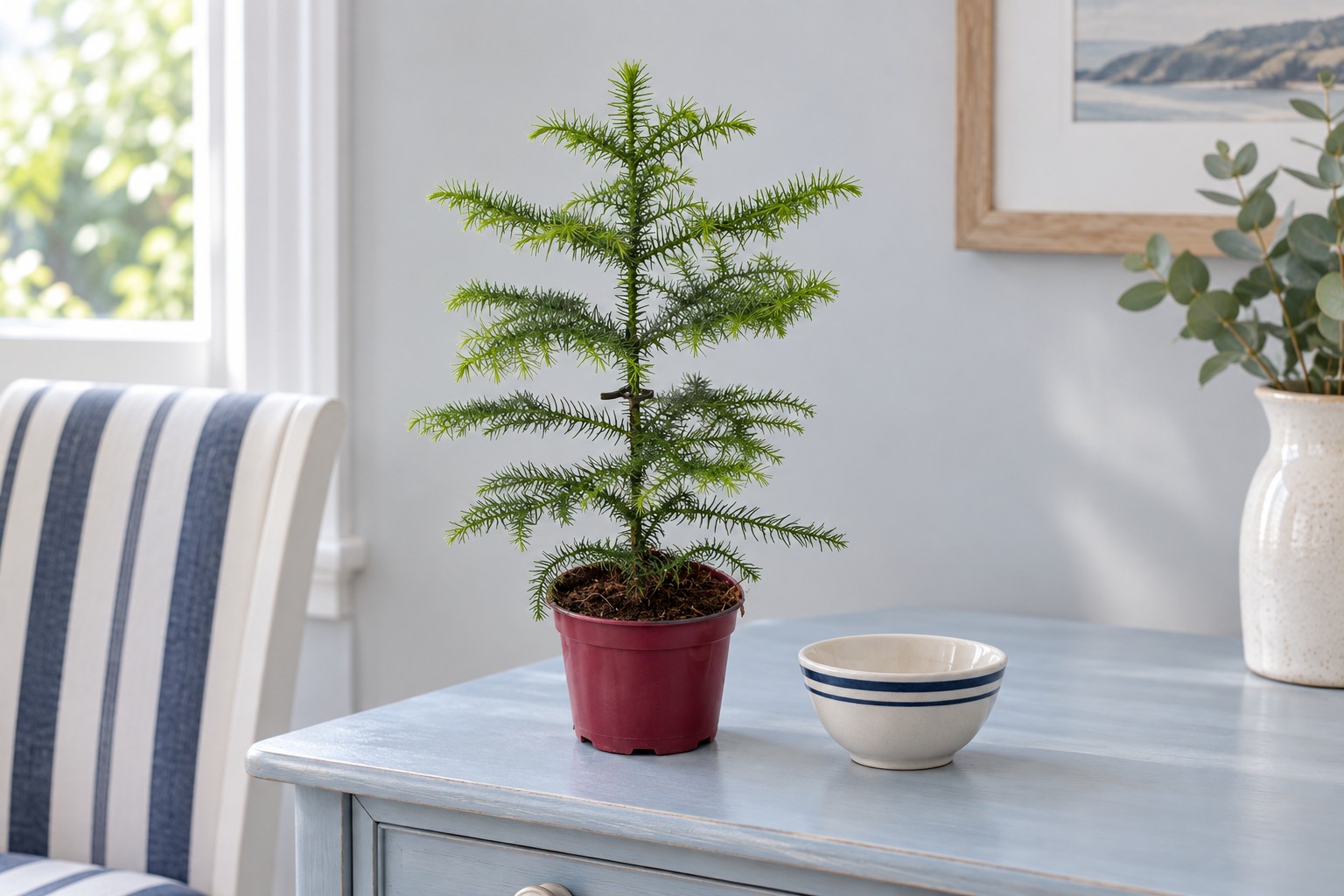
This plant at Exotenherz
Check the shop offer for current availability, price and what is included.
The linked shop is in German. Product details, availability and delivery information are provided in that shop.
Your care table
| Topic | What to do | Why it helps |
|---|---|---|
| Light | Place in bright conditions and turn slightly now and then. | Even light supports the regular shape. |
| Water | Allow the surface to dry slightly and keep the root ball consistently supplied. | Severe dry periods can damage branches. |
| Drainage | Remove leftover water from the cachepot. | Persistent wetness stresses roots. |
| Indoor climate | Keep fairly cool and away from heating. | Dry warm air encourages brown tips. |
| Compost | Use loose, free-draining compost in a pot with holes. | The root ball needs air and moisture. |
| Feeding | Feed moderately during growth according to the label. | Demand is usually lower in winter. |
| Pruning | Do not cut off the main shoot; remove only dead parts. | The tree form is hard to preserve after cutting the tip. |
| Winter | Overwinter bright and frost-free. | Norfolk Island pine is not a native frost-hardy fir. |
Check the compost and pot weight. The care table explains how far the compost may dry.
Water only when needed. The water should reach the root ball without spilling over the rim.
Remove surplus water from the saucer or cachepot. Then return the plant to a suitable position.
An island tree in a young format
Norfolk Island pine comes from Norfolk Island and is not botanically a fir of the genus Abies. Young araucarias carry soft, fine-looking foliage on regularly arranged tiers of branches. A distinct leading shoot develops with age. In its natural habitat, this becomes a large tree; indoors, pot and conditions limit growth. The calm, symmetrical shape is its special appeal. It stays most attractive when individual tiers can continue growing undamaged.
Delivered small, with a long-term perspective
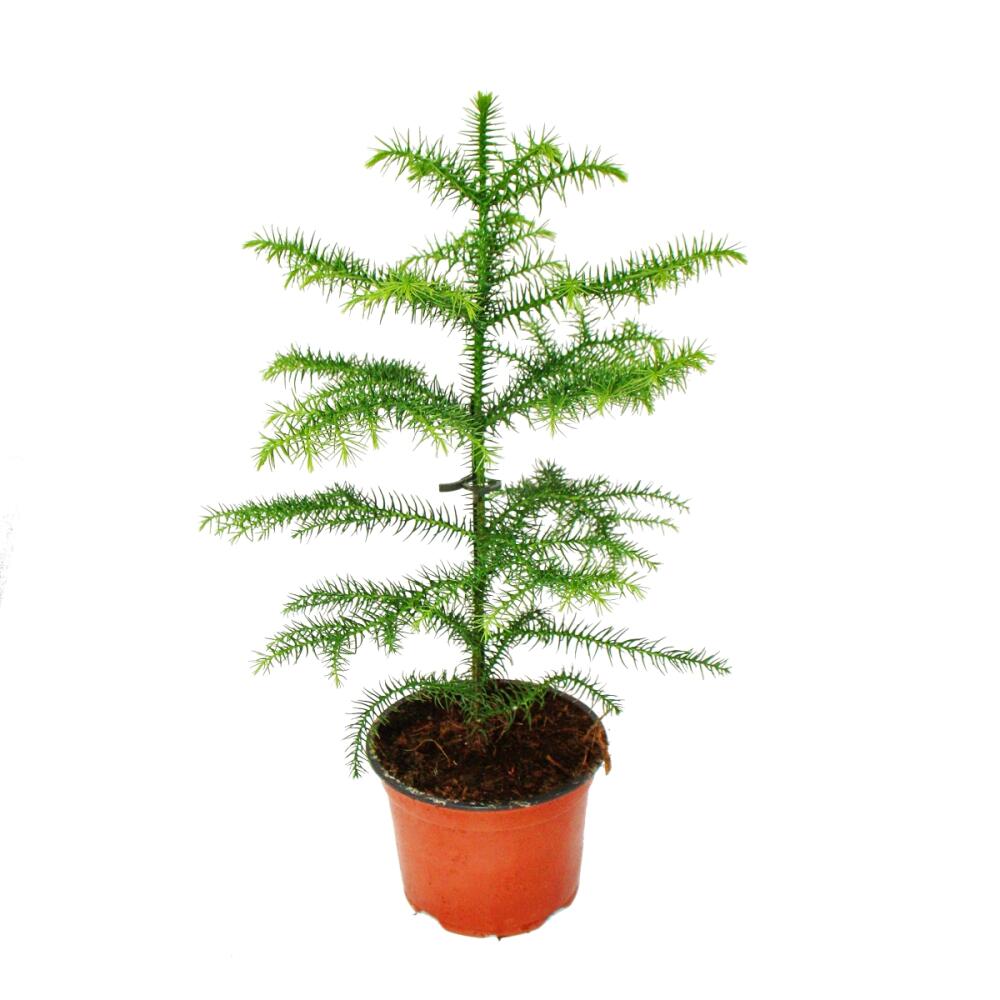
This plant is offered in a 12 cm pot with about 25–30 cm total height. A bright sideboard in a fairly cool room is often better than a spot close to a radiator. Branches should not be pressed against a wall or curtain. Heavy Christmas ornaments would strain the delicate branches; the plant is a living companion all year. The cachepot and room styling in the image are examples, not promised contents.
Distribute light evenly
Choose plenty of daylight, preferably without sudden hot summer sunshine. Turn the pot slightly now and then so the tree does not lean permanently towards the light source. A cooler, bright room often suits it better than very warm, dry indoor air. The plant nevertheless remains frost-free and protected from cold draughts. Its German name, indoor fir, must not encourage placing it outside in winter like a native garden fir.
Do not dry out or leave standing in water
Check the uppermost compost layer and water when it has dried slightly. The entire root ball should not remain dry for an extended period. Water thoroughly as needed and remove excess. Permanently heavy, wet compost also causes harm. Brown, dry branch tips may be connected with dry periods or heating air, among other causes. Fully dried branches do not turn green again with extra water. What matters is improving conditions for the healthy part.
Respect the leading shoot
Do not cut the tip to keep the tree smaller. Such a cut can permanently change its characteristic shape. Carefully remove only clearly dead or damaged parts. When repotting into loose, free-draining houseplant compost, disturb roots as little as possible and provide only slightly more room. A container with drainage holes remains essential. Feed moderately according to the label during visible growth, with much greater restraint in a low-light winter.
Inspect fine branches regularly
Check shoot bases and foliage for mealybugs or other sap-sucking pests. Remove dust carefully without bending the branches. Better room humidity is more useful than occasional sprays beside hot heating. Avoid frequent abrupt changes of position. If several lower tiers are lost, check light, root-ball moisture and root condition. Patience matters: a missing branch does not simply grow back in the same place.
One plant, several views
Good to know
Can I plant it in the garden at Christmas?
No. Araucaria heterophylla is not suitable as an ordinary garden fir for our cold winters.
May I cut off the tip?
This should be avoided as a way to limit size because it can permanently change the typical habit.
Why are lower branches turning brown?
Check dry periods, constant wetness, insufficient light and dry heating warmth. Dead branches will not become green again.
Is the listing already a large tree?
No. It is a young plant with about 25–30 cm total height in a 12 cm pot.
Sources and editorial note
Sources checked: 15 September 2026. Product details and delivery contents follow the linked shop listing. Care has been checked against the specialist sources cited and must be adapted to the plant’s condition, position and season.