This plant at Exotenherz
Check the shop offer for current availability, price and what is included.
Link to the offer in German. Check the shop for the current price, availability and delivery contents.
Your care table
| Topic | What to do | Why it helps |
|---|---|---|
| Sun | Choose a sunny, sheltered outdoor position and acclimatise slowly to direct sun after time indoors. | Light promotes a compact shape. Moving abruptly can damage foliage. |
| Watering | Water thoroughly during growth, then allow to dry somewhat; closely watch needs in the small container. | Drought tolerance in established trees does not apply to every young potted root ball. |
| Drainage | Provide a pot with clear holes, stable free-draining growing medium and reliable drainage. | Rainwater must drain too. Water in a decorative pot is particularly problematic in cool autumn weather. |
| Fertiliser | Use a suitable fertiliser during growth according to the manufacturer’s instructions. | A pot has limited nutrient reserves; more fertiliser does not replace good root function. |
| Pruning | Plan larger shape corrections for spring; selectively inspect dead and damaged wood. | Careful shaping preserves more healthy leaf area than an indiscriminate hard cut. |
| Repotting | If needed, move in spring to a stable container that is only moderately larger. | A slender trunk with a crown needs stability without standing in excessive wet compost. |
| Winter position | Before frost, place somewhere bright and cool, preferably frost-free; check moisture regularly. | Roots in a container are less protected than in established ground. |
| Winter water | Water sparingly according to root-ball moisture; do not let it dry out completely. | Evergreen foliage still loses water. Cooler conditions lower consumption, however. |
Check the compost and pot weight. The care table explains how far the compost may dry.
Water only when needed. The water should reach the root ball without spilling over the rim.
Remove surplus water from the saucer or cachepot. Then return the plant to a suitable position.
A Mediterranean tree in a manageable format
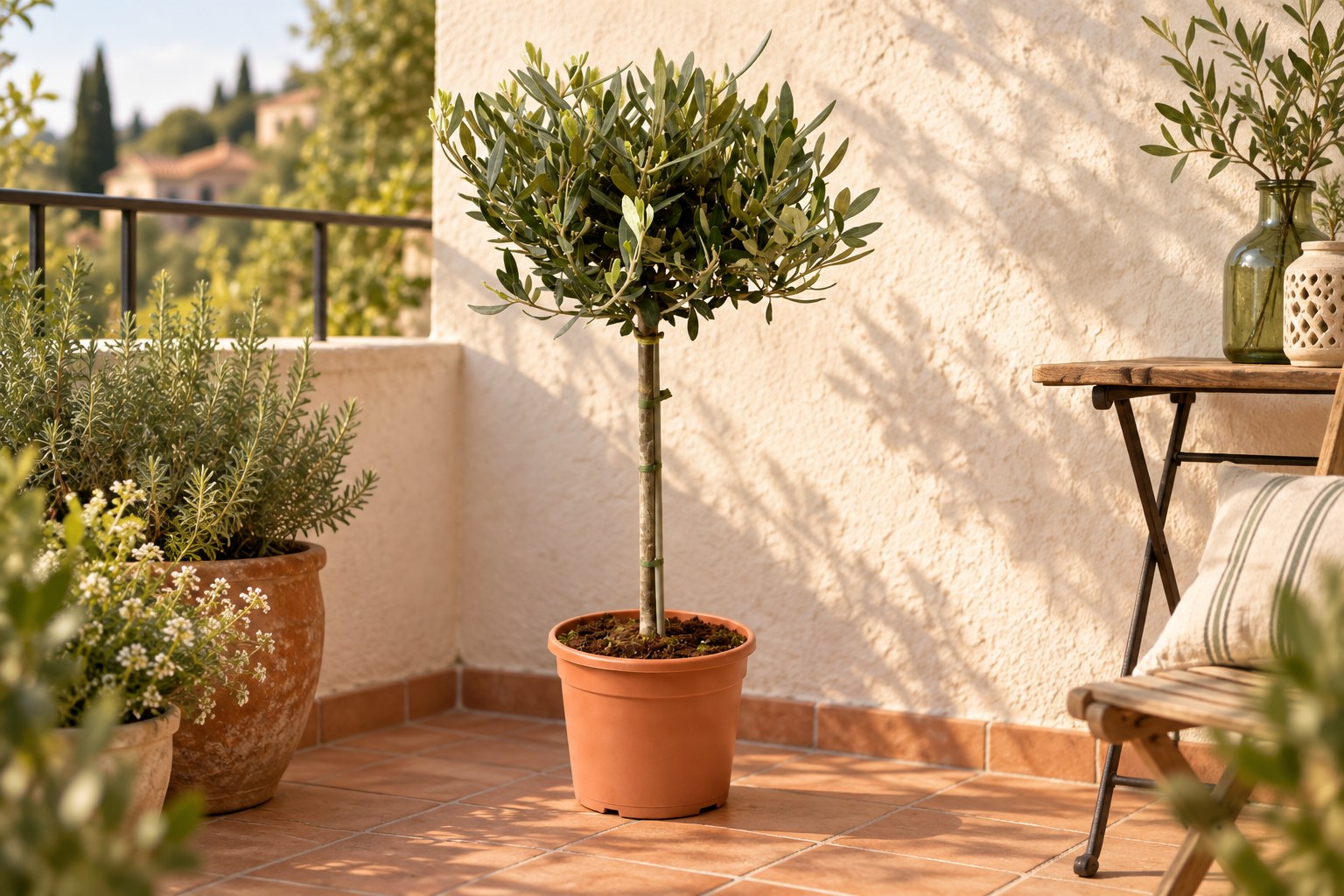
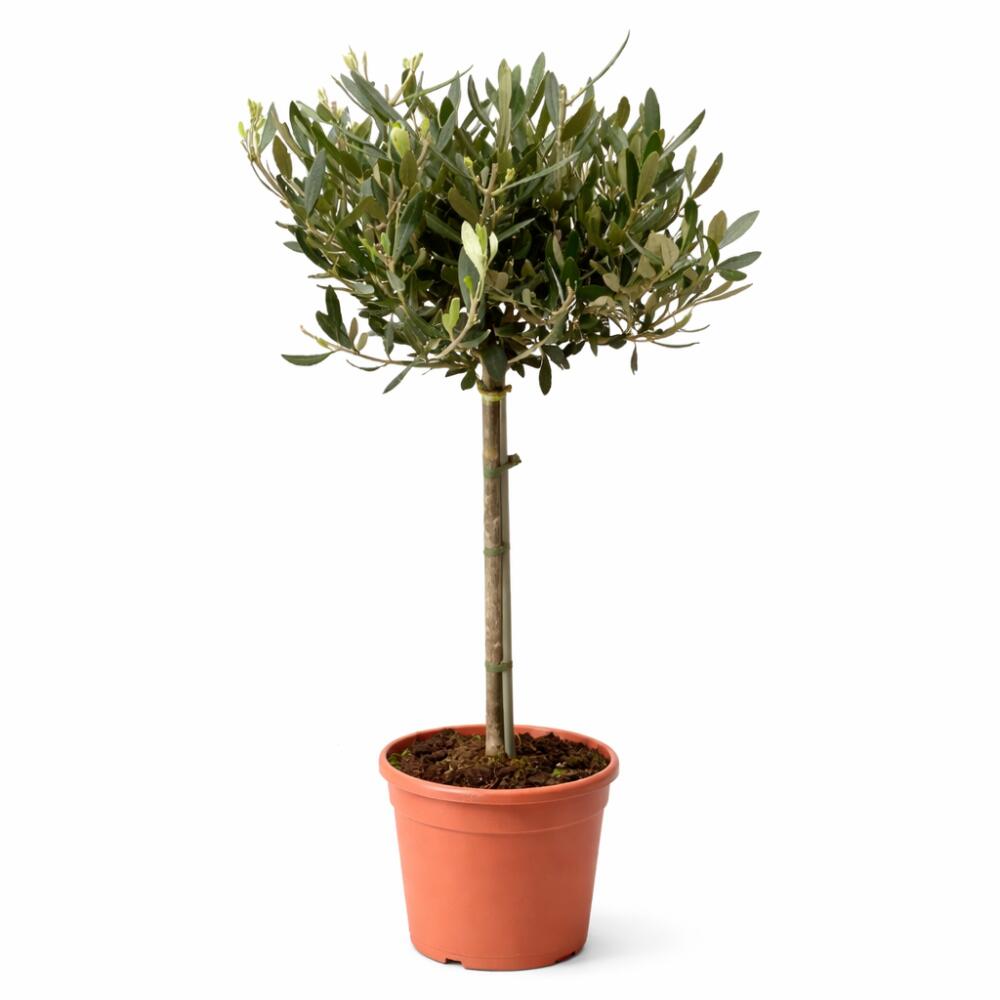
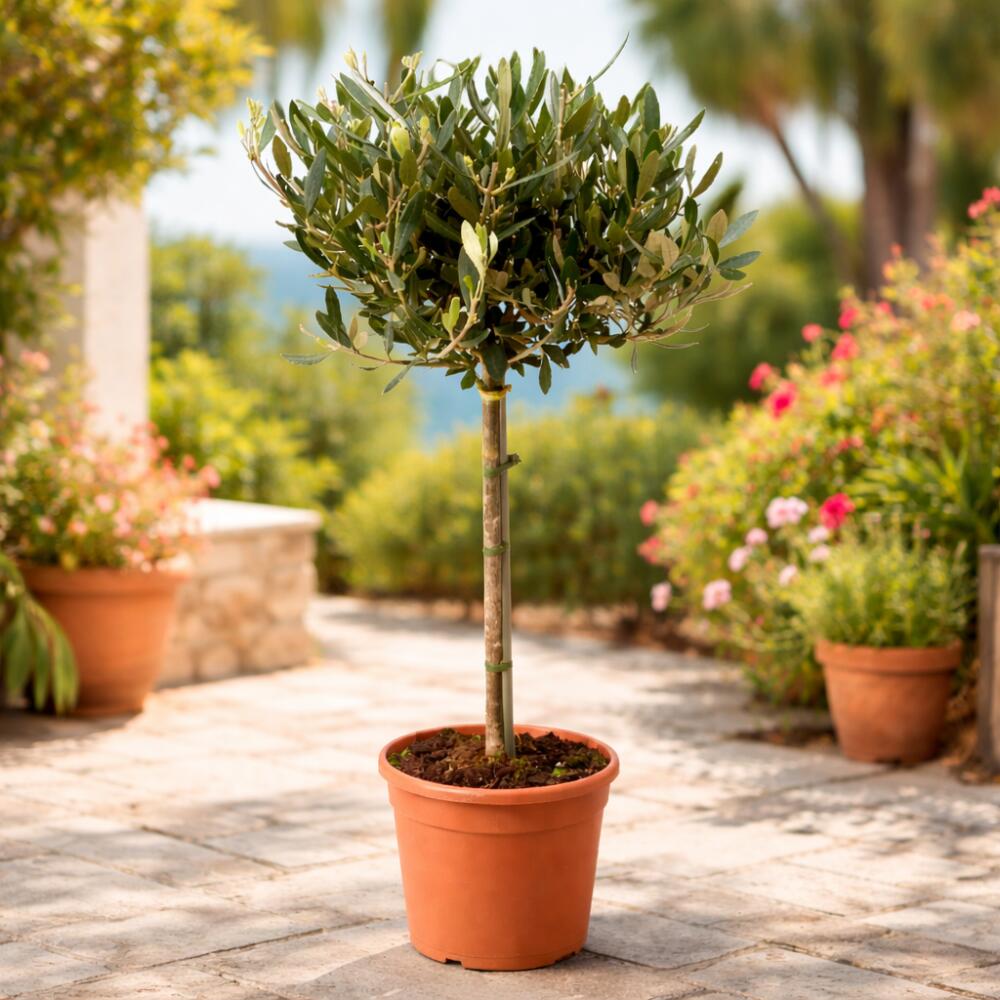
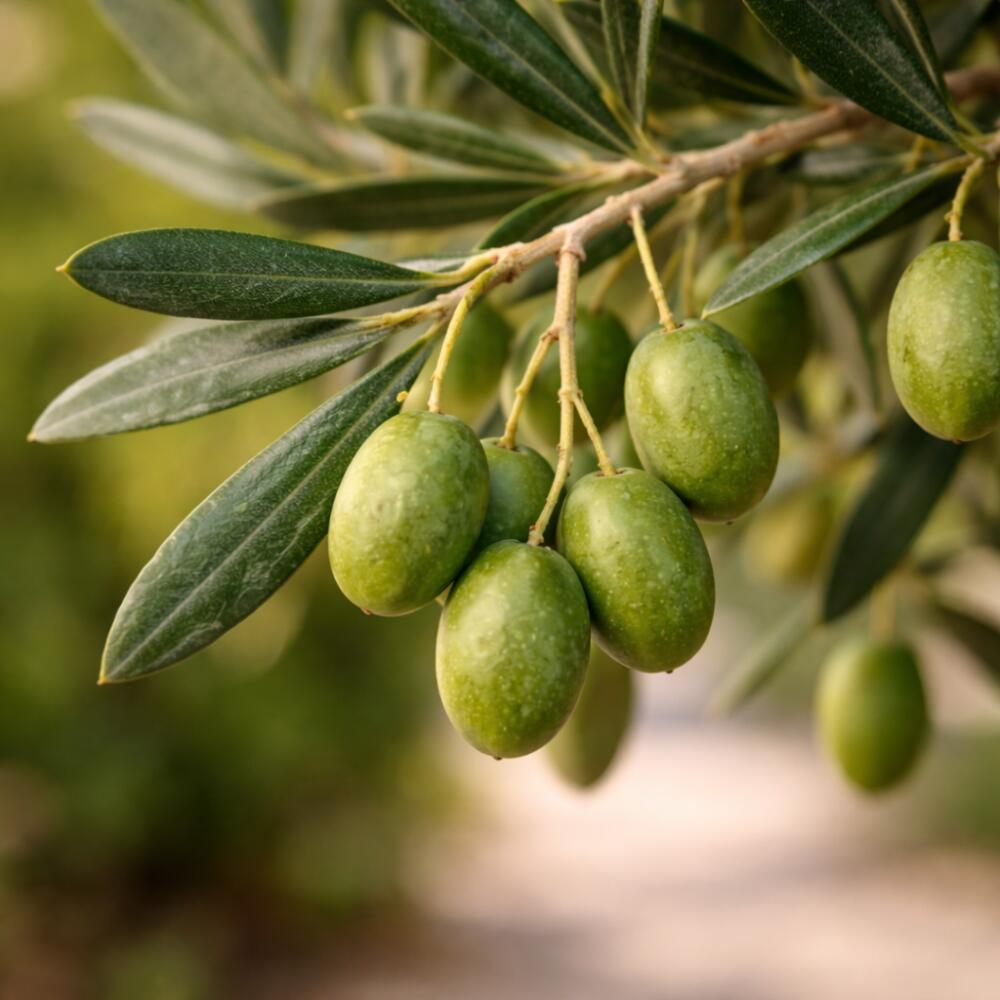
The olive tree, botanically Olea europaea, is an evergreen woody plant with narrow leaves that look silvery underneath. The shop plant presented here is offered in a 19 cm pot at approximately 70 to 80 cm tall. Its young trunk and small crown also fit modest terraces. It is not yet a gnarled old tree with roots deep in the ground, however. This difference shapes its care: a limited root ball responds faster to heat, wetness and cold. Alongside its favourite summer position, plan an accessible winter location straight away. The prettiest container is little help if it can no longer be moved in autumn.
The summer position: sunshine with a good start
A sunny, sheltered position outdoors suits an olive’s character. After transport or a long period indoors, do not put it straight into intense midday sun. Accustom it gradually to the stronger light and watch the foliage. A sheltered position does not mean moving the tree permanently into a dark corner. Ensure it is stable too: a small crown can catch more wind than the slender trunk suggests. A saucer is practical only if water does not collect in it. On balcony slabs and level terraces, check that the drainage holes really remain clear.
Drought tolerance is not a ban on watering
An established olive tree in suitable soil copes with drier periods differently from a young plant in a small pot. Feel regularly how moist the root ball is and consider its weight. In warm, sunny and windy weather, water needs can rise substantially. Water thoroughly when necessary and allow excess water to drain. The upper compost can dry again before the next watering. Permanently wet growing medium is as unfavourable as repeated complete drying out. After rain, do not automatically add water; also check whether the rain reached the root ball beneath a dense crown at all.
Consider compost, container and nutrients together
The important thing is a growing medium that keeps its structure, distributes water and releases excess moisture. A suitable container-plant mix with mineral components can provide a good basis. A layer of stones at the bottom cannot turn a pot without clear drainage holes into a reliably drained nursery pot. Increase size only moderately when repotting and inspect the root ball rather than routinely using a much larger container every year. Feed during active growth according to the fertiliser label. With damaged roots or stalled growth, the plant first needs suitable growing conditions, not extra fertiliser on suspicion.
Prepare winter quarters in September
Autumn is the right time to check the moving route and winter quarters. A bright, cool and preferably frost-free place offers a reliable starting point for this young container olive. A warm, dim living room is often unsuitable because temperature and available light do not match. A shed is suitable only if there is enough light and the root ball does not freeze through. General sub-zero temperature figures in descriptions of older olives in the ground are not a reliable promise for this potted tree. Consider the duration of cold, wind, wetness and actual root protection. Arrange its accommodation before the first frosty night makes it an urgent problem.
Winter care is still care
Look at the olive regularly even in cool winter quarters. Check the root ball and water cautiously when moisture declines; complete drying out is not an appropriate winter strategy for an evergreen plant. At the same time, cool compost dries slowly, so a summer watering rhythm would quickly be too much. Inspect leaves and shoots for unusual coatings, sticky patches or firmly attached small bumps. Some leaf loss after moving need not be a disaster. With heavier loss, check light, temperature and roots together. Ventilate suitable quarters on mild days without exposing the plant to a freezing draught.
Pruning, fruit and the start of the next year
Plan larger shape corrections for spring and proceed gradually. Remove dead or damaged areas selectively; the small crown does not have to reach its final shape in a single cut. Once frost danger has passed, gradually accustom the olive to its outdoor position and sunshine again. Flowers and fruit depend, among other things, on age, growing conditions, variety and pollination. No particular harvest is guaranteed for the offered specimen. When buying an olive, first enjoy its foliage and habit. Any fresh fruit is not a snack straight from the tree either: untreated olives are strongly bitter and need appropriate processing.
One plant, several views
Good to know
Can this olive tree overwinter outdoors?
For the young container plant, the cautious recommendation is a bright, cool, frost-protected place. A species name cannot establish blanket frost hardiness for every pot and position.
Do I need to water in winter?
Yes, if the root ball is losing moisture. Check it regularly and water cautiously. Evergreen means neither constantly soaked nor months without water.
Will the offered plant definitely bear olives?
No. No particular variety or harvest is promised here. Flowering and fruit depend on several conditions; its reliable strength is its decorative evergreen foliage.
Sources and editorial note
Sources checked: 14 September 2026. Based on shop information and the linked specialist sources. Always adapt care to the plant’s condition, position and season.