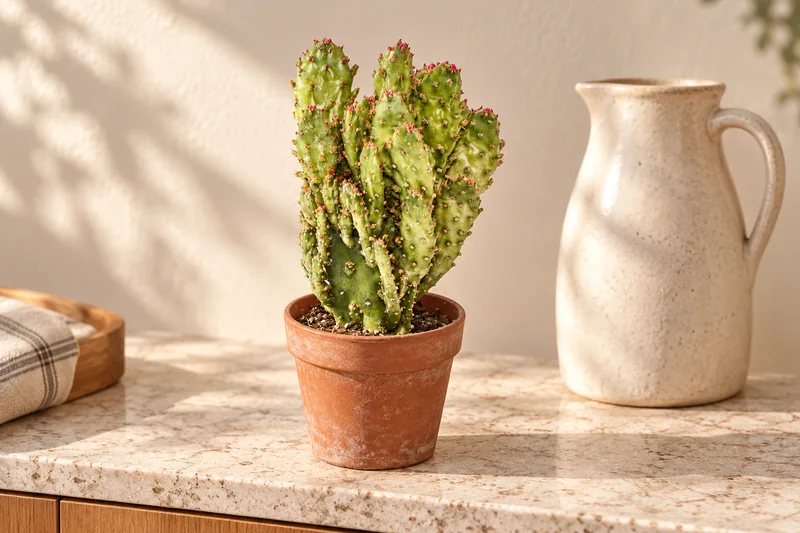
This plant at Exotenherz
Check the shop offer for current availability, price and what is included.
Check the shop for the current price, availability and offer contents.
Your care table
| Topic | What to do | Why it helps |
|---|---|---|
| Light | Choose a very bright and accessible position. | Observe new segments. |
| Sun | Increase stronger sun gradually after moving. | Avoid abrupt exposure behind hot glass. |
| Water | Allow the root ball to dry noticeably between applications. | Stem reserves do not replace root care. |
| Drainage | Water the soil directly and remove excess. | Avoid constant wetness. |
| Soil | Structured, free-draining cactus soil. | Keep container holes clear. |
| Handling | Account for spines and fine glochids. | Do not touch seemingly smooth segments without protection. |
| Feeding | Sparingly during growth, following the label. | No blanket feeding during rest. |
| Winter | Bright and frost-free; adapt water to consumption. | Do not borrow garden hardiness from another species. |
Check the compost and pot weight. The care table explains how far the compost may dry.
Water only when needed. The water should reach the root ball without spilling over the rim.
Remove surplus water from the saucer or cachepot. Then return the plant to a suitable position.
The flat ears are actually stem segments
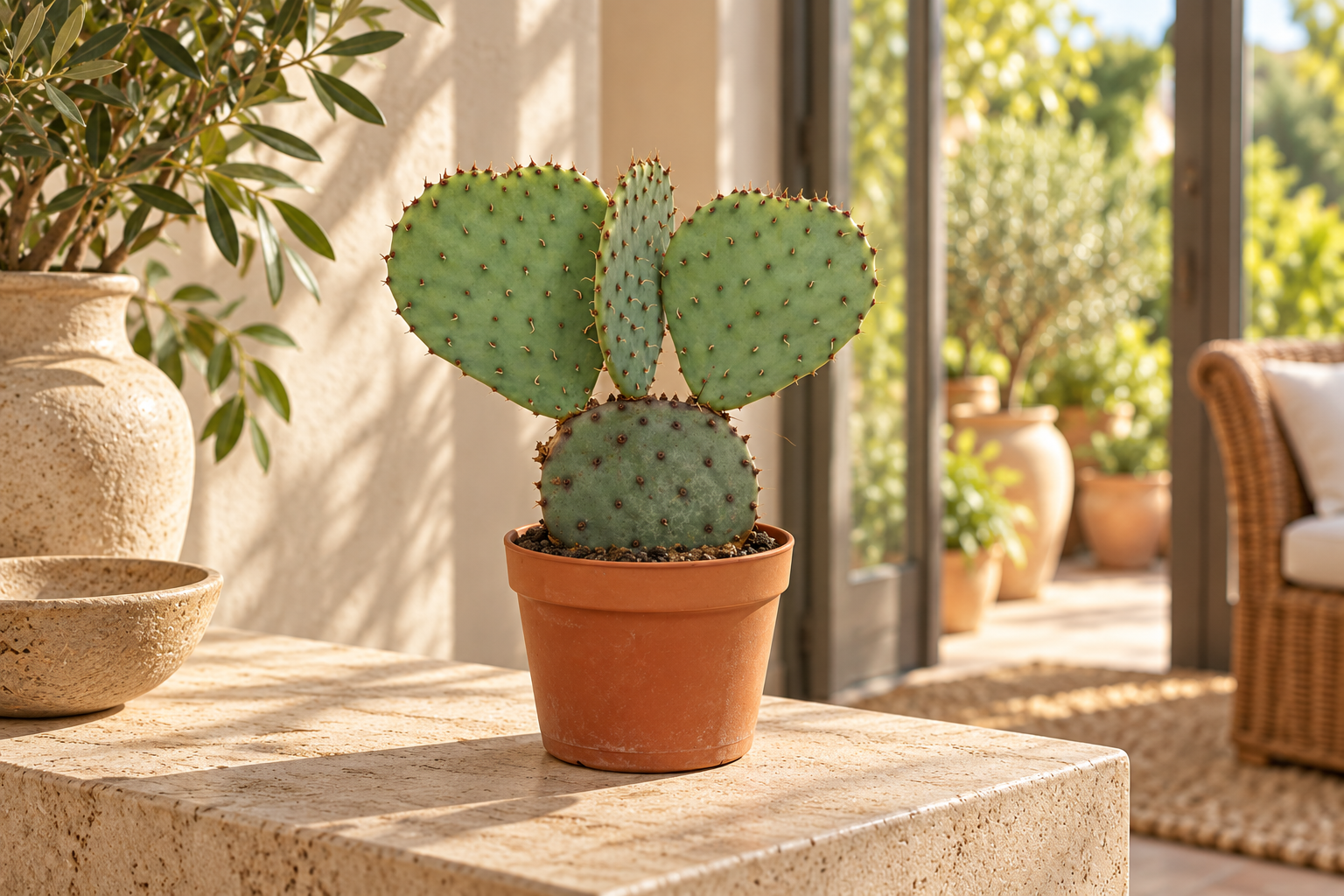
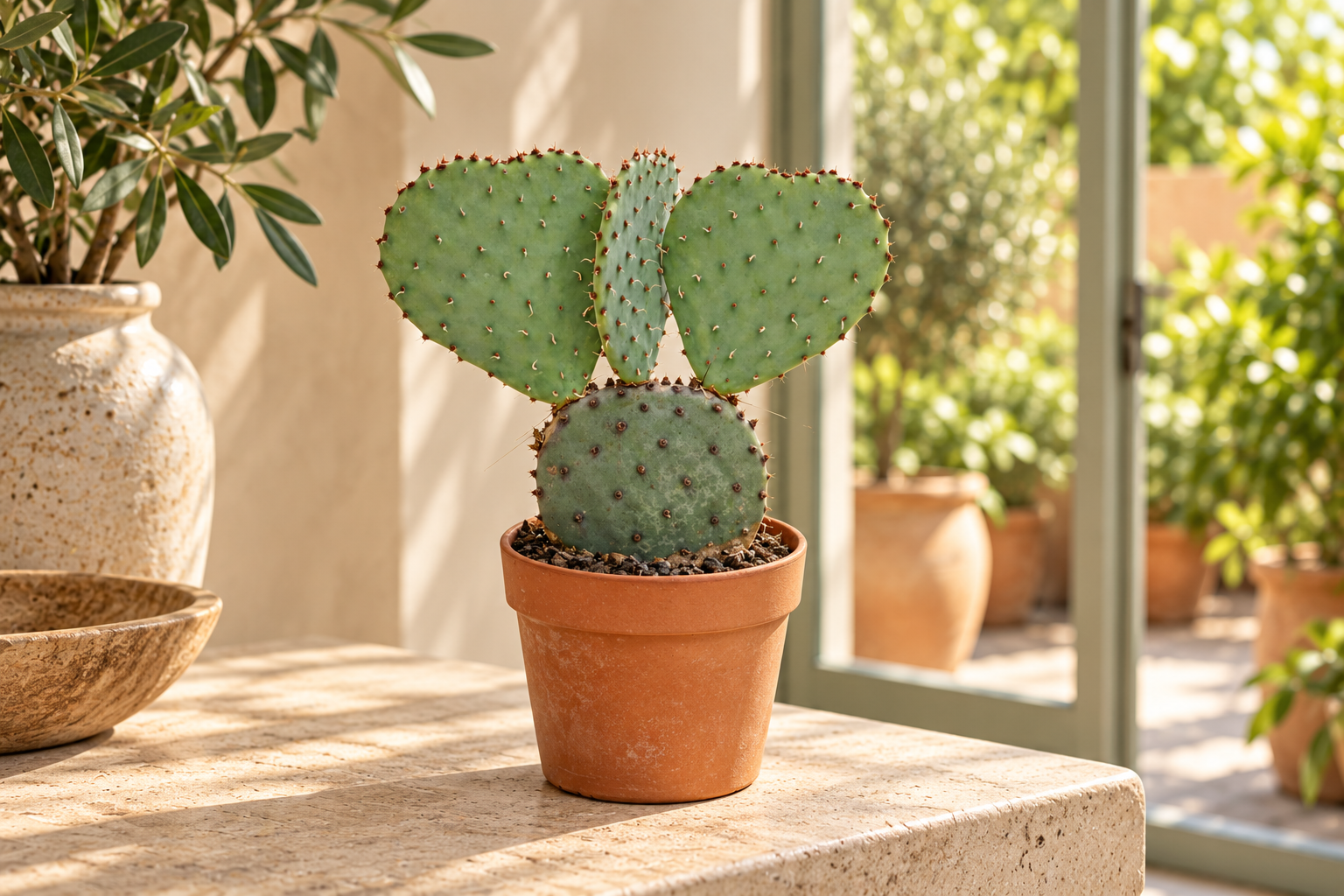
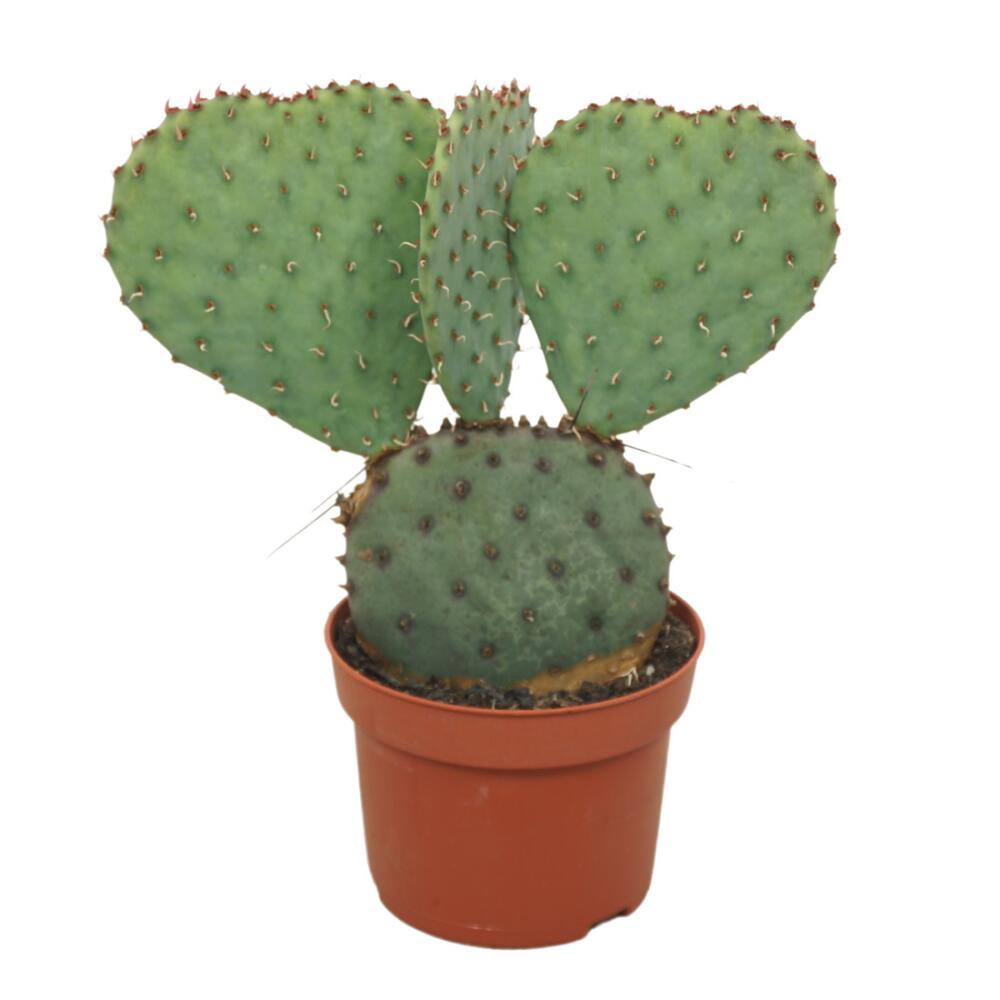
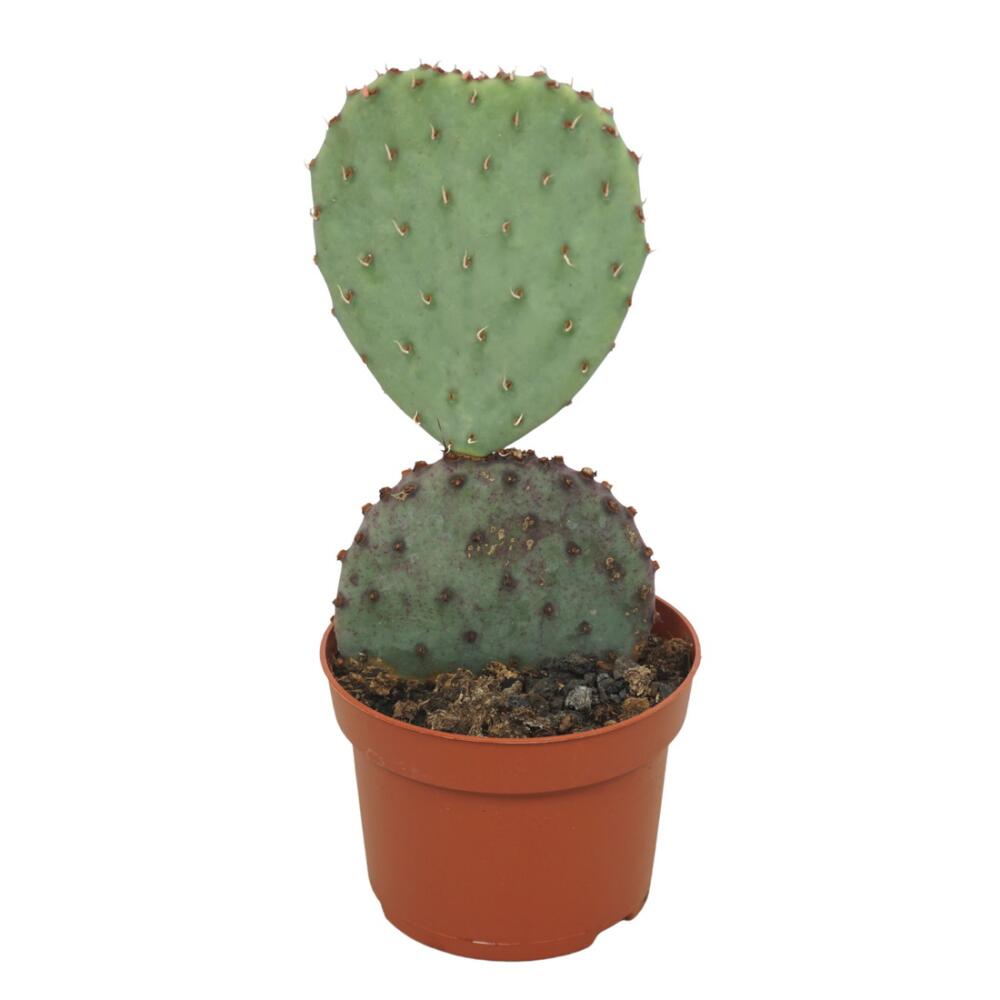
Further flat oval segments stand above a low rounded segment. Their blue-green body carries regularly spaced darker areoles with fine spines. From the front, the young opuntia almost resembles a small pair of ears; from the side, its flat shape becomes clear. What looks like a broad leaf is a modified stem. This difference makes the portrait interesting: water is stored in the fleshy body while the green surface receives light. The fine dots are no invitation to touch the plant without protection.
Give the small form space away from contact
The associated item has a 12 cm pot and about twenty to twenty-five centimetres total height. The original views show different numbers of young segments; they do not promise a fixed later silhouette. Support the container when carrying it. Alongside larger spines, opuntias can have tiny barbed glochids. Do not test even a seemingly smooth surface with bare fingers. A bright, safe place away from frequent contact shows off the form without skin, fabric or neighbouring foliage brushing against it whenever someone passes.
Plenty of light with a gradual transition
Give the young opuntia a very bright location. After transport or a move, introduce stronger direct sunlight gradually. A possible summer position outdoors needs frost-free conditions and careful acclimatisation. We do not infer garden frost hardiness from the behaviour of another opuntia species. Observe the newest segments and their attachment points. A decorative place on a dark bookcase does not automatically provide enough light for further development. The small plant should stand where it can grow, not simply where its silhouette is most striking.
The pads store water, but still check the root ball
Allow the substrate to dry noticeably between applications. During growth, water the soil slowly and remove excess from the outer pot. Do not use flat segments as handles for lifting. Consider a changed pad together with root condition, light and moisture: an already wet root ball does not automatically need another application. Nor does spraying only the outer surfaces properly care for a plant forgotten dry for a long time. The small root space remains the real starting point for care.
Repot without contact with the fine areoles
Free-draining cactus soil and unobstructed container holes support manageable cultivation. When space is genuinely needed, repot carefully at the start of growth. Suitable gripping aids and protective measures help with spines and glochids; an arbitrary thin cloth is not automatically safe. Support the root ball rather than bending the stem segments apart. Feed sparingly during active growth according to a suitable cactus fertiliser label. Check the segment junctions and base especially, from a little distance. Investigate unusual new deposits more closely rather than confusing them with the natural areole pattern.
Development is more interesting than an invented flower promise
Opuntia azurea is described here as a young perennial potted plant. Current flowers, an edible harvest or a precise later height are not inferred from the original photos. In winter, keep it bright and frost-free; reduce watering during rest and continue checking the root ball. Photograph the front and a side view in the plant book. Record when a new segment starts and where the plant stood then. Its own small architecture becomes visible without judging it prematurely by a fixed number of ears or a general flowering time.
One plant, several views
Good to know
Are the flat ears leaves?
They are fleshy flat stem segments that also store water.
Is an almost spineless area safe to touch?
Opuntias can carry very fine glochids. Do not touch without protection.
How many segments will there be later?
The pictures show young forms, not a guaranteed future segment count.
Can it overwinter in a garden bed?
No garden frost hardiness is promised for this offer; grow it frost-free.
Are flowers or fruits promised?
The portrait describes the pictured young plant without such delivery promises.
Sources and editorial note
- Exotenherz: offer and original images (03.10.2026)
- RHS – cacti in containers, light and need-based care (03.10.2026)
- NC State Extension – Opuntia, stem segments and glochids (03.10.2026)
Shop offer, item number, GTIN, availability and original images directly checked on 02.10.2026; specialist acceptance on 03.10.2026. Specialist sources read directly. SKU, original images, dimensions and orderability directly checked in the shop on 03.10.2026. Relevant specialist sections read. The shop name and botanical reference remain distinguishable. Images checked against the originals; no Wawi, server or tool changes. Currently not orderable: knowledge portrait without a purchase link; social drafts not cleared for sending.