This plant at Exotenherz
Check the shop offer for current availability, price and what is included.
Product and delivery details are given in the individual offer.
Your care table
| Topic | What to do | Why it helps |
|---|---|---|
| Light | Very bright; acclimatise carefully to strong sun. | Pale variegated areas can scorch during abrupt changes. |
| Water | During active growth, thoroughly, then allow to dry well. | Segments store water; roots need air. |
| Soil | Draining cactus compost with a stable structure. | Moisture should not remain at the base. |
| Drainage | Pot with holes; remove water from the decorative pot. | Hidden waterlogging harms the root space. |
| Fertiliser | During growth, sparingly according to the cactus-fertiliser label. | More food replaces neither light nor suitable dry phases. |
| Winter | Frost-free and bright; reduce water strongly during rest. | This variegated potted form receives no general permission for frost. |
| Handling | Hold the pot; use suitable aids when repotting. | Glochids can remain in skin even without obvious large spines. |
| Pruning | Only selectively when genuinely needed. | The irregular structure belongs to the commercial form. |
Check the compost and pot weight. The care table explains how far the compost may dry.
Water only when needed. The water should reach the root ball without spilling over the rim.
Remove surplus water from the saucer or cachepot. Then return the plant to a suitable position.
A cactus without uniform segments
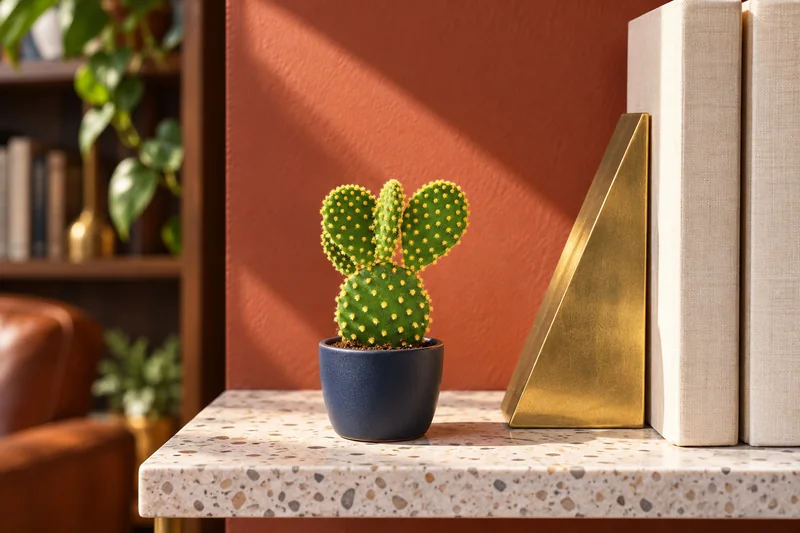
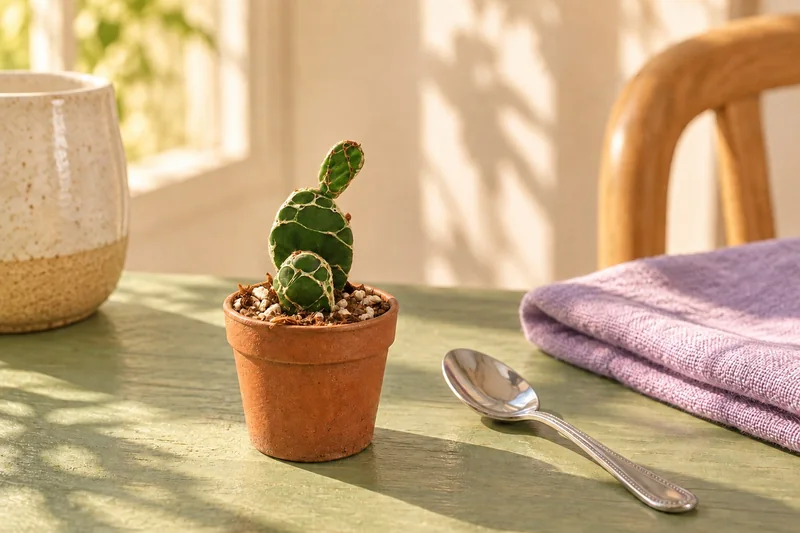
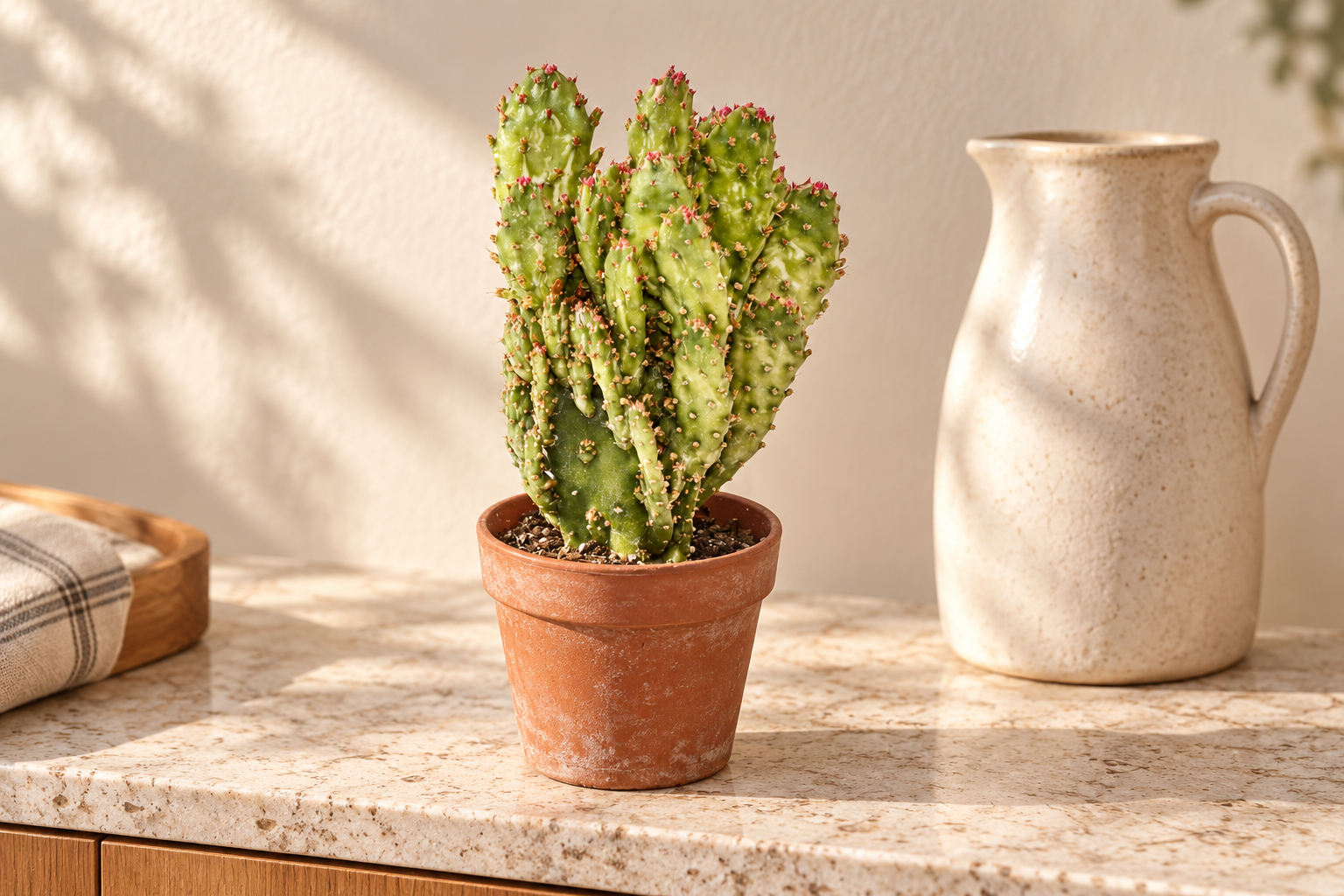
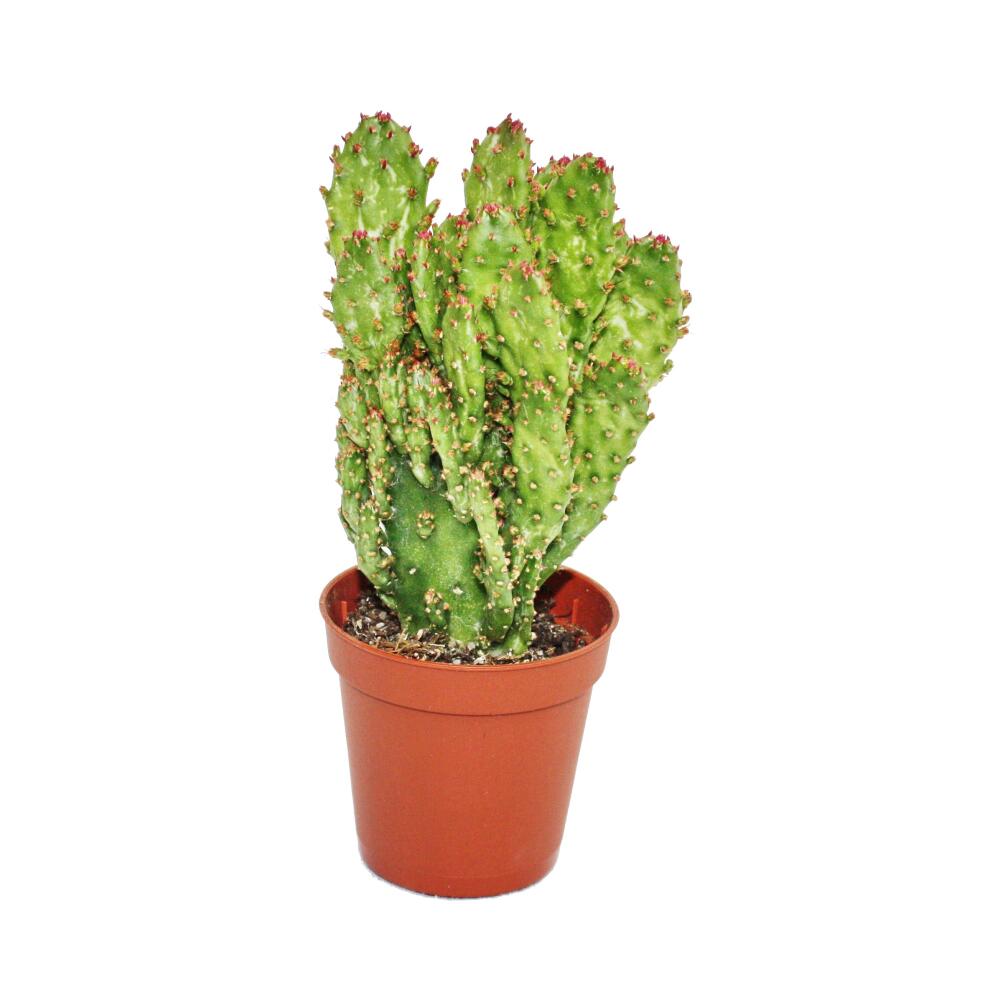
Opuntia monacantha ‘Variegata’ looks like a small cactus with plenty of ideas of its own. Its segments branch irregularly, with green areas alternating with creamy and yellowish islands. Some tips may look pink. This mixture is precisely the appeal of the commercial form offered. The plant in an 8.5 cm pot has an overall height of about 12 to 18 cm. It is not portrayed as a symmetrical prickly pear with two round ears. The original shows its actual structure. A bright position reveals the pattern while giving new growth the foundation it needs for strong development.
Variegation is not a uniform pattern
Pale areas of the cactus segments contain less chlorophyll than green parts. The pattern therefore differs from segment to segment. We do not expect every new tip to gain the same colour distribution. The offered plant retains its commercial name; an additional precise cultivar or form designation is not inferred simply from its unusual silhouette. This restraint keeps photograph and text understandably aligned. A naturally irregular structure is not automatically a sign of insufficient light. Noticeably thin new growth is nevertheless assessed together with the position rather than indiscriminately attributing every change to the form.
Place brightly and introduce sun carefully
The opuntia needs a very bright position. After transport, increase direct sun gradually because pale tissue areas in particular may suffer from a sudden change. A warm airy shelf with good light is better than a dark shelf. Check temperature behind a hot pane. A sheltered summer place outdoors is possible if frost and cold nights are excluded and rain does not constantly soak the pot. The plant should stand securely without catching on curtains or clothing. Although its small pot allows easy repositioning, frequent changes of position are not a care goal.
Take the fine barbs seriously
With opuntias, conspicuous large spines are not the only important ones. Small glochids can remain in the skin and become unpleasant when handled carelessly. Therefore hold the pot and use suitable aids when repotting instead of holding segments with bare hands. Children and pets should not have direct access to the plant either. Fallen parts are picked up carefully, not casually swept off the table. The delicate pale pattern does not make the cactus harmless. A well-chosen place is therefore both an attractive light position and somewhere nobody constantly brushes against it.
Water and soil share a rhythm
During active growth, moisten the root ball thoroughly and then let it dry well again. Soil needs a freely draining structure and the pot clear drainage holes. Remove water from the decorative pot and check its weight before watering again. In warm light, the plant may grow actively and need water accordingly; permanent wetness remains unsuitable. A surface-only dryness test is insufficient with a dense root ball. When repotting, give only a reasonable increase in space and do not set the base deeper. Moderate nutrient applications are possible during growth according to the label of the product used.
Winter rest without testing frost
As light and growth decline, water is strongly reduced. The variegated potted form overwinters brightly and frost-free. The general reputation of hardy garden opuntias does not automatically apply to this other species and commercial form. A cool airy position makes the dry phase easier. A warm room needs especially much light; extra water cannot improve a dark winter position. Check that the base is firm and inspect new tips occasionally. A slow-growing cactus need not keep forming new segments in winter. Healthy rest is also a good part of its cultivation.
Let its own shape develop
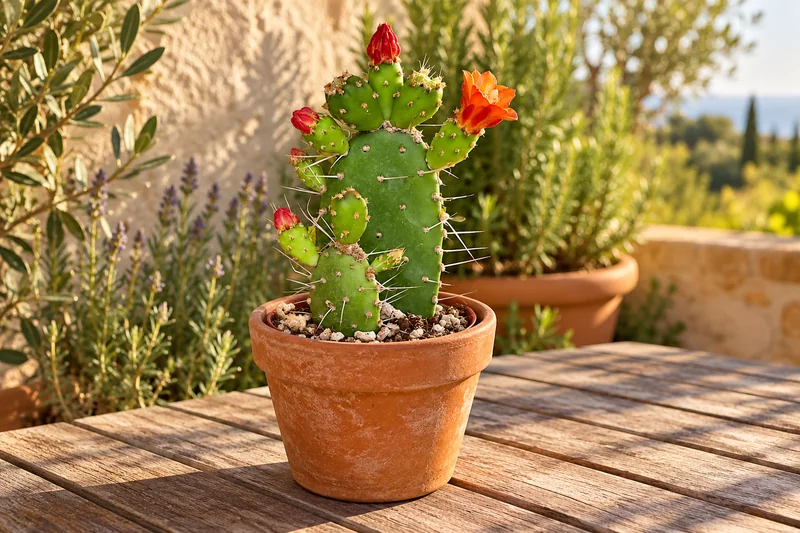
The opuntia needs no regular shaping cuts to look symmetrical. Its irregular segments are the actual attraction. Prune only when necessary, cleanly and with safe handling. Do not remove every differently coloured segment simply because its pattern differs from the photograph. Instead, observe whether the plant stays firm and continues healthy growth. No flowers or fruits are promised on the young delivered plant. The colourful form is enjoyable even without flowers, especially when a new tip develops a different pattern. With good light, a controlled root ball and respectful distance from fine barbs, this little cactus can be accompanied attentively for a long time.
One plant, several views
Good to know
Why are the segments so irregular?
The offered commercial form shows an individual branching structure; a symmetrical ear shape is not assumed.
Will the pattern remain exactly as in the photograph?
No. Green and pale areas can be distributed differently on each segment.
Are small opuntias harmless?
No. Fine barbed glochids particularly require careful handling.
May it overwinter outside?
Keep this potted form frost-free; frost information for other garden opuntias is not transferable.
How do I water in summer?
During active growth, thoroughly after good drying, with reliable drainage.
Should I cut off differently coloured segments?
Not automatically. Natural differences in pattern are part of the plant.
Does it need a large pot?
Increase moderately only when genuinely needed; much unrooted soil makes moisture control harder.
Sources and editorial note
- Exotenherz: offer and original images (01.10.2026)
- Kew: Opuntia monacantha (01.10.2026)
- LLIFLE: variegated forms of Opuntia monacantha (01.10.2026)
- RHS: cacti in cultivation (01.10.2026)
Shop offer, SKU, GTIN and availability checked live on 01.10.2026. Original photograph unchanged. Our own researched gardening texts and individually approved scene.