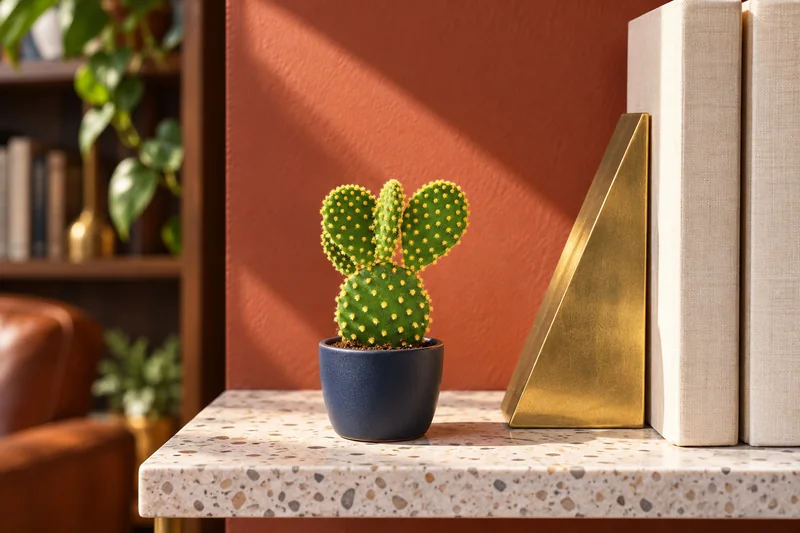
This plant at Exotenherz
Check the shop offer for current availability, price and what is included.
Check the shop for the price, current availability and what is included.
Your care table
| Topic | What to do | Why it helps |
|---|---|---|
| Light | Very bright to sunny after slow acclimatisation. | Sudden strong sun can burn cacti too. |
| Water | Water only after the root ball dries well. | Strong stem segments store water. |
| Drainage | Remove all excess. | Avoid constant moisture at shoot bases. |
| Compost | Freely draining cactus mix with mineral structure. | Compacted wet compost provides too little air to roots. |
| Feed | Sparingly during growth according to the product. | Pause during rest. |
| Winter | Bright and frost-free, considerably drier. | Hardiness is not established for the offer. |
| Handling | Use suitable aids to protect against glochids. | The almost smooth surface may still irritate. |
| Checks | Distinguish net markings from newly appearing soft patches. | The natural pattern does not need removal. |
Check the compost and pot weight. The care table explains how far the compost may dry.
Water only when needed. The water should reach the root ball without spilling over the rim.
Remove surplus water from the saucer or cachepot. Then return the plant to a suitable position.
A net on green cactus segments
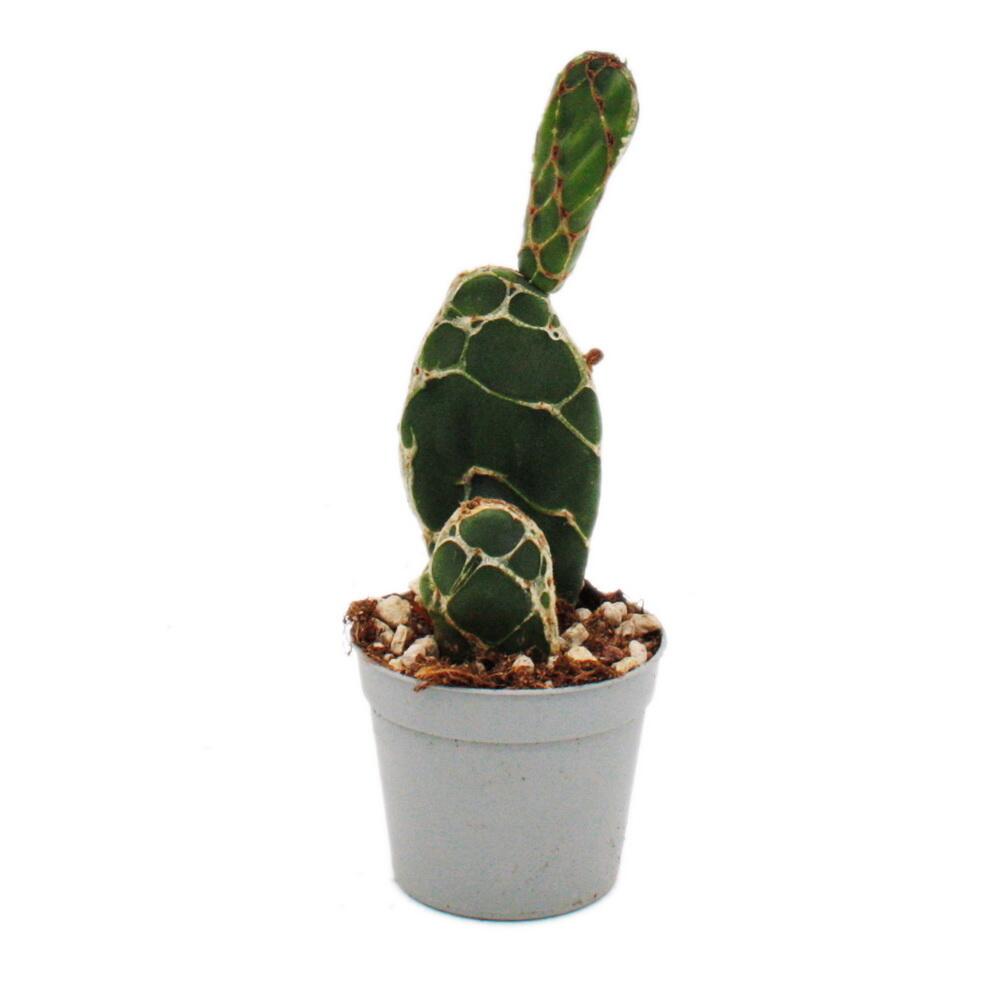
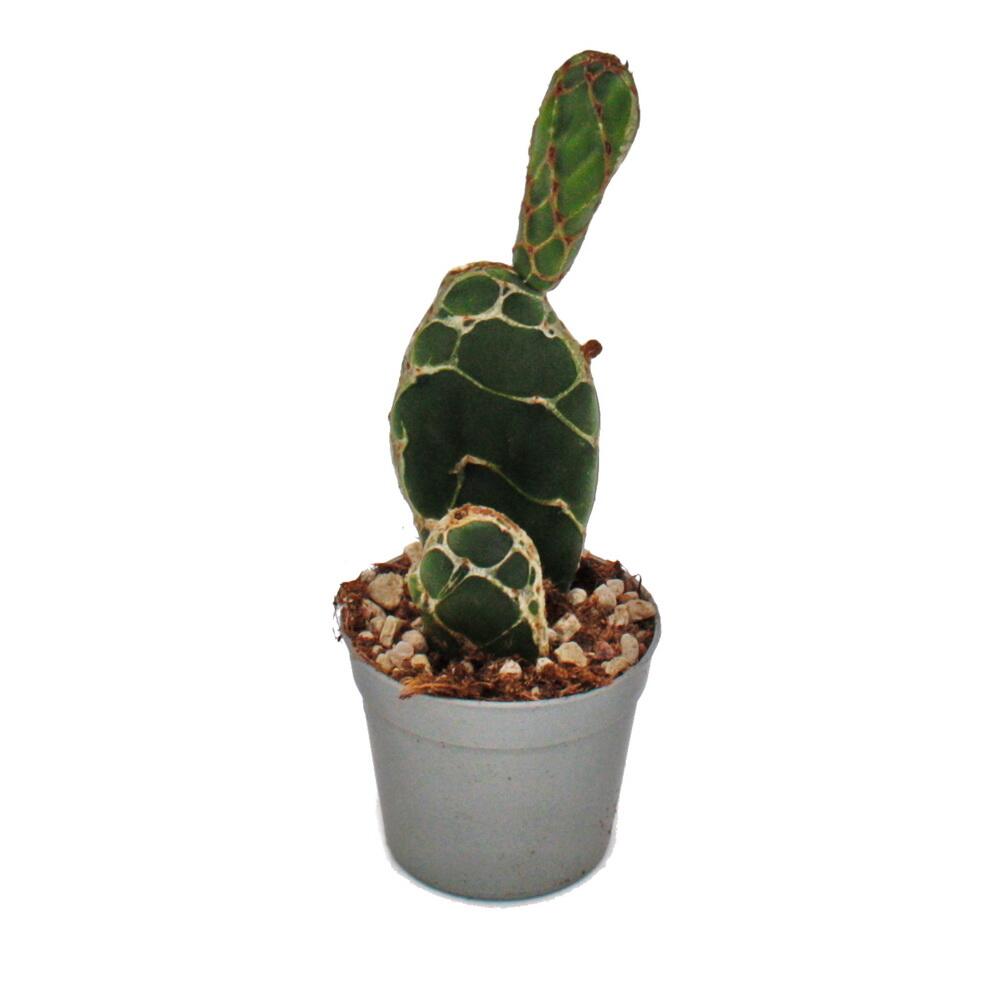
The striking pattern covers strong green stem segments. Pale lines and irregular areas recall snakeskin and explain the trade name Cobra. This is a horticultural form sold as Opuntia reticulata Cobra and also as Opuntia zebrina f. reticulata. A certain independent wild species cannot be inferred from that. The pattern is not a spider web to wash off. Shoots may have different shapes and branching. This individual development is precisely what makes the small cactus interesting.
Look closely at the miniature format
The shop describes a 6.5 cm pot and around 10 to 12 cm overall height. Such a specimen suits a small sunny position but is not a mature cactus tree. The scene respects its compact size. New segments need not appear symmetrically on both sides. Ensure a stable position where nobody accidentally brushes a hand over it. Small spines and fine glochids are possible despite the relatively smooth impression. Decoration and outer pot belong to the plant offer only if expressly stated.
Make sun a gradual routine
A very bright to sunny position supports strong shoots. After shipping or prolonged shade cultivation, gradually accustom the cactus to direct sun. A sudden move behind a hot south-facing pane can damage even sun-loving plants. In summer, a warm well-ventilated outdoor position is possible if protected from persistent rain. Bring inside before cold nights. The trade name says nothing about reliable winter hardiness. For this small offered pot plant, bright frost-free overwintering is the appropriate cautious foundation.
Allow dry phases throughout the root ball
During active growth, water only once the compost has dried well. Then supply the root ball and let excess drain. The next application follows need, not automatically a week later. In a small pot, a loose mix dries differently from heavy compacted compost. Check container weight too. Water remaining in an outer pot cancels out the advantages of a freely draining mix. In winter, during cooler bright rest, give much less water. Cold damp roots and permanently wet shoot bases are particularly unsuitable.
Mineral structure and careful handling
A freely draining cactus mix with suitable mineral ingredients such as pumice provides roots with support and air. The pot needs drainage holes. Repot when needed into a container only slightly larger. Work with suitable aids that protect against glochids and do not squeeze stem segments tightly. Fine bristles may remain caught in materials and skin. During active growth, modest suitable cactus feed according to product instructions is sufficient; pause during rest. Do not polish, brush or coat the distinctive surface with leaf-shine products.
New segments, possible flowers and changes
Strong plants may form further segments. These initially grow soft and should not be moved unnecessarily. Later flowering is possible but not guaranteed for the young offer. Healthy detached segments may be used for vegetative propagation after cut surfaces dry sufficiently; the small starting cactus need not be dismantled immediately for this. With thin stretched new growth, check insufficient light. Suddenly soft dark areas may instead indicate wetness problems. Natural net-like markings alone do not justify treatment. Check regularly for mealybugs and changes at stem bases.
One plant, several views
Good to know
Is the pale net pattern a disease?
The net-like pattern belongs to the Cobra form’s appearance. Newly appearing soft dark areas need checking instead.
Can I simply touch the cactus?
Not unprotected. Small spines and fine glochids may irritate skin even when the surface looks relatively smooth.
Is it hardy like some garden opuntias?
This is not established for the offer. Overwinter the small pot cactus brightly and frost-free.
How large is the offered specimen?
Around 10 to 12 cm overall height in a 6.5 cm pot. Segment shape and number may naturally vary.
Sources and editorial note
- Product and delivery contents: Exotenherz
- Giromagi cactus nursery: growing advice
- Cactus Art nursery: description of forms
- Royal Horticultural Society: plant and care information
Sources checked: 15 September 2026. Product information and the contents of delivery follow the linked shop offer. Care advice was checked against the cited specialist sources and should still be adapted to the plant’s condition, position and season.