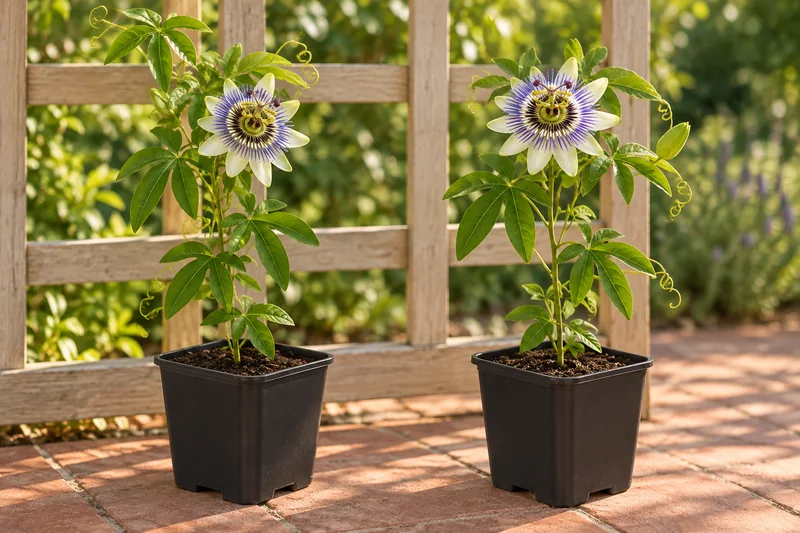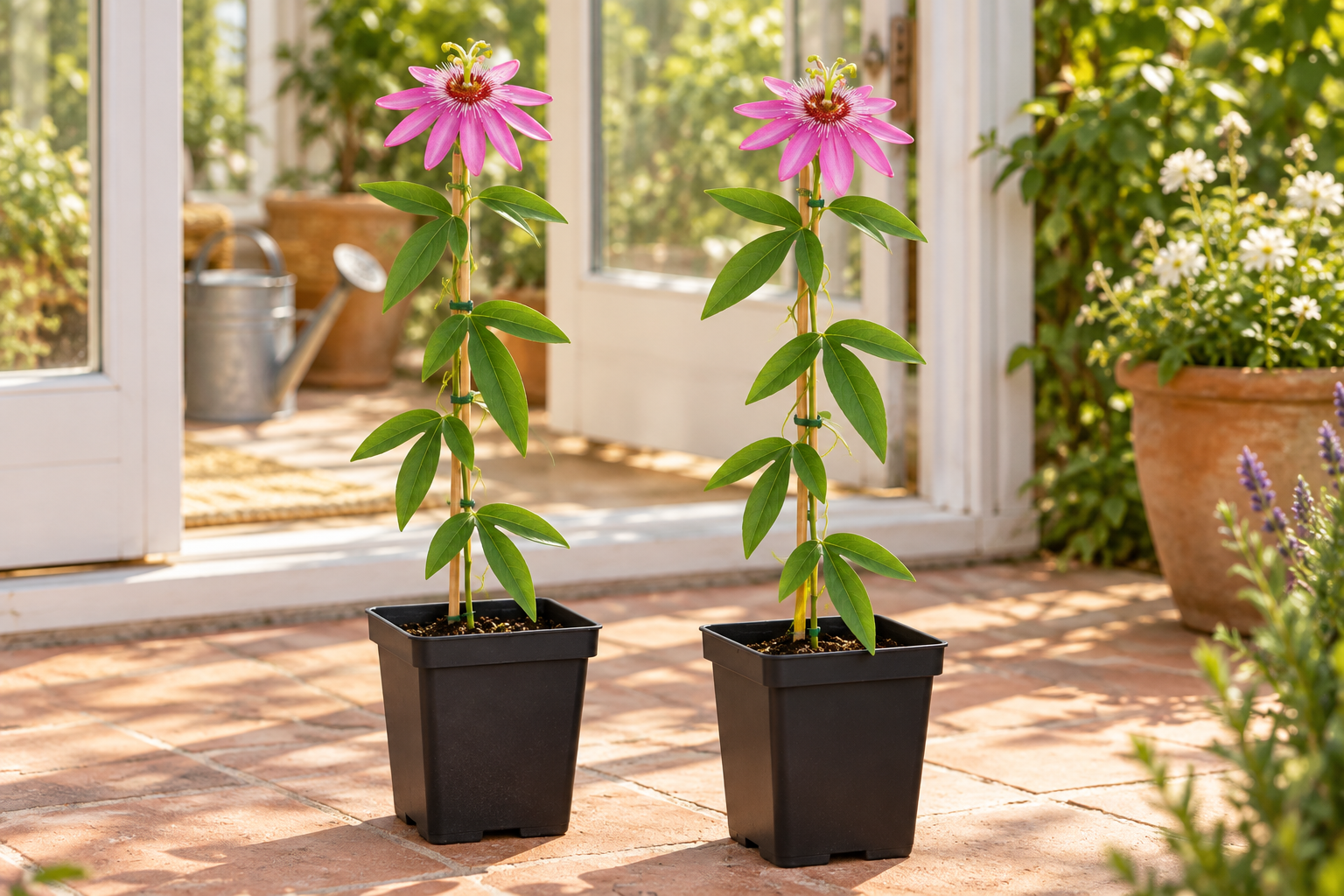
This plant at Exotenherz
Check the shop offer for current availability, price and what is included.
Product and delivery details are given in the individual offer.
Your care table
| Topic | What to do | Why it helps |
|---|---|---|
| Summer position | Choose sun, shelter from wind and gradual acclimatisation after moving outdoors. | Light supports flowers; abrupt sun stresses overwintered foliage. |
| Arrival | Check root-ball moisture, shoots and leaf undersides. | Small pots dry quickly and pests may initially remain hidden. |
| Container | Use structurally stable compost and clear drainage holes. | Vigorous growth needs moisture without oxygen shortage. |
| Support | Provide a portable trellis and spread shoots early. | Winter quarters must remain accessible with the plant. |
| Water | When the surface dries, check root-ball moisture and water as needed. | Drought stress may cost buds; standing water harms roots. |
| Fertiliser | Feed during active growth according to the product label. | Winter rest does not require a summer feeding plan. |
| Pruning | Remove dead and overlong parts in spring, retaining the basic framework. | New shoots carry flowers; heavy annual rejuvenation may delay them. |
| Winter | Plan bright, frost-free conditions, considering approximately 8 °C as the specialist collection’s guide. | Anastasia is not treated as reliably hardy outdoors. |
| Checking | Check leaf undersides and fine webbing in winter quarters. | Mites and sap-sucking insects may occur under glass. |
For young plants, feel the soil directly at the root ball. The surface and deeper soil may have different moisture levels.
Water thoroughly after planting; later, water according to the soil, weather and establishment rather than a fixed calendar.
Avoid standing water. For plants in containers, also check that water runs out of the drainage hole.
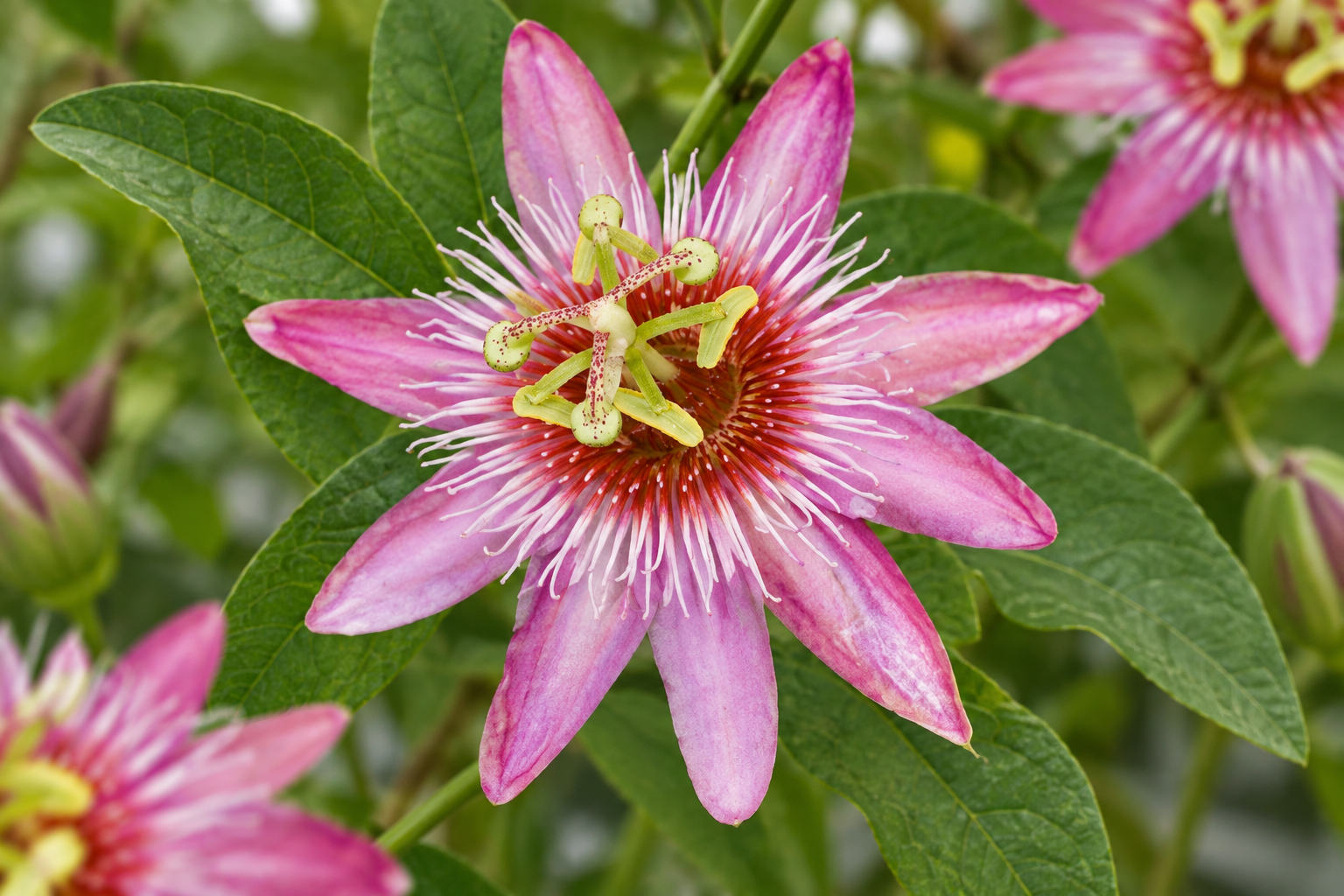
A pink flower reveals its little structure
The Anastasia flower in the shop has narrow pink to magenta floral segments. Reddish areas and fine pale filaments lie at its centre. Above them rises the typical passion flower column with anthers and three stigma arms. The flowers are worth examining closely rather than planning the plant solely as green climbing coverage. Three-lobed leaves sit on slender shoots that seek support with tendrils. A small trellis is enough initially; during a warm summer the framework becomes more important than the initial plant height.
Anastasia is a named garden hybrid
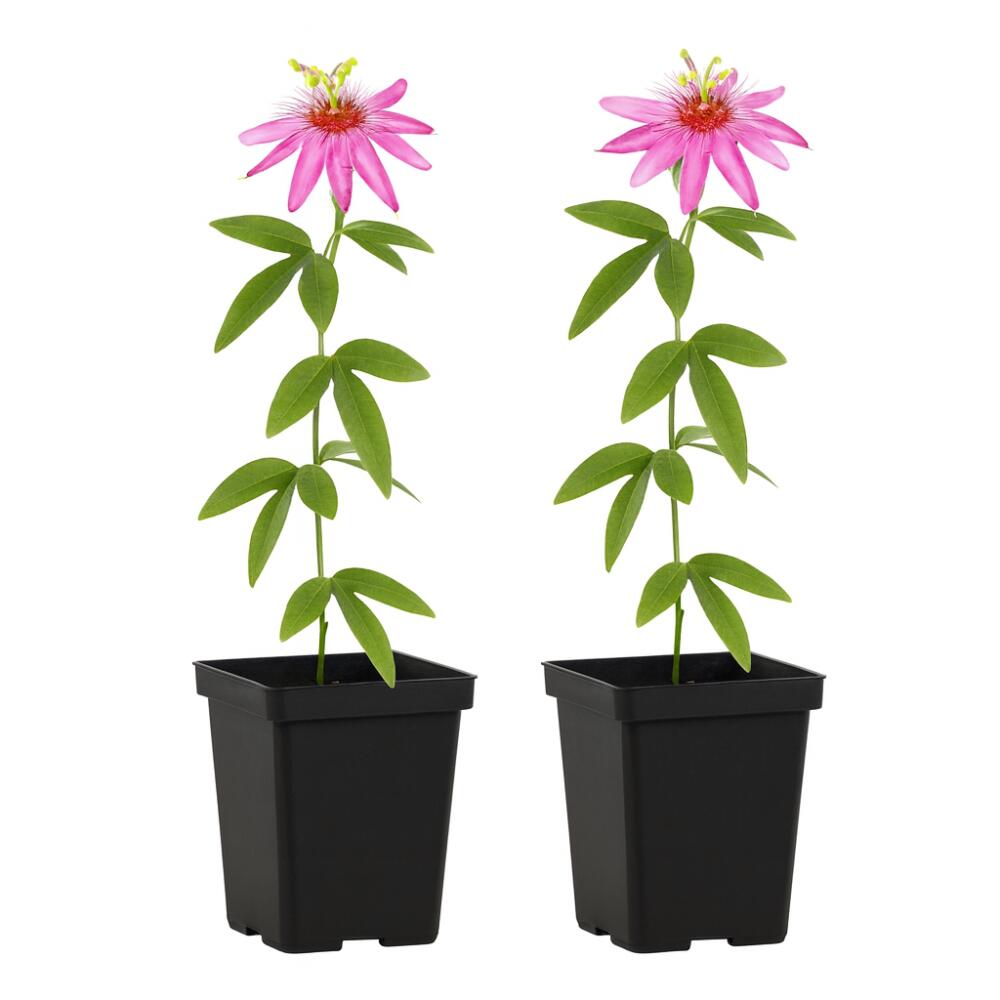
The cultivar belongs to the Passifloraceae family. The international passion flower register and Maurizio Vecchia’s specialist collection describe it as a horticultural cross between Passiflora gritensis and the white-flowered selection Constance Eliott from the Passiflora caerulea group. This origin does not establish blanket frost hardiness. The current offer contains two young plants, each in an 11 cm pot and approximately 40 cm total height. The small plant and its later climbing space are different measurements. No reliably fixed final height for this cultivar is promised here; leave several metres of shoot length available and guide growth in good time.
The summer position needs light and a winter plan
A sunny, wind-sheltered summer position or a very bright conservatory suits Anastasia. Under glass, light shading in strong midday heat may protect against leaf scorch; a dark room slows flowering and growth. After winter, gradually acclimatise the plant to stronger outdoor sun. When planting, consider how you will bring the container and framework back into winter quarters. A structure permanently attached to a roof makes this harder. The specialist collection gives approximately 8 °C as a favourable minimum temperature; therefore plan bright, frost-free overwintering rather than an unprotected garden winter.
From the delivery pot to portable root space
After unpacking, check root-ball moisture, shoots and leaf undersides. Carefully moisten a dry root ball. Remove the plant from the pot without pulling its tendrils. Permanent container growing needs more compost than the 11 cm delivery pot, but not a huge container full of constantly wet compost. Approximately 30 cm width is a practical starting guide for passion flowers; development and the root ball determine later steps. Use nutrient-containing, structurally stable container compost and clear drainage holes. Set plants at their previous root-ball level and water in.
The climber combines moisture and air in the soil
During growth, a sunny container loses plenty of water. Check the compost when its surface dries and water through the root ball as needed. Remove excess water. Complete drying may cost flower buds; constantly wet compost puts roots at risk. A fixed daily water quantity suits neither changing weather nor growing foliage. Support vigorous spring and summer growth with suitable liquid fertiliser according to its label. Approximately four to six weeks is generally cited as a possible interval; soil reserves and product concentration remain decisive. In cool winter quarters, do not continue feeding as in summer.
Guide tendrils without constricting young shoots
Tendrils can grip a fine trellis or horizontal wires. Spread shoots early before they form a dense knot. Tie loosely where help is needed. In spring remove dead or overlong parts and retain a healthy basic framework. Passion flowers bloom on new growth; nevertheless, heavy rejuvenation every year is unfavourable and may delay flowering. Faded flowers often fall naturally. Seed-grown plants need not retain the character of this named cultivar; properly rooted cuttings are more suitable for retaining its traits.
A bright winter is a separate care period
Bring Anastasia indoors before cold nights and keep it bright and frost-free, preferably around 8 °C or warmer according to its condition. Reduced activity means less water, but the root ball must not dry completely. Continue regular checks despite reduced watering. Under glass, spider mites, scale insects or whiteflies can occur; fine webbing, sticky areas and leaf undersides give early clues. In spring acclimatisation to outdoor sun starts again. Its flowers make Anastasia an ornamental plant: the offer does not promise edible passion fruit and should not be treated as a kitchen harvest plant.
One plant, several views
Good to know
Can Anastasia overwinter unprotected in the garden ?
Bright, frost-free winter quarters are the suitable plan for this cultivar. The specialist collection gives approximately 8 °C as a favourable minimum temperature.
What is in the set ?
Two young plants, each in an 11 cm pot; approximately 40 cm total height is the shop guide, not later climbing height.
Why do buds drop ?
A dried-out root ball may be one cause. Also check light, roots and the actual care history.
Does it need a very large pot immediately ?
More root space than the delivery pot is useful. Choose according to the root ball, with good drainage rather than excessive wet compost.
Can I attach the framework permanently to the house ?
A removable or portable framework is more practical for a container plant needing winter quarters. Tendrils become hard to disentangle later.
Are edible fruits promised ?
No. The cultivar is cared for as a flowering ornamental plant; the offer does not guarantee an edible passion fruit harvest.
Sources and editorial note
- Exotenherz: current plant offer and original gallery (03.10.2026)
- Specialist reference read directly: anastasia-rhs (03.10.2026)
- Specialist reference read directly: anastasia-collection (03.10.2026)
- Specialist reference read directly: passiflora-register (03.10.2026)
- Specialist reference read directly: passiflora-growing (03.10.2026)
Public shop offer, originals and directly read specialist sources checked on 03.10.2026. Young delivered plants, later development and winter care distinguished. Shared page view and publication still require Root acceptance.