This plant at Exotenherz
Check the shop offer for current availability, price and what is included.
Check the shop for the current price, availability and offer contents.
Your care table
| Topic | What to do | Why it helps |
|---|---|---|
| Light | In summer, position brightly in sun to partial shade sheltered from wind. | Light and warmth support flower development. |
| Soil | Use structurally stable draining container soil and drainage holes. | Roots should be supplied without staying permanently wet. |
| Moving | Place outside after last frosts and acclimatise to sun. | Young and overwintered shoots are sensitive to abrupt changes. |
| Support | Offer reachable thin bars and guide shoots early. | Tendrils seek support and otherwise tangle easily. |
| Water | In summer, water thoroughly as upper soil dries. | Active growth and flowers need a supplied rootball. |
| Feeding | Feed during growth according to the label. | Limited container soil must nourish long shoots. |
| Pruning | Remove dead parts in spring and limit long shoots as needed. | Available climbing space and winter quarters determine structure. |
| Winter | In cold regions, overwinter bright, cool and frost-free. | A mild position does not replace a general frost-hardiness guarantee. |
| Winter water | Water much less in cool quarters, checking the rootball first. | Slower growth uses less, but complete drying remains unsuitable. |
| Checking | Under glass, inspect leaf undersides and shoot bases. | Sap-sucking pests are noticed early there. |
For young plants, feel the soil directly at the root ball. The surface and deeper soil may have different moisture levels.
Water thoroughly after planting; later, water according to the soil, weather and establishment rather than a fixed calendar.
Avoid standing water. For plants in containers, also check that water runs out of the drainage hole.
A flower with a fine ring of filaments
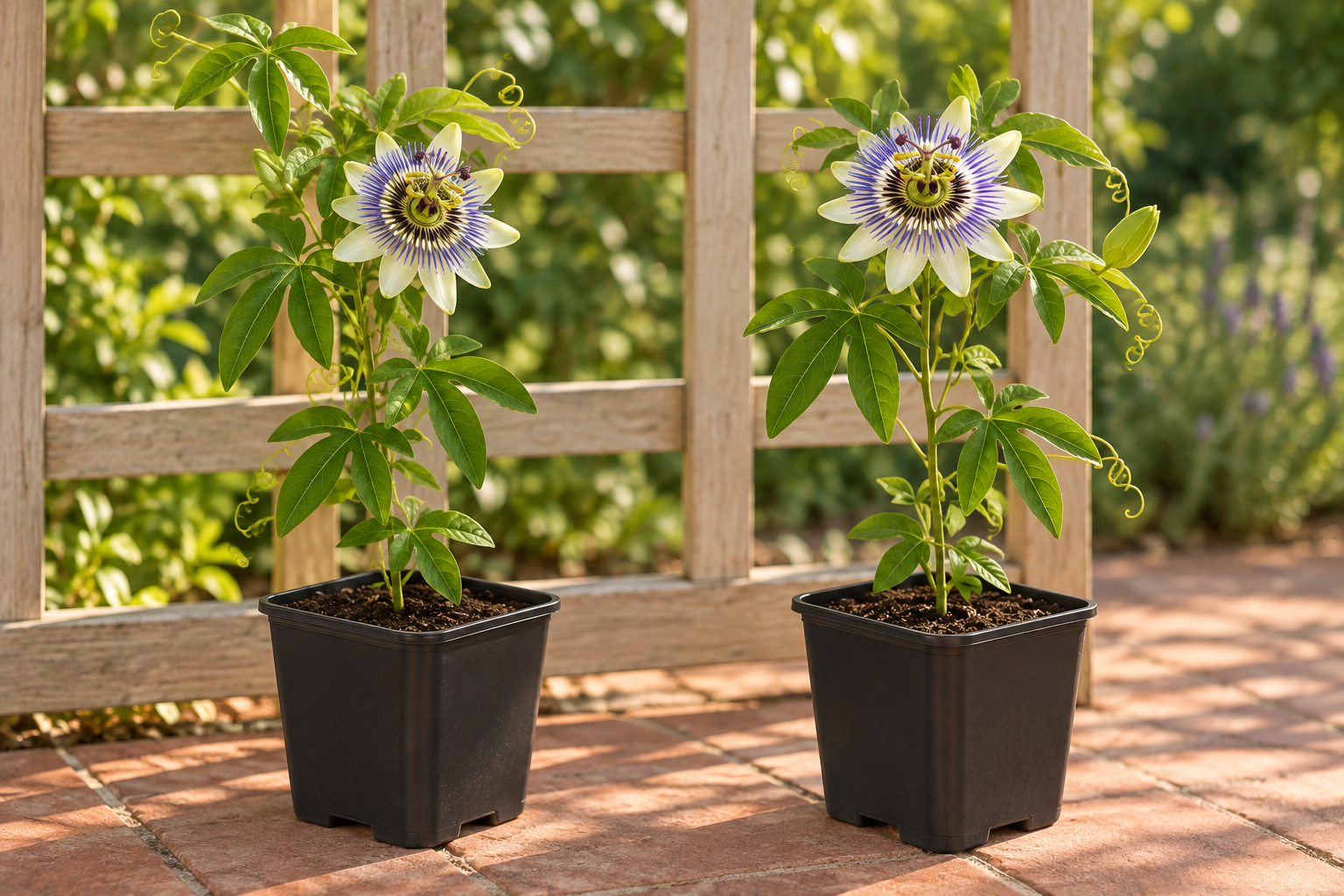
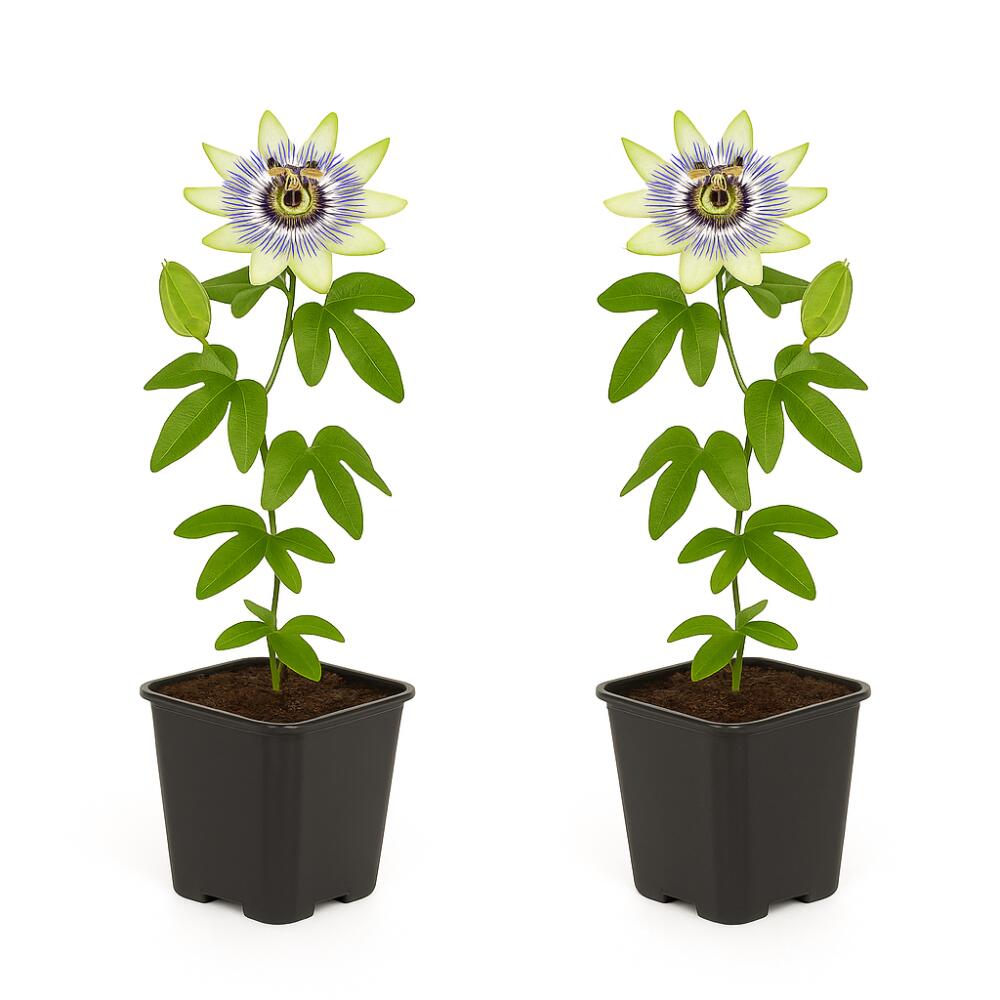
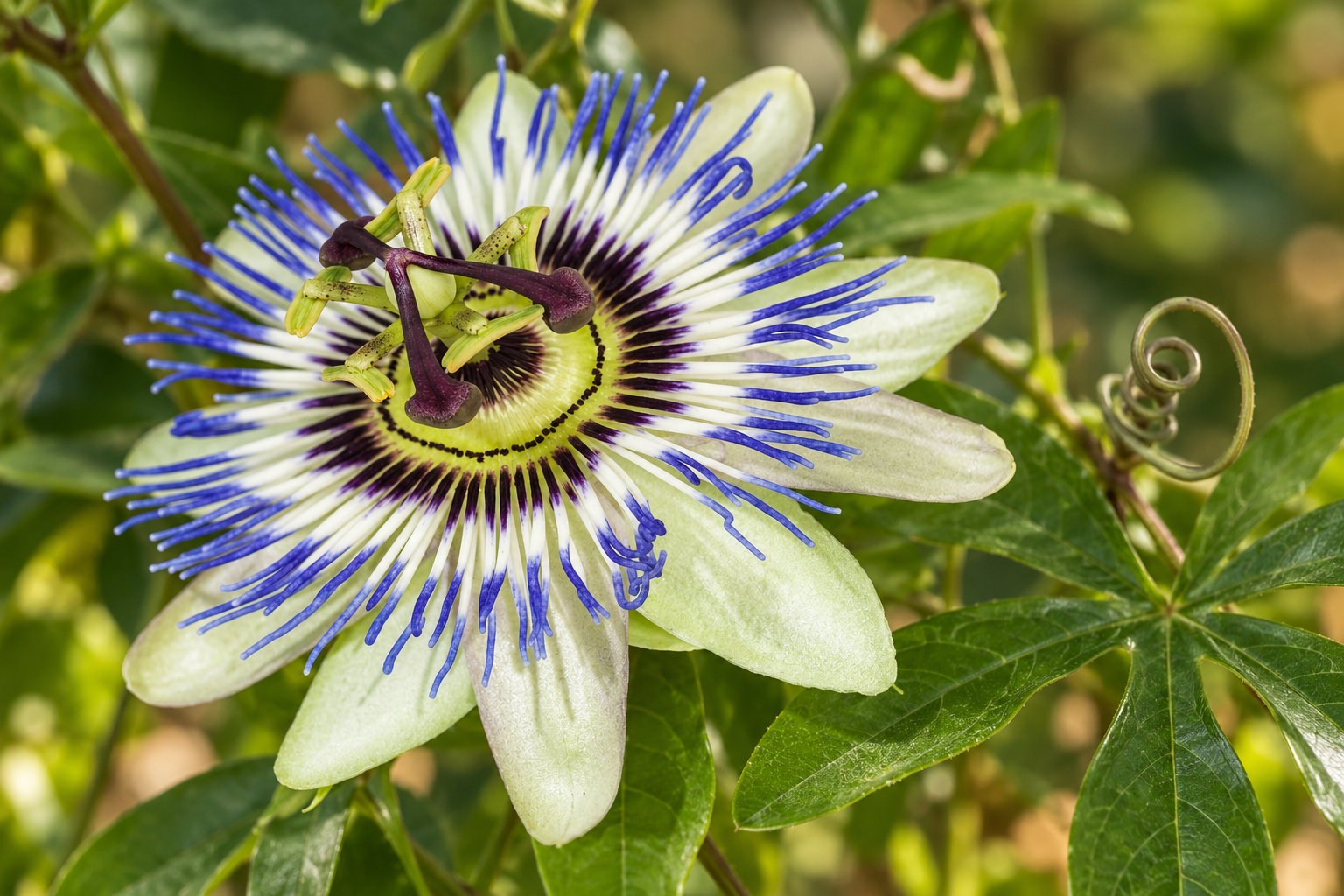
Close up, blue passionflower looks almost constructed: a ring of narrow blue-violet filaments lies above white to greenish-white petals. The characteristic column of floral organs rises in the centre. Flowers may reach about 8 cm wide. Shoots also carry green finger-lobed leaves, usually with five to seven lobes on developed leaves. Passiflora caerulea is a documented species and vigorous climber. Its tendrils distinguish it from clematis: its own thin tendrils grasp support, whereas clematis holds with leaf stalks.
The young plant fits a terrace; the adult needs planning
The linked set includes two plants each in an 11 cm pot, about 40 cm total height including container. These are young climbers, not instant screening. In particularly favourable permanently sheltered cultivation, the species may reach about 8–12 m long-term. A pot on a German balcony develops differently because of climate, root space and pruning; the large botanical height is not an annual expectation. Check rootball moisture and tendrils on unpacking without pulling attached shoots apart. Flower examples explain the species but do not promise the flowers currently present on your delivery.
A summer position with an accessible route to winter
Choose a bright sunny to partially shaded wind-sheltered spot for summer. Warmth supports flowering, while a very dark corner favours long green shoots. Plan winter before planting: in cold regions, a container with bright cool frost-free overwintering is more reliable. It must remain movable with its support. Planting out fits only very mild sheltered situations, not a general frost promise for German gardens. Even in mild positions, cold may damage above-ground shoots. A pretty summer trellis is little help if tendrils later attach irretrievably to railings.
Plant, repot and guide the tendrils
Give young passionflower a pot with drainage holes and structurally stable draining container soil. Choose a sensible next root volume rather than an enormous pot with long-wet unrooted soil. Remove the nursery pot gently and water after setting in. Place outside only after last frosts with gradual acclimatisation to stronger sun. Thin bars or taut wires must be reachable by tendrils. Guide shoots early and loosely; fully tangled summer growth is hard to move later. The current double pack means two separate rootballs that need not be squeezed into the same container.
Supply during growth, reduce in winter
During strong summer growth, check upper soil and water thoroughly as it dries. The rootball should not constantly dry completely, but water must drain. Dry spells may encourage bud loss. A warm windy balcony requires more checks than a cool sheltered position. Feed during active growth according to a suitable container fertiliser label. In cool winter quarters growth slows, water demand falls and continued summer feeding is unnecessary. Water only enough to avoid complete rootball drying. Drought tolerance described for established plants is no reason to abandon a small new pot plant permanently.
Pruning must match available space
Early in spring, check which shoots are alive. Remove dead and damaged parts and shorten overly long shoots if needed so the plant fits its support and transport route. Cutting mainly guides and limits growth here, not the same rule as clematis pruning groups. With vigorous growth, distribute new shoots and check for tendrils grabbing neighbours or fixtures unintentionally. This guidance remains recurring work in a border too. Lower water needs in a large established specimen do not mean strong growth manages without care.
Winter begins before the first frost night
Move containers in good time to bright cool frost-free quarters. In cool winter conditions leaf quantity may decrease, especially after moving or cold stress; this alone does not show dead roots. Check shoots and soil before watering more. Under glass, inspect leaf undersides and shoot bases for spider mites, scale or other sap-sucking pests. In spring, water increases with new growth. Gradually acclimatise to the garden again and offer reachable support early. This change between summer growth and sheltered winter rest matters more than a blanket claim of hardiness everywhere.
One plant, several views
Good to know
Is blue passionflower hardy everywhere?
No. Very mild sheltered positions differ from cold German regions. A container with bright cool frost-free winter quarters makes sense in cold places.
How large is the orderable set?
Two young plants each in an 11 cm pot at about 40 cm total height including pot, separate from possible long-term climbing height.
Does it reach 10 m on the balcony every year?
This is no balcony forecast. Botanical height of about 8–12 m refers to very favourable long-term cultivation; climate, pots and pruning limit development.
How do you recognise Passiflora caerulea?
Finger-lobed green leaves, thin tendrils and white flowers with a blue-violet corona. Young leaves and shoots may initially be smaller.
Why do buds fall?
A dry rootball is one possible cause. Also check position, weather changes and roots before adding water or feed.
How do I water in winter?
In cool quarters it needs much less water. Check the rootball, avoid standing water and do not let the ball dry completely.
Sources and editorial note
- Exotenherz: directly read parent offer, delivery measurements and original gallery (03.10.2026)
- Specialist reference: passiflora-caerulea (read directly 03.10.2026)
- Specialist reference: passiflora-growing (read directly 03.10.2026)
Identity and distinct profile checked against canonical 642 and shared and isolated portraits and orders. Parent offer and all associated child offers directly read on 03.10.2026 with distinct URL/file hashes. Total delivery height and later growth separated; sets do not count additionally. Specialist sources read directly. Text and image comparison checked separately; PDF and page acceptance bound to actual hashes. No publication acceptance: Root checks the shared page build.