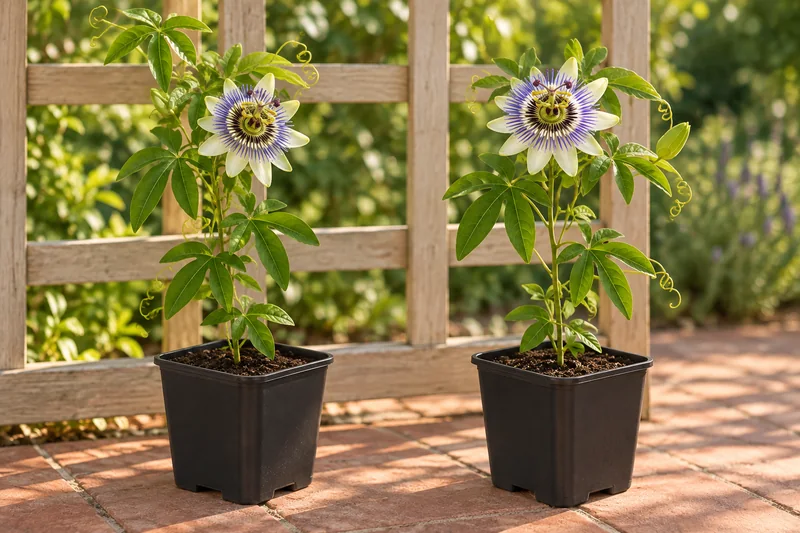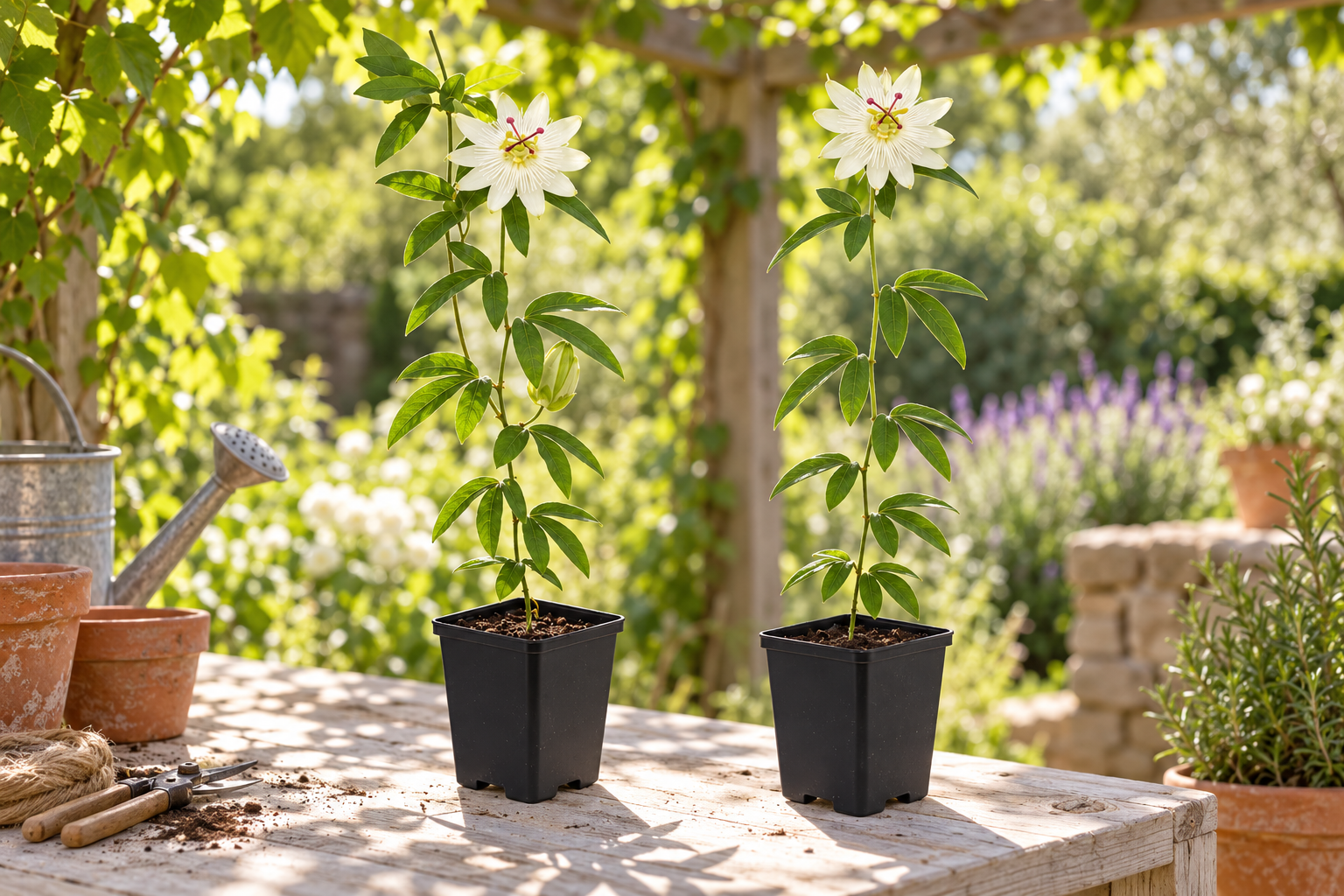
This plant at Exotenherz
Check the shop offer for current availability, price and what is included.
Product and delivery details are given in the individual offer.
Your care table
| Topic | What to do | Why it helps |
|---|---|---|
| Position | Plan sun and shelter from wind with moist, freely draining soil. | Flowers and strong shoots need light and root supplies. |
| Arrival | Check the root ball and carefully moisten dry compost. | The 11 cm pot contains a limited water reserve. |
| Container | Choose a sufficiently large separate container for each plant with free drainage. | The two delivered plants need root space in the long term. |
| Support | Provide a fine trellis or wires; spread young shoots loosely. | Tendrils grip slender structures. |
| Water | Check when the surface dries and water as needed. | Drought stress may cost buds; constantly wet compost threatens roots. |
| Feeding | Use suitable fertiliser during active development according to the label. | Soil reserves and growth determine supplementation. |
| Pruning | Shorten dead and overlong shoots in spring, retaining the basic framework. | Flowers develop on new growth. |
| Winter | Overwinter containers bright and frost-free, continuing root-ball checks. | Small containers are more sensitive to frost and wetness. |
| Winter quarters | Regularly inspect leaf undersides and webbing. | Mites and sap-sucking insects may occur under glass. |
For young plants, feel the soil directly at the root ball. The surface and deeper soil may have different moisture levels.
Water thoroughly after planting; later, water according to the soil, weather and establishment rather than a fixed calendar.
Avoid standing water. For plants in containers, also check that water runs out of the drainage hole.
Even a white flower has strong lines
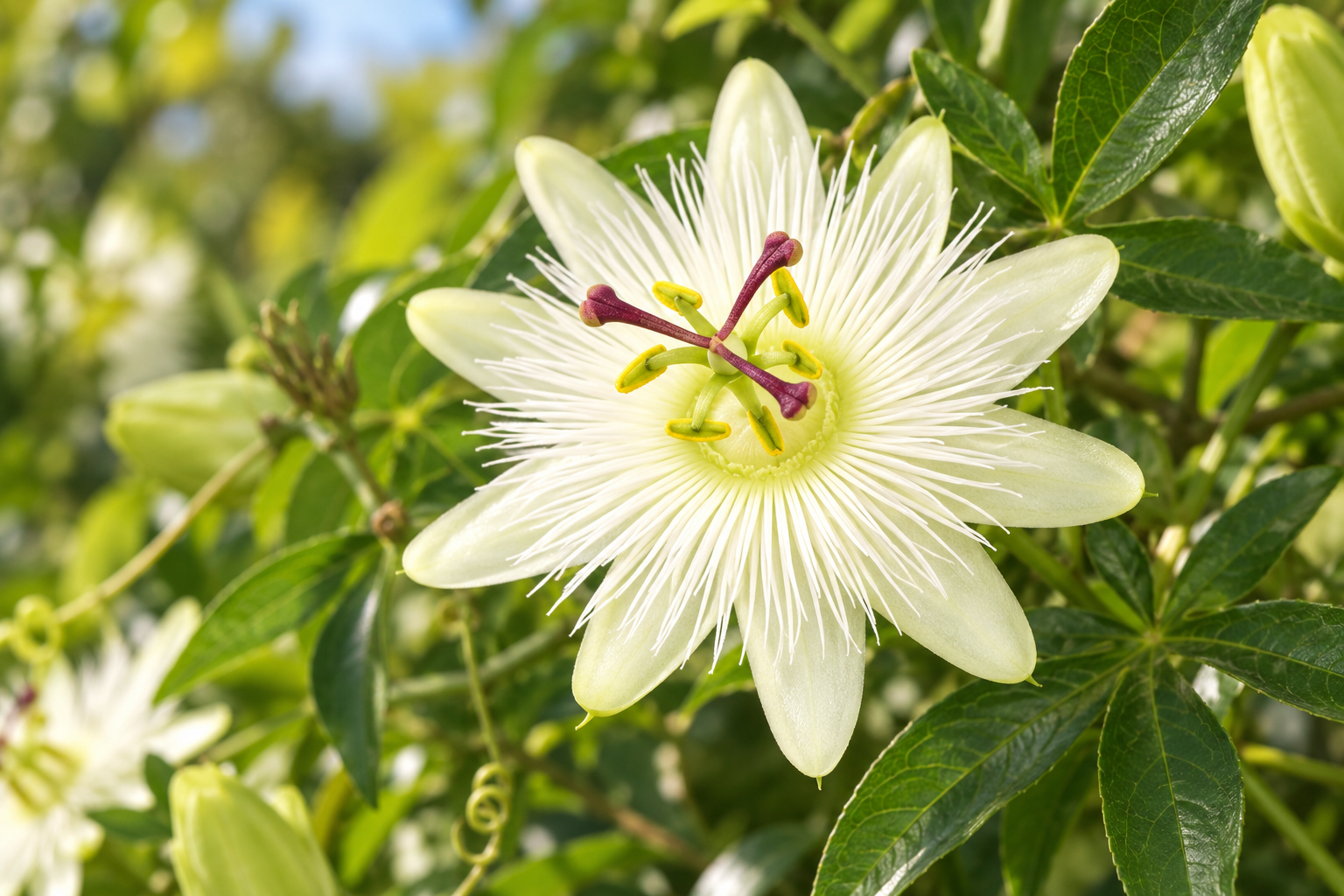
From a distance Avalanche looks almost single-coloured. Seen closely, its flowers divide into broad white floral segments, numerous fine white filaments and an upright green centre with anthers and darker stigma arms. The shop view clearly shows this structure. Green leaves with several narrow lobes and tendrils wrapping a framework complete the plant. Against a calm, darker wooden surface, the white flower stands out particularly clearly. Such a position also needs light and air; the pale floral appearance does not automatically make a shady corner suitable.
Avalanche has its own horticultural name
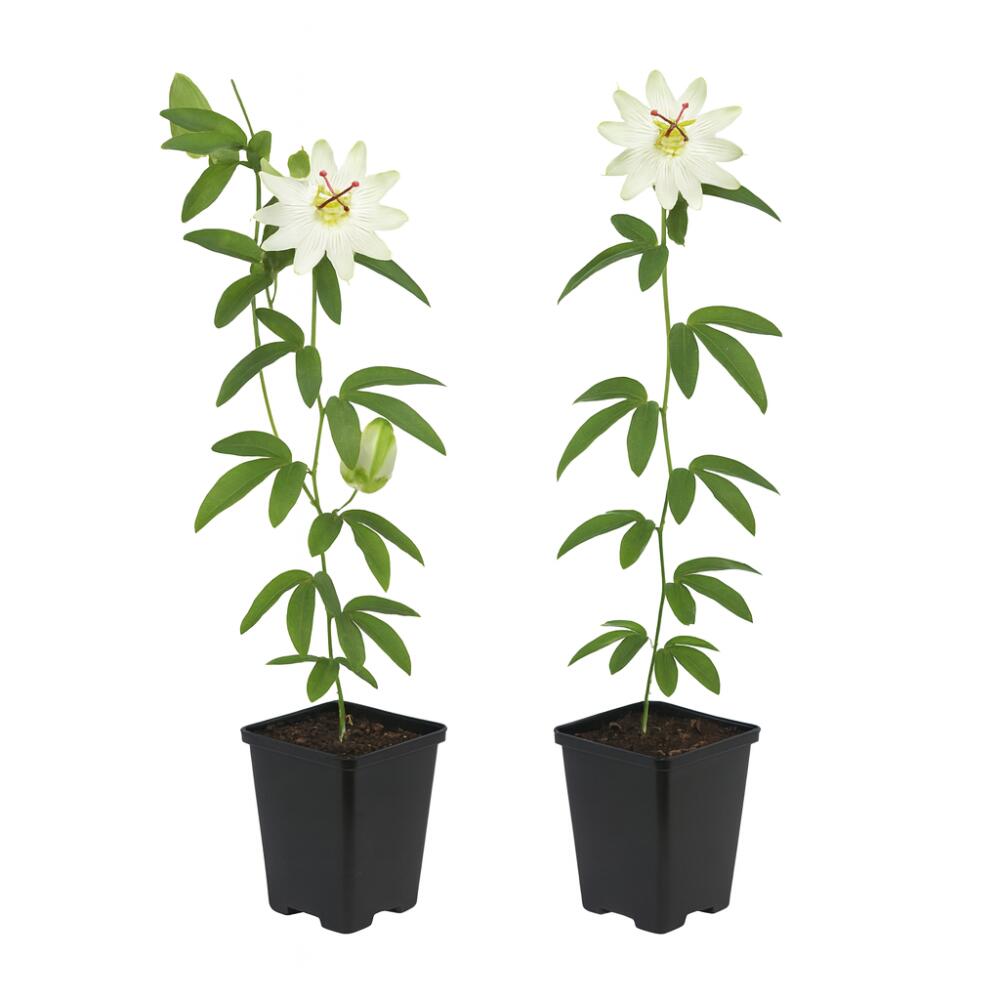
The passion flower belongs to the Passifloraceae family. The international cultivar register describes Avalanche as a selection from white-flowered Constance Eliott, with vigorous growth and particularly large flowers. A fine pink tinge is also mentioned in the register; a bloom therefore need not look paper-white in every light. The offer contains two young plants, each in an 11 cm pot and approximately 40 cm total height. From this starting size, a framework of shoots several metres long can develop. Its actual extent depends on warmth, root space, pruning and support. No fixed final height is promised here.
A warm position needs distance from dry walls
For summer, choose a sunny garden or terrace position sheltered from wind if possible. Light partial shade is possible; a very dark area often reduces flowers. The soil should be sufficiently nutritious, moist and freely draining. Little rain reaches roots beneath roof overhangs; do not place a container in this dry strip solely for a warm house wall. Shoots can grow well spread on a sunny trellis. In colder regions, movable container growing with winter quarters is the more reliable plan. A mild urban wall position and an open frosty garden are different conditions.
Start the two plants with root space
Check the root balls after delivery. Carefully moisten dry compost and remove the plants from their pots without pulling slender shoots. Each plant can have its own container with free drainage and nutrient-containing, structurally stable compost. Approximately 30 cm container width is generally a useful start for passion flowers; the actual root ball and intended growing period decide. Plant at the previous root-ball level and water in. A small trellis should be in place from the start. When planting outdoors in a mild position, wait until spring after the last frosts; autumn is not a good starting time for an uncertain winter climate.
A growing framework of leaves uses water
Check sunny containers regularly, especially in warmth and wind. As soon as the surface looks dry, check root-ball moisture and water thoroughly as needed. Water must be able to drain. Drought stress can cause bud drop; constant wetness is also unfavourable. In a border the actual root zone determines whether rain is sufficient. During active development, suitable liquid fertiliser can be applied according to its label; general passion flower care gives approximately four to six weeks as a possible guide. Fresh compost may initially already contain nutrients. Reduce feeding in cool winter quarters rather than blindly continuing the summer regime.
Spread tendrils early and keep pruning manageable
Guide shoots along fine wires or a trellis that tendrils can grip. Loose ties help initially without constricting stems. Spread growth in several directions rather than allowing all shoots to become a dense bunch at the top. In early spring remove dead or overlong parts and retain a healthy framework. New shoots bear the flowers. Very heavy rejuvenation remains an occasional intervention because it may delay flowering for a long time. Cuttings are more likely to retain the named selection than sowing with variable offspring.
Winter determines the permanent position
Even for a relatively robust passion flower, do not treat a small container like garden soil. A bright, frost-free winter space protects against severe freezing and simplifies checking; cool conditions around 5–7 °C are generally a useful framework for frost-sensitive passion flowers. Water less often there but continue checking the root ball. A general frost figure is not a promise for wet small pots. Under glass check leaf undersides for mites, scale insects and whiteflies. Reacclimatise the plant to outdoor sun in spring. Avalanche is cared for here as an ornamental plant, without a promise of edible fruits.
One plant, several views
Good to know
Is Avalanche the usual blue passion flower ?
The named selection has white flowers and filaments. Its character is not the blue corona of ordinary Passiflora caerulea.
Are the white flowers always completely colourless ?
The cultivar register describes a possible fine pink tinge. Light and flower development also change the colour impression.
How large are the delivered plants ?
The set contains two plants, each in an 11 cm pot and approximately 40 cm total height; later shoots may reach several metres.
Do I need a climbing framework ?
Yes. Thin wires or a trellis give the tendrils support; a smooth wall alone is not sufficient.
Can a container remain unprotected in winter ?
For reliable planning, overwinter it bright and frost-free. Freezing solid and prolonged wetness affect small containers particularly strongly.
Is a fruit harvest promised ?
No. The offer is cared for as a flowering ornamental plant and does not guarantee an edible passion fruit harvest.
Sources and editorial note
- Exotenherz: current plant offer and original gallery (03.10.2026)
- Specialist reference read directly: passiflora-register (03.10.2026)
- Specialist reference read directly: passiflora-growing (03.10.2026)
Public shop offer, originals and directly read specialist sources checked on 03.10.2026. Young delivered plants, later development and winter care distinguished. Shared page view and publication still require Root acceptance.