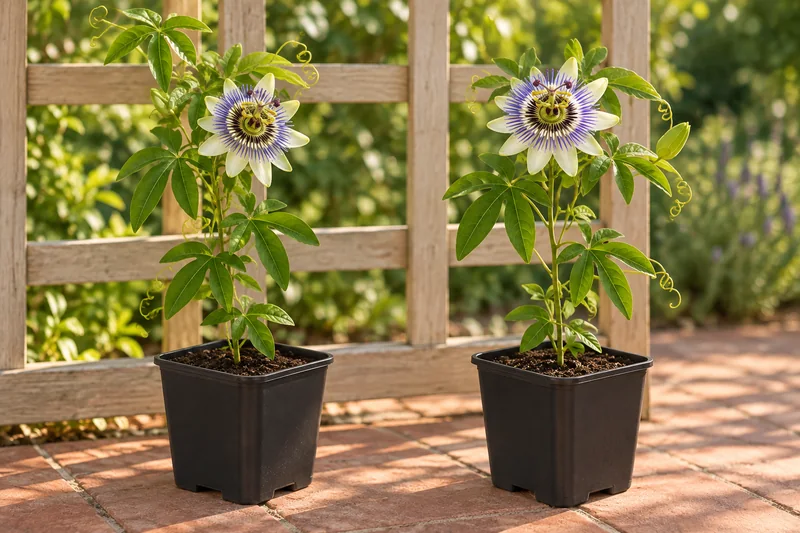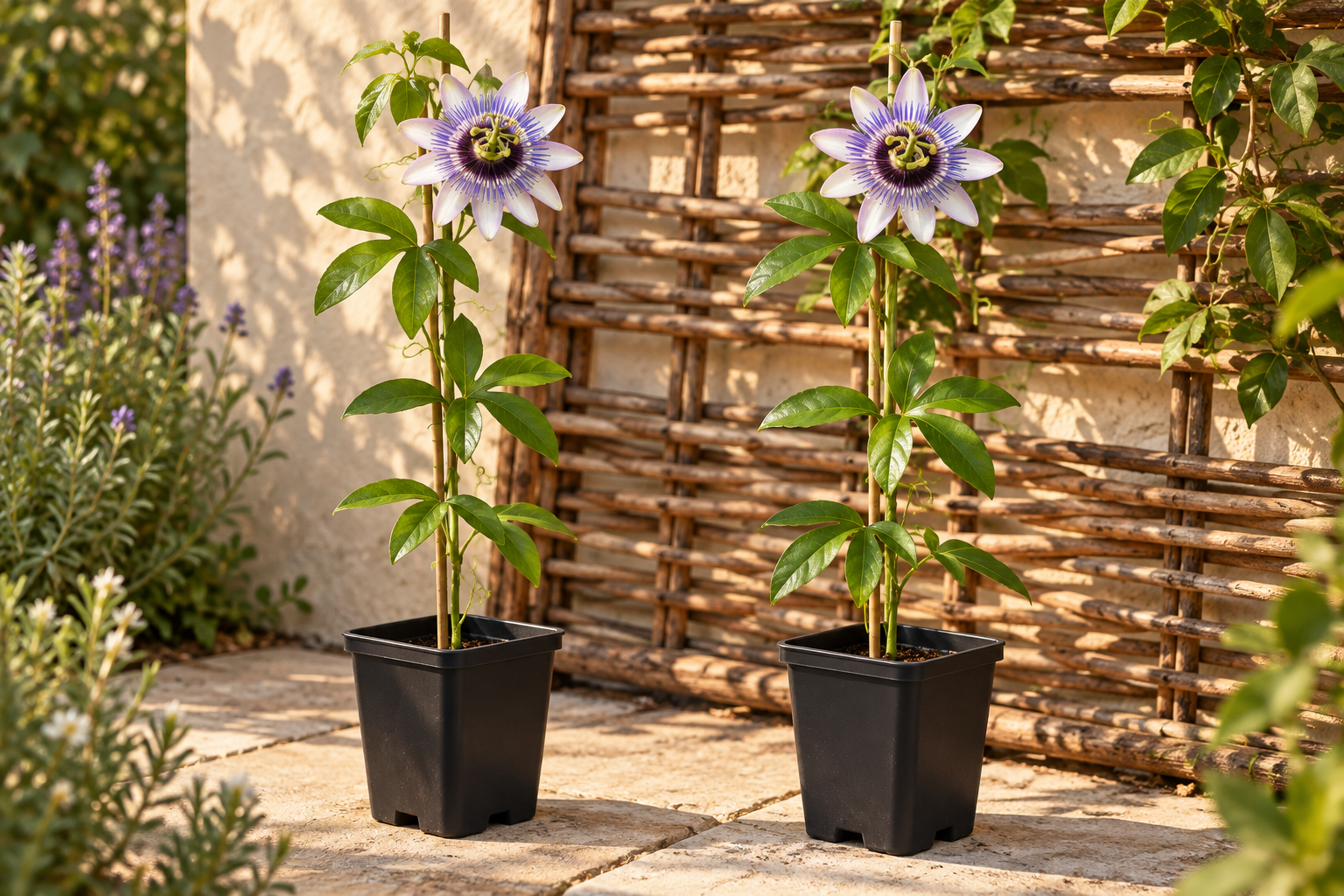
This plant at Exotenherz
Check the shop offer for current availability, price and what is included.
Product and delivery details are given in the individual offer.
Your care table
| Topic | What to do | Why it helps |
|---|---|---|
| Position | Choose sun and shelter from wind with moist, freely draining soil. | Strong growth and flowers need light and supplied roots. |
| Arrival | Check root-ball moisture and shoots, carefully moisten dry compost. | Young plants start in small pots. |
| Support | Provide a sturdy framework with fine structures that tendrils can grip. | Perennial shoots may occupy a large area. |
| Container | Plan sufficient root space and free drainage for each plant. | Later size goes well beyond the delivery pot. |
| Water | When the surface dries, check the root ball and water as needed. | Heat and growing foliage increase consumption. |
| Fertiliser | Supplement during active development according to the label. | A cool winter does not need a summer dose. |
| Pruning | Shorten dead and overlong parts in spring, retaining a healthy framework. | Flowers develop on new growth. |
| Winter | Keep containers bright and frost-free, water less often and continue checking. | Small containers freeze more deeply than garden soil. |
| Fruits | Treat as decorative and do not eat. | The breeder’s description classifies them as inedible. |
For young plants, feel the soil directly at the root ball. The surface and deeper soil may have different moisture levels.
Water thoroughly after planting; later, water according to the soil, weather and establishment rather than a fixed calendar.
Avoid standing water. For plants in containers, also check that water runs out of the drainage hole.
Violet filaments shape the flower
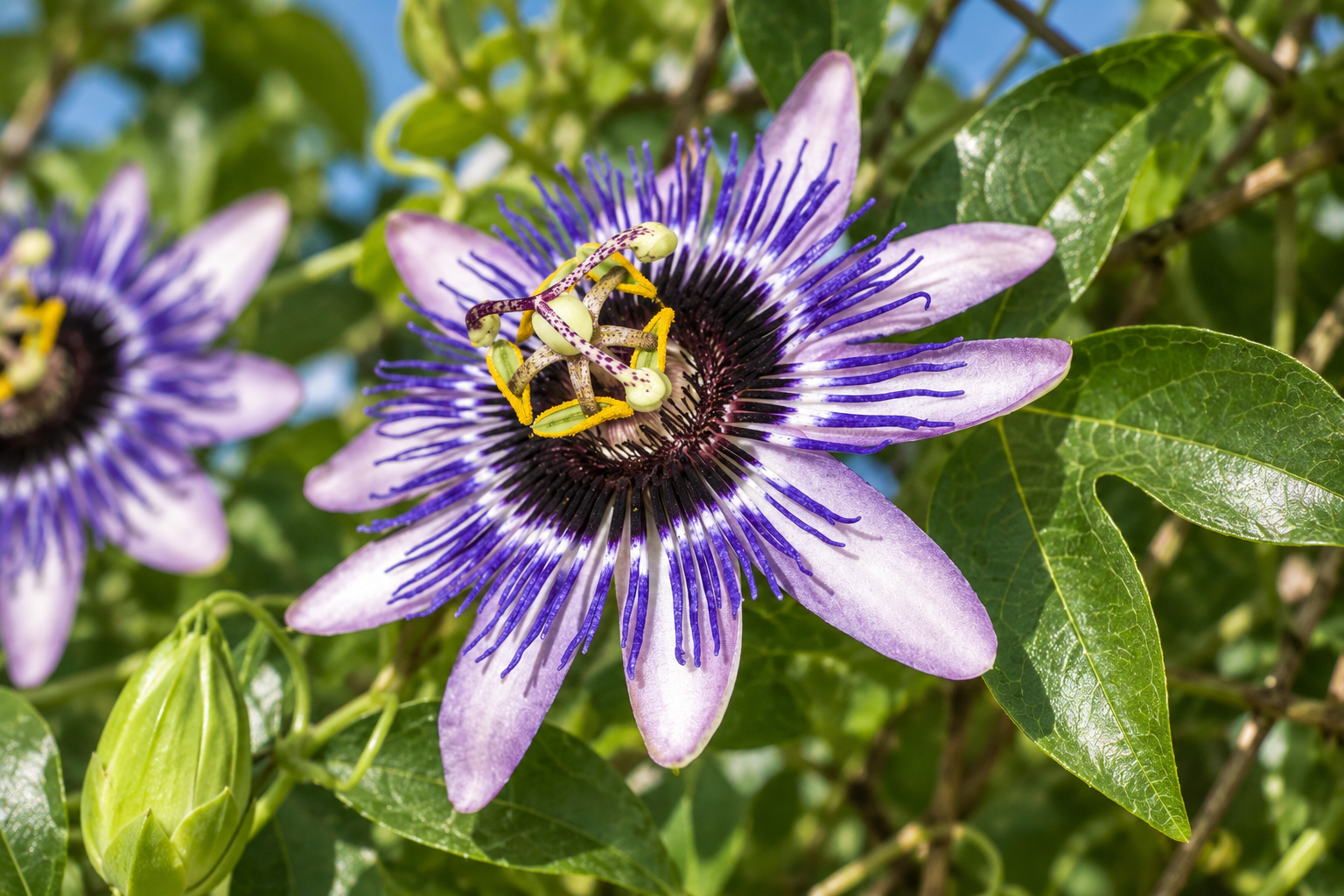
Damsel’s Delight is particularly striking for its corona. Long blue-violet filaments have pale bands and become almost black-violet towards the centre. Behind them are whitish floral segments with a lilac tone. The upright floral column raises anthers and stigma arms above them. The breeder describes large, strong flowers up to approximately 13 cm; individual blooms may be smaller depending on developmental stage. Glossy dark-green leaves usually have three lobes, sometimes four or five. Tendrils hold the slender shoots to the framework. Even one flower close to a seat shows much more than a distant photograph of a covered wall.
A garden hybrid with a horticultural history
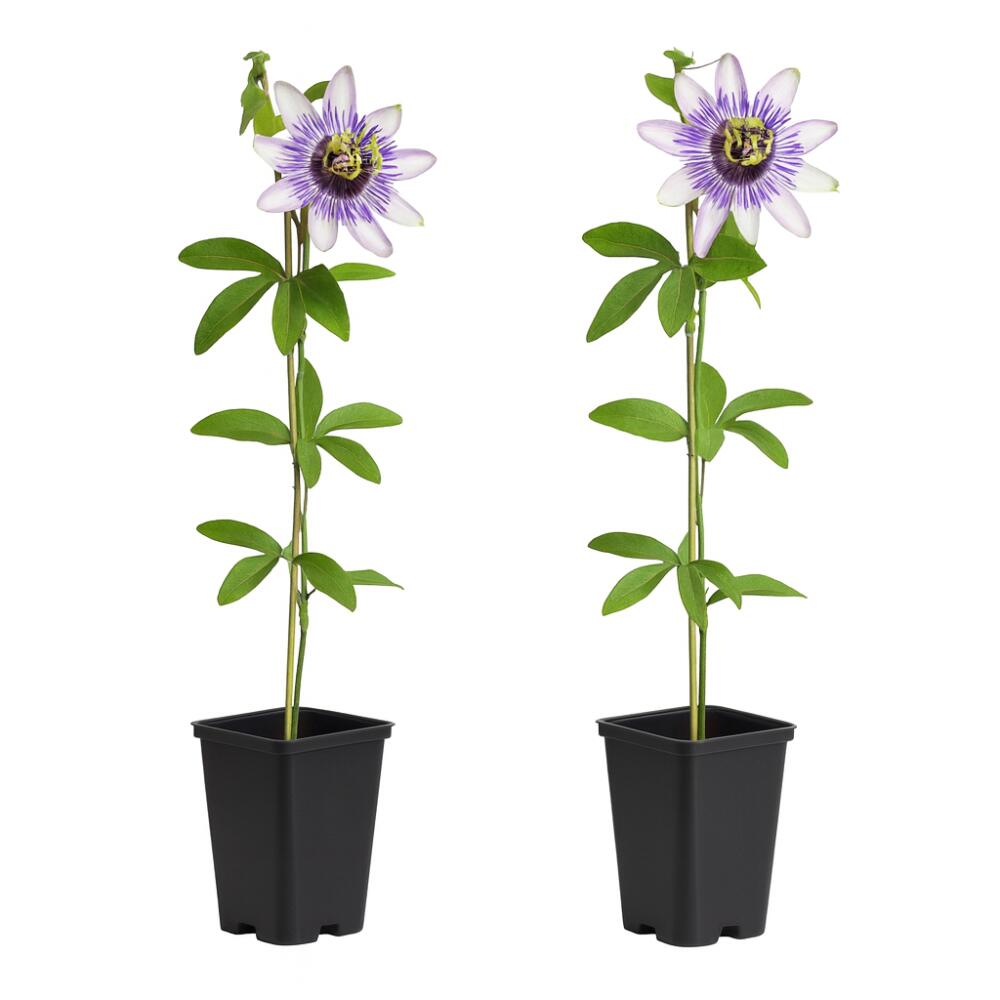
Myles Irvine describes Damsel’s Delight as his own Riverside garden hybrid; it belongs to the Passifloraceae family. In the garden trade you may also encounter the older name Silly Cow. The usual cultivar name helps identify these special flowers again. The current set contains two young plants in 11 cm pots and approximately 40 cm total height. This starting size does not describe a finished screen. A guided framework of approximately 3 m can be a useful first plan; favourable positions allow considerably longer shoots. Plan climbing space according to your available room and keep access clear for pruning and winter care.
Warmth and good soil sustain vigorous growth
A sunny position sheltered from wind is particularly suitable. Light partial shade is possible; a deep, dark corner reduces the floral effect. Soil should be sufficiently nutritious, moist and freely draining. A warm house wall can help, but its rain shadow may dry the root ball unnoticed. Lead the framework from the planting position rather than placing the pot directly in the driest wall corner. For an open, cold garden, container growing with protected overwintering is easier to plan. Even a relatively robust garden hybrid is more exposed to frost in a small pot than an established plant in the ground.
Young plants start with a checked root ball
After unpacking, examine shoots, leaves and root-ball moisture. Water dry compost carefully and support the root ball when removing the pot. A separate container for each plant simplifies later development and winter movement. Nutrient-containing, structurally stable compost with free drainage is the basis; approximately 30 cm container width is a general starting guide for passion flowers. Long-term growth may need more space. Plant at the previous root-ball level and water in. For a suitable mild outdoor position, wait until spring after the last frosts. The load-bearing framework should already be in place when planting.
Leaves turn warmth into water demand
Check containers regularly as soon as the surface dries. Thorough watering as needed supplies the root ball better than continual small sips around the stem. Excess water must then drain away. A growing framework of leaves consumes much more on hot, windy days than a small plant in cool weather. Bud drop may relate to drought stress; check the root ball rather than judging only the flower. During active growth, support the plant with suitable fertiliser according to the label. In well-supplied soil, development determines an additional application. Do not keep feeding in winter quarters as in sunny summer.
The framework keeps vigorous growth manageable
Spread young shoots along thin wires or a sturdy trellis and tie them loosely when necessary. Tendrils should be able to grip without everything tangling at the top. In early spring remove dead or overlong parts and retain a healthy basic framework. Flowers develop on new growth. Very heavy rejuvenation is possible for an overlarge older plant, but remains a rare intervention and may delay flowering. A removable container framework makes bringing it indoors easier. Tearing firmly entangled tendrils apart in autumn readily causes unnecessary damage to slender shoots.
The winter position also protects access for care
Overwinter containers bright and frost-free; a cool room where the root ball remains accessible for checking is practical. Reduce water when activity decreases, but do not let roots dry completely. Depending on temperature, some foliage remains or is lost. A fixed frost figure would not account for small containers or wet soil. In winter quarters check leaf undersides for sap-sucking insects and fine mite webbing. Reacclimatise the plant to outdoor sun in spring. Rare fruits may look decorative; the breeder describes them as inedible. Damsel’s Delight is therefore cared for as a flowering ornamental plant, without harvest promises.
One plant, several views
Good to know
How much climbing space does Damsel’s Delight need ?
Plan several metres of shoot length and sturdy support. A guided 3 m framework is a first guide; the plant can grow considerably farther in favourable positions.
What size is the set ?
Two plants, each in an 11 cm pot and approximately 40 cm total height. This is their young delivery size.
Why are some flowers paler than others ?
The floral segments are whitish with a lilac tone; light and flower development affect the impression. The strong blue-violet corona is characteristic.
Can the container overwinter outside ?
A bright, frost-free winter position is useful for cold locations. Small containers are more exposed to frost and constantly wet compost.
Must I cut back heavily every year ?
No. Remove dead and overlong parts in spring and retain the basic framework. Heavy rejuvenation remains occasional.
Can I eat fruits ?
The breeder describes the rare fruits as inedible. Treat them as decoration and keep them separate from food.
Sources and editorial note
- Exotenherz: current plant offer and original gallery (03.10.2026)
- Specialist reference read directly: damsel-breeder (03.10.2026)
- Specialist reference read directly: damsel-rhs (03.10.2026)
- Specialist reference read directly: passiflora-growing (03.10.2026)
Public shop offer, originals and directly read specialist sources checked on 03.10.2026. Young delivered plants, later development and winter care distinguished. Shared page view and publication still require Root acceptance.