This plant at Exotenherz
Check the shop offer for current availability, price and what is included.
Check the selected shop offer for price, availability and delivery contents.
Your care table
| Topic | What to do | Why it helps |
|---|---|---|
| Light | Place bright and indirect. | Protect glossy leaves from sudden hot sun. |
| Moisture | Let upper soil dry a little. | Do not dry the whole root ball for long. |
| Watering | Water soil and let drain. | Leaf thickness does not replace checks. |
| Cover | Check surplus after watering. | Permanent wetness is unfavourable. |
| Soil | Choose loose permeable houseplant soil. | Roots need moisture and air together. |
| Fertiliser | Give moderately by label during active growth. | Supplies accompany new leaves. |
| Cleaning | Support leaves when wiping gently. | Do not damage stalks through pressure or pulling. |
| Winter | Keep frost-free and reassess consumption. | Less light changes drying. |
Check the compost and pot weight. The care table explains how far the compost may dry.
Water only when needed. The water should reach the root ball without spilling over the rim.
Remove surplus water from the saucer or cachepot. Then return the plant to a suitable position.
Raindrop gives green a clear shape
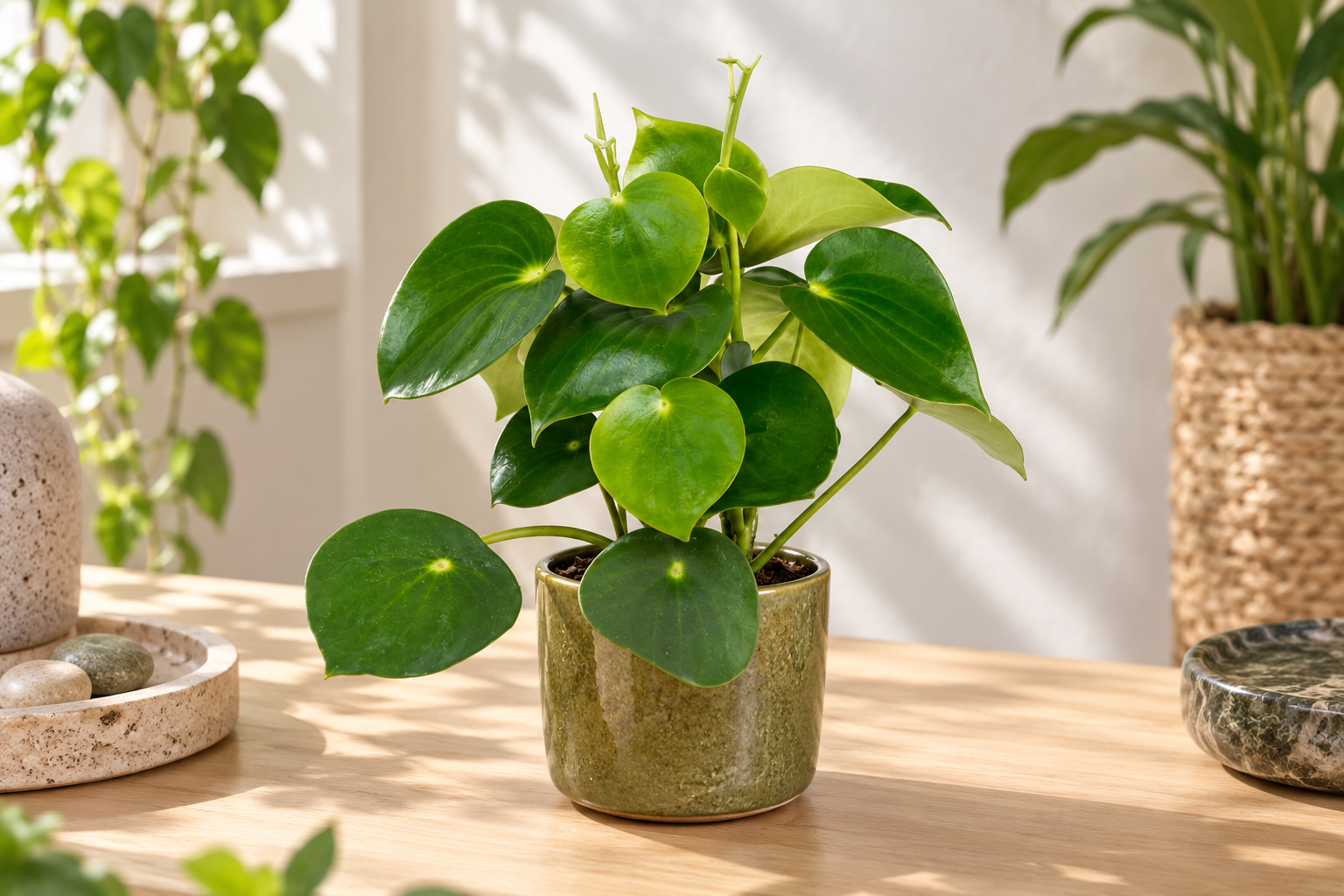
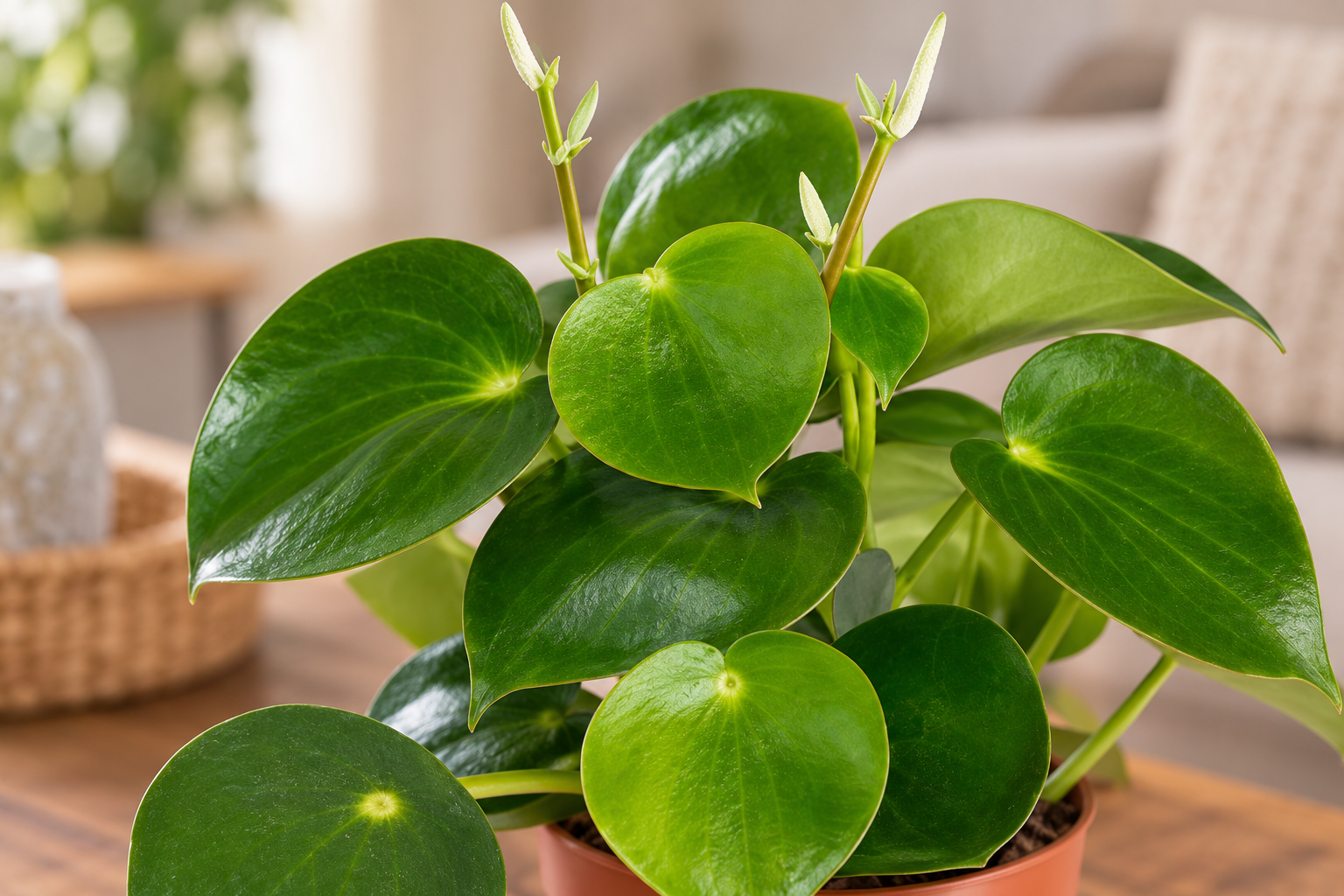
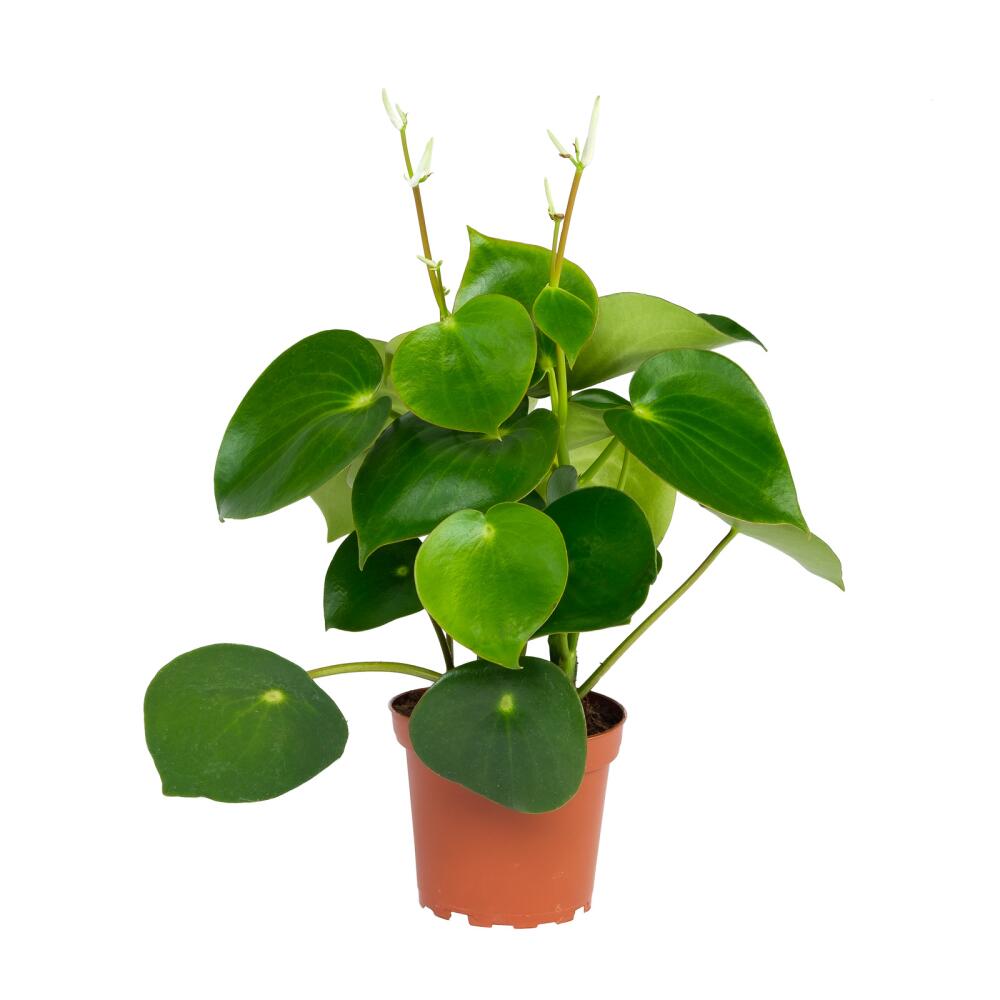
Thick glossy leaves narrow from a broad rounded surface into a tip. Their raindrop shape distinguishes this peperomia from a Pilea with almost circular coin leaves. A small surface depression shows the stalk attachment region underneath. The compact crown looks quiet and sculptural on a bright desk. A plain container lets individual surfaces remain visible. Do not turn every leaf to an artificially identical direction when looking; natural position is part of the effect.
The little delivered plant already has its own volume
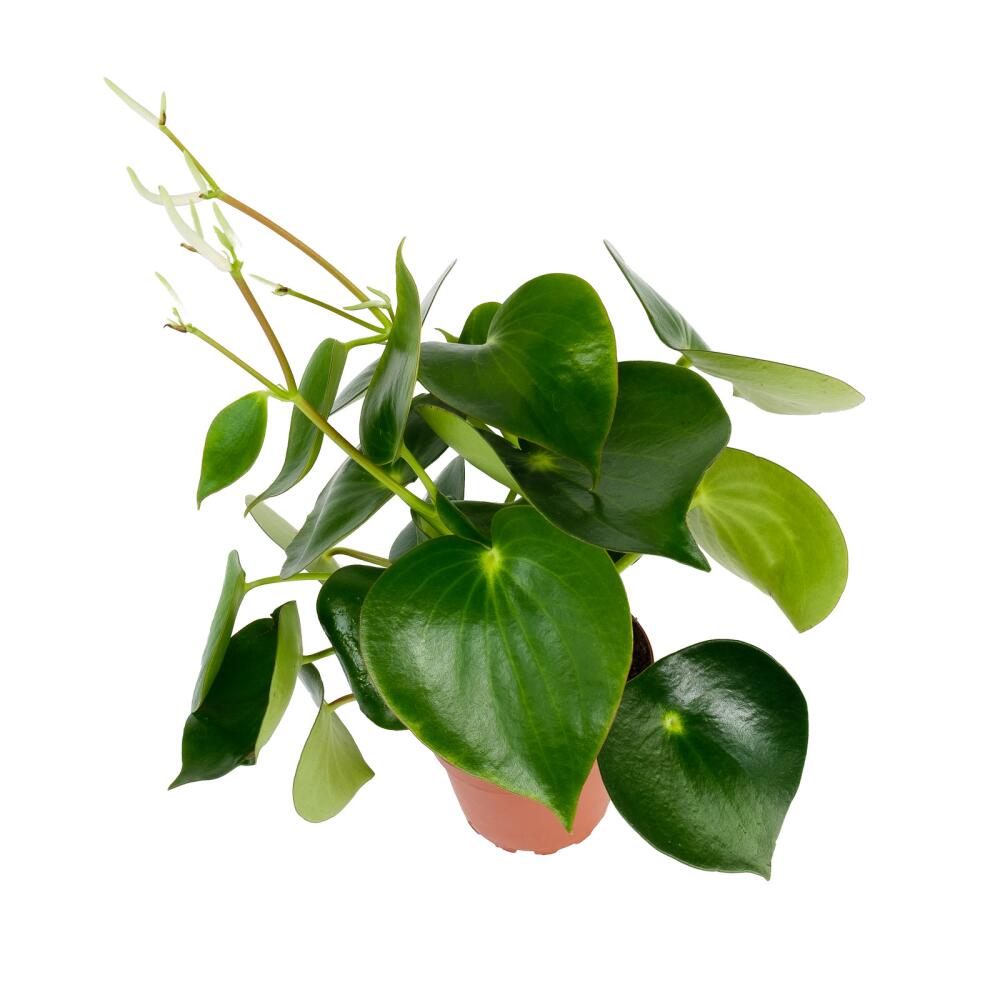
The range offer sits in a 12 cm pot and is described at about 25 to 30 cm total height including pot. That is young-plant size, not a promised mature height. Hold the container while unpacking and support a leaf if packaging sticks. Strong-looking surfaces still sit on stalks that may break when pulled. One photo above and one at the side help compare starting condition and new leaf positions later.
Bright daylight with quiet acclimatisation
A warm bright indoor site with indirect light suits cultivation. Avoid hot direct sun after transport. On a desk, check whether a screen, curtain or shelf shades the crown. More light is not the same as more heat at the leaf. A sudden move into sun may strain surfaces. Cold ventilation draughts matter too. The plant may stay in a good location instead of being put in a wholly different room for every photograph.
Leaf thickness does not replace checking roots
Before watering check upper soil and container weight. Supply roots after some drying; they should not remain wholly dry for long. Water at soil level and let excess drain. Thick leaves store water, but a persistently wet root zone remains unfavourable. If leaves soften, first distinguish dry earth from heavy wet soil. Another watering based only on a drooping leaf can therefore be the wrong response. Check drainage inside a decorative cover too.
Make room for roots and new foliage
Loose permeable houseplant soil helps combine moisture and air in roots. Repot only slightly bigger with real space needs and do not bury the base unnecessarily. Supply moderately by fertiliser label during active growth. A young compact crown needs no regular shaping cuts. Remove dust with a soft cloth while supporting the blade. Thin flower spikes may occur; they differ from large glossy leaves and are not presumed on delivery.
Observe new drop-shaped leaves through the seasons
Raindrop stays frost-free indoors. Less winter light may reduce consumption; check soil before continuing a summer rhythm. Undersides and stalk bases belong in cleaning checks. Small scales or cotton-like deposits may be noticed early there. A close-up in the plant book can capture the characteristic depression. Compare from the same angle: gloss shifts with light without necessarily changing actual leaf colour or health.
One plant, several views
Good to know
Is Raindrop a Pilea?
No. It is Peperomia polybotrya with drop-shaped rather than almost round leaves.
What is the little leaf depression?
It lies above the stalk attachment region underneath.
Is 30 cm plant height alone?
The shop figure describes total height including pot.
Do thick leaves need no regular checking?
This plant also needs a root-ball check before watering.
Are thin light spikes new leaves?
They may be flower spikes; specific flowering is not promised.
Sources and editorial note
- Exotenherz – offer and original pictures, 03.10.2026
- NC State Extension – Peperomia polybotrya, drop-shaped leaves and cultivation, 03.10.2026
- NC State Extension – peperomias, root moisture and care, 03.10.2026
Shop offer, article number, GTIN, availability and original pictures checked directly on 02.10.2026; specialist acceptance on 03.10.2026. Specialist sources read directly. SKU, delivery measurements, orderability and originals checked directly in the associated shop article on 03.10.2026; specialist sources read. Trade names stay recognisable. Currently not orderable: knowledge portrait without purchase link or social dispatch approval. No Wawi, server or tool-data changes. Currently not orderable: portrait without purchase link; social drafts not approved for dispatch.