This plant at Exotenherz
Check the shop offer for current availability, price and what is included.
Check the selected shop offer for price, availability and delivery contents.
Your care table
| Topic | What to do | Why it helps |
|---|---|---|
| Position | Cultivate bright and warm with filtered light. | Do not hide the small crown deep in a shelf. |
| Moisture | Let upper earth dry lightly; supply roots as needed. | Avoid wet and prolonged wholly dry extremes. |
| Watering | Water soil rather than unnecessarily over foliage. | Targeted supplies protect leaf surfaces. |
| Drainage | Let drain and check cover. | Excess must not stand at the bottom. |
| Soil | Choose loose permeable houseplant soil. | Roots need both air and moisture. |
| Fertiliser | Dose moderately by label during growth. | Red undersides do not signal extra fertiliser. |
| Leaf care | Support while cleaning and inspect undersides. | Damage may be noticed early there. |
| Winter | Keep frost-free and reassess consumption. | Less light changes root moisture. |
Check the compost and pot weight. The care table explains how far the compost may dry.
Water only when needed. The water should reach the root ball without spilling over the rim.
Remove surplus water from the saucer or cachepot. Then return the plant to a suitable position.
Two leaf sides make Sunrise appealing
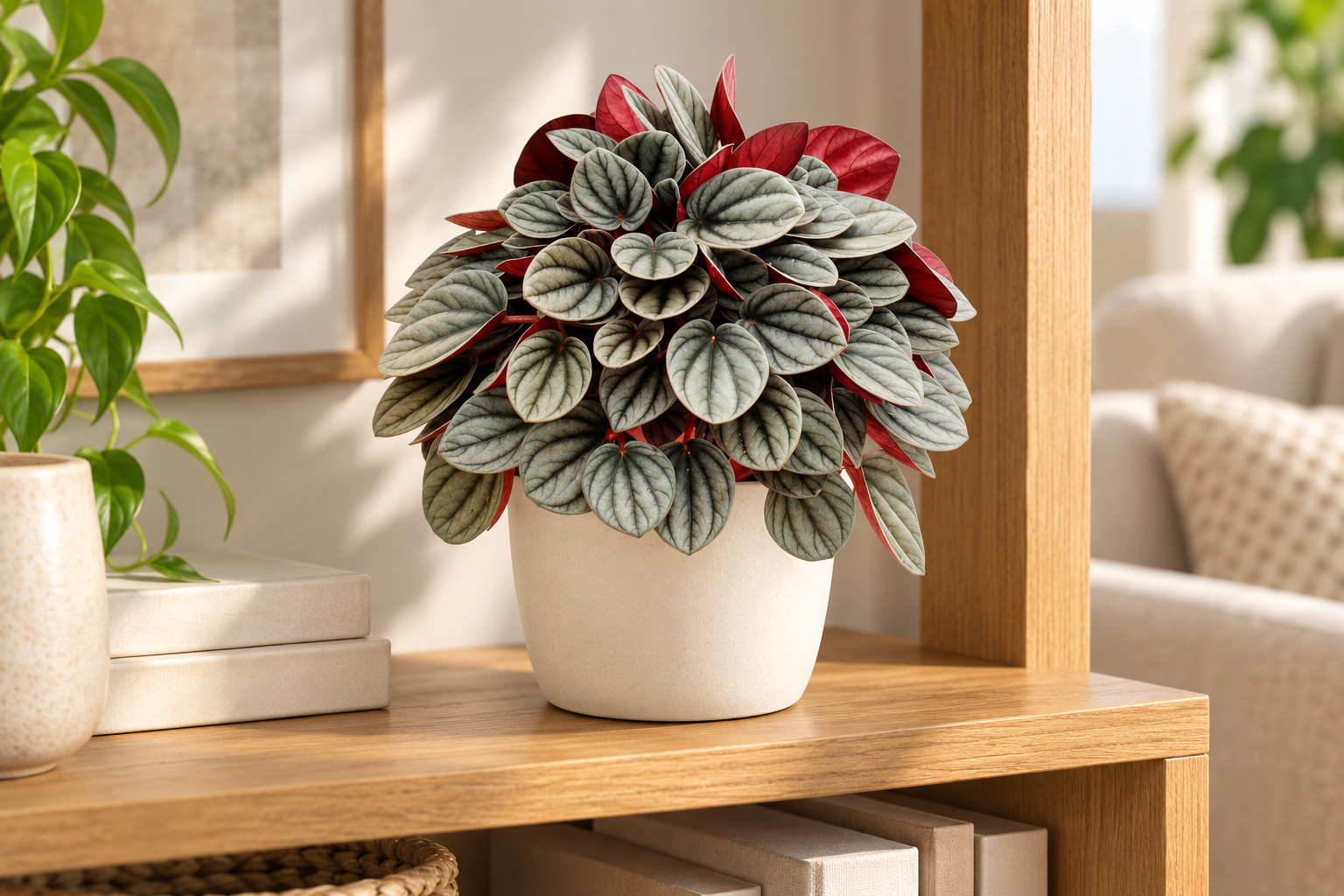
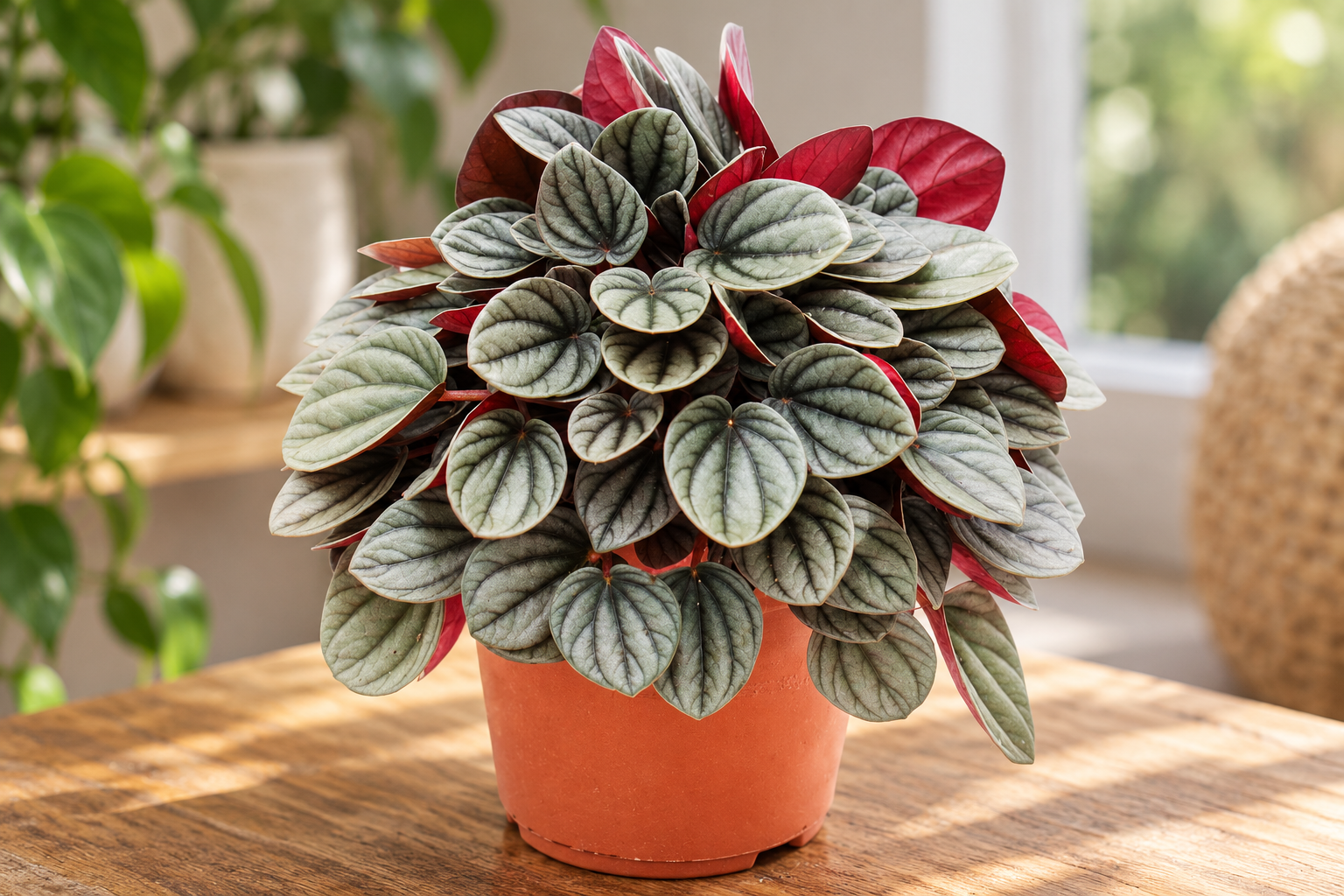
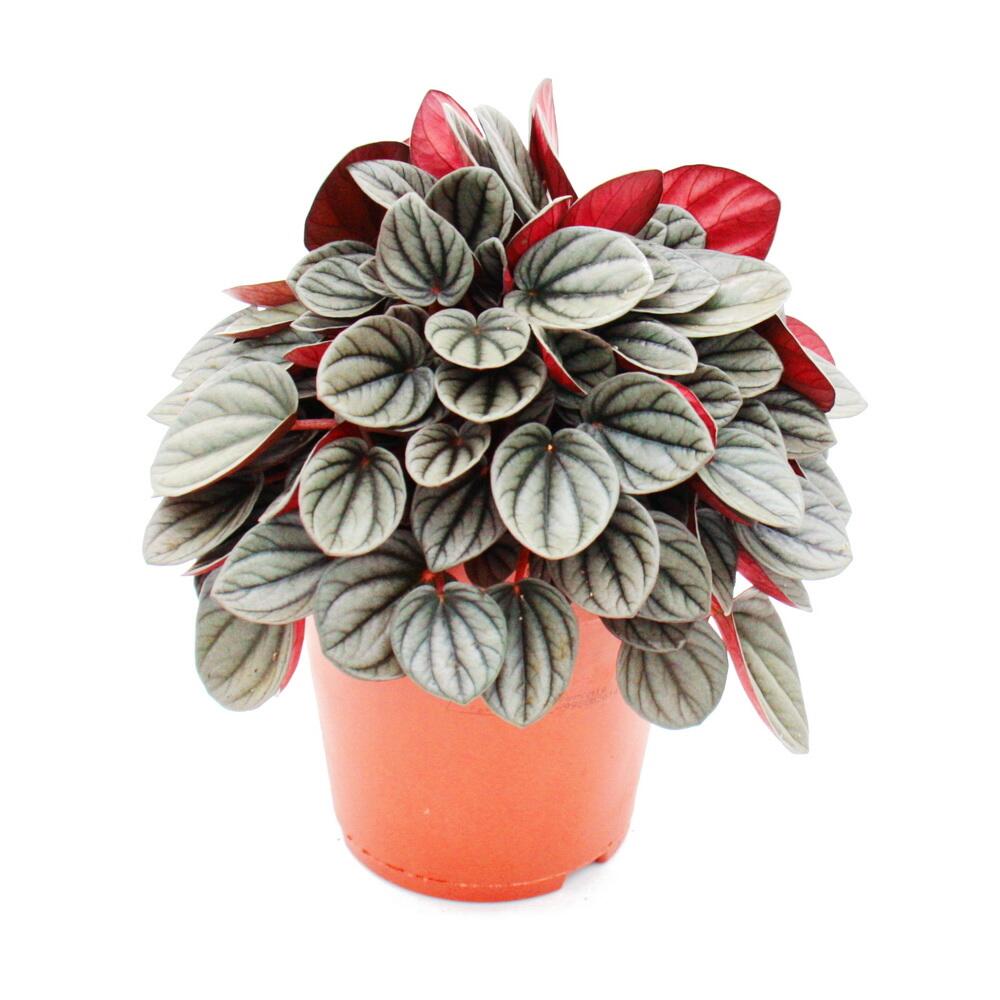
Sunrise combines cool light upper leaf surfaces with warm red underneath. Heart-shaped blades carry distinct veining; slanting leaves reveal burgundy undersides. Changing views give the compact crown depth. On a low bright bookcase you can look from front and slightly above. A plain light container suits it. The original shows both sides working together, not a uniformly red leaf or one fixed colour stage.
Get to know the young plant as a starting point
The associated range contains a plant in a 15 cm pot at about 20 to 25 cm total height including pot. Leaf number and position vary individually. Hold the container when unpacking, not delicate stems. A first photo of the whole crown and a slightly inclined leaf records starting condition. Later you can recognise new growth. Delivery height is no rule to retain forever through darkness or constant cutting.
Filtered light brings out both sides
A bright warm indoor place suits care. Avoid hot sun immediately after transport and introduce brightness changes gradually. An open shelf is suitable only when books do not shade the crown deeply. Check cold ventilation draughts and extreme heater air too. Red undersides are no sign of extra fertiliser needs. New leaves should emerge healthy. A quiet location makes changes easier to understand than frequent moves between greatly different conditions.
Moisture is judged at roots
Before watering check upper soil and compare container weight. After some drying supply roots as needed without prolonged complete drying. Water soil, let excess drain and check the cover. Soft leaves may relate to dry soil but also a wet problematic root zone. Red or a hanging stalk therefore cannot alone signal watering. Actual moisture condition and temperature always belong in the decision.
Airy roots keep care manageable
Loose permeable houseplant soil provides support without permanently airless roots. Repot slightly bigger only with real space needs and do not bury the base unnecessarily. Supply moderately by fertiliser label during active growth, considering pre-fertilisation. Narrow light flower spikes may appear in peperomias but are not promised in the young offer. Foliage and position already provide beauty. Extra supplies accompany healthy growth, not force a fixed red tone or accelerate flowering.
Include the reverse deliberately in observation
Wipe reachable surfaces gently while supporting each leaf. Looking at red undersides also reveals small scales, cotton-like deposits or new damage early. Do not pull stems apart merely to see every detail better. In winter keep frost-free indoors; reassess consumption under less light. Overview and close-up complement each other in the plant book. Photograph with similar light and comparable tilt so a changed viewpoint is not mistaken for colour loss.
One plant, several views
Good to know
Why do I see red on some leaves?
Tilted leaves show dark red to burgundy undersides.
Is Sunrise a uniformly red peperomia?
The described original combines silvery grey-green tops and red reverses.
Should I pull leaf stalks apart?
No. Support a leaf gently without damaging the crown to look below.
Is delivery height mature height?
No. It describes the young plant including pot.
Does extra fertiliser make undersides redder?
An extra fertiliser course is not intended for that.
Sources and editorial note
- Exotenherz – offer and original pictures, 03.10.2026
- NC State Extension – Peperomia caperata and indoor cultivation, 03.10.2026
- NC State Extension – peperomias, care and observation, 03.10.2026
Shop offer, article number, GTIN, availability and originals checked directly on 02.10.2026; specialist acceptance on 03.10.2026. Specialist sources read directly. Shop article with SKU, delivery measurements, current orderability and all available originals checked directly on 03.10.2026. Sources read, no outside photos adopted. Trade names retained; species care not presented as cultivar-specific delivery promise. Not orderable: knowledge portrait without purchase connection or social dispatch. No Wawi, server or tool changes. Currently not orderable: portrait without purchase link; social drafts not approved for dispatch.