This plant at Exotenherz
Check the shop offer for current availability, price and what is included.
Check the shop for the price, current availability and what is included.
Your care table
| Topic | What to do | Why it helps |
|---|---|---|
| Light | Bright with filtered light. | Pale young leaf areas are sensitive to hot sun. |
| Colour development | Allow pale new growth to become greener later. | This is a typical maturation process of this form. |
| Water | Let the upper compost layer dry slightly, then water thoroughly. | Even supply without a constantly wet root ball. |
| Compost | Airy and free-draining, pot with drainage holes. | Healthy roots require oxygen. |
| Foliage | Retain healthy older green leaves. | They contribute substantially to supplying the plant. |
| Fertiliser | Moderately during active growth following product instructions. | More fertiliser does not reliably produce paler growth. |
| Winter | Warm and bright; lengthen watering intervals as needed. | Less light often reduces consumption. |
| Fresh growth | Do not forcibly unfold tender leaves. | New leaf surfaces tear easily. |
Check the compost and pot weight. The care table explains how far the compost may dry.
Water only when needed. The water should reach the root ball without spilling over the rim.
Remove surplus water from the saucer or cachepot. Then return the plant to a suitable position.
Colour tells the age of a leaf
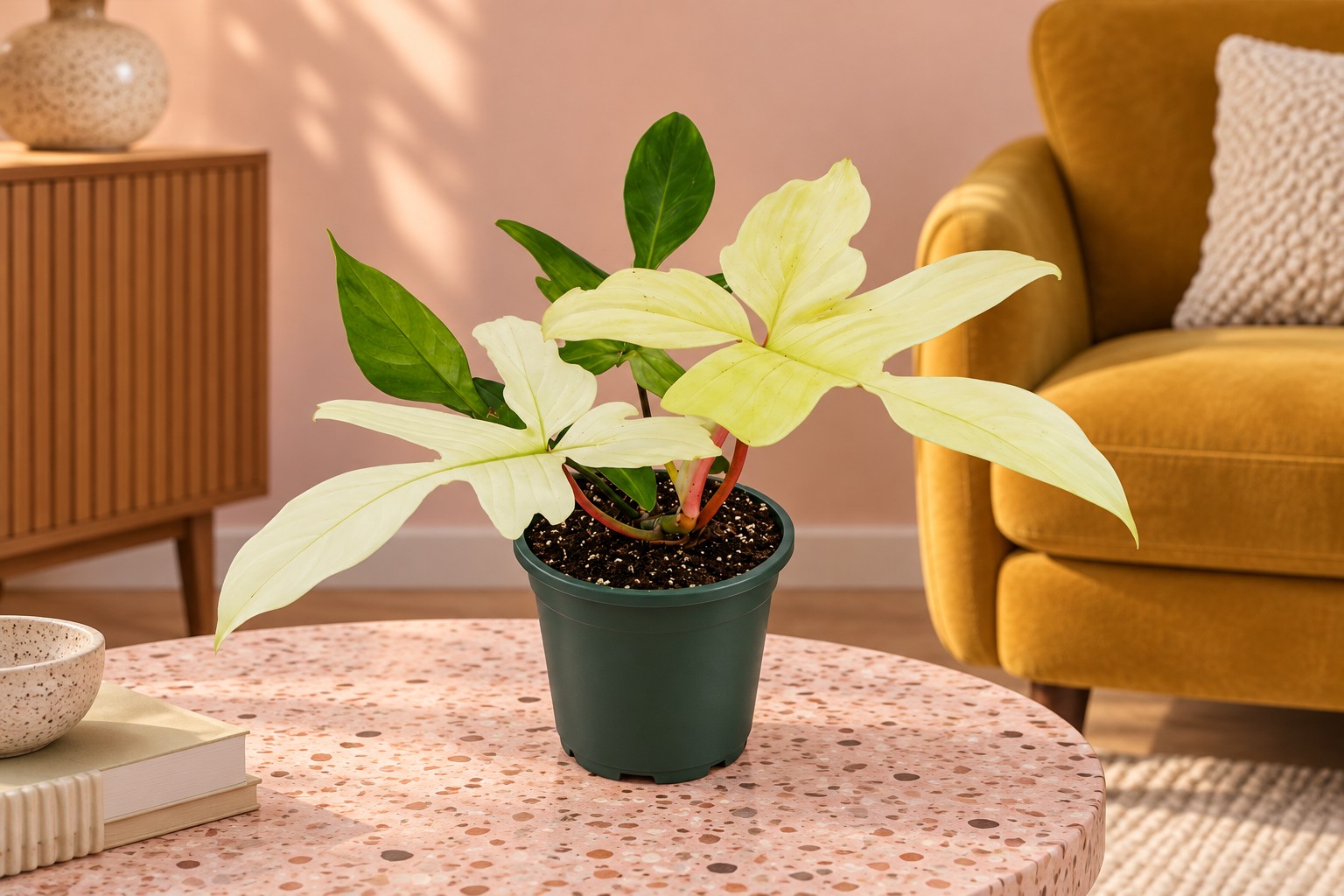
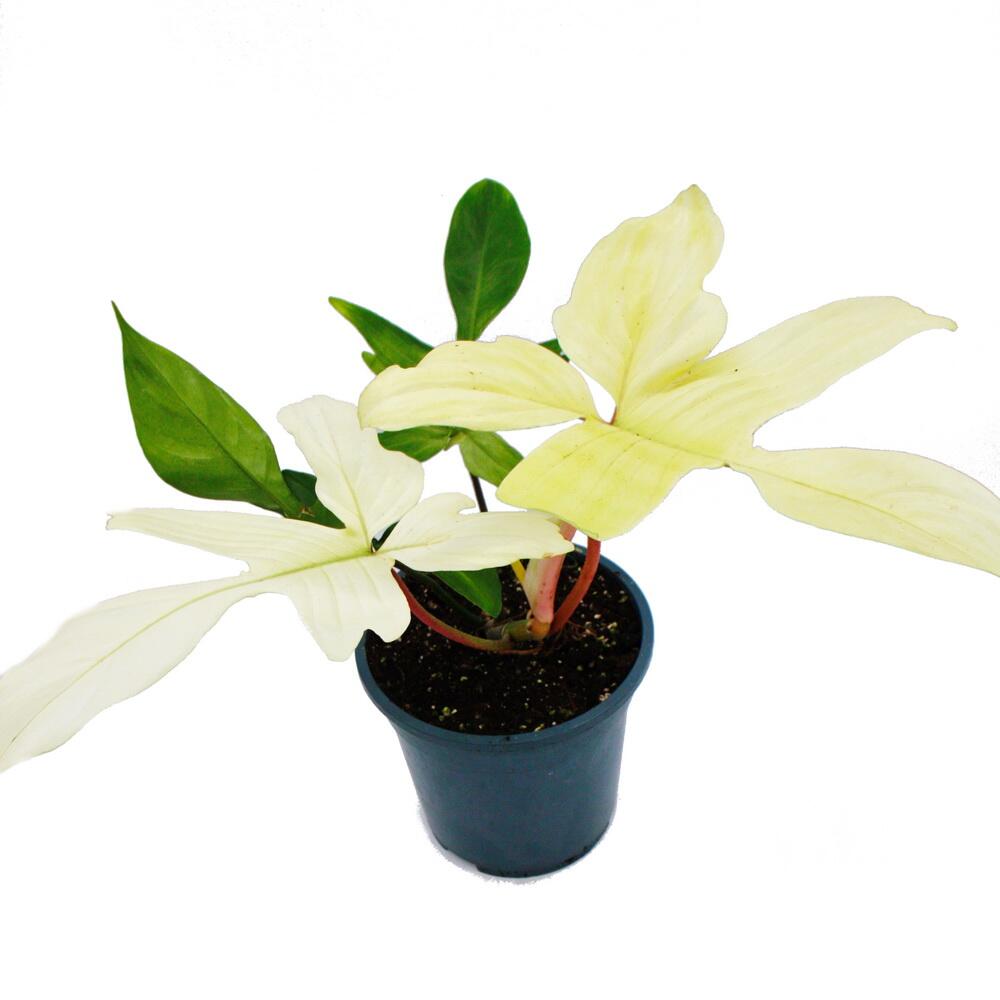
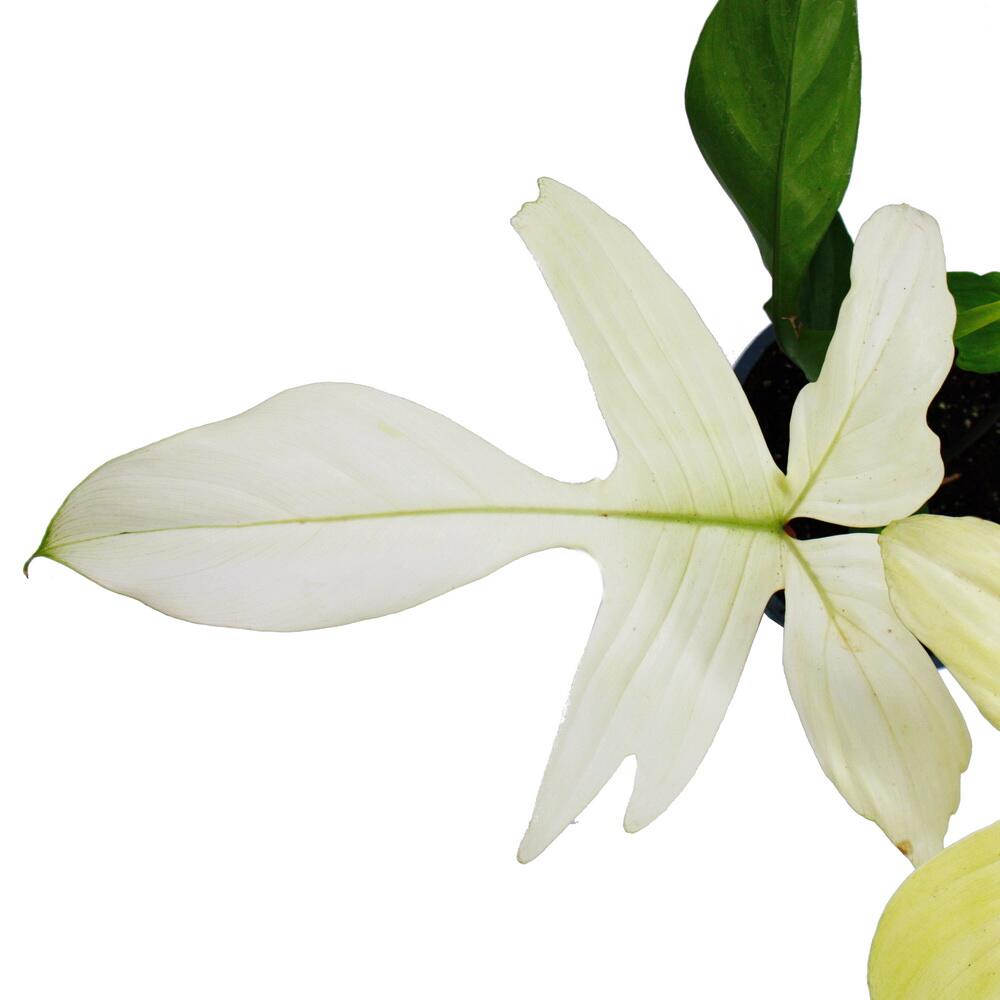
In Florida Ghost, young leaves emerge pale cream to mint green and become greener as they mature. This differs from permanently evenly distributed variegation. Nor is it a simple seasonal colour change that should be forced through strong sun. Lobed leaf outlines and reddish textured leaf stalks form part of its characteristic appearance. Florida relatives originate from horticultural crosses. The exact proportion of pale leaves depends on development and cultivation; a plant need not look at every moment like a photograph of newly unfolded pale leaves.
Distinguish the young plant from later climbing form
The shop’s short description states a 19 cm pot and approximately 30 to 40 cm total height. This is a young compact plant, not a finished tall climbing column. The original photograph shows pale lobed leaves beside older green foliage. Precisely this combination is valuable. A low clear surface displays leaf colours without squeezing the plant between other objects. Plan suitable support as growth increases. Any climbing support or decorative pot is included only if expressly stated.
Plenty of usable light without burned pale areas
A bright position with filtered light supports strong fresh growth. Intense direct sun may damage pale leaf surfaces, particularly after shipping or moving. Brighter therefore does not mean unprotected against the hottest window. An evenly warm room without cold draughts suits. Good humidity may ease the unfolding of leaves but should be combined with air movement. Do not forcibly pull out a stuck tender leaf. Its surface tears easily. First check whether the root ball is adequately supplied and whether surroundings have become unnecessarily dry or cool.
Supply roots evenly and preserve oxygen
Choose airy free-draining compost and a pot with drainage holes. Let the upper compost layer dry slightly before watering again, then water thoroughly and drain completely. The plant should neither sit constantly in wet soil nor dry to wilting for a long time. Pot weight helps assess moisture below the surface. Intervals often lengthen in winter or with little growth. Check a decorative cover pot after watering. Pale leaves need no unusually frequent watering but reliable healthy roots.
Keep green foliage and fertilise moderately
Older green leaves make an important contribution to supplying the plant. Do not cut them simply because an entirely pale specimen looks more decorative. During active growth, give suitable foliage-plant fertiliser at an appropriate dosage following product instructions. Overfeeding does not whiten leaves and may damage roots. With a densely rooted ball, gently move into a pot only slightly larger. Loosely fasten shoots to support. Carefully remove dust from mature leaves with a damp cloth without bending sensitive fresh growth or treating it with leaf shine.
Distinguish normal green maturation from problems
A formerly pale leaf becoming greener over time is expected in Florida Ghost. Brown dry patches after intense sun, numerous yellow leaves with a wet root ball or dotted leaves with webs instead call for targeted inspection. Regularly inspect leaf undersides and shoot axes for pests. For propagation attempts, use only healthy shoot sections with nodes without unnecessarily weakening the mother plant. A single cut leaf does not form a complete new climbing plant. Like other philodendrons, it is not for consumption: keep away from nibbling pets and small children and avoid sap contact when cutting.
One plant, several views
Good to know
Why is my white leaf turning green?
Florida Ghost produces pale new growth that becomes greener as leaves mature. This is part of its typical appearance.
Should I remove green leaves?
Keep healthy green leaves. They supply the plant and are not a cosmetic defect.
Can I force white leaves with strong sun?
That is unsuitable care. Pale leaf surfaces may burn; bright filtered light makes more sense.
How large is the offered plant?
The shop’s short description states a 19 cm pot and approximately 30 to 40 cm total height. Individual leaf shape and colour may differ.
Sources and editorial note
- Product and delivery contents: Exotenherz
- Costa Farms nursery: plant and care knowledge
- Gabriella Plants nursery: variety features and cultivation
Sources checked: 15 September 2026. Product information and delivery contents follow the linked shop offer. Care has been checked against the stated specialist sources and remains subject to plant condition, position and season.