This plant at Exotenherz
Check the shop offer for current availability, price and what is included.
Check the shop for the price, current availability and what is included.
Your care table
| Topic | What to do | Why it helps |
|---|---|---|
| Light | Grow brightly with filtered daylight. | Pale leaf areas are sensitive to hot sun. |
| Water | Let the upper soil dry somewhat, then water the root ball. | Roots need air again between waterings. |
| Drainage | Consistently remove surplus water. | An attractive outer pot must not form a water reservoir. |
| Soil | Repot into a loose, structurally stable mix. | Compacted wetness strains fleshy roots. |
| Warmth | Position evenly warm without cold draughts. | Tropical foliage reacts to strong fluctuations. |
| Fertiliser | Moderately during active growth according to the label. | More fertiliser does not control leaf markings. |
| Support | Give longer shoots loose support if needed. | Leaf stalks and new leaves must remain free. |
| Handling | Do not eat; keep protected from children and pets. | Calcium oxalate crystals can cause irritation. |
Check the compost and pot weight. The care table explains how far the compost may dry.
Water only when needed. The water should reach the root ball without spilling over the rim.
Remove surplus water from the saucer or cachepot. Then return the plant to a suitable position.
Each leaf puts the pattern together anew
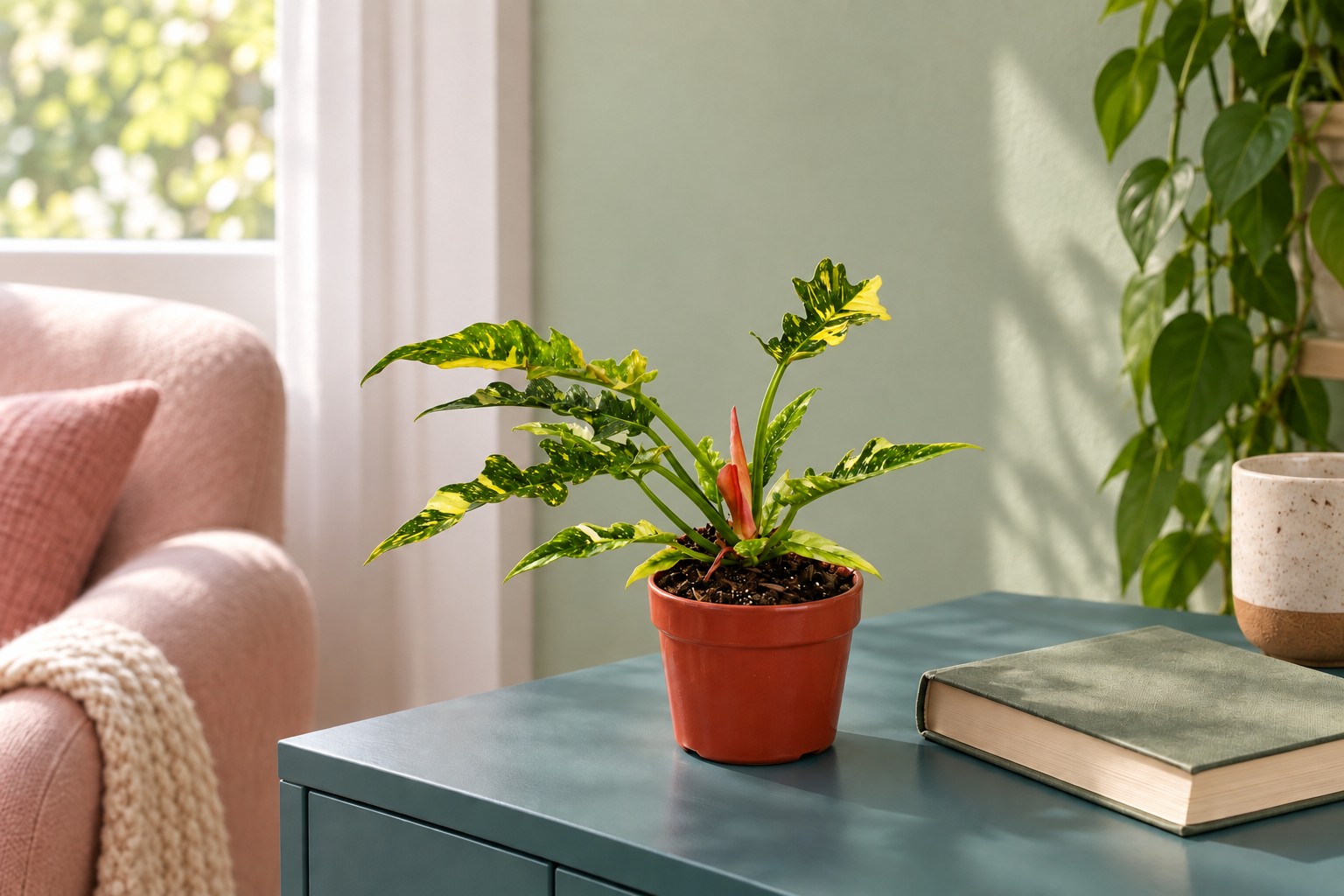
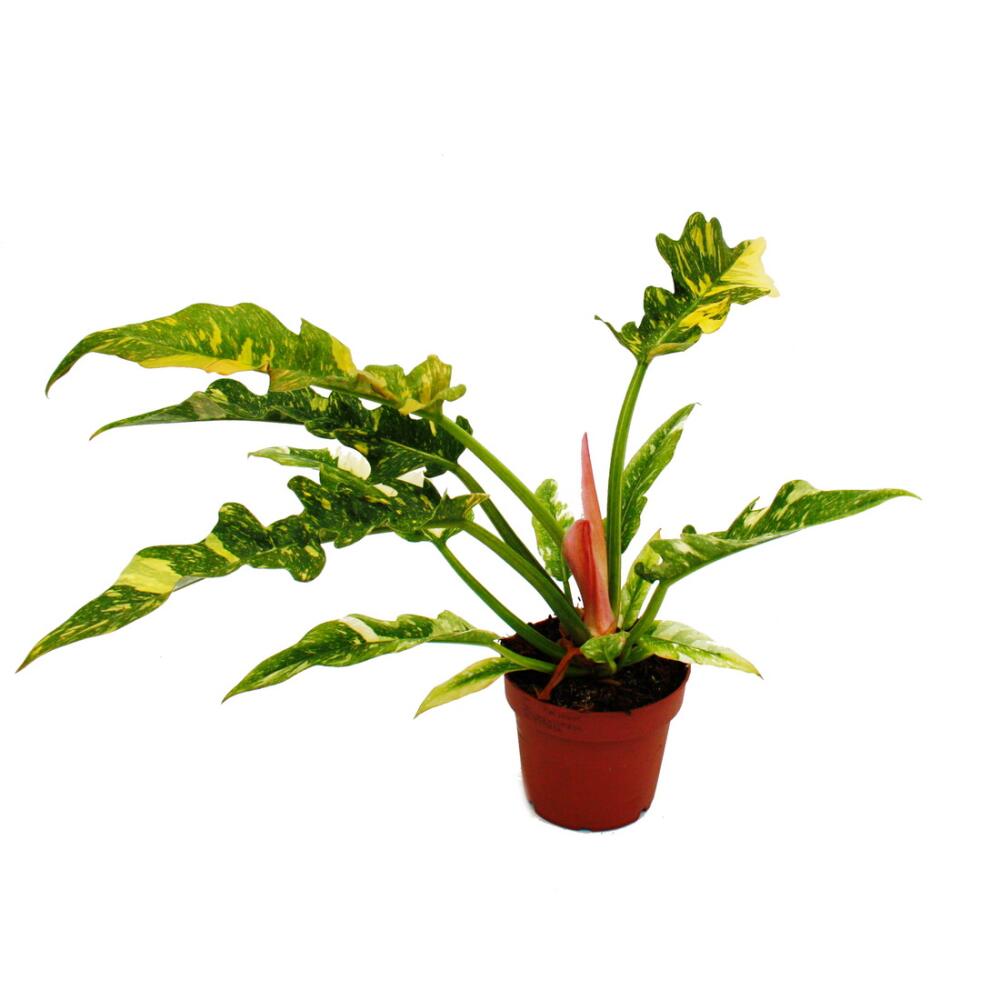
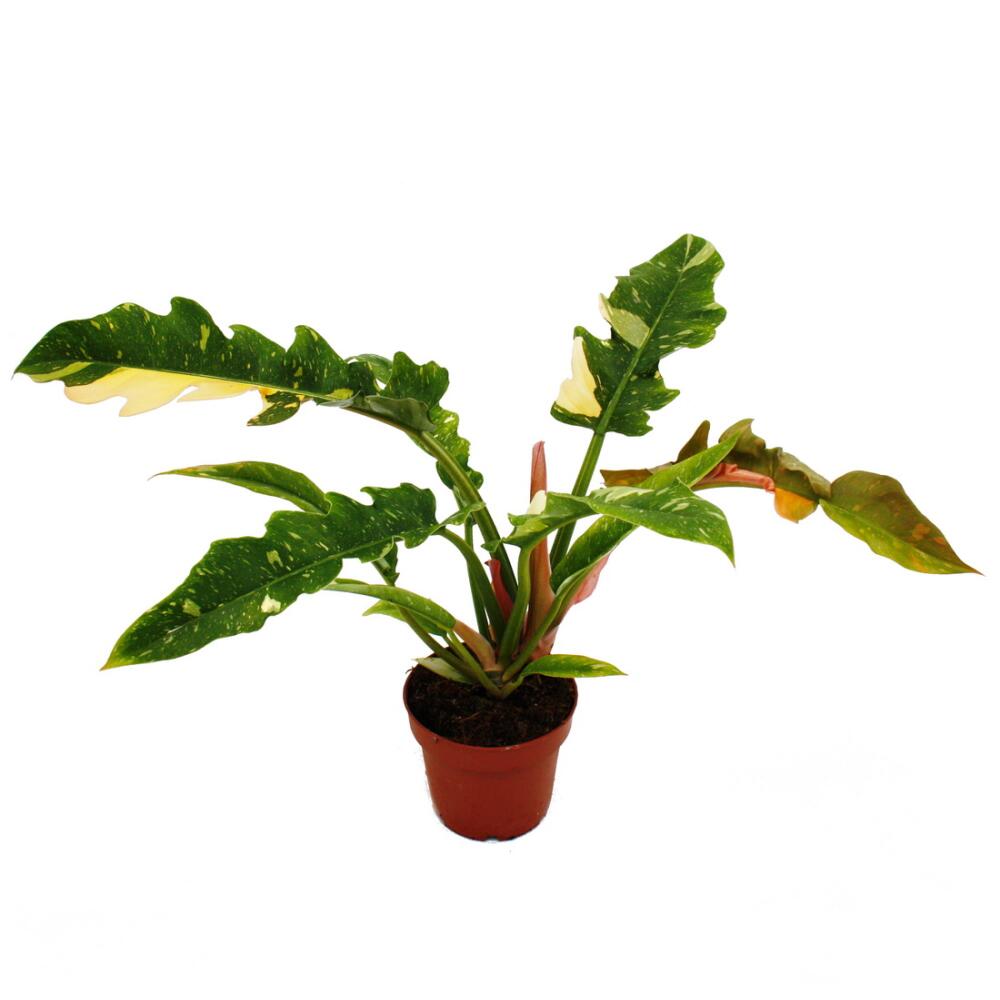
The narrow elongated leaves have distinctly serrated margins. Green, yellowish and cream areas are distributed irregularly; individual leaves may be more or less strongly marked. Reddish sheaths protect young shoots and belong to the changing appearance. Ring of Fire is listed as a horticultural form. A specific parent combination is not documented for this offer and is therefore not added. Anyone observing the plant discovers its special character particularly in the differences between old foliage and fresh growth.
The young plant also needs some sideways space
The offered specimen is in a 12 cm pot with approximately 25 to 30 cm overall height. Leaves may already extend sideways beyond the pot at this size. Choose a surface where their tips will not be knocked with every movement. Much larger leaves and longer shoots can develop later; the small delivery size is not a permanent ultimate size. A stable outer pot helps with positioning but does not replace drainage. Decoration and container colour in the scene are not additional delivery promises.
Maintain pale markings with soft daylight
A bright position with indirect light suits it well. Pale leaf areas in particular need protection from hot midday sun. More sunshine is not a reliable route to better variegation; burns remain visible as damaged patches. Growth declines instead in a very dark room. Keep the plant evenly warm and avoid cold draughts. After shipping, a calm change of location is more sensible than daily moves between very different light and temperature conditions.
Roots need moisture and air
Before each watering, check whether the upper soil has already dried. Then water the root ball evenly, allow good drainage and empty the outer pot. Suitable frequency depends on light, temperature, root mass and soil mix. Drying usually takes longer in winter. Limp leaves in dry soil and limp leaves in a constantly wet root ball call for different responses. With wetness, first check the roots rather than adding more water as a precaution.
Support growth without crowding young leaves
A loose, structurally stable aroid mix is suitable. Once strongly rooted, use a pot only slightly larger. Feed moderately during active growth according to the fertiliser label. If longer shoots need support, add a suitable climbing aid and attach loosely; leaf stalks and fresh tips must not be constricted. Dust larger leaves with a soft damp cloth, supporting them from below. Do not pull on a leaf sheath that is still closed, even if unfolding takes some time.
Distinguish colour, damage and propagation
Natural pale variegation must be distinguished from newly developing general yellowing. Brown dry spots may be associated with sun, dry air or root problems, among other causes. Also inspect leaf undersides for thrips and spider mites. For a new plant, a cutting needs a suitable stem node; a single decorative leaf is not enough. The philodendron belongs to the aroid family and contains irritating calcium oxalate crystals. Position it protected from nibbling children and animals.
One plant, several views
Good to know
Does every leaf remain equally colourful?
No. Variegation is distributed differently, and the colour impression also changes as leaves develop.
Does Ring of Fire need direct midday sun?
No. A bright position with filtered light suits indoor cultivation better; hot sunshine can damage pale areas.
Does the plant stay just 30 cm tall?
Approximately 25 to 30 cm describes the offered young plant. It can become much larger and broader later.
Must I add a climbing pole immediately?
Not necessarily. Observe shoot development and add suitable support once longer shoots need it.
Sources and editorial note
- Product and delivery contents: Exotenherz
- Costa Farms nursery: plant and care knowledge
- Royal Horticultural Society: plant and care information
Sources checked: 15 September 2026. Product information and the contents of delivery follow the linked shop offer. Care advice was checked against the cited specialist sources and should still be adapted to the plant’s condition, position and season.