This plant at Exotenherz
Check the shop offer for current availability, price and what is included.
Product and delivery details are given in the individual offer.
Your care table
| Topic | What to do | Why it helps |
|---|---|---|
| Light | Place very brightly; increase sun gradually after sheltered cultivation. | The young pine needs enough light for healthy new growth. |
| Summer | Choose a bright, airy outdoor position with a secure base. | The species is a Mediterranean tree, not a permanent shade plant. |
| Water | Water thoroughly as surface drying begins. | The small root ball should neither stay constantly wet nor dry out completely. |
| Drainage | Keep drainage holes clear and remove accumulated water. | Constant root wetness also harms a tree in a pot. |
| Substrate | Use structurally stable, well-drained container-plant compost. | Water should flow through and roots receive enough air. |
| Nutrients | Supply moderately according to the fertiliser label during growth. | The pot offers limited nutrient reserves. |
| Pruning | Do not routinely shear or cut into old bare wood. | The natural tree shape develops slowly and needs no constant shaping. |
| Winter | Plan a very bright, cool, frost-free place for the young potted plant. | A small root ball freezing through is exposed differently from a mature tree in the ground. |
Check the compost and pot weight. The care table explains how far the compost may dry.
Water only when needed. The water should reach the root ball without spilling over the rim.
Remove surplus water from the saucer or cachepot. Then return the plant to a suitable position.
Getting to know a young pine
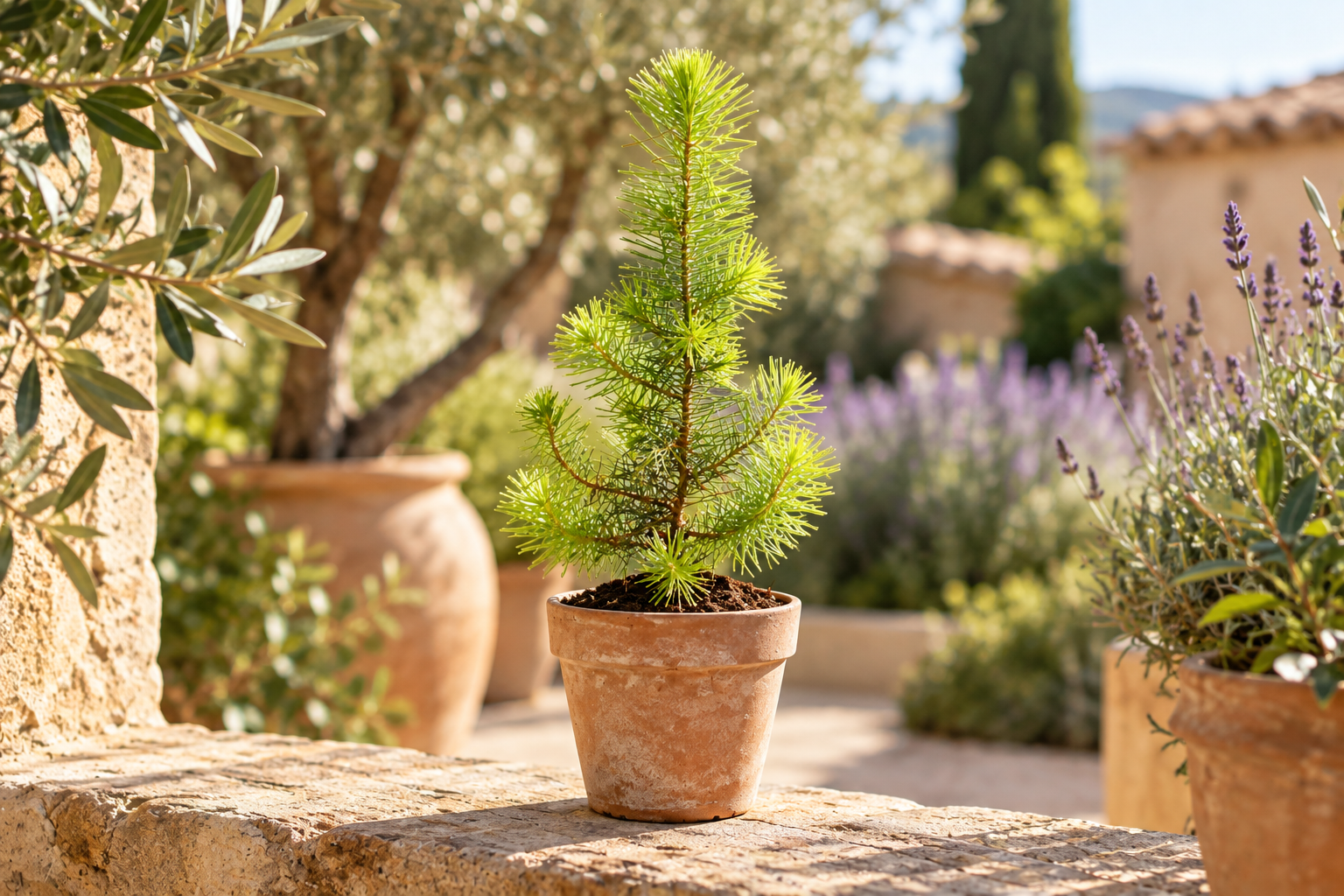
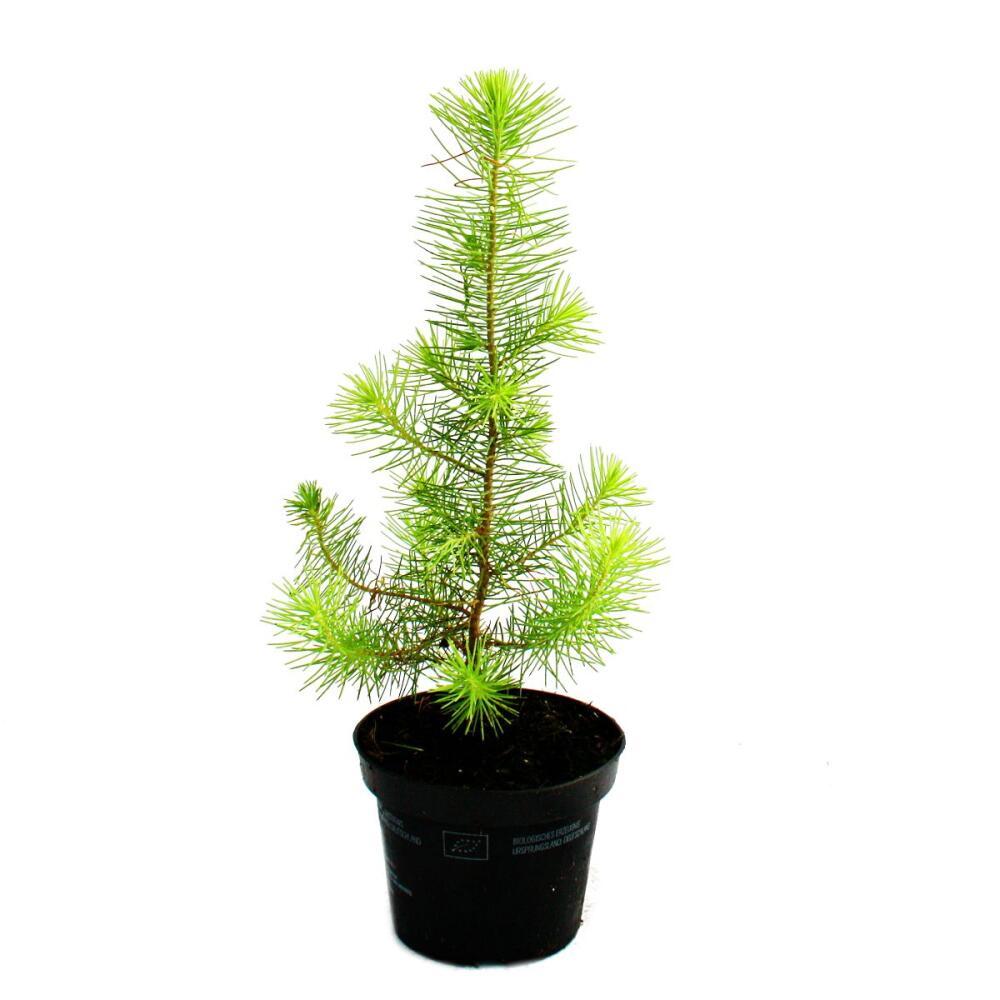
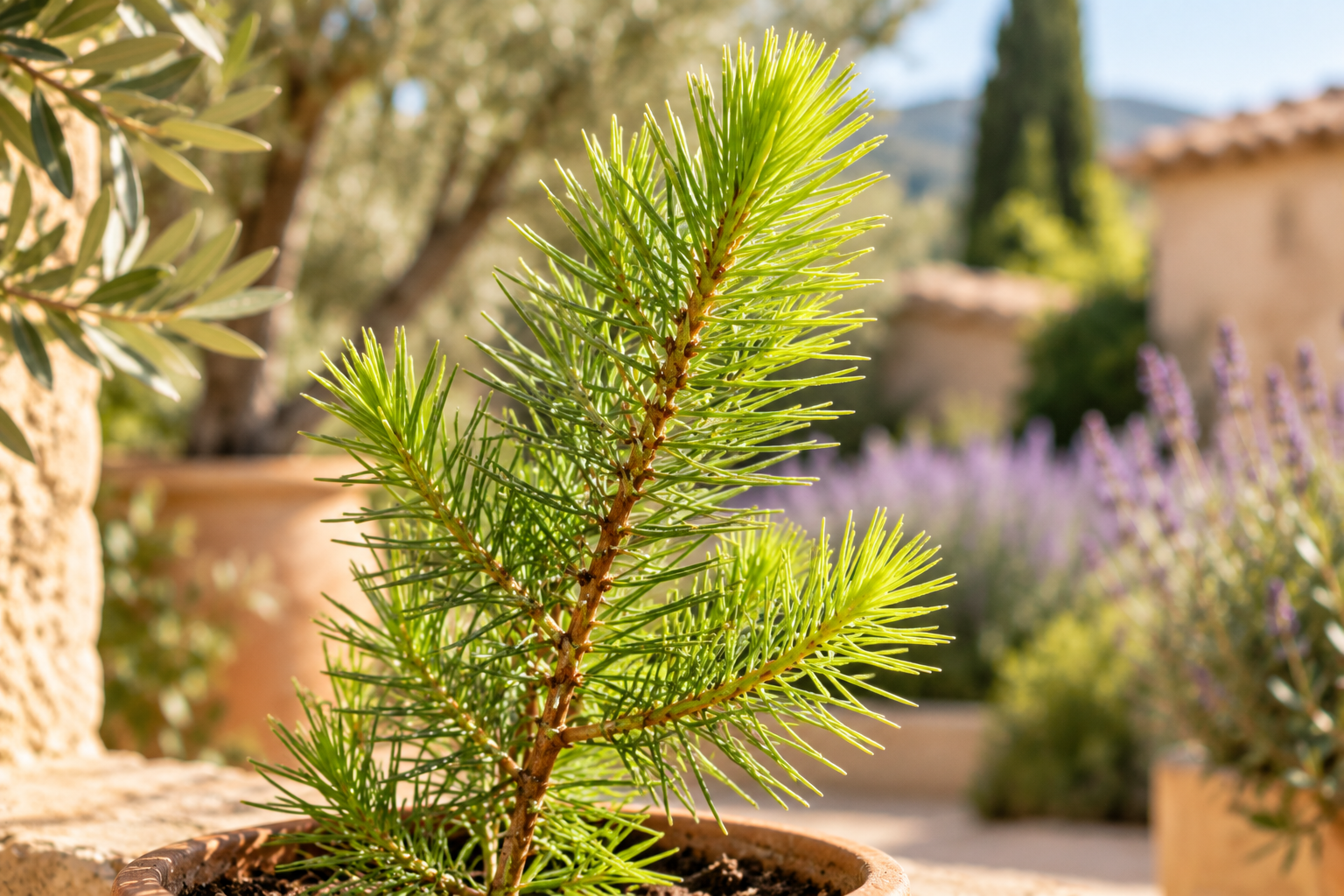
Looking closely at this young pine sold as “Zimmerkiefer”, you discover a loose green structure and a slender leading shoot. The young plant’s fine needles look different from the long, strong needle foliage of an old stone pine. This juvenile form is precisely what makes the little tree appealing. On a bright terrace it can have its own place among other Mediterranean pots. We like this beginning of a tree while considering its later development from the start. The German name meaning indoor pine describes a common retail form; it does not turn the species into a permanently small houseplant.
Between delivery size and a large tree
The offer states a 12 cm pot and about 25 to 30 cm total height. This measurement includes the pot. Pinus pinea is perennial and evergreen, and in a suitable climate may become a large tree over many decades. The later typical broad crown need not yet be recognisable on a young plant. Cones or a pine-nut harvest are not part of this small delivery offer either. Plan not only the first decorative position, but where the growing container plant can receive enough light and space in the future.
Think outdoors in summer
A very bright position is essential. For summer, an airy outdoor place after gradual acclimatisation makes more sense than a cramped, dark living-room corner. Begin under protection after unpacking and increase direct sun gradually. Young growth can then adapt to stronger conditions. The pot must stand securely and not dry out unnoticed on hot stone. Indoors, allow light to reach lower branches and keep away from radiators. A sunny photograph is a design idea, not evidence that the same place stays suitable in every season.
Supply the small root ball reliably
Check the soil and pot weight before watering. As the upper layer begins drying, water thoroughly and ensure free drainage afterwards. Evergreen needles do not mean a small root ball can do without water. Consumption rises in sun and wind, while soil may stay moist for a long time in cool weather. A filled outer pot is not a dependable reserve. When the tree stands outdoors, check drainage after rain too. You can distinguish water need from wetness only by actually checking the root ball.
Grow along with the roots
Structurally stable, well-drained container compost supports pot cultivation. When repotting, transfer a rooted ball carefully and choose only a suitable next container size. Do not pull the plant out by its branches or bury the trunk deeper than before. Supply according to the fertiliser label during active growth; initially account for reserves in fresh pre-fertilised substrate. With a weakened little tree, lots of fertiliser replaces neither a good position nor healthy roots. Check conditions before greatly changing pot, soil and feeding all at once.
Plan the winter position early
For this young pine in a small pot, we plan a very bright, cool, frost-free winter position. The hardiness of a mature tree in a suitable garden cannot be transferred to a freely standing small root ball. A permanently warm living room with little daylight is no good winter solution either. Check the soil even in cool quarters: watering becomes smaller or less frequent, but the root ball is not deliberately kept completely dry. Avoid strong cold draughts when ventilating and protect the pot from freezing through unnoticed.
Observe the tree shape rather than shearing strictly
The young stone pine can develop its branches; routine regular shaping is not required. Do not cut far into old bare wood without a specific reason. If needles turn brown, first examine the pattern: a single older area differs from fresh growth suddenly drying out. Compare light, root-ball moisture, winter temperature and a recent move. Occasional photographs from the same angle help show how the small delivered plant becomes a branching little tree. Part of its appeal lies in consciously following this gradual development.
One plant, several views
Good to know
Is this indoor pine a permanently small living-room tree?
No. Pinus pinea is a Mediterranean pine with long-term tree growth. The young potted plant needs plenty of light and a suitable winter position.
Why do its needles differ from those of old stone pines?
Young plants have a different needle and growth form. The mature broad crown develops only later.
Can it go onto the terrace in summer?
Yes, after gradual acclimatisation to stronger sun, in a suitable bright place with a secure base.
May the pot freeze through in winter?
A bright, cool, frost-free winter place is intended for this young potted plant. Garden hardiness cannot simply be transferred to its small root ball.
Must I shape it regularly?
No. Let the natural shape develop. Do not routinely shear or cut into old bare wood without a specialist reason.
Can I harvest pine nuts soon?
The young delivery offer is not a harvest promise. Cones appear only on sufficiently developed trees under suitable conditions.
Sources and editorial note
- Exotenherz: offer and original images (02/10/2026)
- RHS: Pinus pinea (02/10/2026)
- RHS: conifers in gardens and pots (02/10/2026)
Shop offer, article number, GTIN, availability and original images checked directly on 02/10/2026. Specialist sources read directly. Juvenile needles checked against the original. No mature height inferred from delivery dimensions and no guaranteed frost temperature for small-root-ball pot cultivation in Germany. Winter recommendation framed as cautious container cultivation.