
This plant at Exotenherz
Check the shop offer for current availability, price and what is included.
The linked shop is in German. Product details, availability and delivery information are provided in that shop.
Your care table
| Topic | What to do | Why it helps |
|---|---|---|
| Light | Very bright; introduce direct sunshine gradually. | Light enables strong, compact growth. |
| Water | Let the root ball dry noticeably between waterings. | The trunk base stores water. |
| Waterlogging | Remove all leftover water. | Persistent moisture endangers roots and the trunk base. |
| Compost | Use free-draining succulent compost. | Roots need air again quickly. |
| Potting | Move slightly larger only when needed and do not plant deeper. | Too much wet compost increases rot risk. |
| Feeding | Feed sparingly during growth according to the label. | This slow-growing plant does not need excessive feeding. |
| Winter | Keep frost-free and as bright as possible; water much more sparingly. | Little water is used when growth is limited. |
| Checks | Regularly check trunk firmness and leaf bases. | Moisture problems and mealybugs are noticed early this way. |
Check the compost and pot weight. The care table explains how far the compost may dry.
Water only when needed. The water should reach the root ball without spilling over the rim.
Remove surplus water from the saucer or cachepot. Then return the plant to a suitable position.
A tree with a built-in reserve
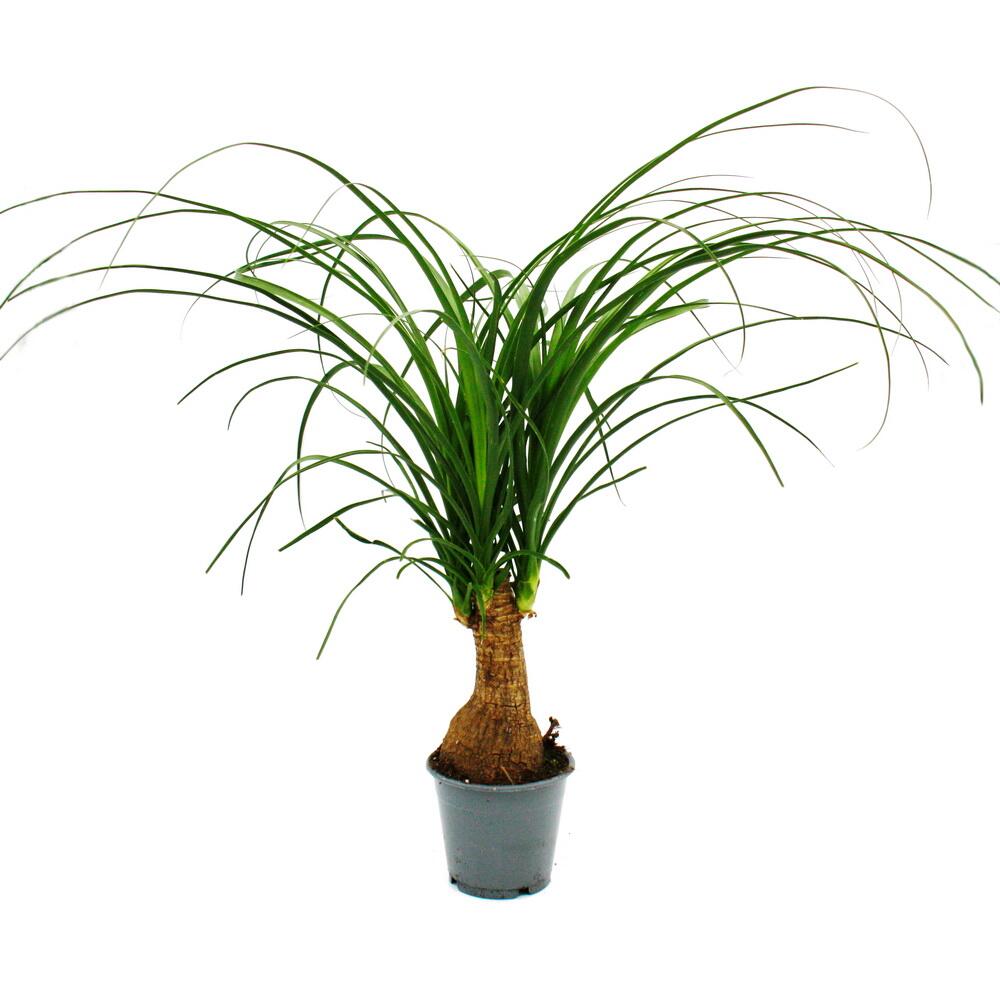
Beaucarnea recurvata looks palm-like with its crown of leaves, but is not a true palm. Its widened trunk base, which can store water, is conspicuous. The long, narrow leaves curve downwards in loose arches. In a pot, this plant grows relatively slowly and develops its own character over the years. A strong base is therefore not an invitation to frequent watering, but a clue to the way of life of this species from drier regions of Mexico.
Plan realistically for the delivery size
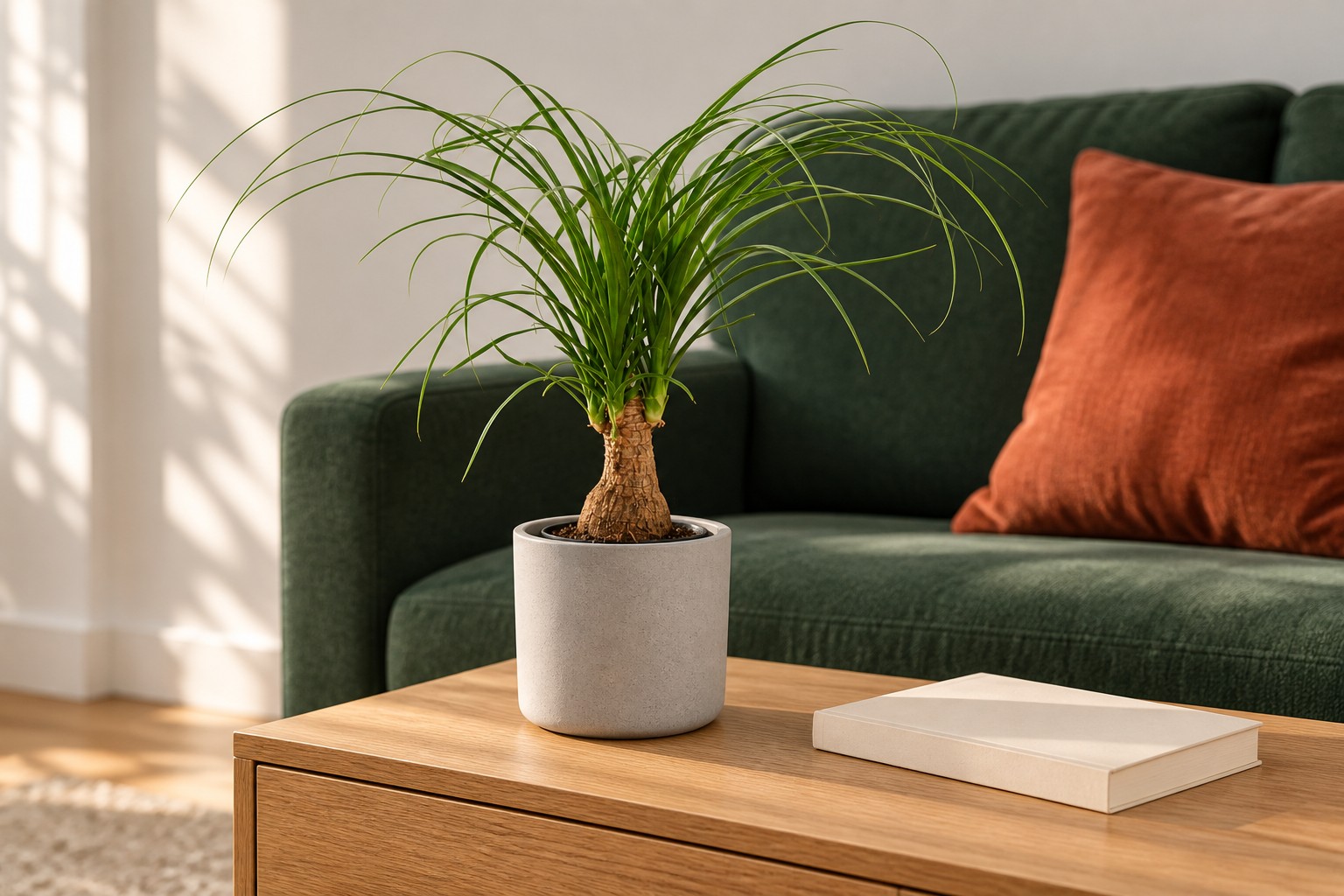
The listing is in a 12 cm pot and reaches about 30–40 cm total height. It is a young plant for a bright table or low chest of drawers. A large, old indoor tree looks different and needs years of development. Allow lateral room for the leaf crown so tips do not continually brush a wall or walkway. A stable cachepot is practical but must not become a water reservoir. The pictured furnishings provide a guide to size and styling.
Get to know sunshine gradually
A very bright position is crucial. Direct sunshine is used well after gentle acclimatisation; a specimen newly arriving from darker conditions is not immediately put into hot midday sun. The darker and cooler the position, the more slowly compost dries. A low-light place therefore cannot be rescued solely by watering less often. Turn the pot occasionally if the crown points to one side. The plant remains frost-free.
Check the root ball before fetching the watering can
Let compost dry noticeably between waterings. Lift the pot and check below the surface too before watering again. When needed, water the root ball and let it drain completely. Many small daily sips maintain unfavourable moisture particularly around the trunk base. A soft trunk base together with wet compost is a serious warning; do not reflexively keep watering. In winter, the interval may become very long, depending on warmth and light.
An airy root zone protects the trunk base
Use free-draining succulent compost and a pot with open drainage holes. Do not bury the swollen trunk base deeper than before. Repotting is useful only when space is clearly short; a far too large container stays wet unnecessarily long after watering. During visible growth, restrained feeding according to the product instructions is enough. With fresh, pre-fertilised compost, pause accordingly. Somewhat slow growth is normal for this species.
Care for leaves without destroying the shape
Dust can be removed carefully with a soft cloth. Gently release completely dried foliage; do not cut healthy leaves to create an artificially straight outline. Brown tips may develop from drought stress, dry warm air or salt buildup. Also check tight leaf bases for mealybugs. Cutting the trunk changes the plant greatly and is not routine care. A suitable position and patience are usually more valuable for an attractive specimen than frequent interventions.
One plant, several views
Good to know
Is the ponytail palm a palm?
No. Beaucarnea belongs to the asparagus family and develops a water-storing trunk base.
How often must I water it?
Only after noticeable drying. Pot weight, compost, light and temperature are more reliable than a weekly schedule.
Can the thick base disappear into compost?
No. Keep the previous planting depth when repotting. Moisture around a buried trunk base is unfavourable.
Why is the trunk soft?
Together with wet compost, this may indicate rot. Stop watering and check roots and position.
Sources and editorial note
Sources checked: 15 September 2026. Product details and delivery contents follow the linked shop listing. Care has been checked against the specialist sources cited and must be adapted to the plant’s condition, position and season.