This plant at Exotenherz
Check the shop offer for current availability, price and what is included.
Product details, availability and delivery information in the shop.
Your care table
| Topic | What to do | Why it helps |
|---|---|---|
| Light | Sunny and warm, preferably with long light exposure into autumn. | Late fruit development needs favourable conditions. |
| Water | During growth, water thoroughly after the surface begins to dry. | Irregular supply stresses young roots. |
| Compost | Structurally stable container-plant compost with good drainage. | A pot without drainage is unsuitable for permanent cultivation. |
| Feeding | Moderately during active growth, according to product instructions. | Overly strong applications correct neither shade nor damaged roots. |
| Space | Plan larger containers or garden space as roots develop. | The 50 cm young plant becomes a perennial woody plant. |
| Harvest | Wait for soft, sufficiently ripe fruit. | Colour alone is not a reliable ripeness indicator. |
| Pruning | Develop the crown selectively; avoid milky sap contact. | A few justified cuts preserve more useful wood. |
| Winter | Cool and sheltered; keep the root ball only slightly moist. | Leaf fall is normal, a completely dried-out root ball is not. |
Check the compost and pot weight. The care table explains how far the compost may dry.
Water only when needed. The water should reach the root ball without spilling over the rim.
Remove surplus water from the saucer or cachepot. Then return the plant to a suitable position.
The variety name belongs to the plant
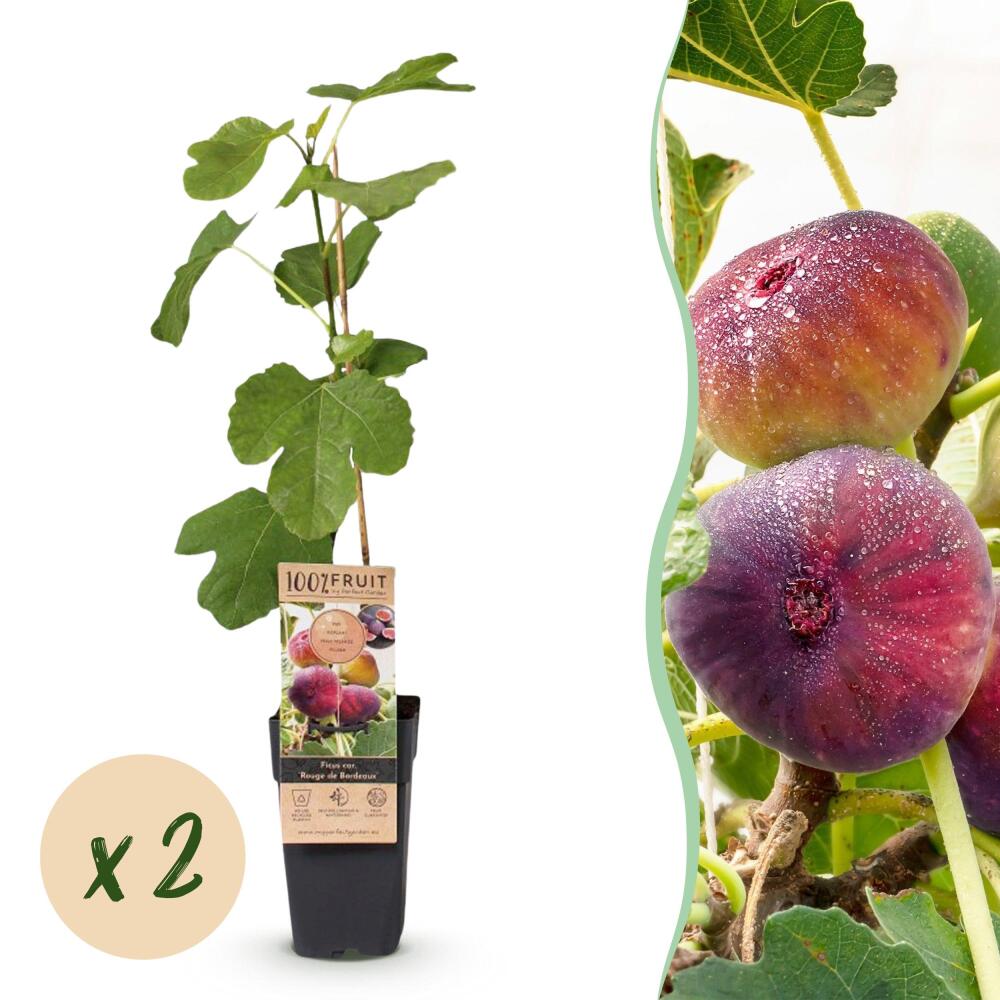
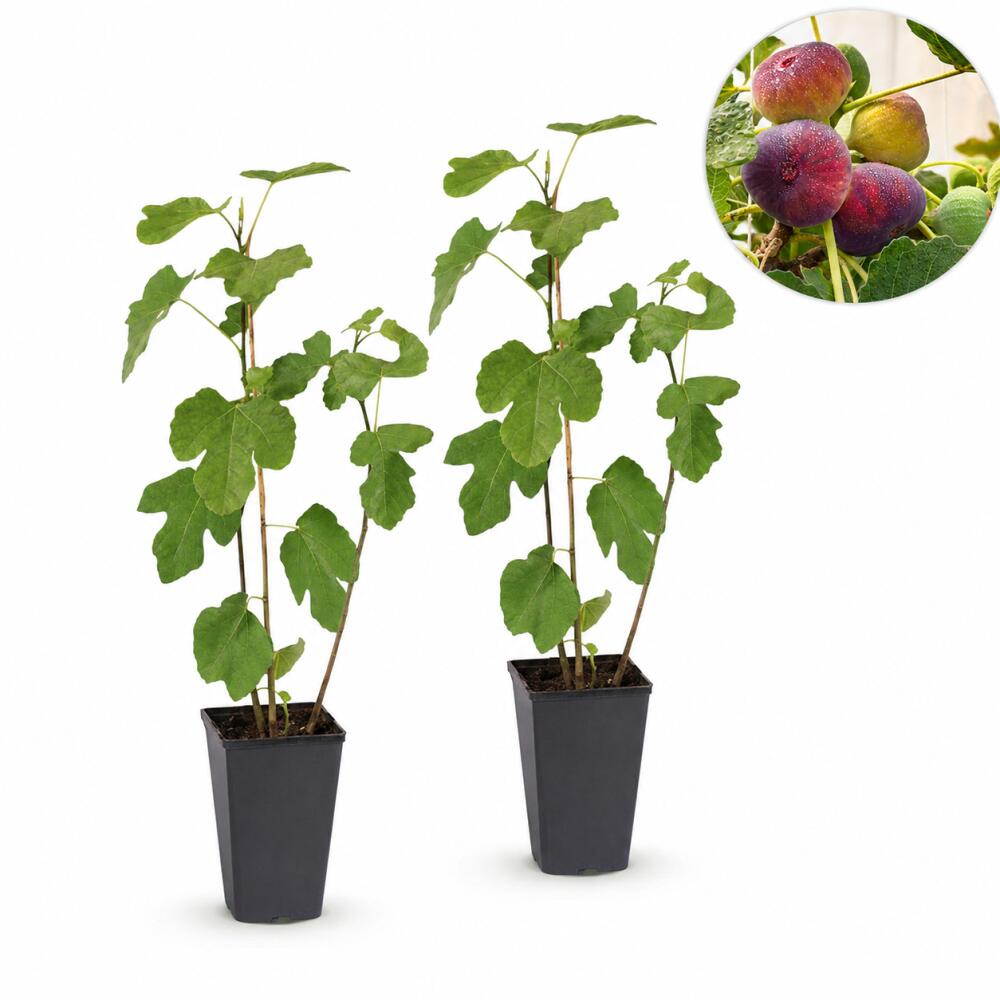
Rouge de Bordeaux is offered as a dark-fruiting variety of Ficus carica. The RHS variety profile describes red flesh and ripening mainly in late summer to autumn. Such information provides guidance, not a fixed harvest date for every garden. We retain the full shop name for later identification. Especially with figs, similar trade names are a good reason to keep the label and not rename plants solely from a fruit photograph.
Young figs rather than finished fruit trees
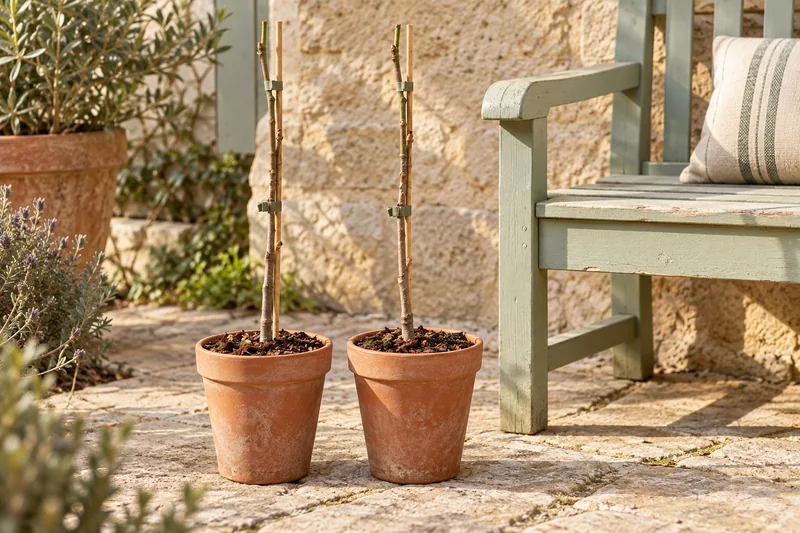
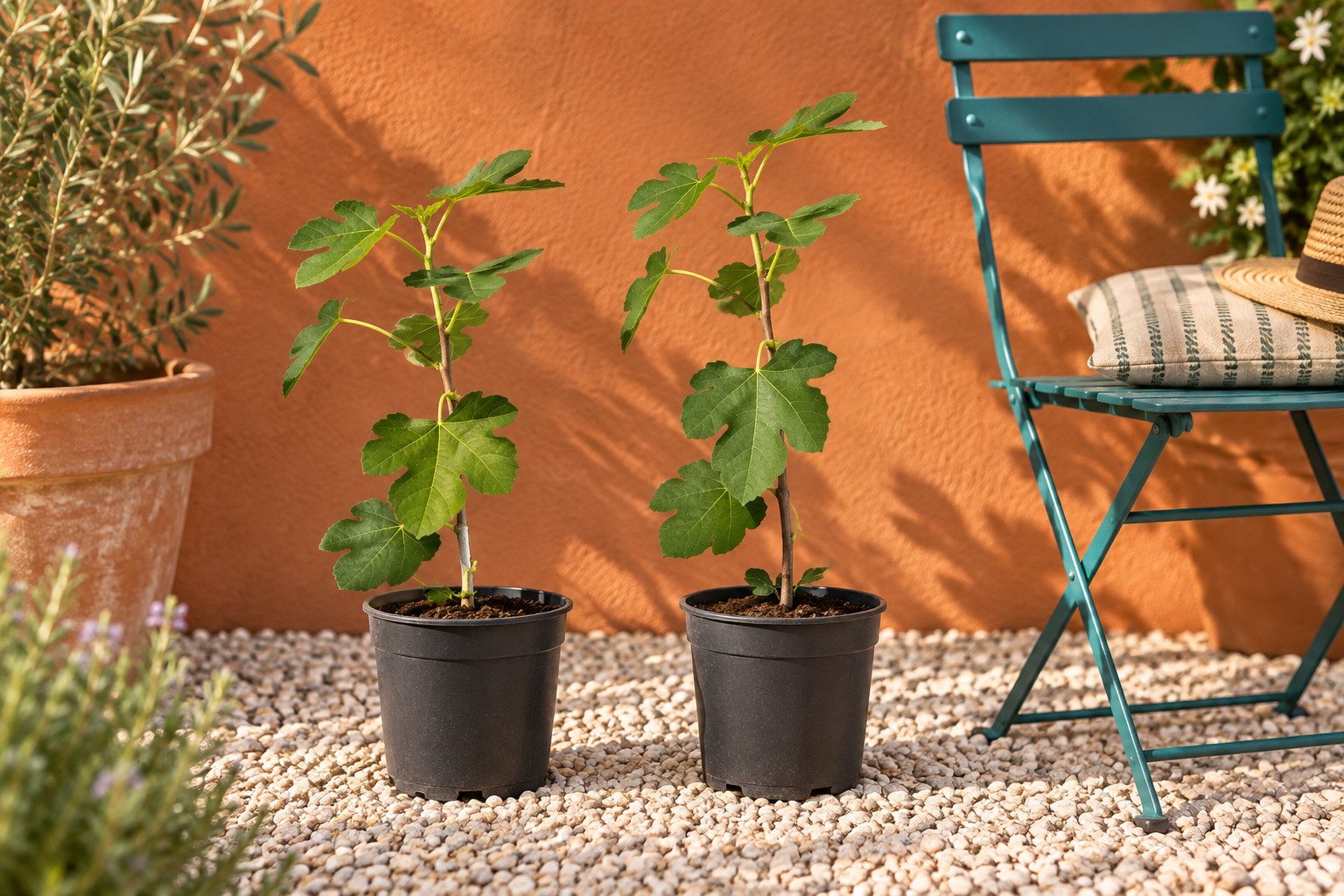
The offer lists two plants in 15 cm pots at approximately 50 cm total height. At this stage, we see slender young shoots and some characteristic lobed leaves. A broad crown develops only over time. The original shop image combines the young plant with a fruit illustration; this does not belong to the guaranteed current delivery. In Pflanzenwelt, we therefore also show the scene as a young-plant situation and distinguish delivery size from later development.
A position where summer lasts
A sunny wind-sheltered position is worthwhile for this fig, for example on a warm terrace. Late fruit development makes a cool shady place unattractive. Observe autumn too: if buildings shade the plant early, usable warmth is shortened. Position a container where it is easy to reach for watering, inspection and later winter transport. Being near a seating area helps you notice foliage changes early.
Container care begins below the surface
A well-rooted delivery root ball gradually needs more space in stable, well-drained compost. Water slowly across the whole surface and check whether water actually enters the root ball. If it merely runs past the edge, the inside may still be dry. Then remove excess water. A fig does not tolerate a permanently wet collecting saucer. Feeding during growth supports it, but should never replace light or healthy roots.
Read leaves and wait for fruit
An individual old leaf on the lower shoot may yellow. However, if the young plant loses a lot of foliage rapidly in midsummer, check drought, persistent wetness and recent position changes first. Under sheltered warm cultivation, inspect leaf undersides for fine speckles or webs. Patience is needed for a later harvest. Ripe fruit gives softly; a darker colour or particular calendar week alone does not prove readiness for picking.
Prepare the next season in winter
Rouge de Bordeaux loses its leaves in autumn. The tree should then rest rather than continue weak growth in a warm living room. A cool sheltered position is sensible for young container plants; compost stays lightly moist and must not dry completely. For later shaping, start with a few targeted interventions and follow crown development. Radical annual pruning is not obligatory. Avoid contact with milky sap and clean the secateurs after use.
One plant, several views
Good to know
Is Rouge de Bordeaux the same as Ronde de Bordeaux?
We use the name Rouge de Bordeaux from the shop offer. Similar names are not evidence of the same variety; retain the original label.
Do the delivered plants already have fruit?
The offer describes young plants and promises no current fruit load. Fruit illustrations show possible later development.
Can it stay in a pot?
Container cultivation is possible, but with growth it needs more root space, regular supply and suitable winter protection.
When are the figs ripe?
That depends on position and weather. Check softness and actual development rather than a fixed month.
Sources and editorial note
- Product and delivery contents: Exotenherz
- Royal Horticultural Society: plant and care information
- Royal Horticultural Society: plant and care information
- NC State Extension: plant profile
Sources checked: 16 September 2026. Product information and the contents of delivery follow the linked shop offer. Care advice was checked against the cited specialist sources and should still be adapted to the plant’s condition, position and season.