This plant at Exotenherz
Check the shop offer for current availability, price and what is included.
Check the shop for the price, current availability and what is included.
Your care table
| Topic | What to do | Why it helps |
|---|---|---|
| Light | Bright and filtered, without sudden hot sun. | Fine leaves need enough light. |
| Water | Regularly wet the entire rosette. | Individual sprays only on tips often do not suffice. |
| Drying | Drain and dry in circulating air. | Avoid constant moisture at the base. |
| Support | Open holder without potting compost. | The rush-like plant is an epiphytic bromeliad. |
| Fertiliser | Very weakly during growth following product instructions. | More salt does not mean more healthy growth. |
| Winter | Bright and frost-free, away from dry heated air. | Adapt water demand to conditions. |
| Leaves | Do not uniformly shorten living tips. | The natural slender form remains. |
| Propagation | Gently separate strong sufficiently large offsets. | Young rosettes first need reserves. |
Take the tillandsia off its support. Do not rub the leaves; preserve the delicate silvery scales.
Use low-lime water at room temperature. The care table explains whether thorough misting or a short soak is suitable.
Gently shake off the water. Tilt rosettes downwards, hang loose strands without bunching them together and allow them to dry with good airflow.
Rush-like but botanically a bromeliad
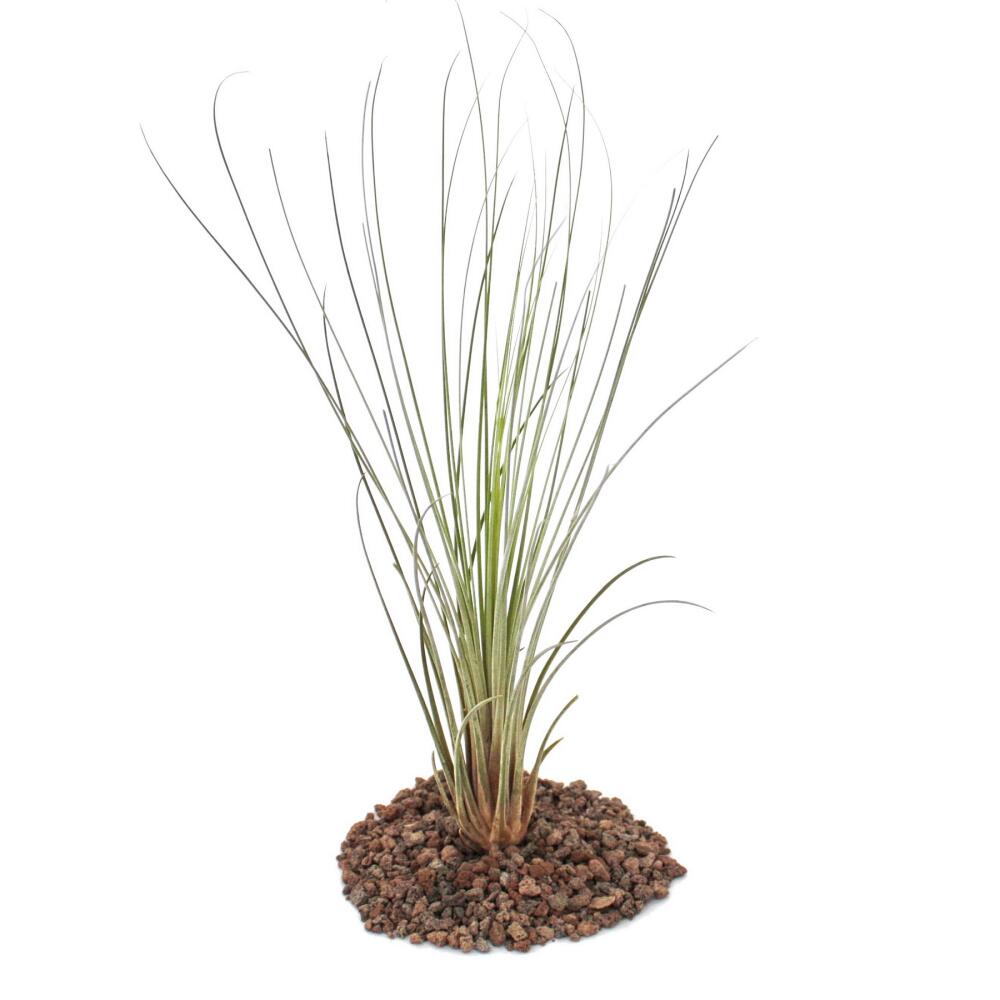
The long very narrow leaves of Tillandsia juncea rise from a compact base and may curve slightly at the tips. Their grey-green tone and fine structure differ clearly from broad-leaved tillandsias. Despite the name, it is neither a rush nor a grass. As an epiphytic bromeliad, it needs no permanently wet soil. Its natural range extends through large parts of the Americas. The spelling junceai in the shop text is a deviation; this portrait and search use juncea.
Support the loose plant appropriately
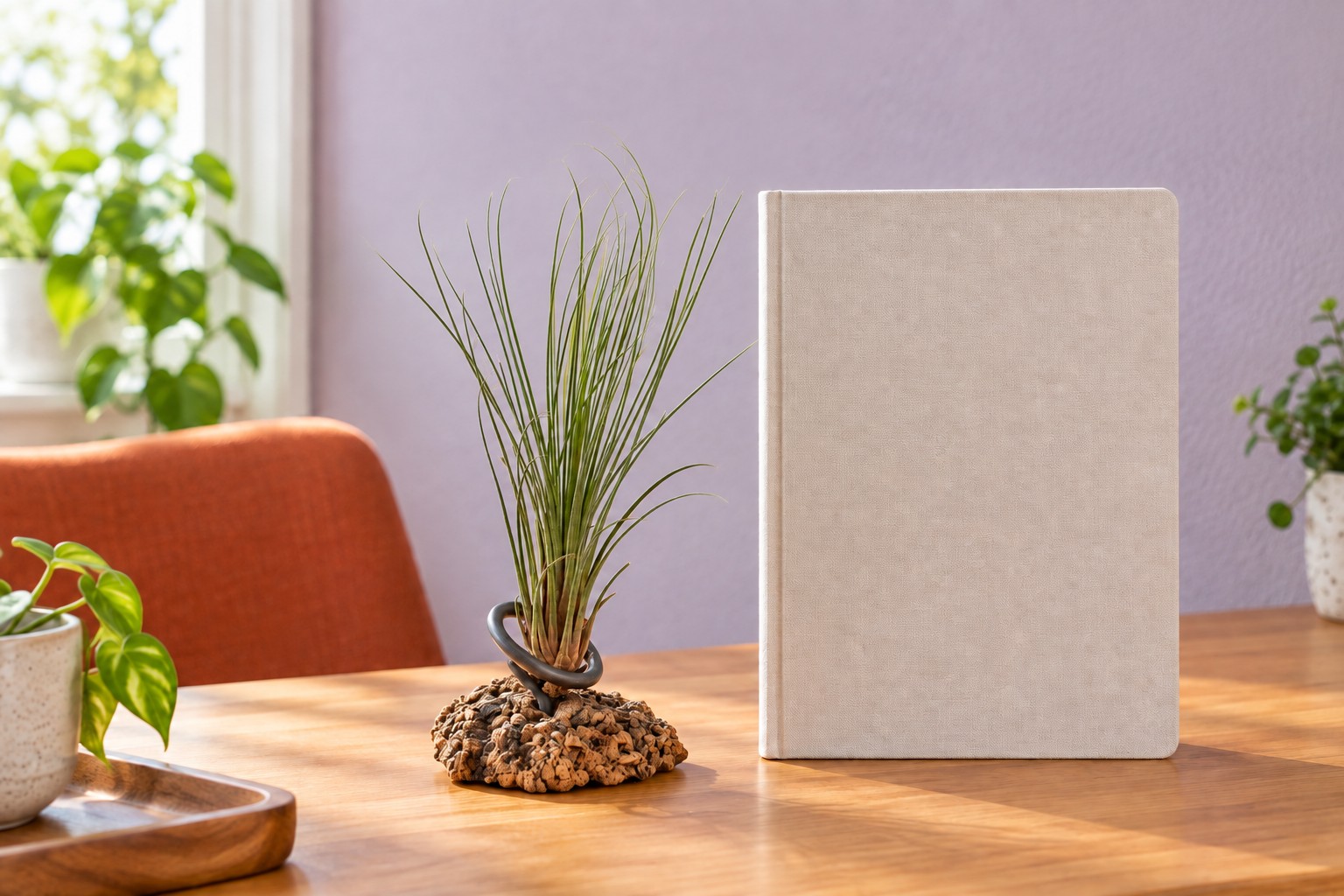
The offer states approximately 25 to 30 cm plant size. It describes a loose tillandsia, not a planted bog pot. An open holder may loosely support the base while narrow leaves stand freely. On a bright table, the plant needs less footprint than a spreading broad-leaved plant but sufficient room above. Ensure a shelf does not constantly touch the tips. The fastening should be secure yet removable for watering. Do not sink the whole base into decorative sand or damp moss.
Bright light between fine leaves
Choose a bright position with filtered light and good air movement. Frequent spraying cannot compensate for a dark corner. After delivery, do not immediately place in hot direct sun behind glass. A sheltered outdoor place with gentle light and enough warmth may suit in summer. Bring indoors before cold nights. Keep bright and frost-free in winter. A bathroom only suits if enough light reaches the plant; high humidity with poor ventilation is no advantage. The thin leaves must be able to dry again after watering.
Supply the whole rosette
Thorough wetting with suitable soft water or brief complete soaking supplies leaf surfaces better than a single spray on the tips. Afterwards, gently drain and remove water from the base. A slightly tilted position helps runoff. The surface may dry between waterings, but the plant should not be left neglected to desiccate for a long time. Warmth and dry air increase checking needs. A fixed interval of several days is merely an initial guide and must match actual conditions.
An airy holder rather than a repotting routine
This air plant requires no ordinary repotting into more compost. Instead, check whether holder and support still suit its growth. Loosen tight bindings promptly. During growth, suitable tillandsia or bromeliad fertiliser may be supplied very weakly according to product instructions. Do not concentrate strongly or fertilise dry leaves. Do not cover pale absorbing scales with leaf shine. A clean open support that drains promptly makes daily care easier while keeping the slender silhouette visible.
Observe new rosettes and a possible flower spike
Strong plants may develop an inflorescence with coloured bracts and violet flowers. Flowering is not guaranteed for this delivery. After flowering, that rosette ages while offsets may continue the plant. Let them grow sufficiently before separation. Remove only completely dead material and do not trim living tips uniformly short merely for preferred shape. If the base softens or many leaves turn brown together, specifically check ventilation, water accumulation and position.
One plant, several views
Good to know
Does rush air plant need a wet pot?
No. Despite its grass-like appearance, it is kept openly as an air plant without ordinary potting compost.
How large is the offered plant?
The shop states around 25 to 30 cm plant size. Decorative holders are included only if expressly stated.
Should I spray only leaf tips?
Water must reach the whole rosette. Then drain well and dry in circulating air.
Can I cut the leaves back like grass?
Living leaves should not be shortened indiscriminately. Gently remove dead parts only.
Sources and editorial note
- Product and delivery contents: Exotenherz
- Royal Horticultural Society: plant and care knowledge
- Royal Horticultural Society: plant and care knowledge
- NC State Extension: plant profile
Sources checked: 15 September 2026. Product information and delivery contents follow the linked shop offer. Care has been checked against the stated specialist sources and remains subject to plant condition, position and season.