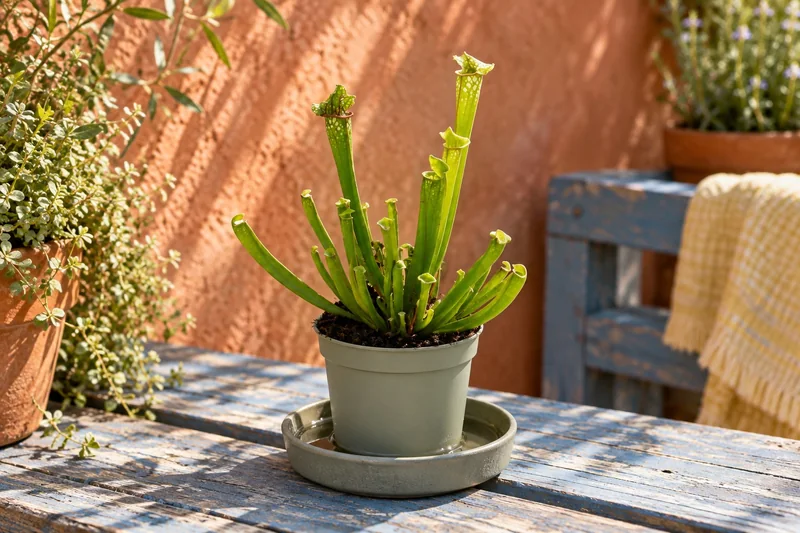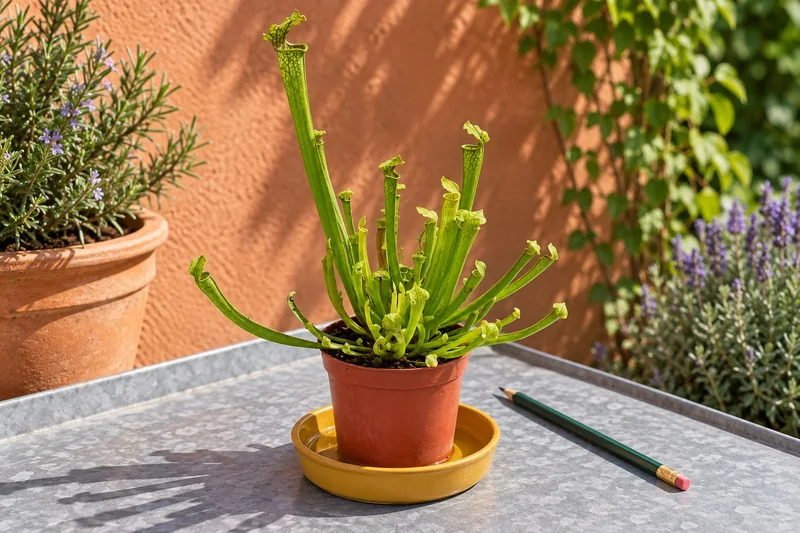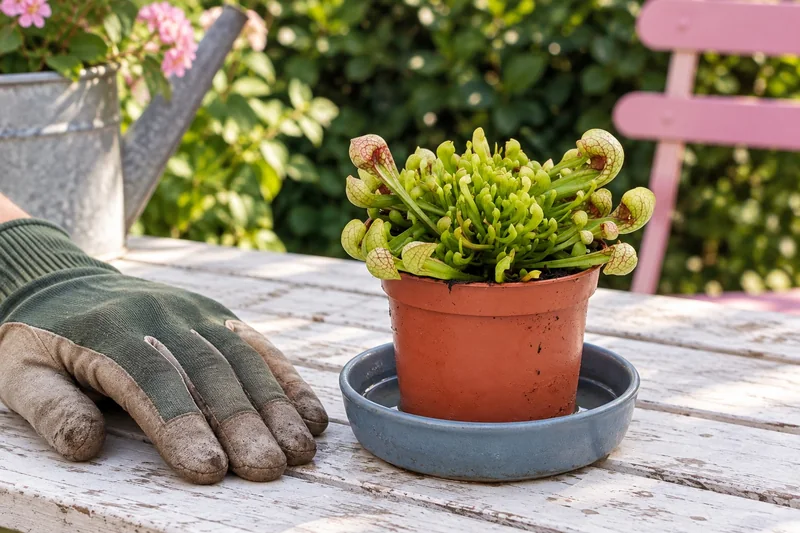
This plant at Exotenherz
Check the shop offer for current availability, price and what is included.
Check the shop for the current price, availability and offer contents.
Your care table
| Topic | What to do | Why it helps |
|---|---|---|
| Light | Keep very bright and sunny; acclimatise slowly after transport. | Light supports firm pitchers and their colouring. |
| Water | Use rainwater, distilled water or suitable reverse-osmosis water. | Minerals from hard water may accumulate in the sensitive root environment. |
| Summer | Keep compost moist; monitor shallow standing water during growth. | The pitcher plant comes from cultivation of wet, nutrient-poor positions. |
| Compost | Choose unfertilised acidic carnivorous-plant compost. | Ordinary pre-fed potting compost does not suit this cultivation. |
| Fertiliser | Do not add ordinary plant or slow-release fertiliser. | The plant uses captured small animals as an extra nutrient source. |
| Repotting | Check root space and rhizome before strong spring growth. | A living growing point must not disappear deep beneath compost. |
| Winter | Rest bright and cool, keep the root ball moist and protect from severe frost. | Small pots and hybrids not precisely documented need cautious winter care. |
| Pruning | Remove only dead pitchers cleanly, retaining green parts. | Ageing traps belong to the annual cycle and do not automatically signal disease. |
Use clean rainwater or suitable distilled water. An ordinary jug filter does not reliably remove dissolved salts.
Put a little water in the saucer. The base of the pot stands in water; the compost surface and centre of the plant remain well above it.
Keep the root ball moist and the saucer clean. Light, temperature and the species-specific winter care in the table determine its needs.
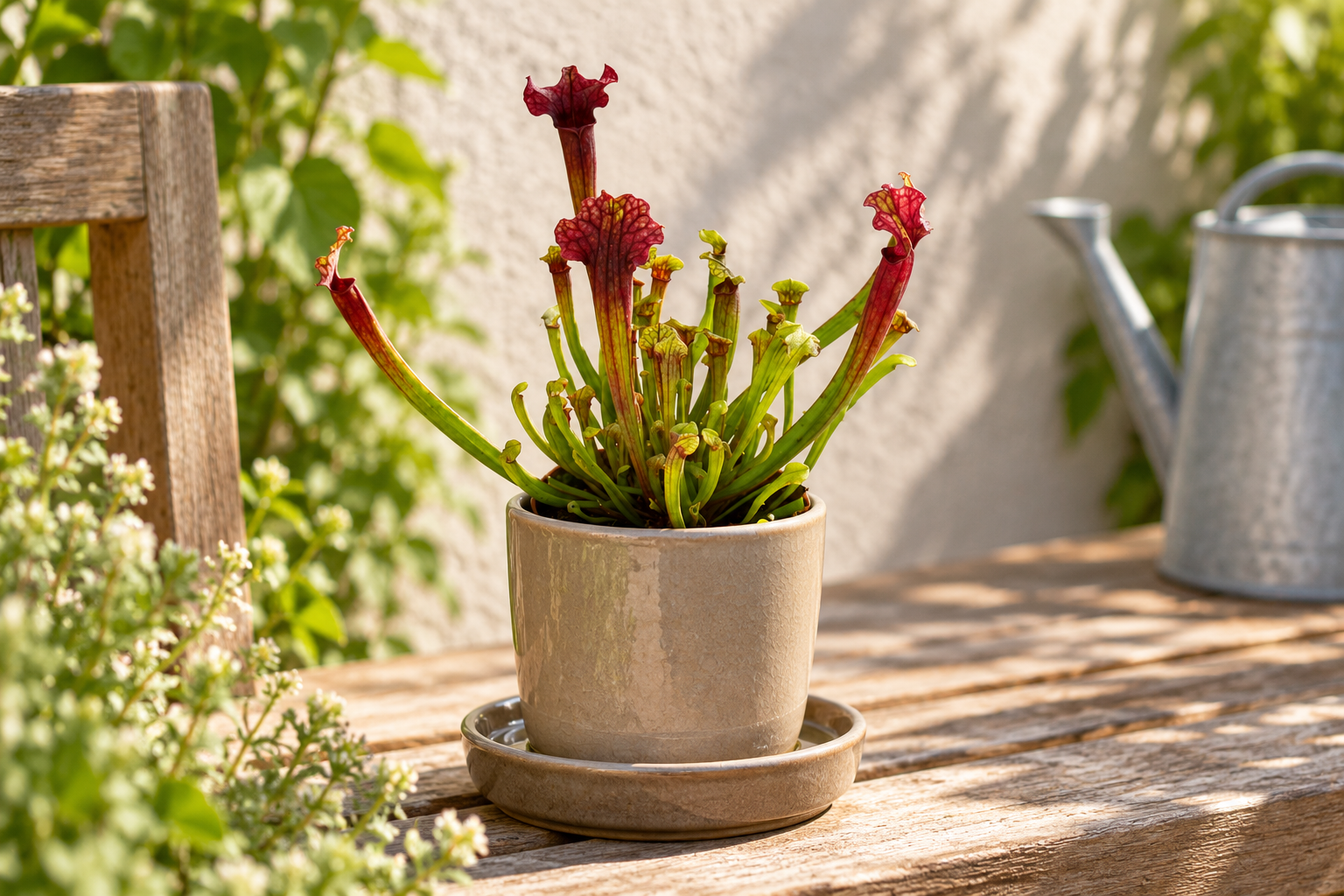
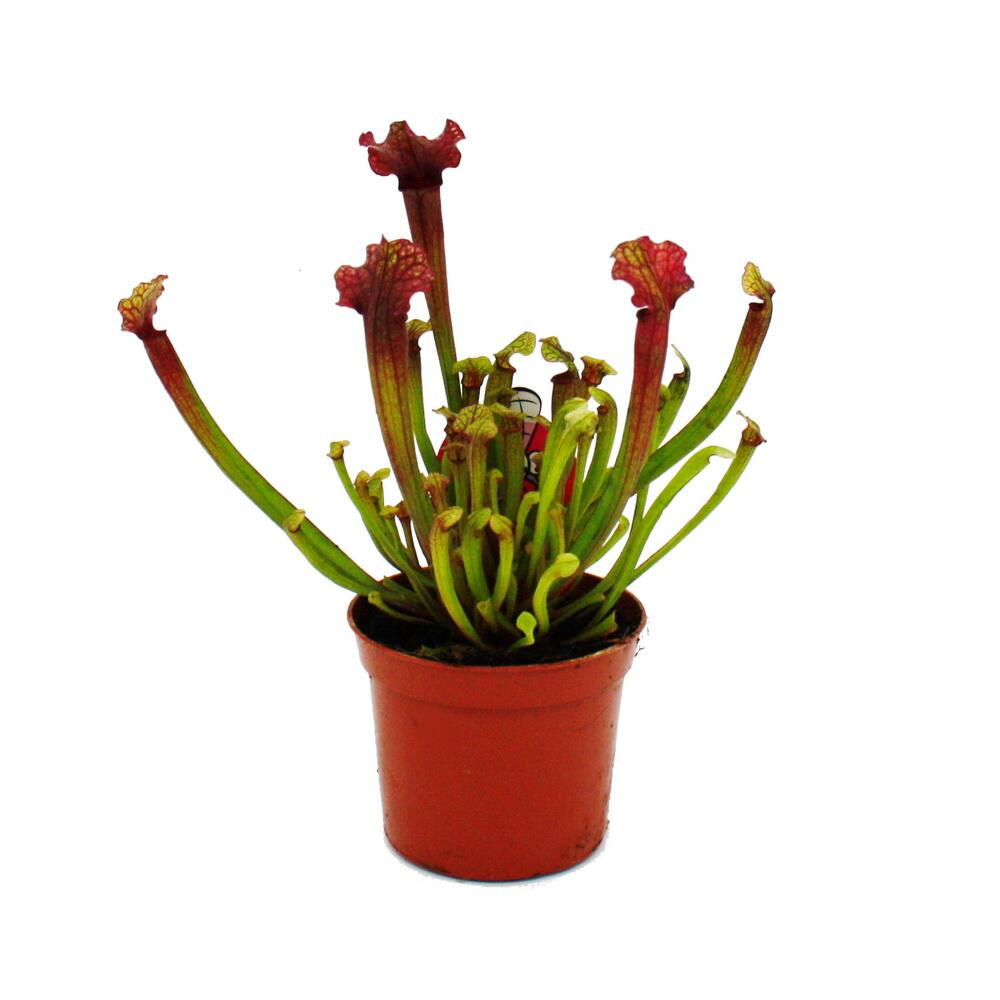
Dark colour with a living green base
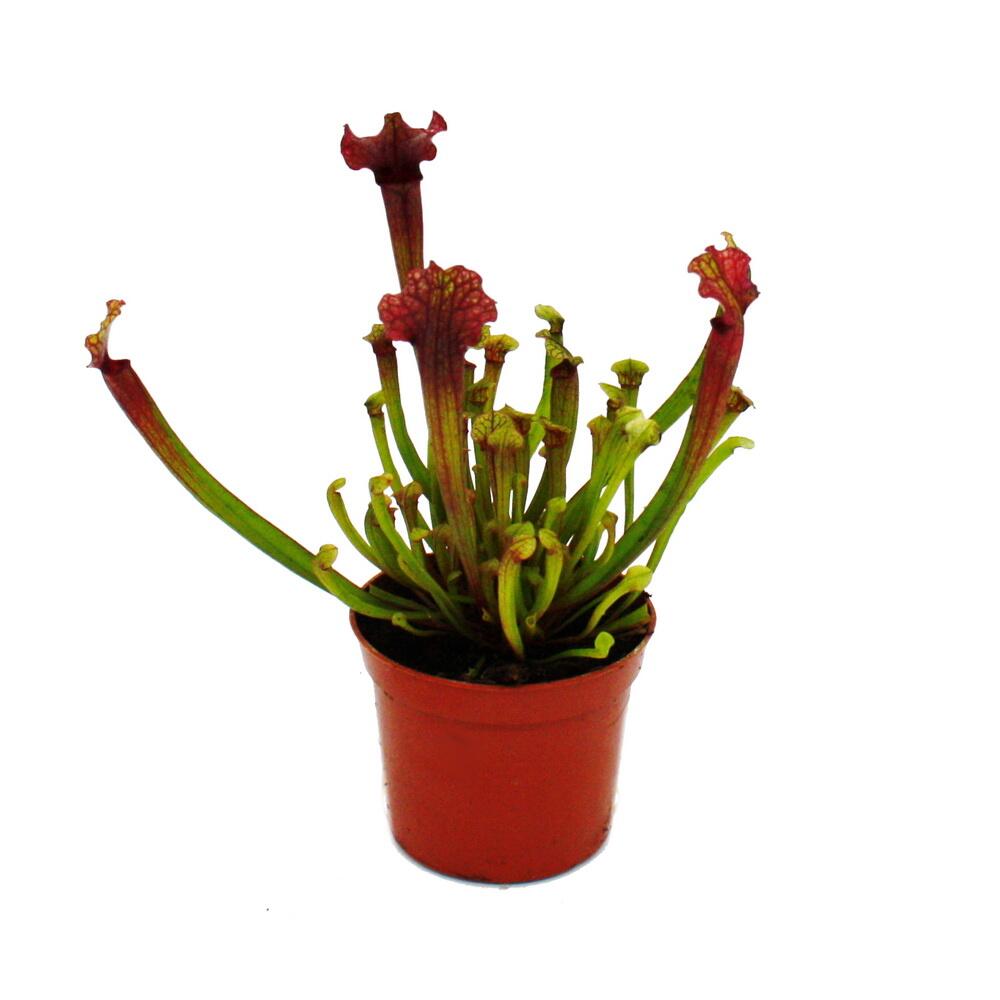
Judith shows an attractive change between dark upper pitchers and younger green leaves. Hood edges can look wavy and the tubes do not all stand equally high. We particularly like this natural structure. On a warm wooden bench in a bright garden, the red colouring stands calmly apart from the background. You need to step closer to see small new traps between the larger ones. Their shape is not added by decoration: the unusual tubes are the leaves themselves. A flower would be a separate part of development, not the dark hood above each trap.
The photograph shows a plant, not a fixed colour value
Judith is offered as a Sarracenia hybrid in a 9-cm pot. Shop name and original photograph remain for identification. This offer gives no precise delivery height. Parent species and a fixed eventual final height are not inferred from the image alone either. The red proportion may change with light, leaf age and cultivation. A fresh green leaf is therefore not automatically a mistake. In the scene the young plant stands in a decorative container with an accessible inner pot. This shows a possible position, not extra containers promised with delivery.
The colour effect needs a suitable position
A very bright sunny sheltered position accompanies the development of trapping leaves. On arrival, do not suddenly move from dark packaging into strong midday sun, but increase light gradually. On a terrace or balcony choose a clear spot where wind does not constantly bend the tubes. Behind a tall plant group it can remain surprisingly dark too. We like comparing how light falls on the hoods in the morning and afternoon. Colour alone is not a care aim, however: a firm root ball and healthy new leaves matter equally.
Create a clear routine with low-mineral water
Use rainwater, distilled water or suitable reverse-osmosis water. A small labelled reserve bottle prevents mineral-rich tap water entering the pot by habit. During growth the compost stays moist. Shallow standing water in a clean suitable saucer supports supplies but does not replace regular checking. Small containers particularly lose water quickly in warmth and wind. Do not let the root ball dry out first and then simulate a fixed routine with lots of water. Frequent brief looks are better. This suits a plant whose new tubes you enjoy discovering anyway.
The traps are interesting enough without experiments
Judith passively captures small animals with its modified leaves. This extra nutrient source is part of its special way of life. Ordinary plant fertiliser, pieces of meat or forced feeding of every trap do not belong to recommended care. One captured fly is fascinating, but no reason to sell the whole plant as a reliable answer to an insect problem. Leave the pitchers undisturbed as far as possible. Cutting them open or reaching inside frequently damages them. We prefer watching which new pitcher rises first and how its hood unfolds over the days.
Compost and container must suit the roots
Use unfertilised acidic carnivorous-plant compost, not ordinary pre-fed potting compost. Handle the living growing point and rhizome gently when repotting. Work before strong spring growth is usually better than amid many fresh soft tubes. The new container should offer enough root space and a suitable water path. A pretty decorative pot helps if the inner pot can still be checked. It does not replace the correct compost mix. Remove dead remains cleanly without pulling firmly attached green leaves. One calm step often achieves more than several simultaneous corrections.
Go through the seasons with the red plant
Growth slows in autumn. Older pitchers may turn brown while living parts remain at the base. Overwinter Judith cool and bright, keep the root ball moist and protect small pots from prolonged severe frost and drying wind. Unknown precise hybrid parentage is not replaced with an arbitrary frost number. Adapt summer standing water and winter moisture to actual consumption. Cut away only dead parts. When small new tubes appear in spring, a closer look is rewarding again: a green beginning and later colour create a slightly different picture each year.
One plant, several views
Good to know
Must every new pitcher immediately be dark red?
No. Leaf age, light and cultivation affect colouring. Young green traps can belong to normal development.
Are the wavy hoods flowers?
No. They belong to the trapping leaves.
What delivery height does Judith have?
The shop gives a 9-cm pot but no guaranteed height. The original shows the growth form.
Should I feed it?
Do not use pieces of meat or ordinary fertiliser. Leave the traps undisturbed and provide suitable conditions.
How is it overwintered?
Bright and cool with a moist root ball; protect small containers from prolonged severe frost.
Why not ordinary potting compost?
The plant needs acidic, nutrient-poor compost. Usual pre-fed compost does not suit this cultivation.
Sources and editorial note
- Exotenherz: offer and original photographs (02.10.2026)
- RHS: Sarracenia (02.10.2026)
- RHS: growing carnivorous plants (02.10.2026)
- UC Davis Botanical Conservatory: their own Sarracenia cultivation (02.10.2026)
- Sarracenia Northwest: experience from their own nursery cultivation (02.10.2026)
Shop offer, product number, GTIN, availability and original images checked directly on 02.10.2026. Specialist sources read directly. Original colours and young form retained, no invented final height or blanket frost promise. No artificially filled traps or fertiliser recommendation.