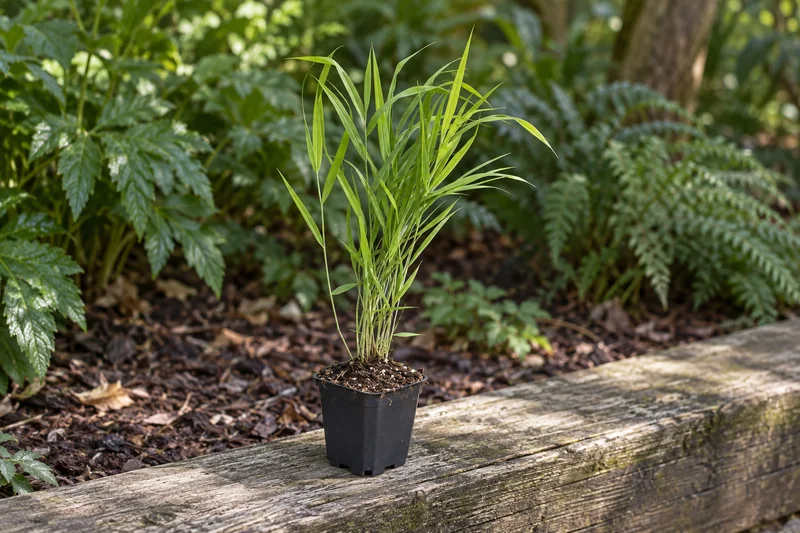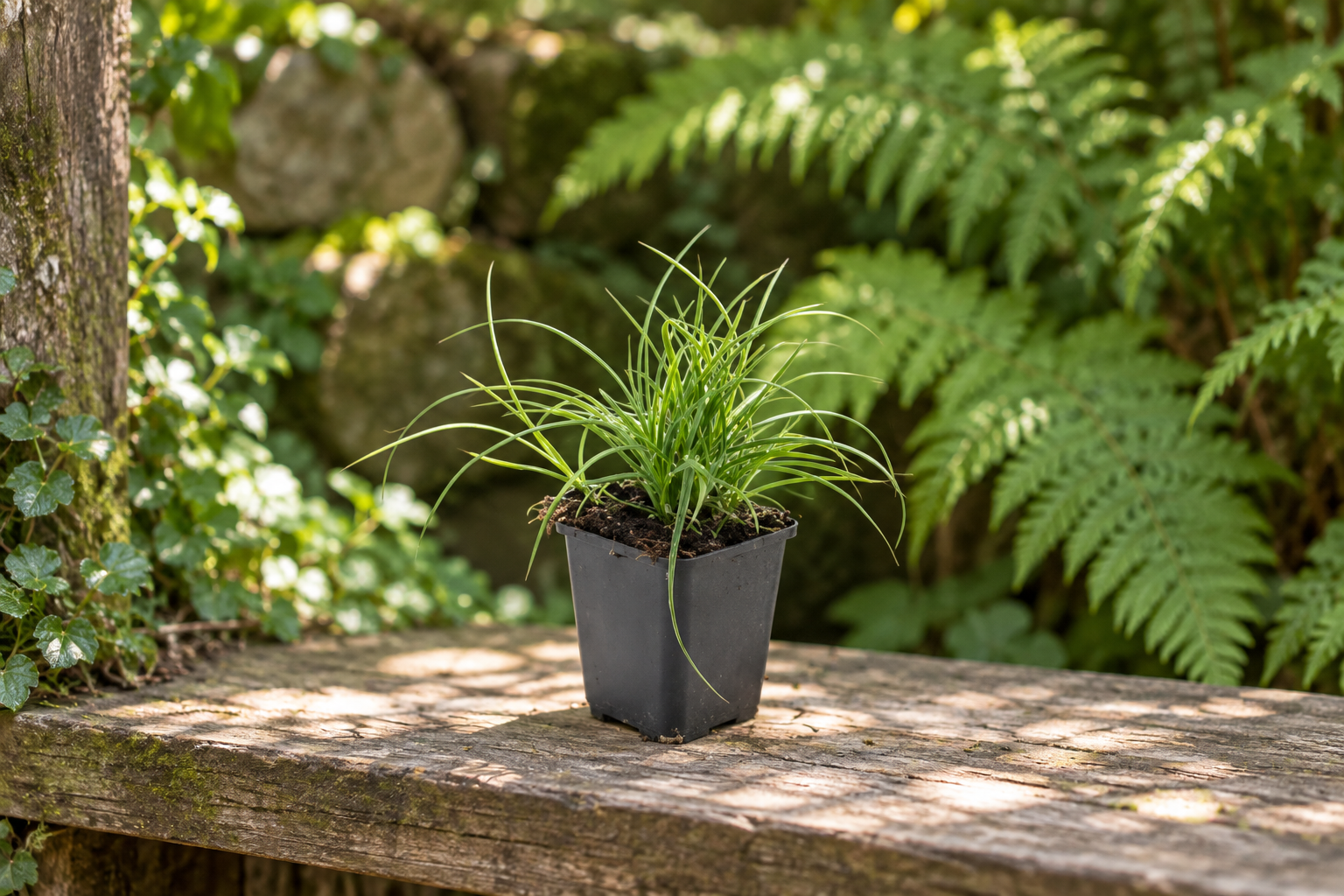
This plant at Exotenherz
Check the shop offer for current availability, price and what is included.
Check the shop for the current price, availability and offer contents.
Your care table
| Topic | What to do | Why it helps |
|---|---|---|
| Light | Choose partial or suitable shade outdoors. | Sun is only considered with assured moisture. |
| Water | Supply the rootball without prolonged standing wetness. | Shade does not prove adequately moist soil. |
| Soil | Provide humus-rich draining moisture-retaining soil. | Root competition and dryness may combine under woody plants. |
| Planting | Set a moistened rootball at its previous height and water in. | Young roots must connect to garden soil. |
| Leaf care | Remove unsightly or dead leaves individually in early spring. | Routine complete cutting is unnecessary. |
| Seed heads | Remove spent stems in time if self-seeding is unwanted. | Luzula nivea can self-seed in suitable conditions. |
| Division | Divide strong older clumps around mid-spring to early summer. | Support divisions with soil contact and moisture afterwards. |
| Feeding | Account for existing supplies and supplement moderately only as needed. | Abundant feed cannot replace a supplied root zone. |
For young plants, feel the soil directly at the root ball. The surface and deeper soil may have different moisture levels.
Water thoroughly after planting; later, water according to the soil, weather and establishment rather than a fixed calendar.
Avoid standing water. For plants in containers, also check that water runs out of the drainage hole.
A pale accent above narrow foliage
Snowy woodrush does not rely on large colourful flowers. Narrow green leaves form a loose clump; small whitish flowers in branched clusters stand above in early to mid-summer. This fine view is especially noticeable beside broad perennial leaves. A young sales-pot plant initially shows mainly narrow leaves and need not yet carry flower stems. Notice their loose arrangement and fine hairs at the leaf edges. A closed tall flowering garden group is a later development, not the shape of every delivery. Making that distinction helps plan a shadier border clearly.
Grass-like but from another family
Luzula nivea is called snowy woodrush. Although its foliage looks grass-like, it belongs to the rush family rather than true grasses. This botanical placement prevents arbitrary ornamental-grass routines transferring automatically. It forms a perennial evergreen clump with narrow foliage, and is not routinely cut completely to ground level each spring. Remove unsightly and dead leaves individually in early spring. Healthy existing foliage remains visible as new growth joins it. Fine white flower stems add a summer moment, but the clump has its own leaf structure without them too.
A shade edge is not automatically moist
Partial shade to suitable shade fits Luzula nivea well. Soil under woody plants may still be dry because large roots take water and rain does not reach everywhere. Check the actual planting spot, not just the light above. Humus-rich draining moisture-retaining soil is a helpful starting point. Sun is only considered with reliably supplied moisture, not as a blanket replacement for a shadier garden position. A persistently wet poorly draining area is unsuitable too. Choose neighbours with comparable supplies and enough room rather than judging solely by a contrasting colour to the narrow leaves.
Separate delivery height from later flower stems
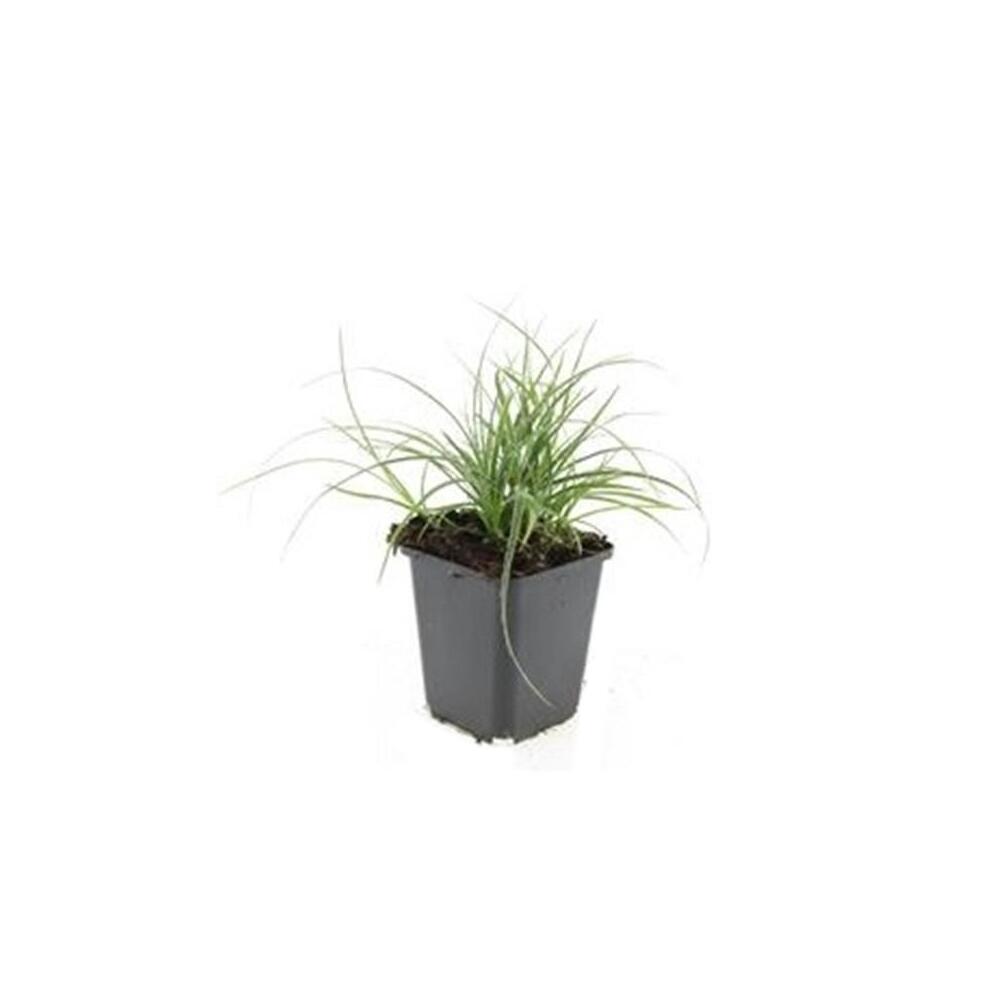
Selectable sets contain young plants in individual 9 cm pots at about 10–25 cm total height including pot. This does not describe later flower stems. Specialist profiles give about 60 cm for developed flowering plants, with foliage below. A clump may reach about 45 cm wide depending on position and development. The shop gives 30–35 cm spacing as guidance. Lay out young pots before planting, considering paths and broader neighbours. Loose foliage looks best when not immediately hidden under dense leaves of other plants. Permanent container cultivation later needs more root space than the small delivery pot.
Let the small clump root well
Spring or early autumn often offers favourable planting conditions. Soil must be frost-free and not remain waterlogged. Moisten the rootball before unpotting, plant at its previous height and bring soil around it. Water slowly, then check directly at the young root zone. Under woody plants especially, the former container ball can dry even when the area looks shady. Water thoroughly as needed so water reaches roots, and drain surplus. Little surface splashes well away from the clump are not reliably enough. Wind, warmth and root competition alter needs; a rigid weekly plan cannot represent these differences well.
Watch flowers, seedlings and the intended edge
Seed heads can follow whitish summer flowers. Luzula nivea may self-seed in a suitable garden position. For tight limits, remove spent stems in time and recognise young seedlings nearby. That differs from pre-emptively cutting all leaves. A strong older clump may be divided around mid-spring to early summer. Pieces then need soil contact and moisture again. Allow for neighbouring growth while working so the new divisions are not immediately crowded. Slowly increasing clump size and additional seedlings are different ways the garden picture may change.
Support narrow foliage through the year
Evergreen foliage does not mean every leaf remains fresh forever. Remove dead or unsightly leaves individually in early spring and look at new growth. Account for existing border supplies and add nutrients moderately only if needed. Keep drainage holes open in pots, shelter outdoors and check rootball moisture on frost-free days. With weak growth, first examine light, root competition and drainage rather than automatically feeding more. Snowy woodrush then becomes an understandable shade-edge companion: a loose green clump, fine pale summer flowers and care focused on its actual roots.
One plant, several views

Good to know
Is snowy woodrush a true ornamental grass?
It looks grass-like but botanically belongs to the rush family. Care is described for Luzula nivea.
Does it suit full sun?
Only with reliably moist roots. Partial to suitable shade is this portrait’s preferred starting point.
Why water under trees?
Large roots can take water; shade alone does not prove sufficiently moist soil. Check the young rootball directly.
Is 10–25 cm its later height?
No. That is delivery height including pot. Developed flower stems may reach about 60 cm, with foliage lower.
Should I cut the whole clump in spring?
No routine complete cutting. Remove unsightly and dead leaves individually in early spring.
How do I keep it in its intended place?
Watch clump and surroundings. If self-seeding is unwanted, remove spent stems in time and recognise seedlings.
Sources and editorial note
- Exotenherz: offer and original photographs (03.10.2026)
- RHS: Luzula nivea, directly read species profile (03.10.2026)
- RHS Plants: snowy woodrush, leaf care and self-seeding (03.10.2026)
- Exotenherz: checked 6-plant child offer (03.10.2026)
- Exotenherz: checked 12-plant child offer (03.10.2026)
- Exotenherz: checked 20-plant child offer (03.10.2026)
- Exotenherz: checked 40-plant child offer (03.10.2026)
- Exotenherz: checked 60-plant child offer (03.10.2026)
Shop offer, article number, availability and original photographs directly checked on 03.10.2026. Specialist sources directly read. RHS species profile and RHS Plants directly read. Flowering height of about 60 cm explained against smaller shop figure; no rigid 40 cm maximum. Rush family; sun only with moisture, self-seeding and spring leaf care documented. All five child offers checked individually; available quantities: 6, 12, 60. Clean original view retained unchanged; young scene and later flower detail separately labelled.