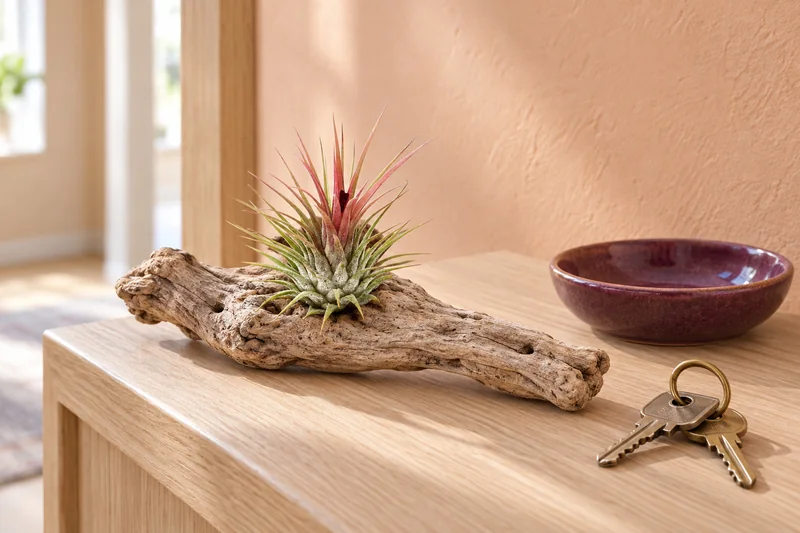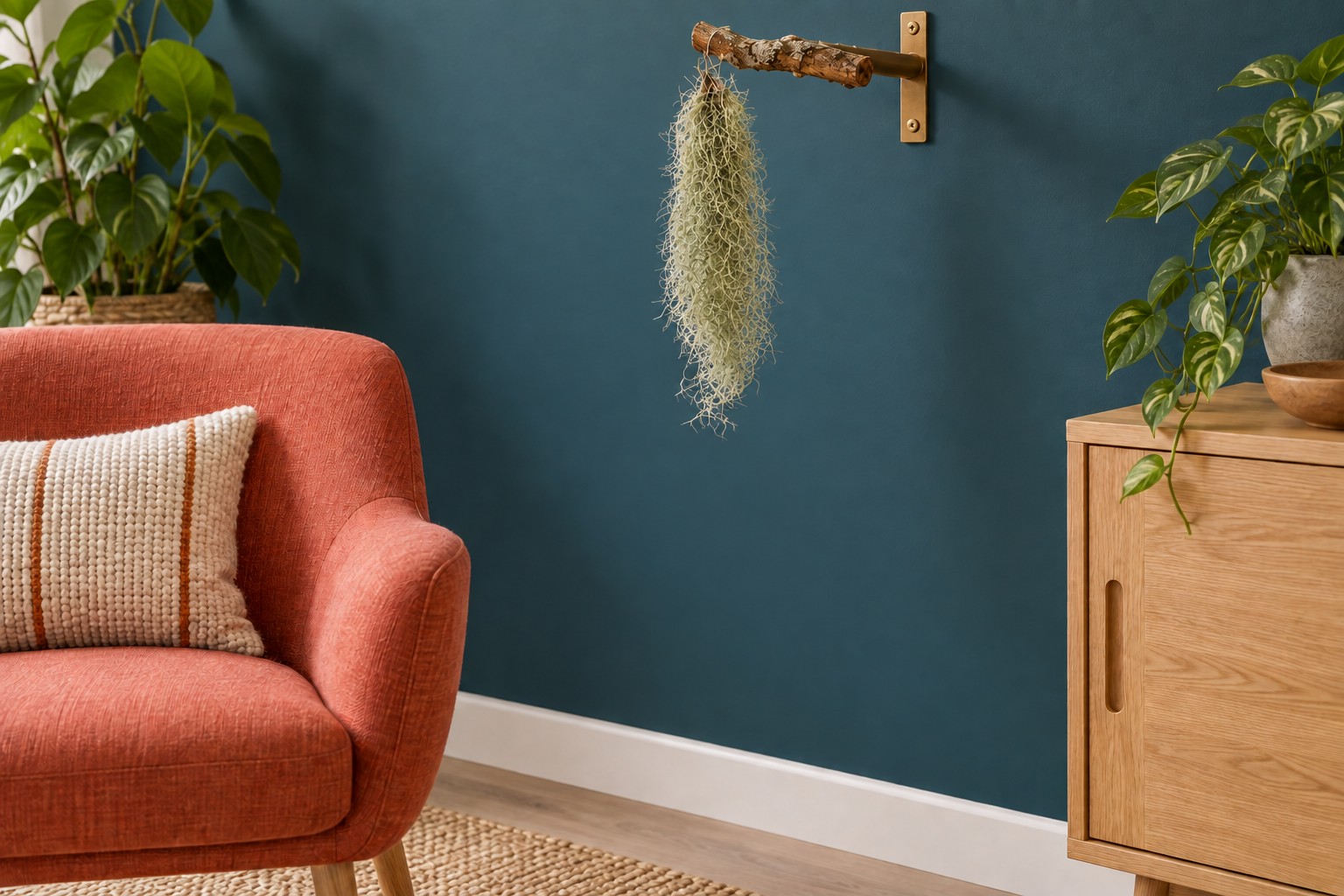
This plant at Exotenherz
Check the shop offer for current availability, price and what is included.
Check the shop for the price, current availability and what is included.
Your care table
| Topic | What to do | Why it helps |
|---|---|---|
| Light | Bright with filtered light. | Dark decorative positions do not suffice in the long term. |
| Water | Regularly wet the entire strand. | Mist applied only outside does not always reach the interior. |
| Drying | Hang loosely in circulating air after watering. | Permanently damp compacted bundles may die inside. |
| Support | Open holder or suitable clean branch, no soil. | The plant lives epiphytically. |
| Fertiliser | Very weakly during growth following suitable product instructions. | Nutrient salts should not accumulate. |
| Winter | Bright and frost-free, away from dry heated air. | Adapt water demand to actual conditions. |
| Bundle | Do not tie tightly or place on damp surfaces. | Inner shoots also require air. |
| Propagation | Loosely place strong living sections on a new support. | Dead threads do not form a new plant. |
Take the tillandsia off its support. Do not rub the leaves; preserve the delicate silvery scales.
Use low-lime water at room temperature. The care table explains whether thorough misting or a short soak is suitable.
Gently shake off the water. Tilt rosettes downwards, hang loose strands without bunching them together and allow them to dry with good airflow.
A living curtain of fine shoots
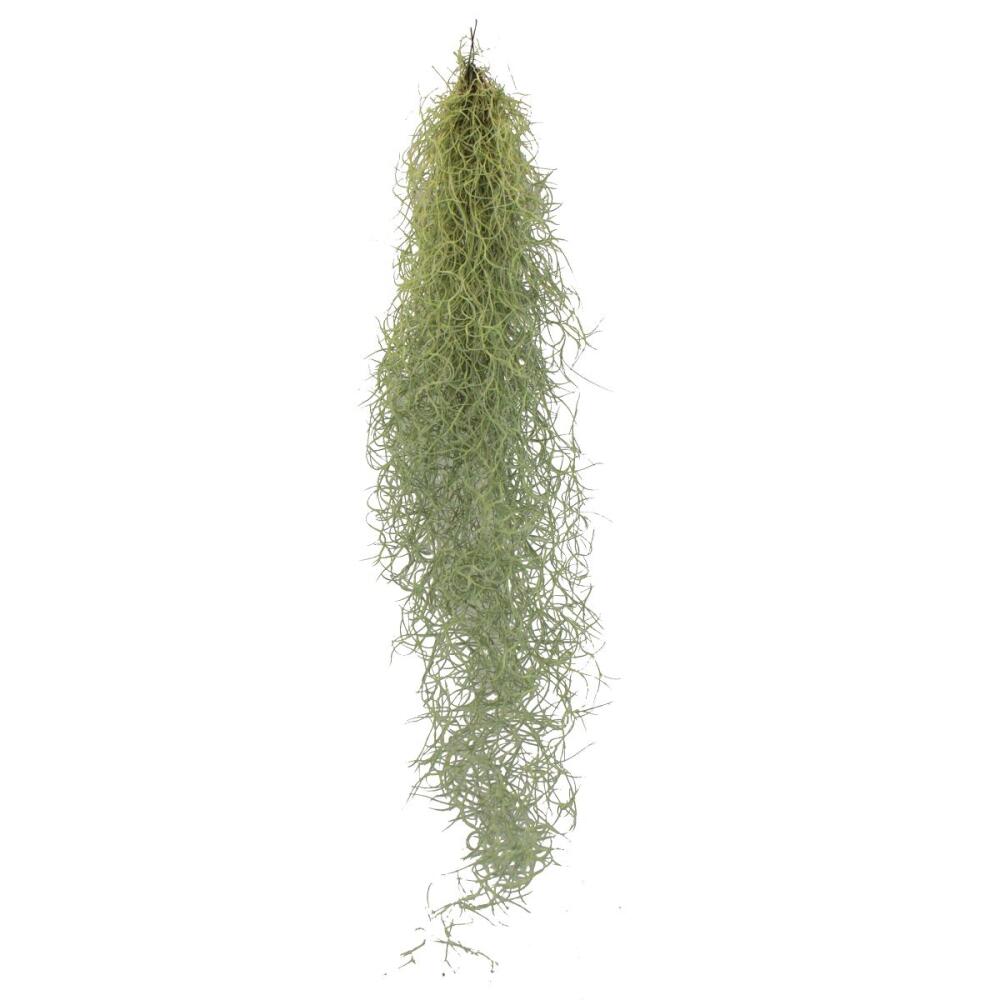
Fairy hair first appears like moss or lichen. Tillandsia usneoides is actually a bromeliad with small narrow leaves on long branching shoots. Pale absorbing scales give the silvery appearance and allow moisture uptake. It grows epiphytically, using branches as support without tapping them like a parasite. The species is widespread across a large area of the Americas. The trade name Louisiana moss therefore describes only part of its story, not a restriction to one place of origin.
The offered strand remains manageable
Different lengths appear in the offer: around 30 to 40 cm in the title and around 40 to 50 cm in the details. Check the current specification before purchasing if a particular space must be filled precisely. It is a loose plant strand, not a metre-long garland or guaranteed delivery with a wall hanger. A small airy hanging arrangement initially suffices. Leave room below and behind so the fine shoots do not rest on a damp surface or keep being brushed when walking past.
A bright position without hot dry air
Bright filtered light is suitable. A dark hallway supplies too little energy even if the silvery strands look decorative there. Hot direct sun and dry heated air may rapidly dry the delicate structure. A summer stay outdoors in a bright sheltered place is possible before returning indoors frost-free in good time. Air movement is desirable, cold draughts are not. A tightly closed glass container often lacks necessary ventilation. Choose the hanging arrangement according to plant needs before considering free wall space.
Water must reach the whole plant
Regularly wet thoroughly with suitable soft water or briefly soak completely. Fine mist on outer threads may leave the inside of a dense strand dry. Where possible, remove the plant from its holder for watering. Then hang loosely, drain and allow to dry in circulating air. Permanently wet compacted bundles are as unsuitable as prolonged dryness. Check more frequently in warmth without treating a fixed interval as a guarantee. The name air plant does not mean ordinary dry room air provides all water and nutrition.
Keep loose and feed sparingly
The plant does not need a pot of compost. A clean untreated branch or suitable open holder can provide support. Do not tie tightly or glue into a dense block. During active growth, a suitable tillandsia or bromeliad fertiliser may be used at very weak strength according to product instructions. Do not build up fertiliser crusts or mix more strongly on speculation. Hold back when growth is limited. Occasional checks inside the bundle show whether air and water reach it evenly. Dead parts can then be gently loosened.
Extend patiently rather than artificially compress
Healthy living sections may be separated and laid on a new support. This allows vegetative propagation without soil or attempted seed sowing. Separate strong living pieces only and avoid unnecessarily tearing apart the entire plant. Small greenish flowers are possible but easily overlooked. With increasingly brittle brown threads, first check water distribution, heated air and light. A dense pretty bundle is no progress if its interior dies. A loose living strand with healthy continued growth is a better care goal.
One plant, several views
Good to know
Is fairy hair real moss?
No. Tillandsia usneoides is a bromeliad with fine leaves and shoots.
Is living-room air humidity enough?
Usually not. The plant needs regular water supply and must then be able to dry.
What length is delivered?
The shop states around 30 to 40 cm in the title and 40 to 50 cm in the details. Check the current delivery length before buying.
Must I plant fairy hair in soil?
No. It is hung loosely on a suitable support or holder.
Sources and editorial note
- Product and delivery contents: Exotenherz
- NC State Extension: plant profile
- Royal Horticultural Society: plant and care knowledge
- NC State Extension: plant profile
Sources checked: 15 September 2026. Product information and delivery contents follow the linked shop offer. Care has been checked against the stated specialist sources and remains subject to plant condition, position and season.