This plant at Exotenherz
Check the shop offer for current availability, price and what is included.
Product and delivery details are given in the individual offer.
Your care table
| Topic | What to do | Why it helps |
|---|---|---|
| Unpacking | Gently examine shoots and condition before laying out. | A small clearly visible area makes changes easier to recognise. |
| Position | Sheltered with subdued light, without hot direct sun through glass. | Moisture alone does not prevent strong window heating. |
| Arrangement | Lay out loosely without pressing heads densely together. | Branches and moisture below remain more accessible. |
| Moisture check | Check shoots and supporting surface together. | A moist head does not describe the condition of the entire layer. |
| Water | Carefully top up when needed; keep moist between checks. | Sphagnum culture calls for continuous moisture rather than fixed watering days. |
| Water level | Leave upper heads visible above the water. | An excessively high water level can also slow development in cultivation. |
| Additions | Initially work without extra fertiliser. | High salt concentrations were a problem in Sphagnum cultivation trials. |
| Neighbours | Keep leaf bases and small seedlings clear and accessible. | Growing Sphagnum can overgrow small seedlings. |
| Ongoing care | Check again after moving and observe unusual sections. | New growth and the condition of each fragment cannot be guaranteed from delivery information. |
Check the compost and pot weight. The care table explains how far the compost may dry.
Water only when needed. The water should reach the root ball without spilling over the rim.
Remove surplus water from the saucer or cachepot. Then return the plant to a suitable position.
Many small heads above a loose network
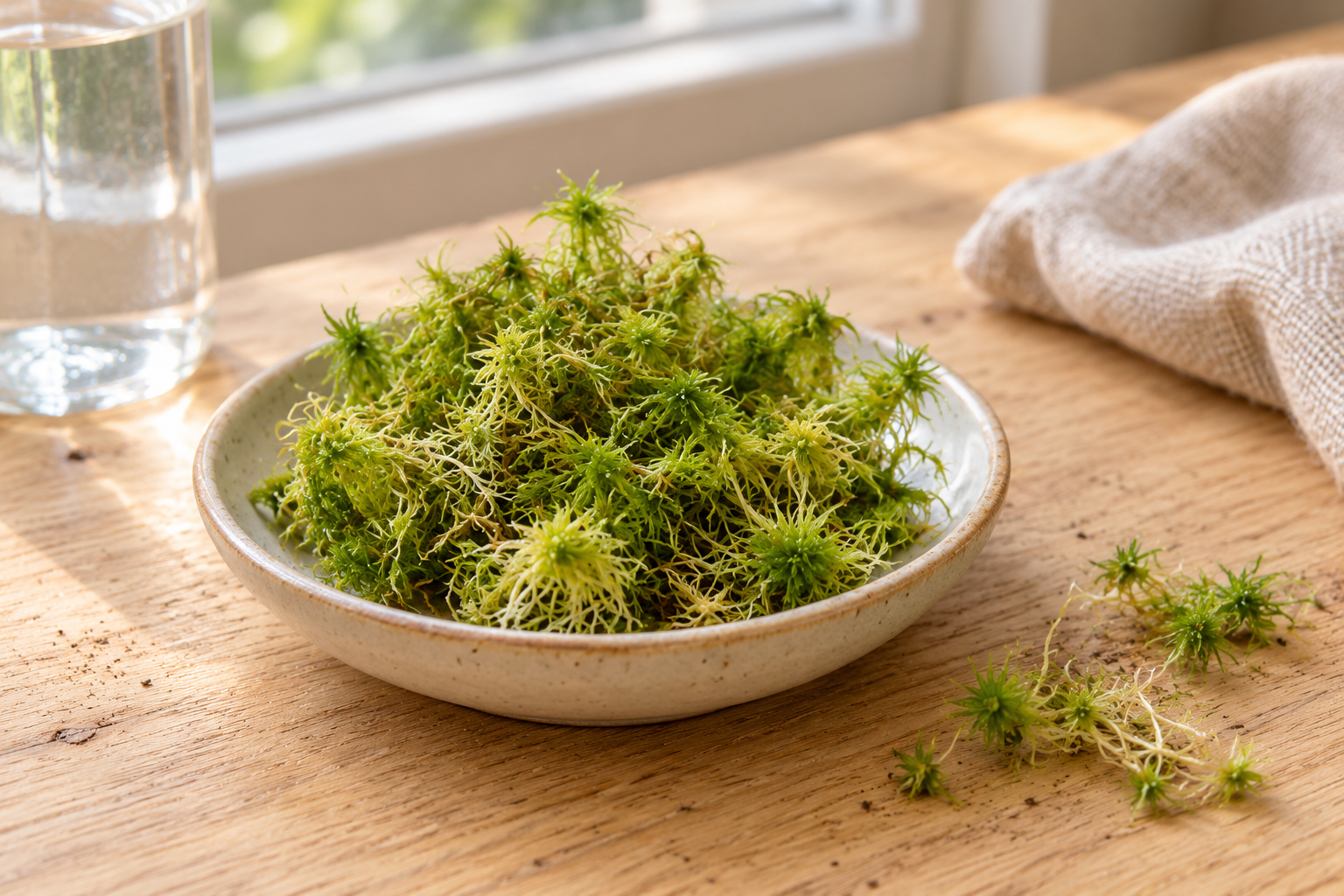
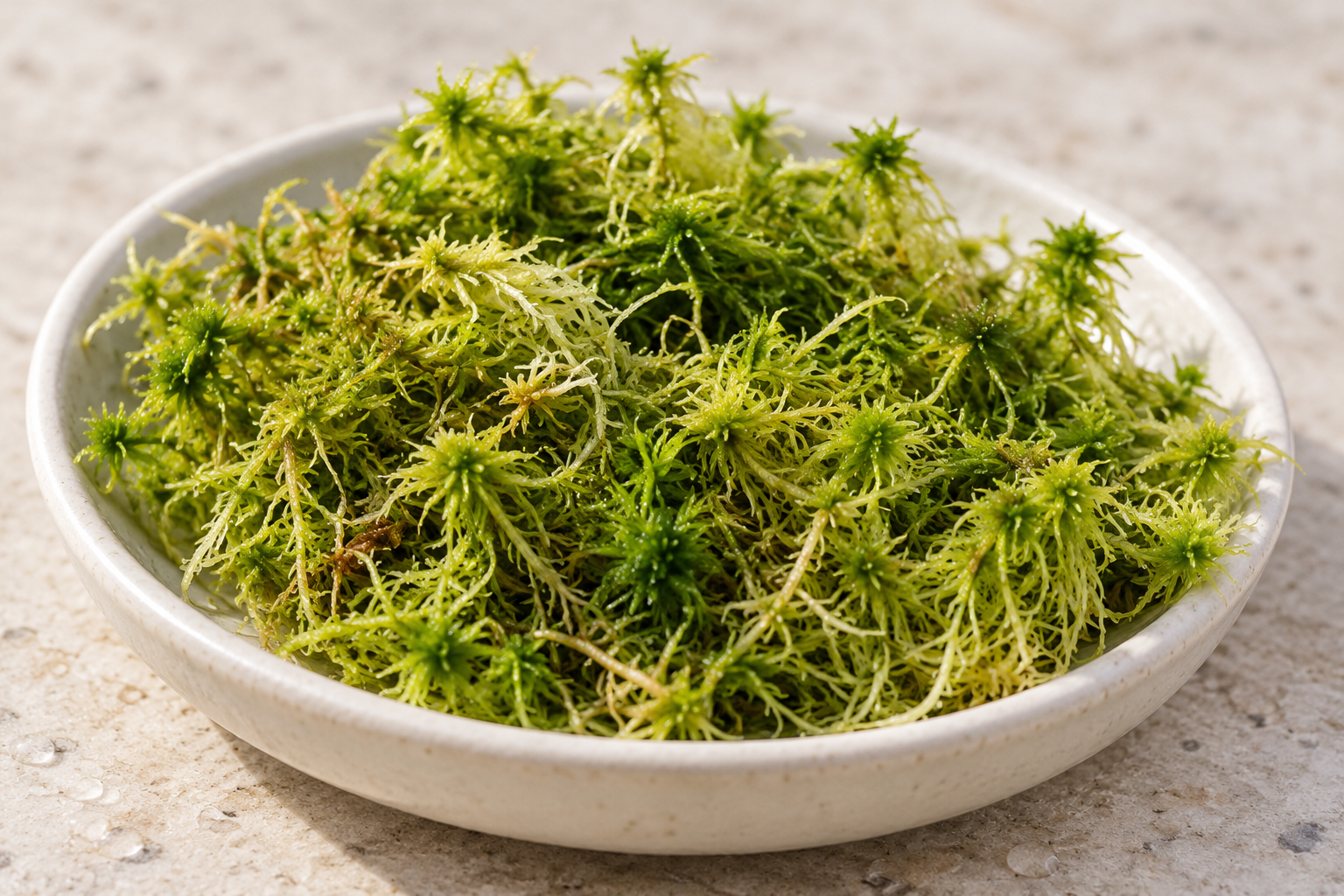
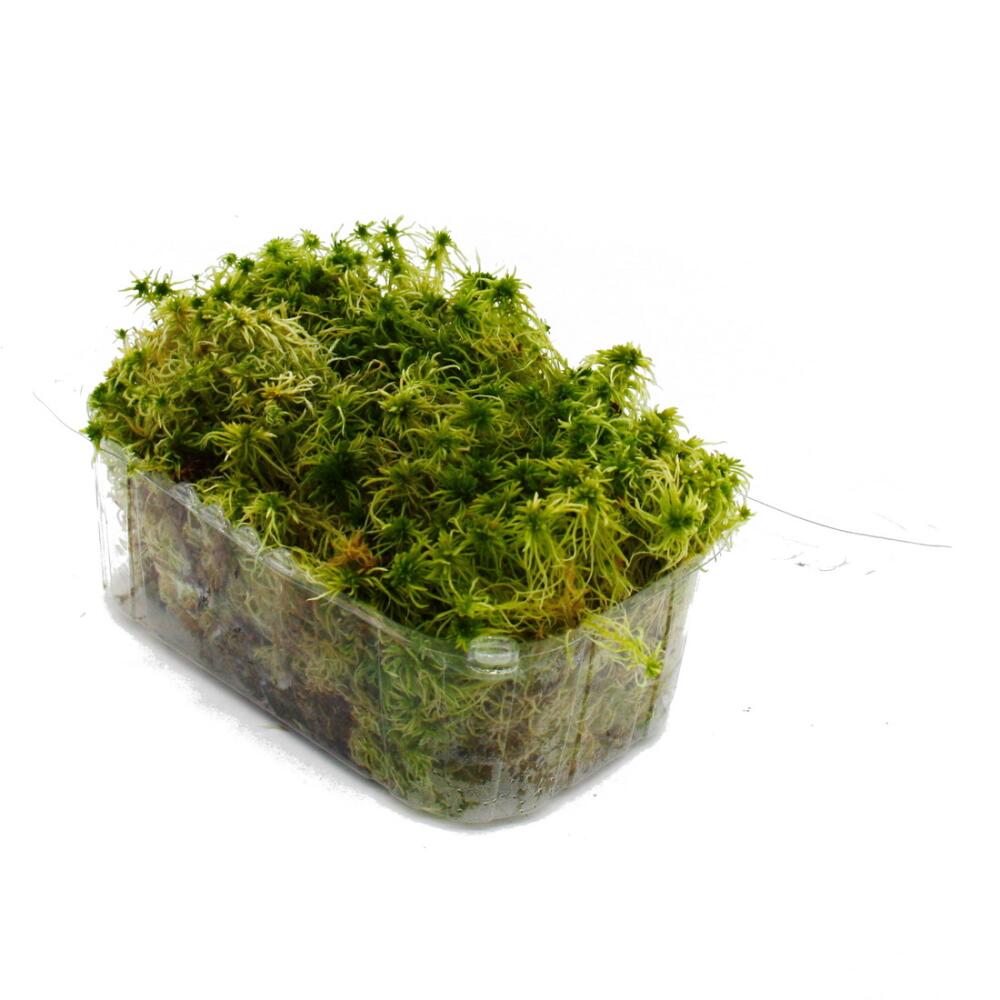
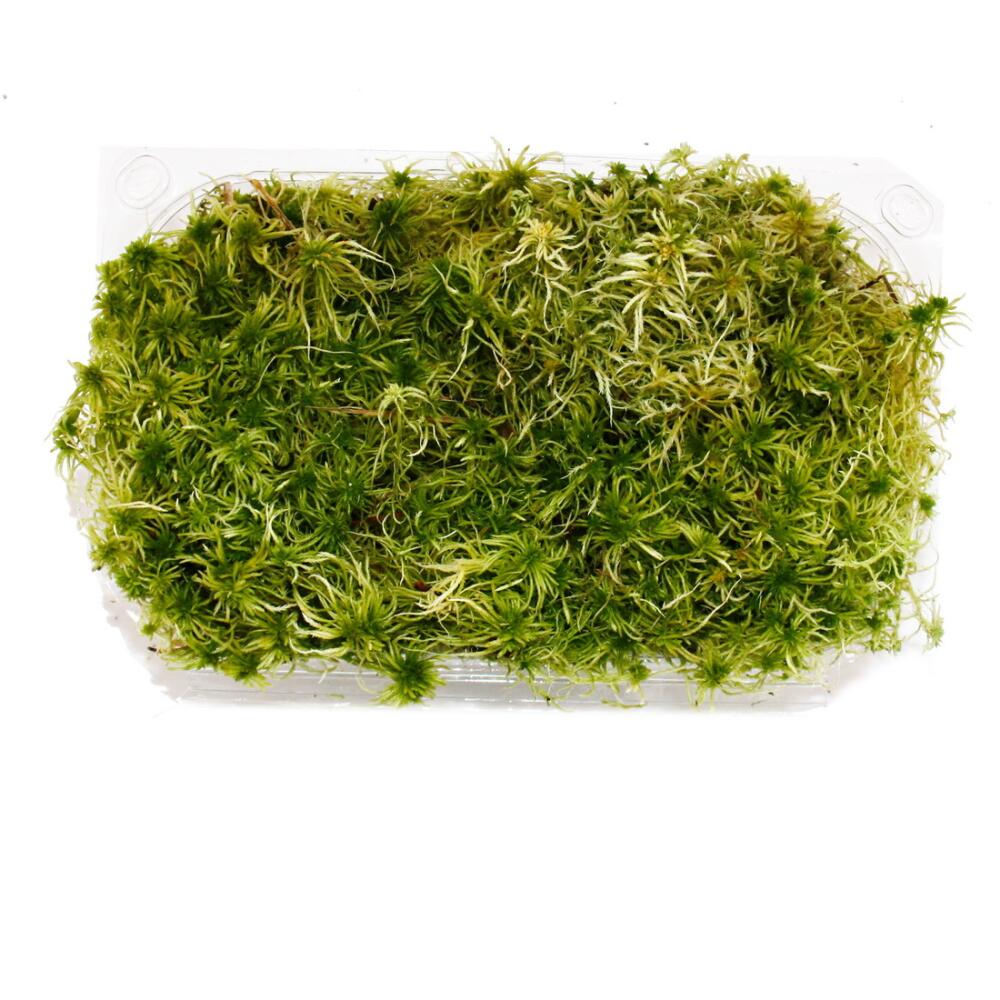
Sphagnum shows a different surface from a firm rounded moss cushion. In the shop originals, flexible branching shoots lie loosely over one another. Their ends carry small heads crowded into star-like shapes. Pale green, yellow-green and very light areas form an uneven network through which individual shoots can be followed. This structure is particularly easy to view in a low bowl. It need not become a closed green slab when arranged: loose connections retain visible branching. The AI scene shows a small working display with a pale table and bowl. It represents neither a ready-planted delivery bottle nor a particular number or later shoot size.
Distinguish fresh moss, dried fibres and peat
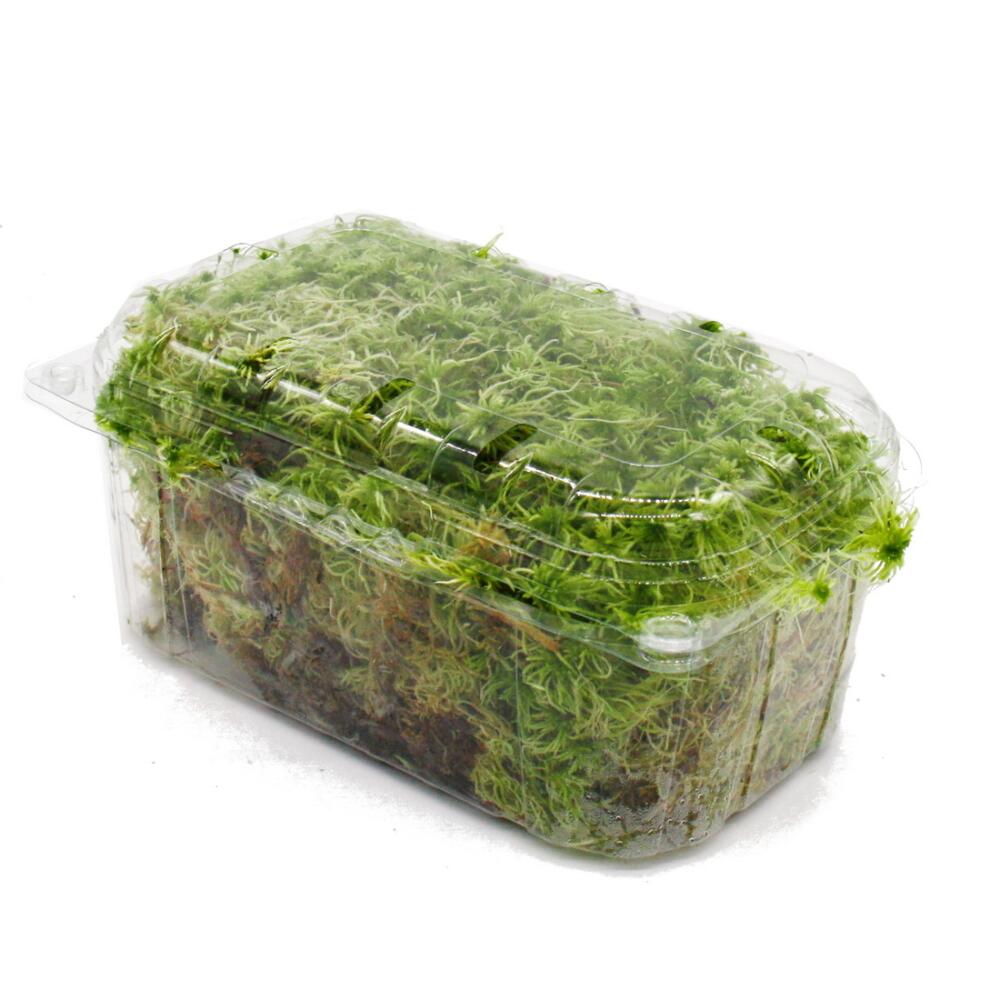
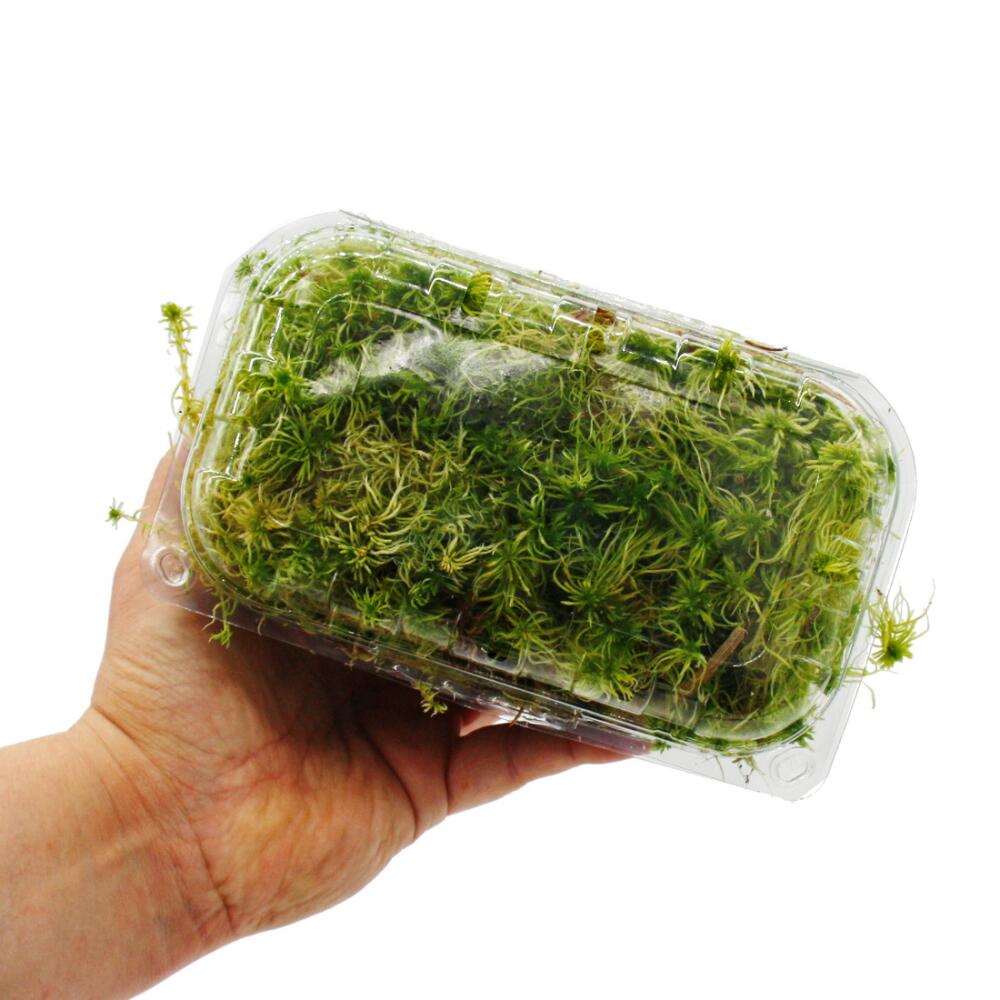
The selected shop offer is called Sphagnummoos or Torfmoos and describes fresh untreated material for decorating and planting. This differs from dried long-fibre Sphagnum used for potting mixes or other horticultural tasks. Peat and fresh shoots are not the same delivery form either. This profile covers the Sphagnum genus; no particular wild species is added. According to the shop, the outer box measures approximately twenty by twelve by twelve centimetres. The title’s approximately thirty cubic centimetres remains an unconfirmed fill volume and is not transferred into litres or plant height. For a setup, what matters is how the actual shoots can be distributed. A photograph alone certifies no particular living condition for every section included.
Set up a small, easily observed growing area
The Carnivorous Plant Society describes growing Sphagnum in trays, in a greenhouse or outdoors. For starting indoors, a shallow, clearly visible bowl helps you assess moisture directly in the material and below it. Begin with little material and shelter rather than immediately covering a large mixed planting completely. General moss conditions support moisture and protection from hot direct sun; a bright spot with subdued light remains easy to check. Window warmth and dry heating air change water supply. In a closed glass container, moisture may instead remain longer. The small culture therefore needs its own observation place, easily reached without rearranging things.
Maintain moisture without flooding the heads
Sphagnum is associated with very moist habitats. The University of Greifswald describes a high continuous water level as important in its cultivation trials; levels too low and too high can slow growth. This does not establish a fixed centimetre depth for a small bowl. Check shoots and their moist support, adding water carefully when they become drier. Upper heads remain visible above the water rather than submerged as floating decoration. Between checks the material should stay moist; a dry weekday followed by a large water supply represents this goal poorly. A surface spray also does not automatically reach the lower part of the loose layer. After watering, therefore check the relationship between surface and supporting layer again.
Retain loose shoots and consider neighbouring plants
Lay material in a relatively thin, loosely spread layer without firmly pressing the upper heads together. A deep compact mass makes moisture and changed sections harder to see. In its own container, shoots, associated fragments and condition are easiest to distinguish. If Sphagnum is used as a surface layer around other plants, keep their leaf bases and individual care accessible. The Carnivorous Plant Society notes that growing Sphagnum can overgrow small seedlings. Limit the layer when needed rather than pushing it up to every small plant’s leaves indiscriminately. Its moist cultivation also does not prove that an orchid or another neighbour tolerates the same water level.
Consider water and nutrients within this cultivation
Moss pieces do not follow an ordinary potted flower’s feeding plan. Initially work without added fertiliser and use clean suitable water. The Greifswald research project lists high salt concentrations as a problem in Sphagnum cultivation trials, suggesting caution with additional solutions. This cannot quantify the exact sensitivity of an unidentified species or this delivery batch. For visible deposits, unusual smell or dark soft areas, first check bowl condition and water supply. Colour alone cannot identify the genus down to species. Nor does a pale shoot section prove that more fertiliser will turn it green. Observation and a simple setup help avoid confusing causes.
Observe development and keep material forms separate
For further care, moisture, light and actual shoot condition remain essential. Check again after moving; consider heating in winter and hot window panes in summer. Cultivation guidance explains suitable Sphagnum conditions without promising certain new growth from every offered fragment. Dried material instead follows its specific horticultural use; soaking alone does not automatically turn it into the same observable fresh culture. Remove distracting loose remains gently and initially change one care factor rather than position, water supply and support all at once. The unchanged original shows the loose branching shoots in the offered box. A small, regularly observed bowl makes this structure accessible and changes easier to follow than a large glass densely planted immediately.
One plant, several views
Good to know
Which Sphagnum species is in the box?
The offer names Sphagnum or peat moss. No specific wild species is assigned here; shop photographs show the offered material, not species identification.
Is fresh Sphagnum the same as dried substrate?
No. Fresh shoots, dried long-fibre Sphagnum products and peat are different material forms. Care follows the particular use.
How large are the moss pieces?
The approximately 20 × 12 × 12 cm refers to the outer box. Piece size, shoot height or number cannot be derived from it. The title quantity of approximately 30 cm³ remains an unconfirmed fill volume.
Must Sphagnum lie entirely underwater?
No. In the small bowl culture described, heads remain above water. A high water level does not mean submerging the entire structure.
Is regular spraying enough?
Also check the lower layer and support. Surface wetting does not show whether shoots stay moist throughout.
Does it suit every plant as a surface layer?
Neighbouring plant needs are checked separately. Keep leaf bases and small seedlings accessible; growing Sphagnum can overgrow them.
Will all delivered fragments definitely keep growing?
Such a promise is unsupported. The profile describes cultivation conditions and offered fresh material without promising certain new growth or a particular later area.
Sources and editorial note
- Exotenherz: own moss box and original gallery (05.10.2026)
- Carnivorous Plant Society: Sphagnum material and dish cultivation (05.10.2026)
- US Botanic Garden: living and dried cultivation material (05.10.2026)
- BIBS: current identification limits for white mosses (05.10.2026)
- BBS: supplementary identification key for white mosses (05.10.2026)
- RHS: general moss features and cultivation conditions (05.10.2026)
- University of Greifswald: MOOSFARM – water level in Sphagnum cultivation (05.10.2026)
Shop offer, original images and expert sources checked on 05.10.2026. Current availability in the shop.