This plant at Exotenherz
Check the shop offer for current availability, price and what is included.
Check the shop for the price, current availability and what is included.
Your care table
| Topic | What to do | Why it helps |
|---|---|---|
| Light | Place brightly and gradually acclimatise to stronger sun. | Compact growth needs light; sudden heat can damage. |
| Water | Let dry well between waterings. | Succulent stems bridge dry periods. |
| Drainage | Remove excess water completely. | Wet bases and roots short of oxygen are at risk. |
| Compost | Use a free-draining succulent mix. | Mineral structure helps drying. |
| Winter | Bright and frost-free; much less water at rest. | The exact species and its cold limits are unconfirmed. |
| Feed | With restraint during growth according to product instructions. | A small root ball needs no strong reserve feeding. |
| Cuttings | Let cut surfaces dry before planting. | Fresh injuries should not go straight into wet compost. |
| Flowering | Wait for the species-specific shape and scent. | Not all stapelias flower or smell alike. |
Check the compost and pot weight. The care table explains how far the compost may dry.
Water only when needed. The water should reach the root ball without spilling over the rim.
Remove surplus water from the saucer or cachepot. Then return the plant to a suitable position.
Cactus-like, but from another plant family
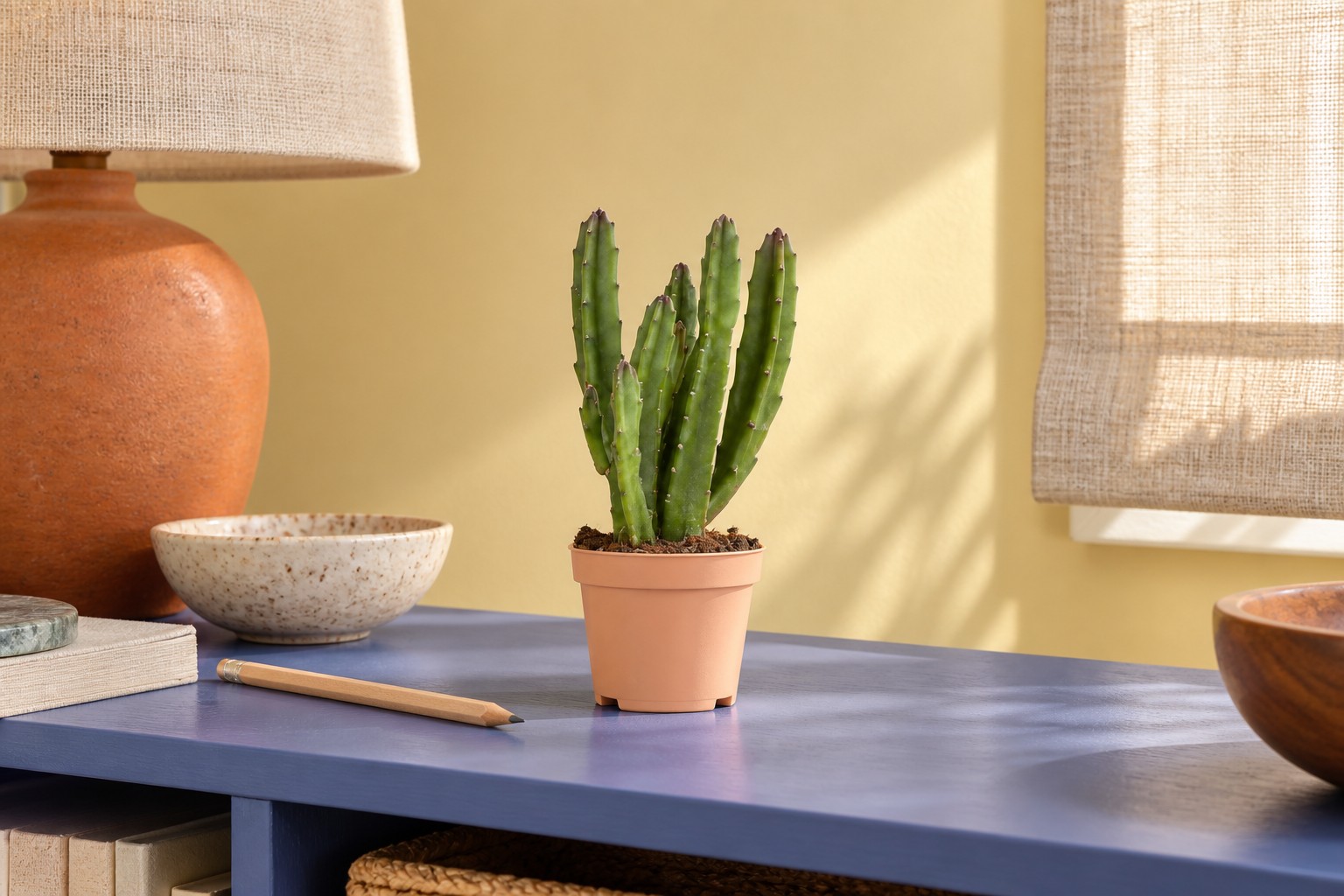
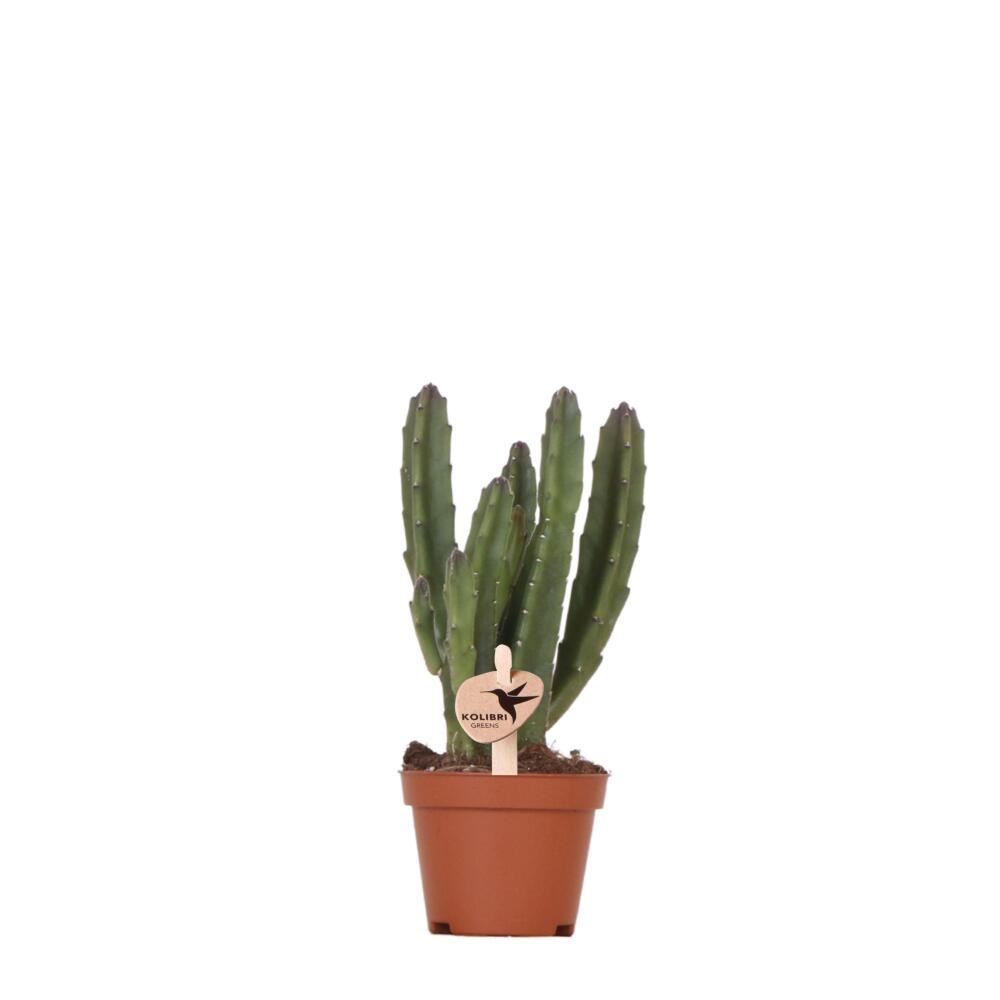
Stapelia belongs to the Apocynaceae. Its upright and later spreading angular stems store water. Small tooth-like projections along the edges are not equivalent to a dense covering of cactus spines. The shop does not definitively name a species for this offer. The plant therefore receives neither an unverified species name nor an arbitrary spectacular flower from another Stapelia species. This portrait describes shared foundations of the genus.
The small delivered plant and unresolved size
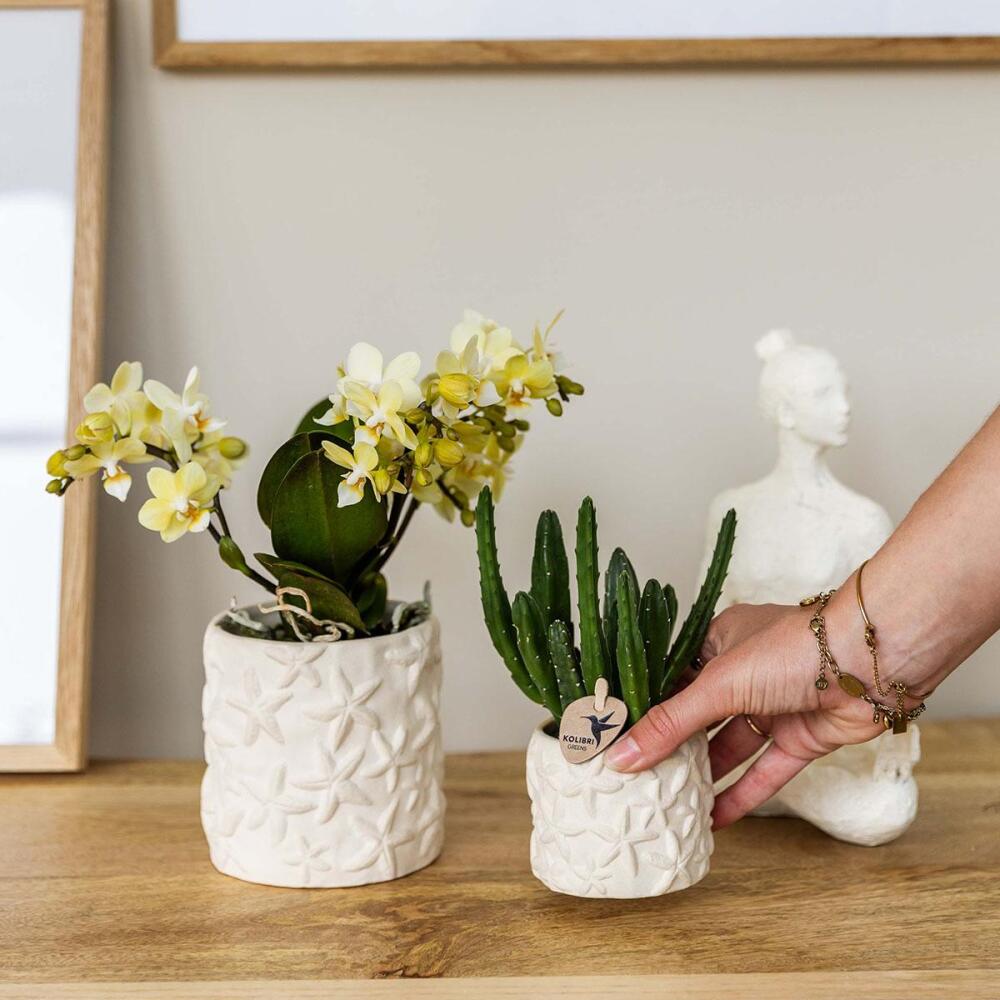
The offer title names a 6 cm pot while the description also mentions 9 cm. Delivery height is not definitively stated. The scene follows the title and original image: a young green plant in a small pot, without flowers. Current shop dimensions remain decisive before purchase. Proportions should not make it appear larger than the sample suggests. Decorative outer pot and other furnishings are a design example.
Bright light without a sudden heat shock
A bright position matters for compact growth. Introduce direct sun slowly after shaded cultivation and avoid immediate exposure to hot midday sun. Some stapelias become redder in stronger light; not every change automatically indicates disease. However, check new pale or sunken areas following a move. For this more loosely identified offer, bright frost-free overwintering makes more sense than blanket approval for cold exposure.
Dry intervals and safe drainage
Water as needed in growth and let the root ball dry well between waterings. Then supply again and remove excess completely. Angular stem bases should not remain in wet compost. In winter with reduced growth, usually water considerably less often. Prolonged shrinking in a dry root ball needs different assessment from a soft rotting base in wet compost. With unclear symptoms, check the root situation before adding water.
Repot and propagate without needless injury
A free-draining succulent mix with mineral components helps container cultivation. Repot only slightly larger when the clump needs more space. Feed with restraint during active growth according to the label. Suitable healthy stem pieces can root after the cut surface dries. Do not immediately press fresh wounds into wet compost. The delivered young plant need not be dismantled for propagation; a healthy gradually enlarging clump is an attractive goal itself.
Flower scent forms part of special pollination
Many Stapelia species attract flies with a carrion-like flower scent. The genus also has exceptions with different scents. Without a reliable species identification, the form, size and scent of a later flower cannot therefore be specifically promised. Flowers serve pollination; Stapelia is not carnivorous and is no method of fly control. Inspect tight stem gaps for mealybugs and soft damaged areas. As an ornamental, keep it out of the kitchen and beyond nibbling reach.
One plant, several views
Good to know
Is Stapelia a cactus?
No. The genus belongs to the Apocynaceae.
Will I get a particular enormous star-shaped flower?
Neither a specific flower shape nor a particular size is guaranteed for the unspecified offer.
Does the plant eat flies?
No. Flies act as pollinators in many species; they are not caught for food.
Is the pot 6 or 9 cm?
The title states 6 cm; the description mentions both sizes. This portrait shows the difference; the current shop offer remains decisive.
Sources and editorial note
- Product and delivery contents: Exotenherz
- SANBI PlantZAfrica: plant profile and cultivation
- Royal Horticultural Society: plant and care knowledge
Sources checked: 15 September 2026. Product information and delivery contents follow the linked shop offer. Care has been checked against the stated specialist sources and remains subject to plant condition, position and season.