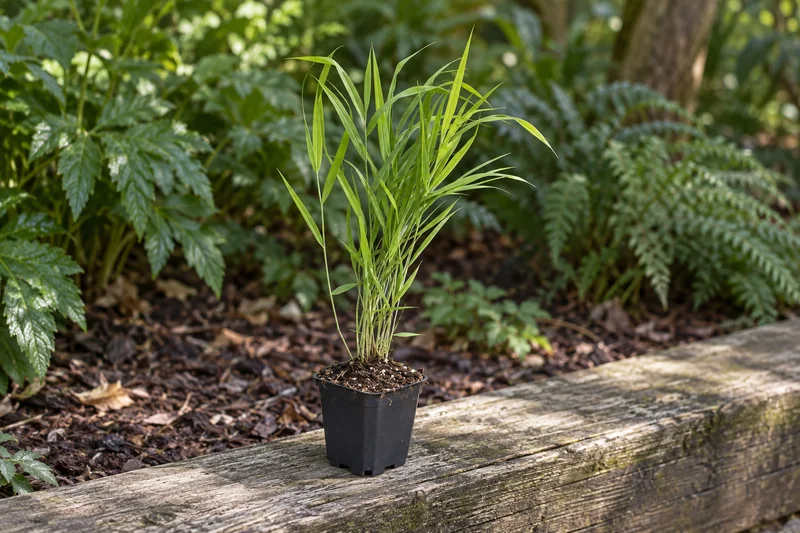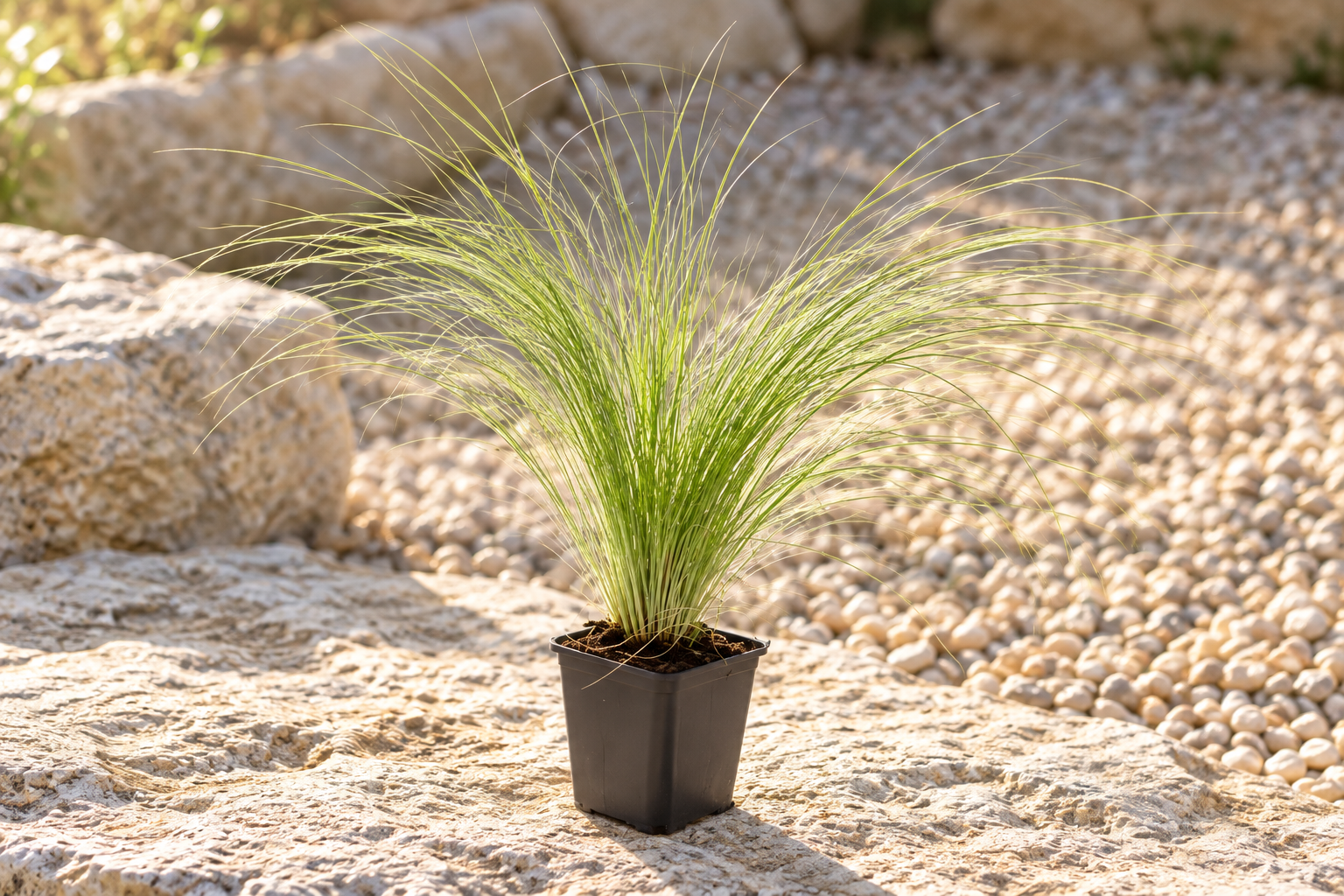
This plant at Exotenherz
Check the shop offer for current availability, price and what is included.
Check the selected shop offer for price, availability and delivery contents.
Your care table
| Topic | What to do | Why it helps |
|---|---|---|
| Light | Choose an open sunny garden position. | Deep shade lacks the foundation for its fine upright clump. |
| Soil | Prepare light to medium moderately fertile soil with good drainage. | A gravel layer merely conceals standing water or compaction underneath. |
| Planting | Plant frost-free in mild weather and water rootball well. | The little young rootball first needs reliable soil contact. |
| Spacing | Use about 30–40 cm between clump centres as guidance. | Later 50–60 cm leaf and panicle threads need room to move. |
| Water | Supply young plants while rooting, older clumps according to soil and weather. | Drought tolerance does not develop by neglecting a small delivery rootball. |
| Fertiliser | Feed moderately only as needed. | Rich feeding is no standard for moderately fertile feather-grass soil. |
| Pruning | In spring comb out a little dead foliage; cut back much dead material. | Winter condition may differ strongly between mild and cold locations. |
| Seedlings | Remove unwanted offspring in the surroundings early. | Self-seeding need not remain where the group was planned. |
| Winter | Secure drainage and sheltered base; give container roots extra protection. | Constant winter wetness is a major burden alongside cold. |
For young plants, feel the soil directly at the root ball. The surface and deeper soil may have different moisture levels.
Water thoroughly after planting; later, water according to the soil, weather and establishment rather than a fixed calendar.
Avoid standing water. For plants in containers, also check that water runs out of the drainage hole.
A grass whose form comes alive in wind
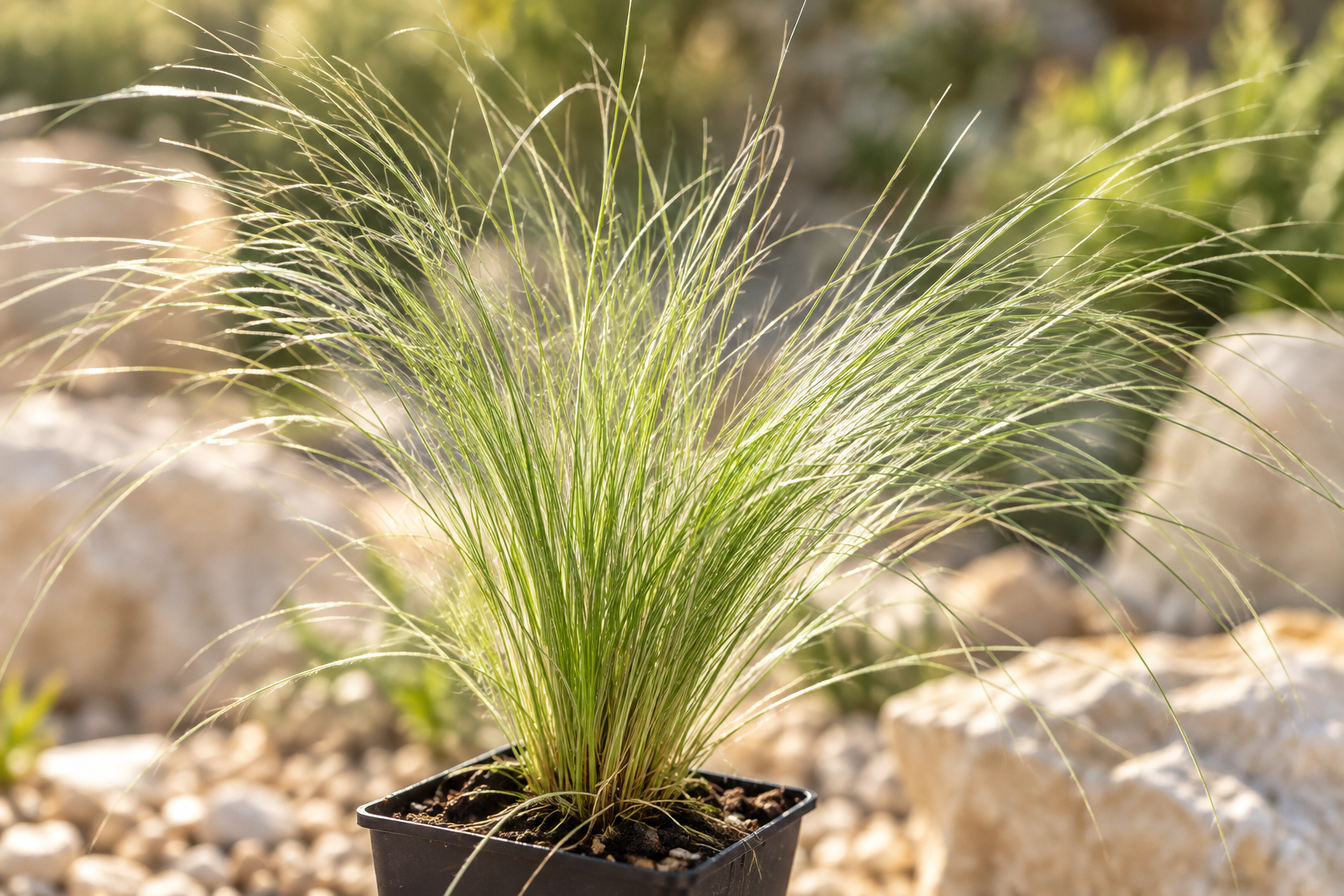
Mexican feather grass forms no broad leaf fans. Hair-fine leaves rise from a small clump and later lean slightly outwards. Even little wind moves the threads; summer light can highlight later pale brown feathery panicles. The shop calls the plant Stipa tenuissima 'Ponytails'. The botanical name Nassella tenuissima describes the same species; Pony Tails is also used as a synonym for this species group. This does not imply an additional independent garden species. The portrait therefore concerns the offered feather-grass form with its documented species features.
Start small and plan for the later airy edge
The delivery plant stands in a 9 cm pot and according to the offer measures about 10–25 cm including pot. Older clumps reach around 50–60 cm with panicles; delivery height is no final measure. About 30–40 cm between centres is horticultural guidance for groups. Beside a narrow passage a little more side space is pleasant as fine threads lean in wind. Quantity follows the chosen shop set. A few plants may already bring movement into a sunny area; close planting does not instantly turn little clumps into a healthy established band.
Sun above, air around roots below
An open sunny place is among the main conditions. Soil should be fairly light to medium, moderately fertile and well drained. Surface gravel alone cures no compaction underneath. Before planting check soil behaviour after rain and whether the base would stand in a wet depression. Feather grass fits attractively among individual stones and loosely placed perennials. A permanently moist poorly aerated place or very dark woody area would be no suitable substitute for its sunny position.
Drought tolerance starts only after rooting
A new little potted plant needs a moist start despite lower later water demand. Moisten a dry rootball before planting, set at previous depth and water in. Then water according to weather and rootball moisture rather than a fixed weekday. Once established in suitable soil the clump can survive drier spells better. In the delivery container or outdoor pot reserves remain limited. Lower water demand does not automatically mean less care: drainage, winter condition and observing the fine base remain decisive.
Prune in spring according to foliage condition
Feather grass may retain much foliage in mild winters but die back more in colder conditions. Actual condition therefore decides pruning. If only a little dead material sits among living threads, gently comb it out with fingers in spring. If the clump is largely dead and filled with old foliage, spring cutback is possible. Routinely shearing a healthy green clump in autumn would be unnecessary. Watch fresh tips at the base while working so they are not damaged together with old leaves.
A position that works in winter too
Winter tolerance depends on more than a temperature number. Well-drained soil and a sheltered young base matter for Ponytails; constant winter wetness deserves particular attention. Check drainage and root protection in containers. A warm home is no suitable garden-plant winter quarter. Rich feeding does not automatically improve form; on suitable moderately fertile ground supplement only as needed. Watch surroundings for seedlings too and remove unwanted offspring early. Fine movement and a manageable clump then stay connected to carefully accompanied culture.
One plant, several views

Good to know
Are Stipa and Nassella different plants here?
No. Nassella tenuissima is the botanical species often sold as Stipa tenuissima. Pony Tails is also a synonym for this species group.
Does the young plant need little water immediately?
No. The little rootball needs reliable supply while rooting. An established clump tolerates drier spells better.
How large does feather grass grow?
About 50–60 cm with summer panicles is a guide. Delivery total height including pot is smaller at 10–25 cm.
Should every clump be cut hard?
Only if much dead material is present in spring. Mainly living foliage needs only gentle combing.
Why does it not suit every dry corner?
It needs sun and well-drained roots. Dryness alone does not compensate for shade, compaction or standing winter water.
Sources and editorial note
- Exotenherz: parent offer, dimensions and original images (accessed 03.10.2026)
- Specialist reference: ponytails-rhs (read directly 03.10.2026)
- Specialist reference: grasses-cutting (read directly 03.10.2026)
- Specialist reference: grasses-growing (read directly 03.10.2026)
- Specialist reference: nassella-kew (read directly 03.10.2026)
- Specialist reference: nassella-nc (read directly 03.10.2026)
- Exotenherz: checked 6-plant child offer (accessed 03.10.2026)
- Exotenherz: checked 12-plant child offer (accessed 03.10.2026)
- Exotenherz: checked 20-plant child offer (accessed 03.10.2026)
- Exotenherz: checked 48-plant child offer (accessed 03.10.2026)
- Exotenherz: checked 60-plant child offer (accessed 03.10.2026)
Parent offer and all associated child offers read directly on 03.10.2026; article numbers, GTIN where present, availability and files separately documented. Delivery height 10–25 cm including 9 cm pot expressly separated from later garden height. Quantity variants count as no new identity. Specialist sources read directly, complete reference portraits fargesia-rufa-guide and heidelbeere-jersey-guide compared. Clean original view 2 retained unchanged; stamped montages excluded. Scene shows one young reference regardless of set size. Draft; joint page and browser acceptance pending. Kew accepts Nassella tenuissima; RHS lists Pony Tails as synonym, no extra independent cultivar identity claimed. Foliage-condition-based spring pruning checked against RHS cutting guide.