This plant at Exotenherz
Check the shop offer for current availability, price and what is included.
Product and delivery details are given in the individual offer.
Your care table
| Topic | What to do | Why it helps |
|---|---|---|
| Unpacking | First examine loose pieces and their side branches. | Natural arrangement determines how they can lie in the bowl. |
| Light | Choose subdued daylight without hot direct sun. | A moist display and heated window glass are different conditions. |
| Moisture check | Check an accessible branch section and contact surface together. | Exposed tips may be drier while water remains below. |
| Water | Carefully add small amounts when needed. | Slight even moisture does not mean deep water. |
| Arrangement | Leave axes and side branches lying loosely. | Pressing together changes the fine feather-like shape. |
| Neighbours | Keep plant bases and their substrate accessible. | A moss layer does not replace care checks of other plants. |
| Glass and air | Take persistent condensation or unusual smell as reasons to check. | A closed setup holds water longer and may become hard to inspect. |
| Nutrients | Add no liquid fertiliser during initial setup. | The trade name supplies no reliable species-specific dose. |
| Season | After moving, look again at edge, centre and support. | Warmth, air and container change the actual moisture pattern. |
Check the compost and pot weight. The care table explains how far the compost may dry.
Water only when needed. The water should reach the root ball without spilling over the rim.
Remove surplus water from the saucer or cachepot. Then return the plant to a suitable position.
Feather-like branches rather than a closed green surface
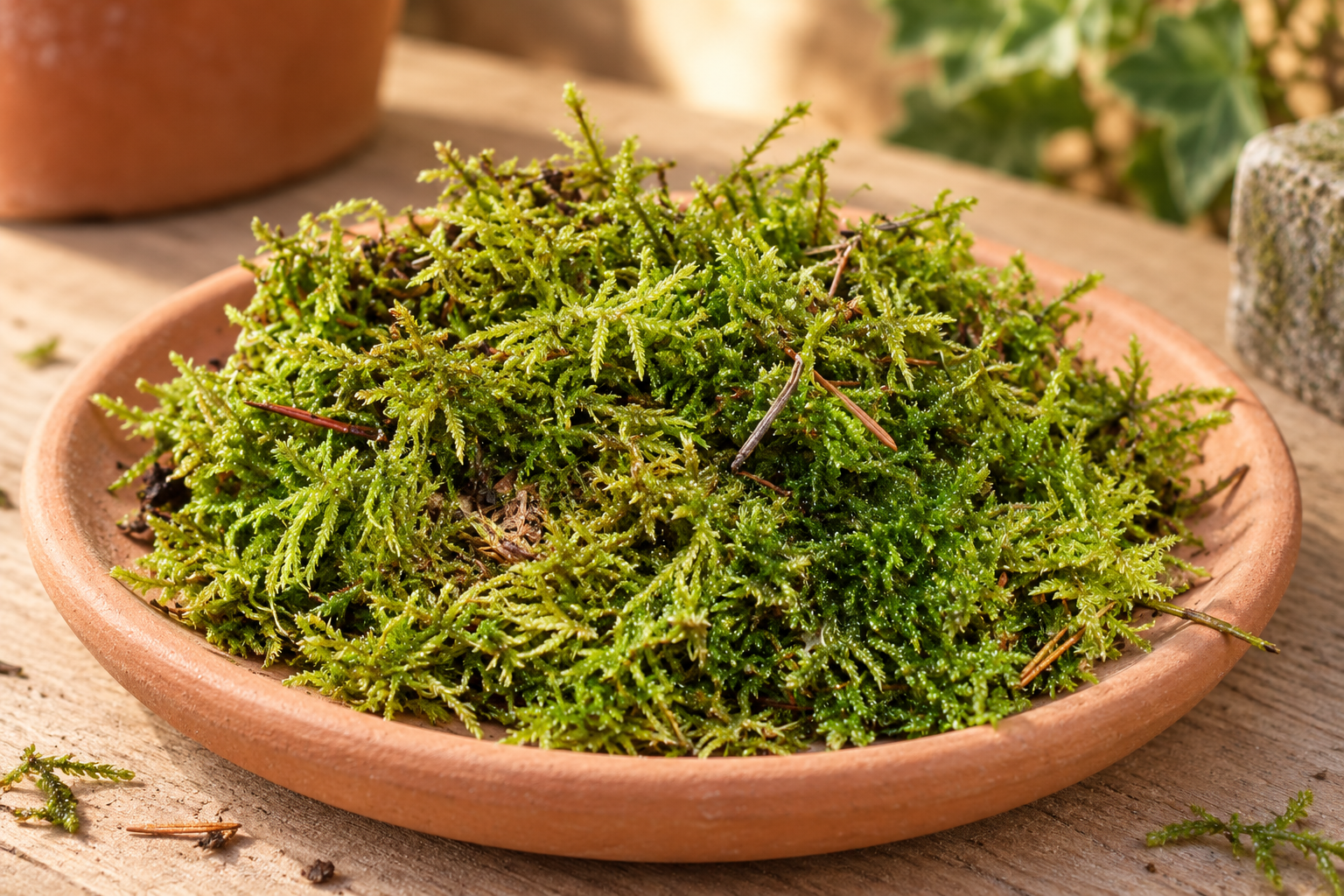
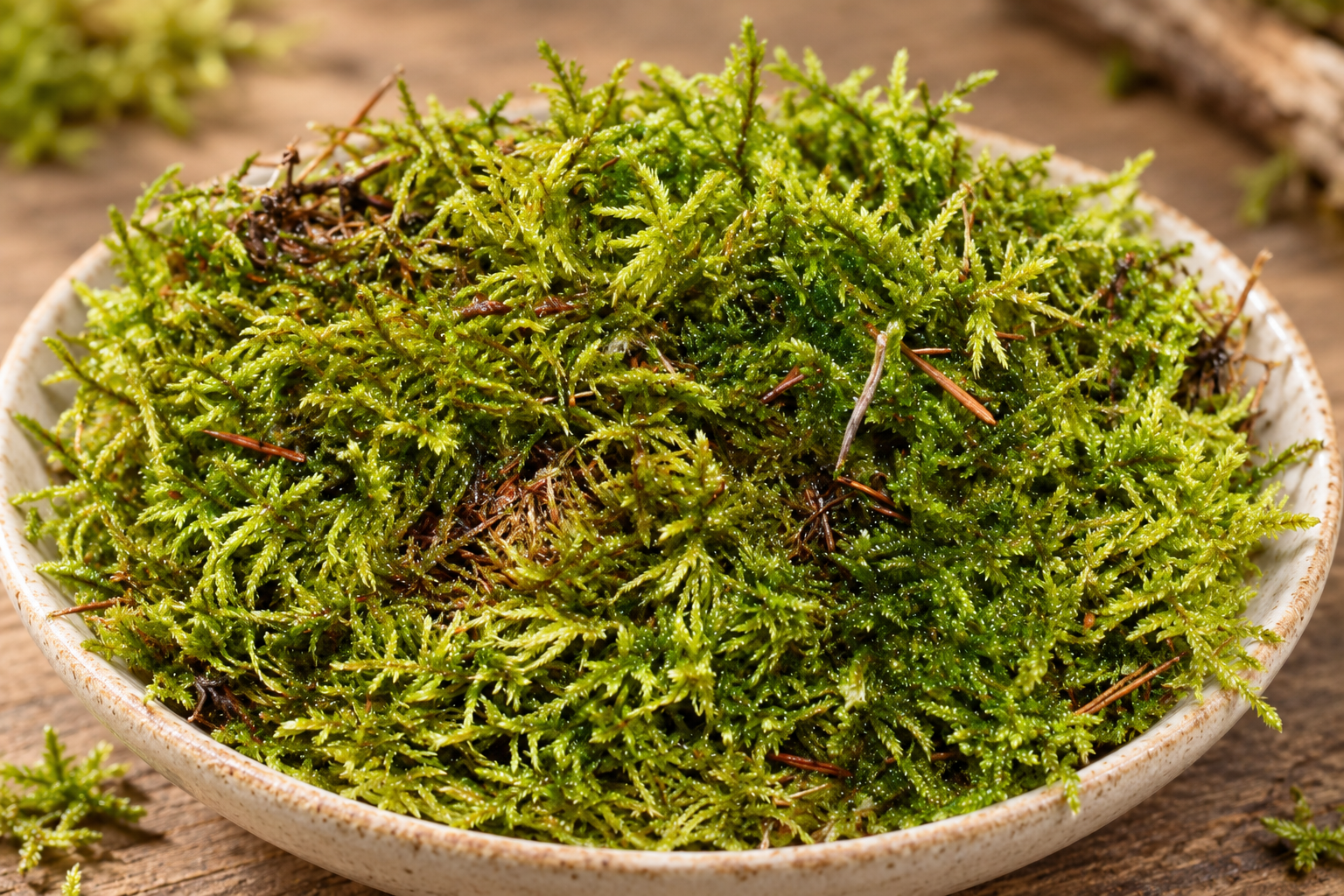
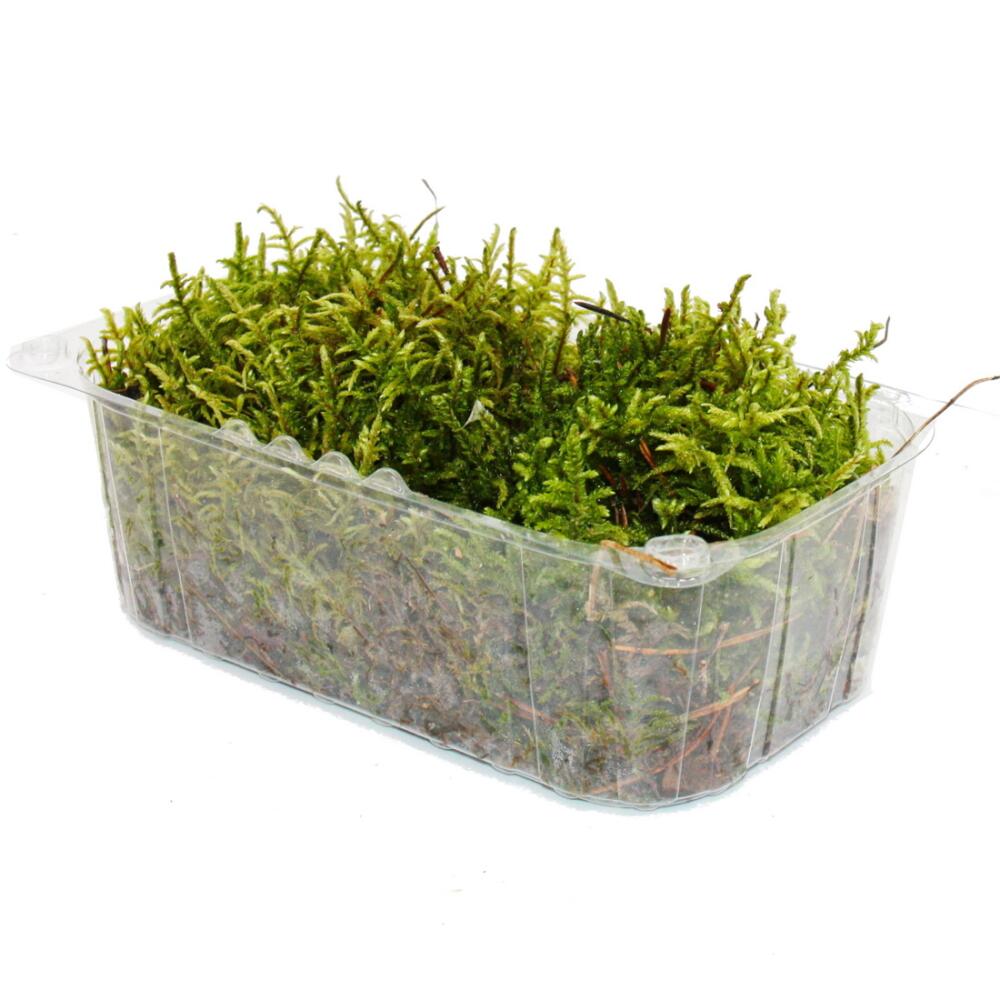
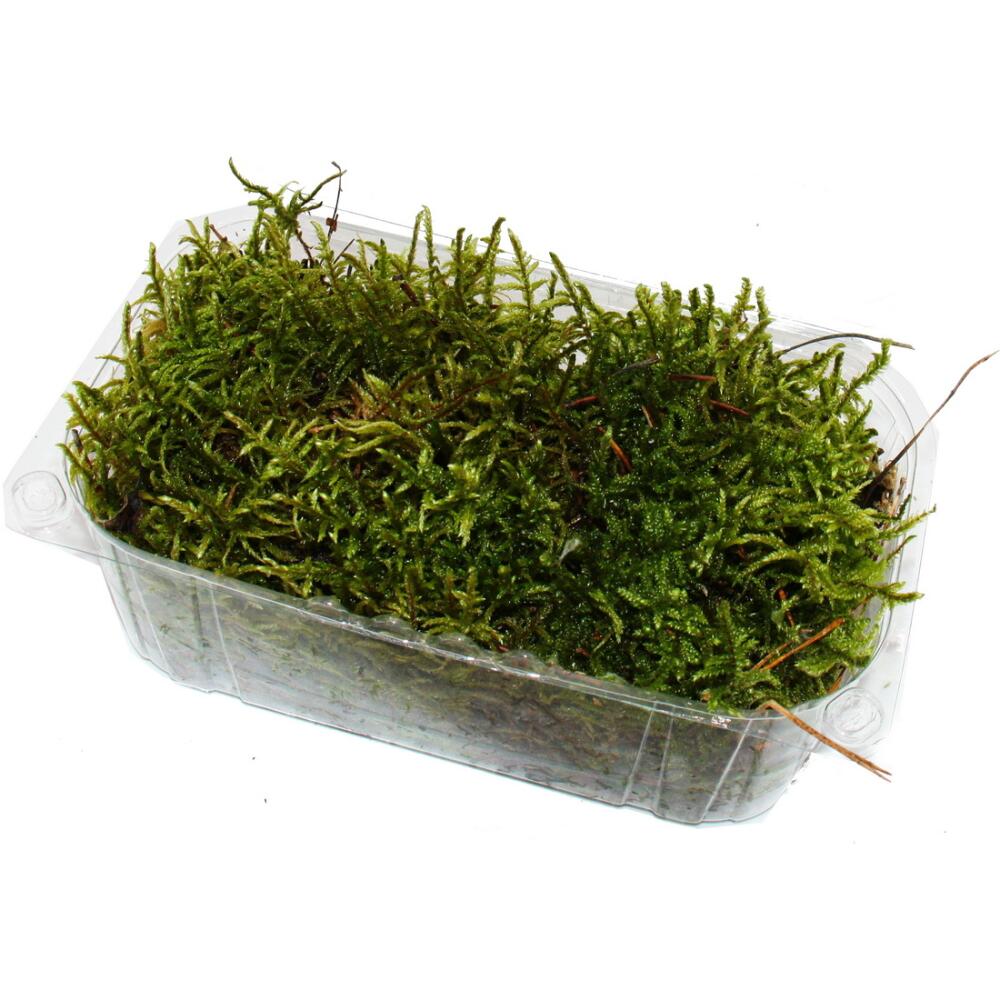
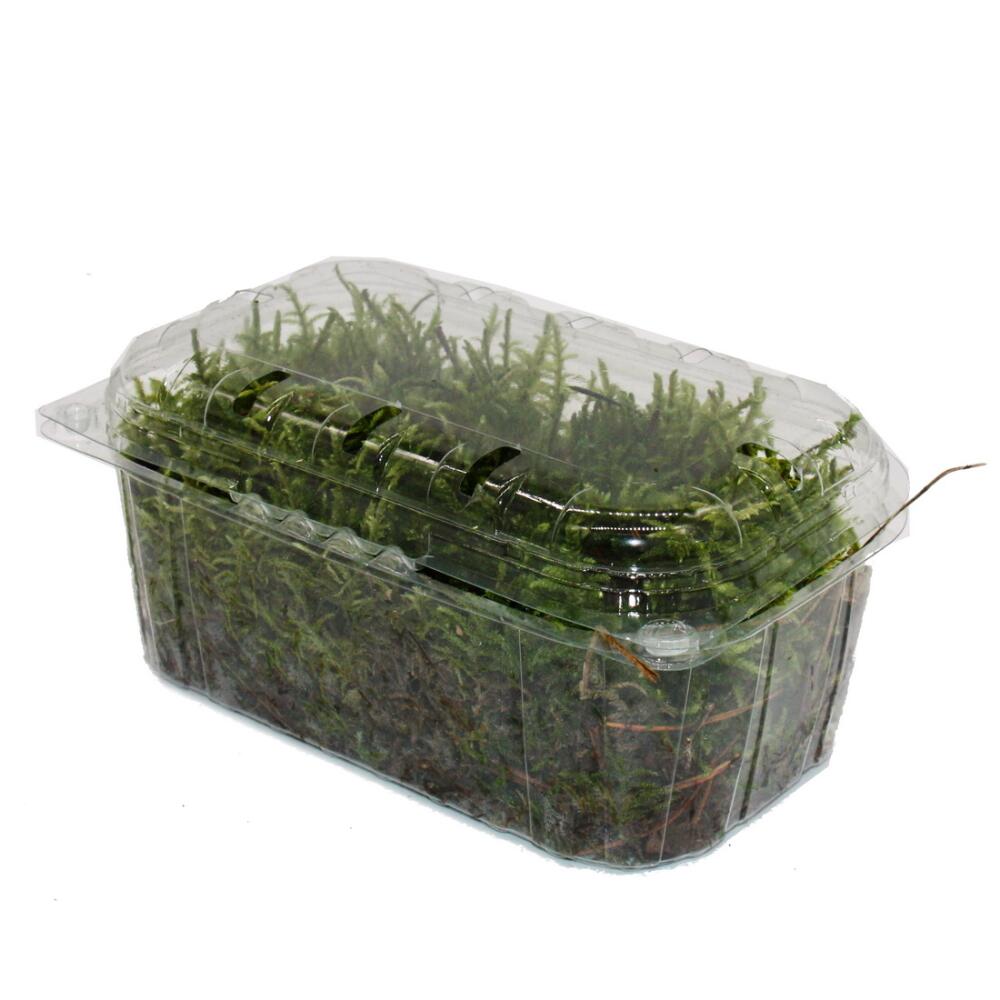
The Sumpfmoos from this box rewards looking along individual axes. Many fine leafy branches sit at the sides, giving loose material a feather-like shape. Pale green and yellow-green sections lie together, with brown needles and small twig remains between them. The shop originals show neither evenly cut moss mats nor a row of upright miniature trees. A loose branch may lie beside a denser piece without identical outlines. On a shallow support, side branches are especially easy to view. Bowl and planting table provide a quiet frame in the AI image; they are illustrative decoration, not additional contents of the small material box offered.
Read the trade name with perspective
The shop also calls Sumpfmoos Bäumchenleitermoos. Here this remains a name for the offered material, not a confirmed identification as Climacium dendroides. A familiar species name for tree-shaped moss cannot be transferred from this label to the actual sideways-branching pieces. Sumpfmoos also establishes neither underwater care nor particular hardiness. The shop description lists fresh untreated material for small planted bowls, glasses and moist displays. The outer box is approximately twenty by twelve by twelve centimetres. The accompanying approximately thirty cubic centimetres remains unconfirmed as fill volume. It is neither converted into another unit nor treated as piece height or bowl area.
Start with a clearly visible container
A shallow container helps you see fine side branches and support together. General moss displays follow moisture, protection from drying and suitable light. For initial setup, choose subdued daylight without hot direct sun. A bowl directly over a radiator receives different conditions from a quiet planting table. Tall glass walls may make looking in and intervening harder, especially with several plants already inside. Begin simply and observe which edges dry faster. A closed glass is not automatically better: strong persistent condensation and dripping walls call for another look at the setup. The trade name alone cannot replace observing actual material condition.
Distribute moisture without submerging branches
Mosses have no ordinary root balls like potted plants; their fine anchoring organs are called rhizoids. For this Sumpfmoos, check an accessible branch section and the surface below instead. Individual exposed side branches may appear drier sooner than a dense area at the base. Carefully add small amounts of water when needed until contact is evenly slightly moist again. If water is already standing below, the bowl should not receive another large dose just because a tip is paler. Keep pieces out of deep water. Fine branches should retain their loose arrangement. A fixed spraying or watering calendar overlooks differences between an open container, sheltered glass and warm room air.
Leave space for side branches when arranging
First lay out a piece loosely and look at the direction of its side branches. Rather than compressing it into a round ball, arrange its longer axis along a small open area. A second section may lie nearby without closing every gap. This shows the form and makes later edge checks easier. Gently remove loose needles or twig remains without pulling out fine moss branches. In a bowl with other plants, their bases and substrate must stay accessible. Moss should neither support a heavy pot edge nor hide a brace that presses its loose structure together. The initial arrangement need not be permanently glued; accessible material is easier to inspect and gently rearrange when needed.
See paling and brown areas in context
The shop offer describes moss kept dry becoming paler and browner. This general material description does not promise that every brown area turns green when moistened. The originals already contain differently coloured parts and natural associated remains. When changes occur, first check moisture, warmth and the area beneath the material. With unusual smell or visibly accumulated water, check the setup rather than immediately adding more water or feed. No extra liquid fertiliser is recommended for initial setup. This unidentified trade group receives no unverified feeding plan from a named marsh-moss species. Fresh and untreated describes delivery but does not confirm the lifespan or development of every piece in an indoor display.
Accompany the small bowl in everyday life
In summer, window heating matters more; in winter, dry heating airflow can affect individual side branches faster. Check edge, centre and support again after moving. Open bowls lose water differently from closed glass containers; base gentle water supplies on these observations. An unattractive small section can be carefully removed without dismantling the entire display. The material remains a feather-like branching moss trade group. It is assigned neither Sphagnum’s star-like heads nor Kugelmoos’s dense rounded cushions as expected features. A simple visible arrangement shows its own form and permits careful handling without assuming a future carpet, fixed lifespan or particular species development.
One plant, several views

Good to know
Is Bäumchenleitermoos a confirmed species here?
No. The offer remains Sumpfmoos trade material. The name does not confirm assignment to Climacium dendroides.
Should I expect miniature trees?
The shop originals show loose sideways-branching feather-like moss pieces. A uniform tree shape is not promised.
May it stay completely underwater?
The name Sumpfmoos does not imply underwater cultivation. Keep material and contact surface slightly moist here without submerging pieces in deep water.
What does box size describe?
Approximately 20 × 12 × 12 cm belongs to outer packaging, not individual moss piece height or width.
How much area can I cover?
No fixed area is documented. The approximately 30 cm³ stated is unconfirmed as fill volume; actual pieces and arrangement determine it.
Why not feed immediately?
Material is not identified to species. Initially observe moisture, light and setup instead of transferring an unverified wild-species dose.
Does fresh material promise growth?
No. Fresh and untreated describes the offer. It implies no reliable lifespan or guaranteed later moss carpet.
Sources and editorial note
- Exotenherz: exact material box and own gallery (05.10.2026)
- BIBS: Climacium as an identification comparison (05.10.2026)
- RHS: general moss design (05.10.2026)
- RHS: mosses and lichens, general classification (05.10.2026)
Shop offer, original images and expert sources checked on 05.10.2026. Current availability in the shop.