This plant at Exotenherz
Check the shop offer for current availability, price and what is included.
Product details, availability and delivery information are provided in the shop offer.
Your care table
| Topic | What to do | Why it helps |
|---|---|---|
| Light | Very bright; slowly acclimatise to direct sun | Pale leaf areas need a gentle transition |
| Water | Water thoroughly after clear drying | Water-storing leaves buffer dry breaks |
| Drainage | Do not leave water in the decorative pot | Roots need air |
| Compost | Loose and free-draining with mineral components | Soil staying wet for long increases rot risk |
| Fertiliser | Feed sparingly during growth according to the label | Overfeeding does not reliably improve colour |
| Winter | Bright and frost-free; water less when cool | Light and consumption determine water quantity |
| Pruning | Shorten long healthy stems as needed | A compact structure can be encouraged gently |
| Inspection | Check leaf axils and root ball with leaf loss | Pests, cold and wetness need different measures |
Check the compost and pot weight. The care table explains how far the compost may dry.
Water only when needed. The water should reach the root ball without spilling over the rim.
Remove surplus water from the saucer or cachepot. Then return the plant to a suitable position.
A jade plant with a different colour display
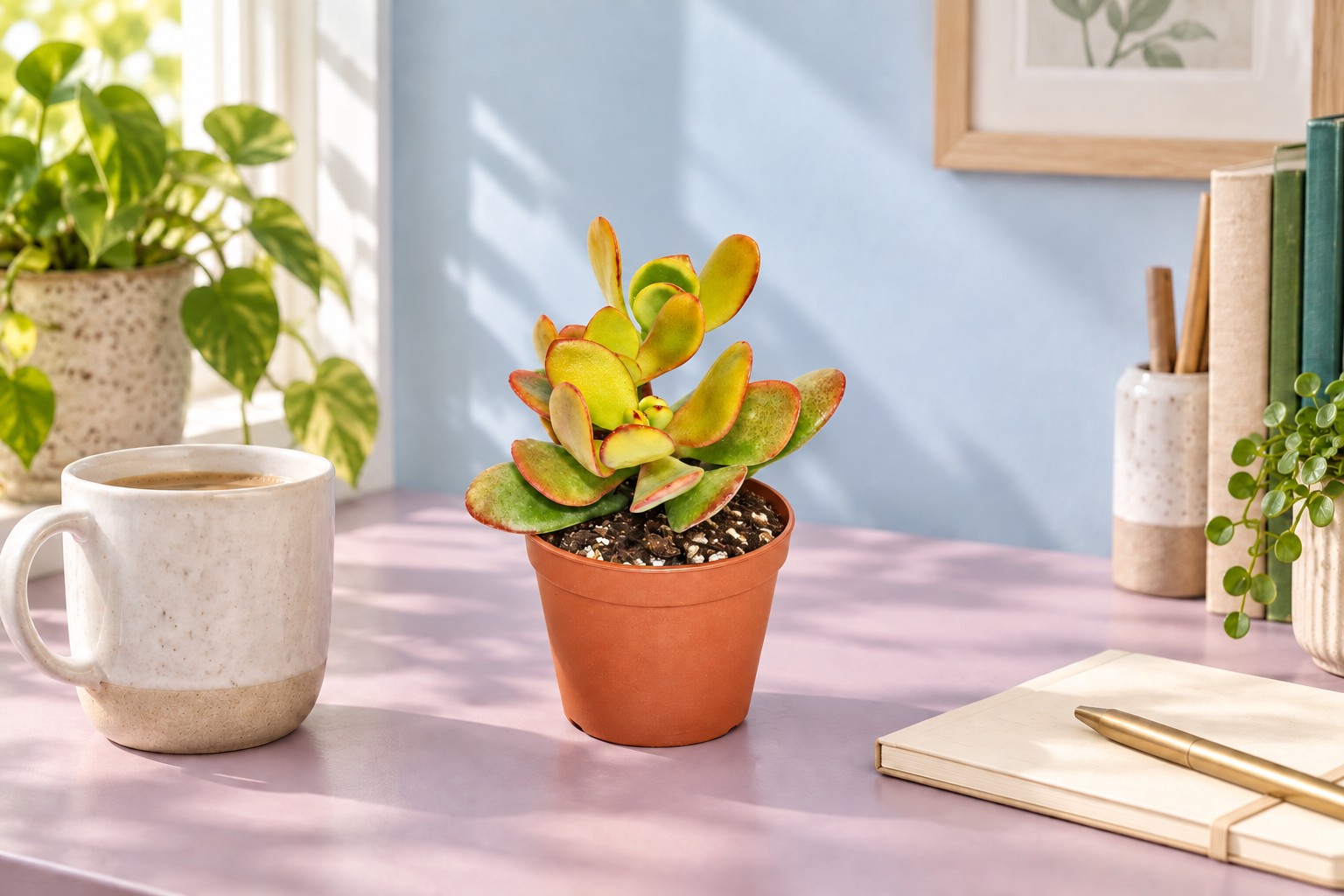
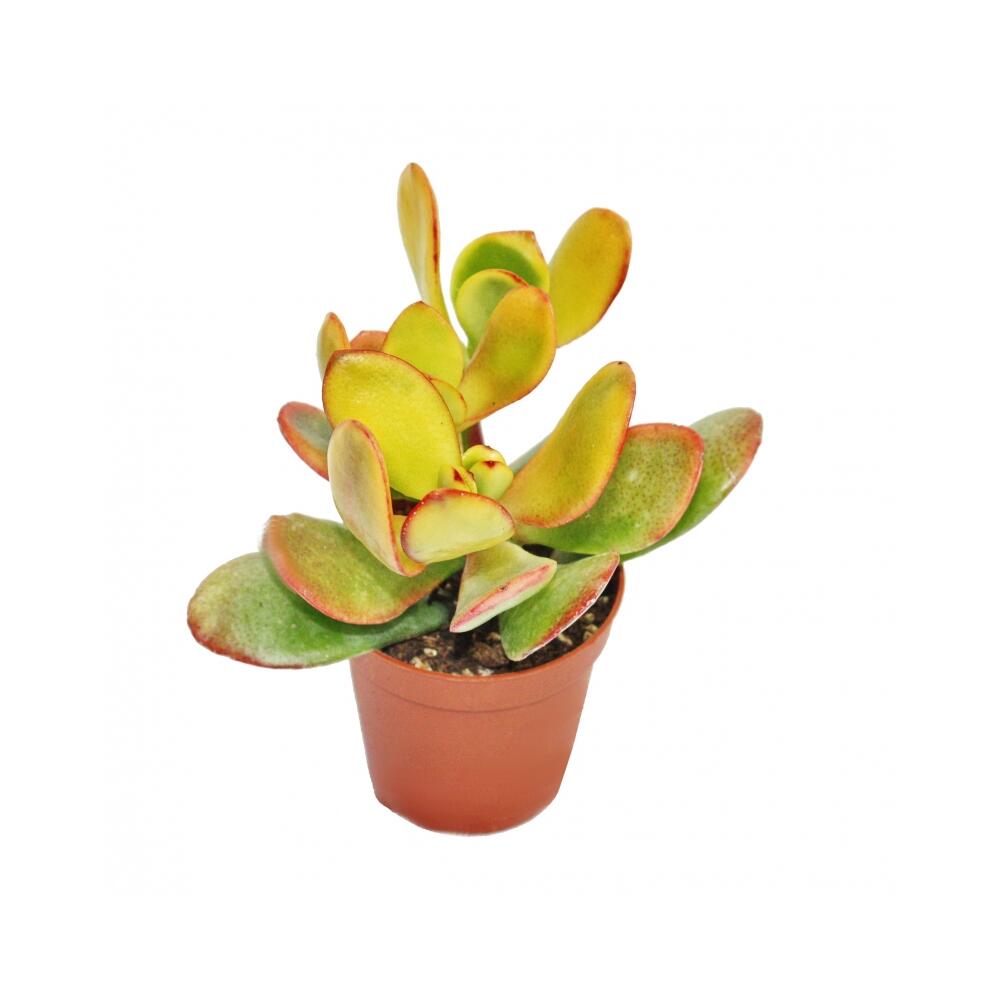
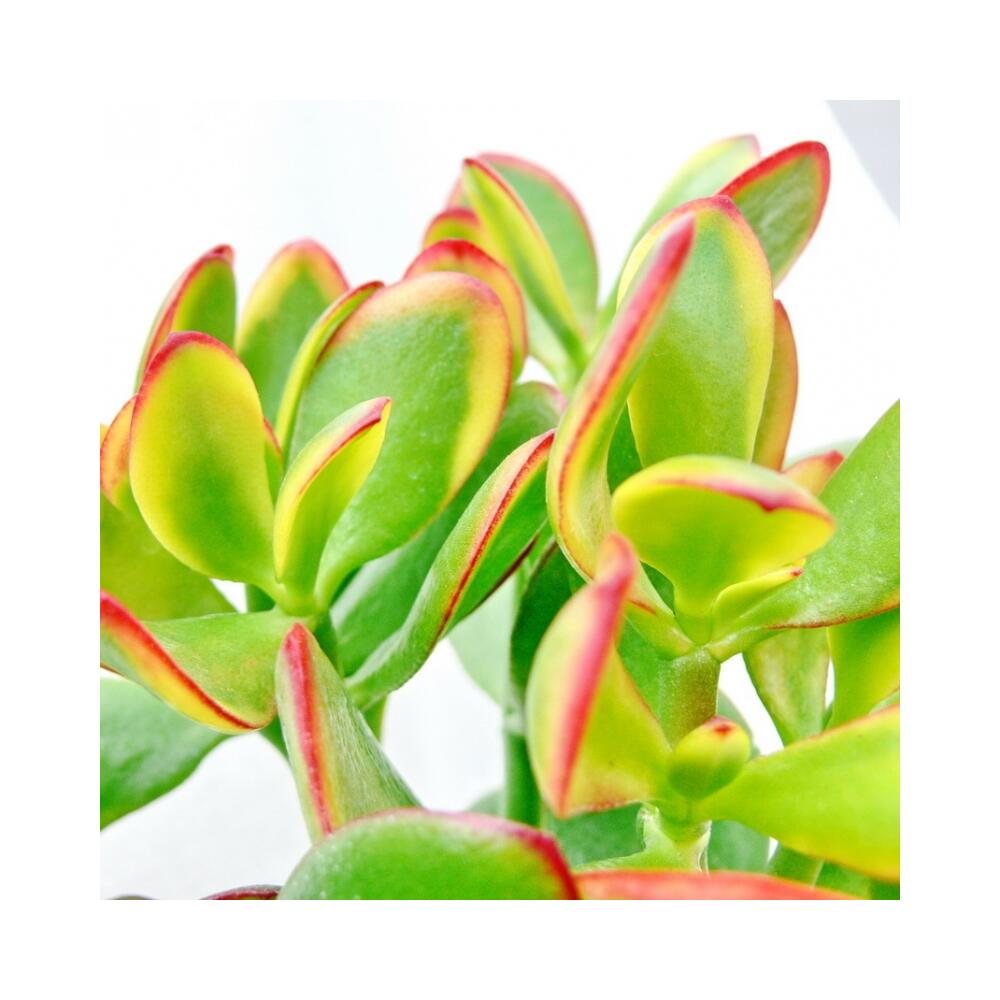
Sunset remains a jade plant in its basic form: strong stems carry pairs of fleshy oval leaves. Here, yellowish areas and warm red edges lie between green parts. The offer states a 12 cm pot and approximately 18–25 cm overall height. It is a small plant that looks good on a bright table. A powerful old trunk is not promised. Leaf markings and the amount of red may vary with season and cultivation.
Place the name botanically
The shop states Crassula portulacea Sunset. Horticulturally, this jade-plant form is treated under Crassula ovata; the RHS lists Sunset as a synonym of Hummel’s Sunset. It belongs to the stonecrop family. The wild species comes from southern Africa, while the colourful garden form was distributed through cultivation and selection. Its water-storing leaves bridge dry periods. That does not mean it should remain dry for months regardless of position and growth, however. Healthy firm leaves and short stem intervals are better care goals than the most extreme stress colour possible.
Light for colour and strong stems
Choose a very bright position with gradually introduced sunshine. Behind hot glass, abrupt midday sun after transport may damage pale leaf areas. A position close to sunlight with clear access to daylight is therefore wiser than a dark decorative shelf. With low light, gaps between leaves lengthen, new stems soften and the colour effect often becomes more restrained. Turn the pot occasionally. A warm sheltered outdoor place is possible in summer if persistent rain is avoided and sun acclimatisation is gradual.
Water according to root-ball condition
Let the root ball dry noticeably between waterings. Check more than just the surface: a heavy pot may still be damp inside. Then water evenly and allow all surplus to drain. No reserve should remain in the decorative pot. In warmth and active growth, intervals shorten; in bright cool winter quarters they lengthen. Soft wrinkled leaves are meaningful only when considered alongside soil moisture. Adding more water to a wet root ball may worsen an existing root problem.
A stable foundation and moderate care
A container with a drainage hole and structurally stable free-draining succulent compost make care easier. Mineral components improve aeration; heavy potting compost that stays wet for long is unsuitable. Repot when densely rooted or when compost has collapsed. A slightly larger pot is usually enough. Feed sparingly during growth according to the label, without pushing growth during winter rest. Overlong stems can be selectively shortened on a healthy plant. Let cut ends dry before cautiously rooting removed stem pieces.
Winter, leaf loss and small flowers
Sunset stays frost-free. A bright slightly cooler winter position with correspondingly less water is better than a dark warm place. Leaves must not touch an icy pane. Individual old leaves fall over time; numerous soft or translucent leaves instead call for a root-ball and temperature check. Inspect leaf axils for mealybugs. Small pale flowers are possible on older jade plants in suitable cultivation, but not reliably every year indoors. The foliage is already the main decoration of this form.
One plant, several views
Good to know
Is Sunset an ordinary green jade plant?
It is a coloured form of jade plant with yellowish areas and reddish edges.
How can I get the reddest possible leaves?
Good light supports natural colour. Deliberately withholding water or applying cold is not a sensible method.
Why does it look greener in winter?
Light availability and cultivation influence colouring. A seasonal change is not automatically a deficiency.
Does Sunset flower every year?
That is not certain indoors. Age and cultivation conditions matter; it is mainly bought as a foliage plant.
Sources and editorial note
- Product and delivery contents: Exotenherz
- Royal Horticultural Society: plant and care information
- SANBI PlantZAfrica: plant profile and cultivation
Sources checked: 15 September 2026. Product information and the contents of delivery follow the linked shop offer. Care advice was checked against the cited specialist sources and should still be adapted to the plant’s condition, position and season.