This plant at Exotenherz
Check the shop offer for current availability, price and what is included.
Check the selected shop offer for price, availability and delivery contents.
Your care table
| Topic | What to do | Why it helps |
|---|---|---|
| Identity | Treat as thornless selection of Loganberry hybrid group. | No pure raspberry species or Ly654 cultivar confirmed for offer. |
| Light | Sunny or bright partially shaded sheltered place. | Canes and fruit ripening need light and support. |
| Soil | Humus-rich moisture-holding soil with free drainage. | Permanent waterlogging hinders healthy roots. |
| Trellis | Stable wires or accessible grid. | Long canes need planned lateral training. |
| Water | Water thoroughly when root zone dries. | Young balls and fruit development respond to inadequate supply. |
| Feed | Check soil needs and use suitable fertiliser by label. | Extra nutrients cannot replace training. |
| Training | Tie previous-year fruit canes separately from new ones. | Harvest pruning becomes clear later. |
| Pruning | After harvest remove fruited canes at ground and keep new ones. | Previous-year growth carries most next fruiting. |
| Winter | Protect container roots; inspect damaged wood in spring. | Leaf fall belongs to rest; living canes remain. |
For young plants, feel the soil directly at the root ball. The surface and deeper soil may have different moisture levels.
Water thoroughly after planting; later, water according to the soil, weather and establishment rather than a fixed calendar.
Avoid standing water. For plants in containers, also check that water runs out of the drainage hole.
A loganberry needs its own space
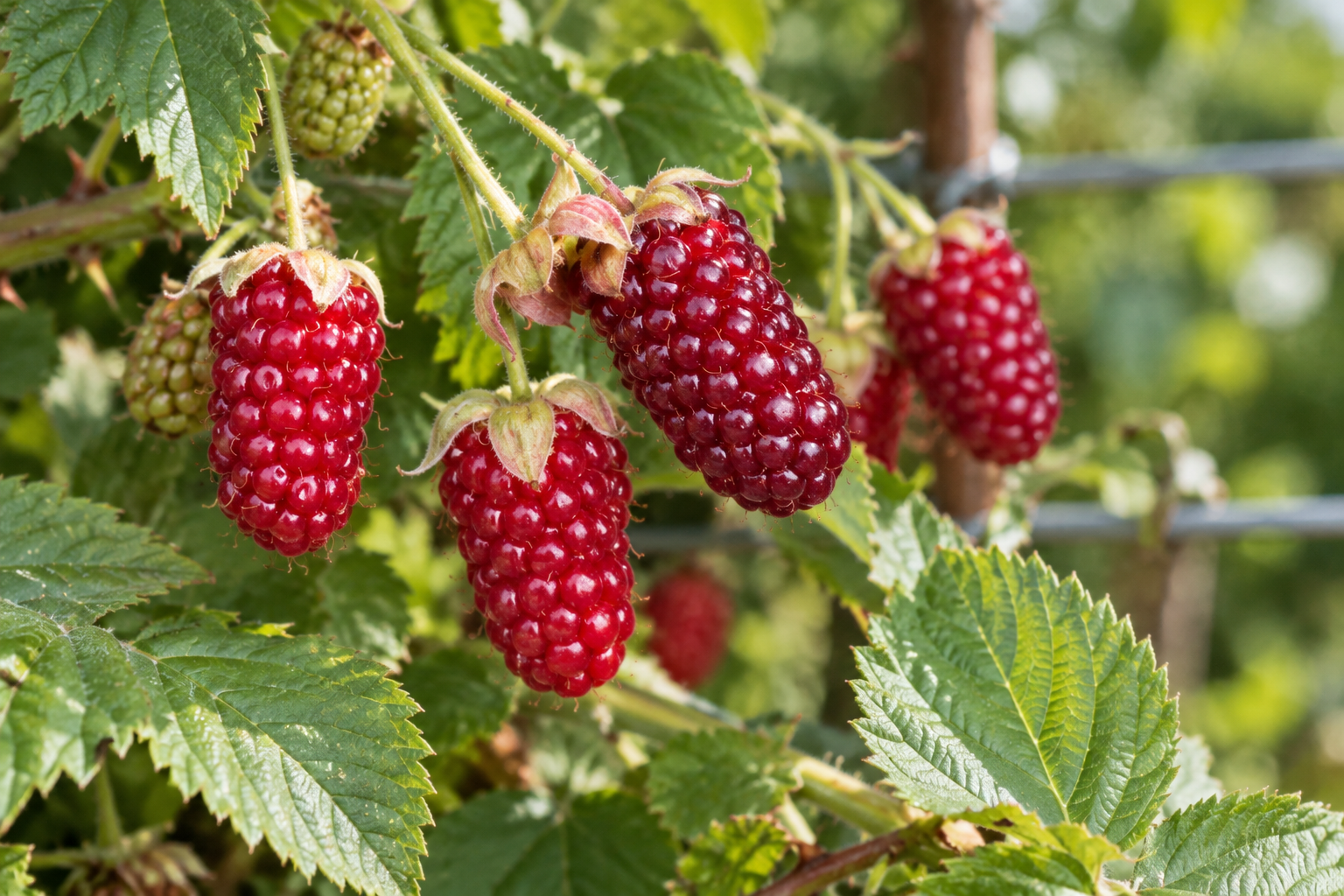
Loganberry combines raspberry and blackberry features. Elongated red fruits consist of many small drupelets and differ from individual smooth gooseberries. This portrait covers linked shop's thornless selection. It is no confirmed pure raspberry species, nor does thornless automatically assign Ly654. Evidenced Loganberry group suffices for gardening: long canes, lateral support and fruit mostly on shoots grown previous summer.
Unpack young canes gently
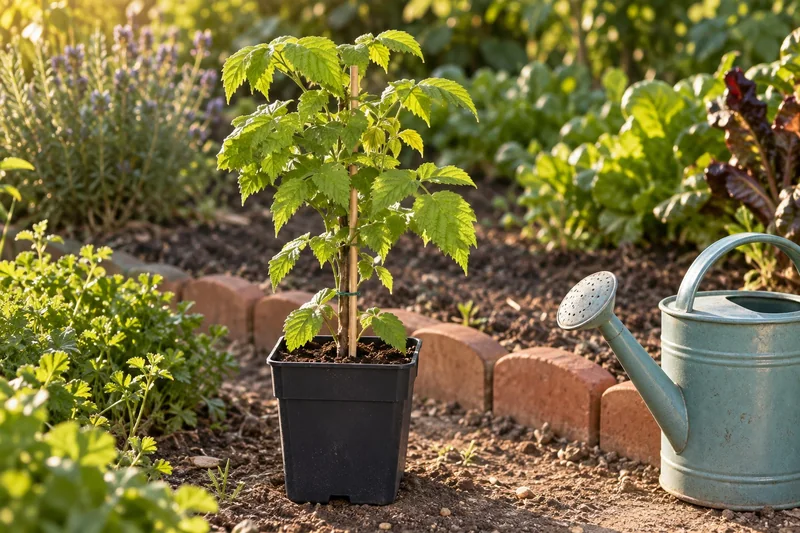
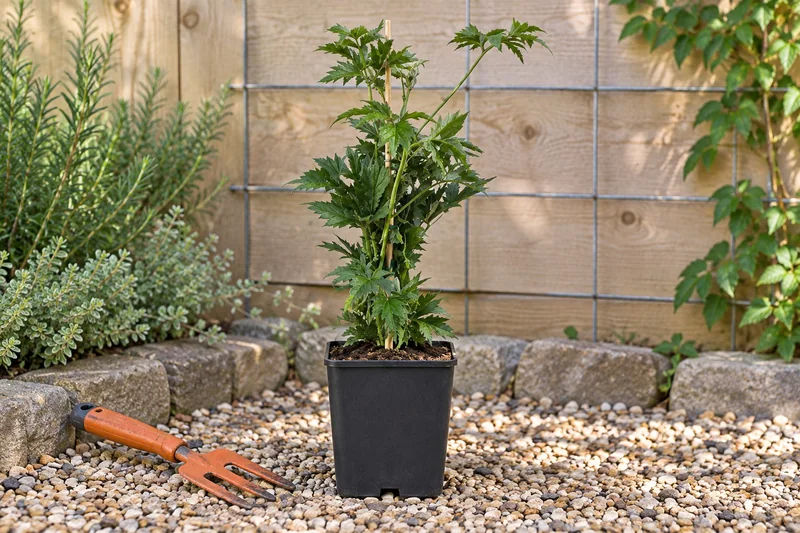
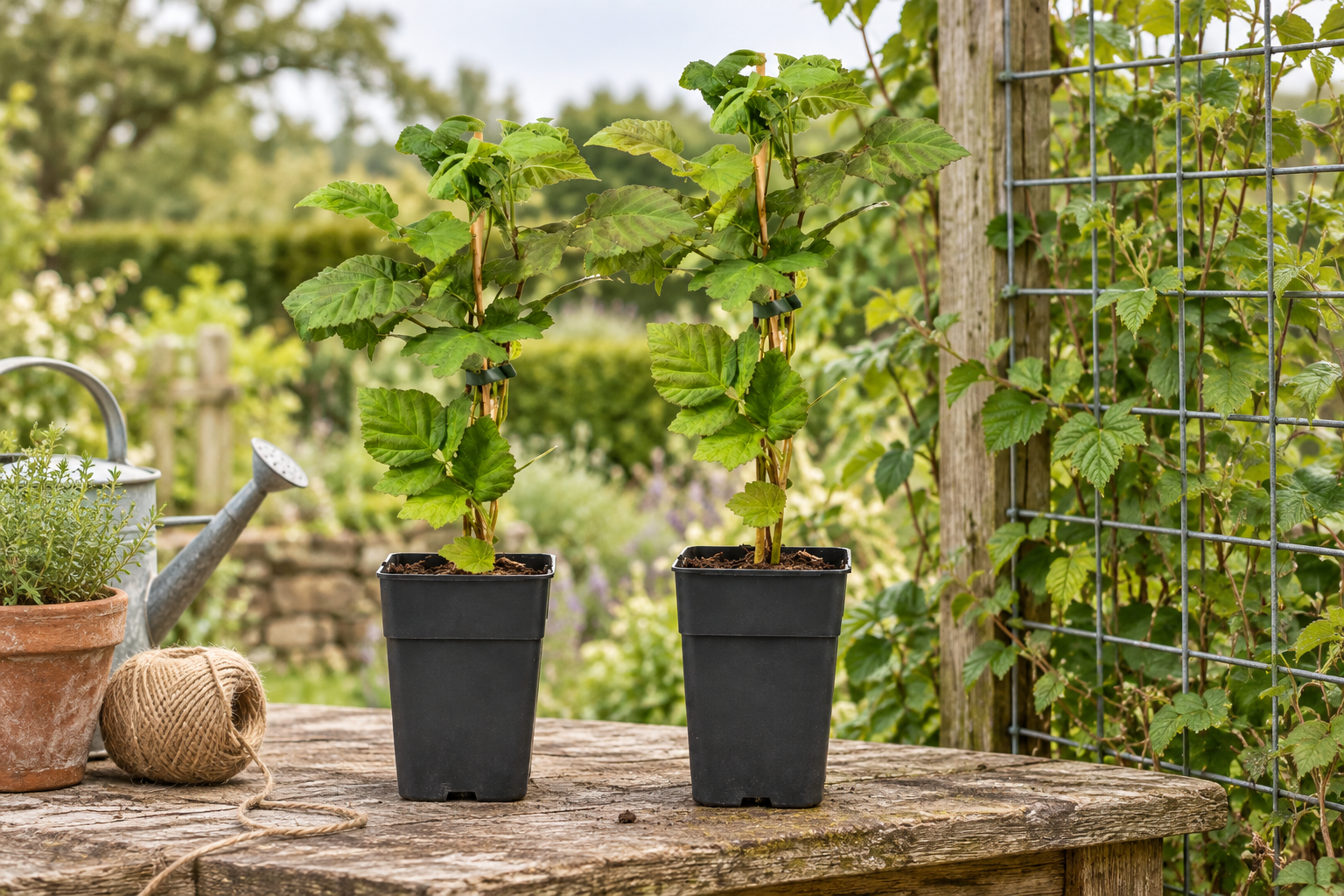
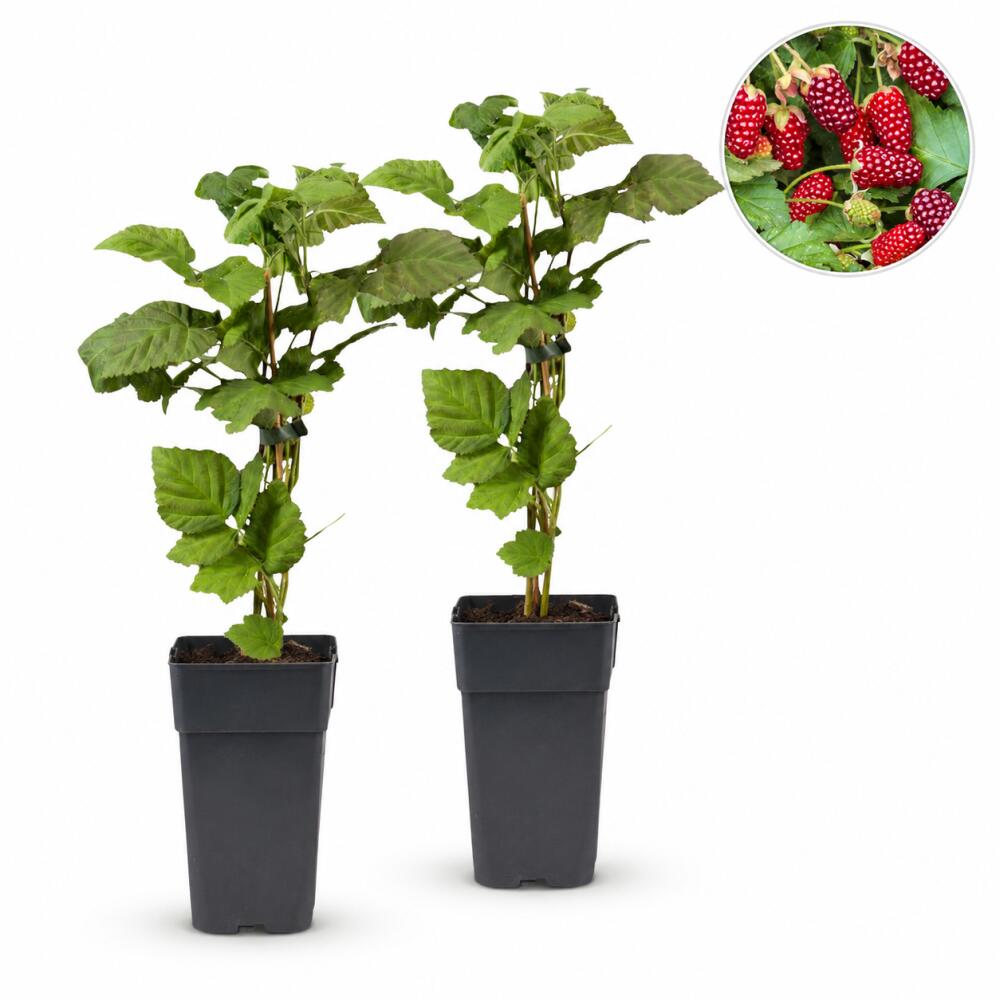
Offer includes two plants in fifteen-centimetre pots with about fifty centimetres total height including pot. A young tied cane is beginning, not a filled fruit wall. Remove wrapping without pulling and check existing support is still loose enough. Small ball should be evenly moist before planting. Later one-and-a-half to two-and-a-half metre height guides trained patch while individual canes need more sideways room. Fruit in shop images shows possible developed phase, not guaranteed current delivery.
Think about trellis before planting
Sunny or bright partially shaded sheltered garden and humus-rich moist draining soil suit. Install firm wires or trellis before shoots disappear among neighbours. Allow about two-and-a-half to three metres sideways per plant as guidance, referring to later canes rather than nursery-pot width. Smooth wall alone supplies no useful training. Keep bindings and bases accessible. Directly by wall, check dry rain shadow that may occur even with moist garden soil.
Prepare ground and accompany new roots
Plant on mild spring or autumn days while soil is frost-free workable. Calendar alone does not demand putting a container into sodden or dried soil. Loosen place and set at existing ball height. Water carefully and softly tie young shoot. Check original ball during establishment: small explored area matters initially more than moisture two steps away. Permanent containers need much root space, free drainage, firm support and corresponding frequent attention.
Train fruit canes and new growth separately
Previous-year flowering canes stand beside growing new shoots. Train apart from outset, older one side and new opposite for example. After harvest this reveals completed canes. Cut those at ground and tie strong new canes for next year. Do not remove all green shoots just because red berries appear. Soft ties must not restrict increasing diameter. Inspect broken or frost-damaged parts in spring too.
Water reaches base, not just leaves
Water thoroughly as the root zone dries and maintain free drainage. Extended dryness weighs more during fruit development. Overgrown base may hide whether water reaches young ball. Keep it clear and optionally mulch loosely organically, not wrapping shoot bases in continual moisture. Feed according to soil and growth with suitable berry label. Frequent feeding cannot enlarge a narrow trellis or replace sensible training.
Observe ripening and rest
Loganberries ripen from midsummer by place and development. Check individual fruits rather than clearing entire cane together. Darker red and softer consistency show ripening. Remove spoilt fruits and allow dense foliage to dry after rain. Sudden wilting canes call for checking breaks, root area and stem discolouration; not every wilt means thirst. Perennial sheds autumn leaves. Protect container and check on frost-free days while retained new canes wait for next season.
One plant, several views
Good to know
Is loganberry a pure raspberry?
No. Group contains raspberry-blackberry hybrids. Shop's raspberry term shortens trade description.
Is Thornless Loganberry definitely Ly654?
Not supported for this article. Portrait names thornless selection without extra cultivar claim.
What size is current set?
Two plants in 15 cm pots with roughly 50 cm total height including container. Later trellis patch needs far more room.
Which canes are cut after harvest?
Remove previous-year fruited canes; retain strong new ones and tie for next season.
Is a spare corner without support enough?
Long canes soon become confused. Plan stable accessible trellis with lateral room.
Do all fruits ripen together?
No. Observe individual fruits and pick by actual development. Fruit photographs promise no current crop on delivery plants.
Sources and editorial note
- Exotenherz: parent offer, dimensions and original gallery (03.10.2026)
- Directly read reference: loganberry, RHS (03.10.2026)
- Directly read reference: blackberry and hybrid cultivation (03.10.2026)
- Directly read reference: hybrid pruning and training (03.10.2026)
Identity and SKU compared with Canon642 and shared/isolated portraits. Parent offer, child sets and whole sources directly read03.10.2026; exact URL/hash evidence isolated. Delivery total height separated from later growth; sets and colours create no identities. Historical publication not authorised: Root handles shared site build and acceptance.