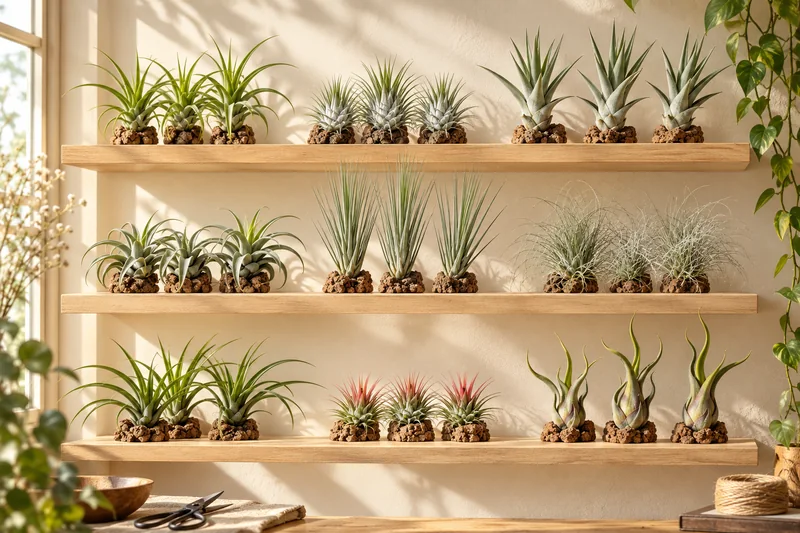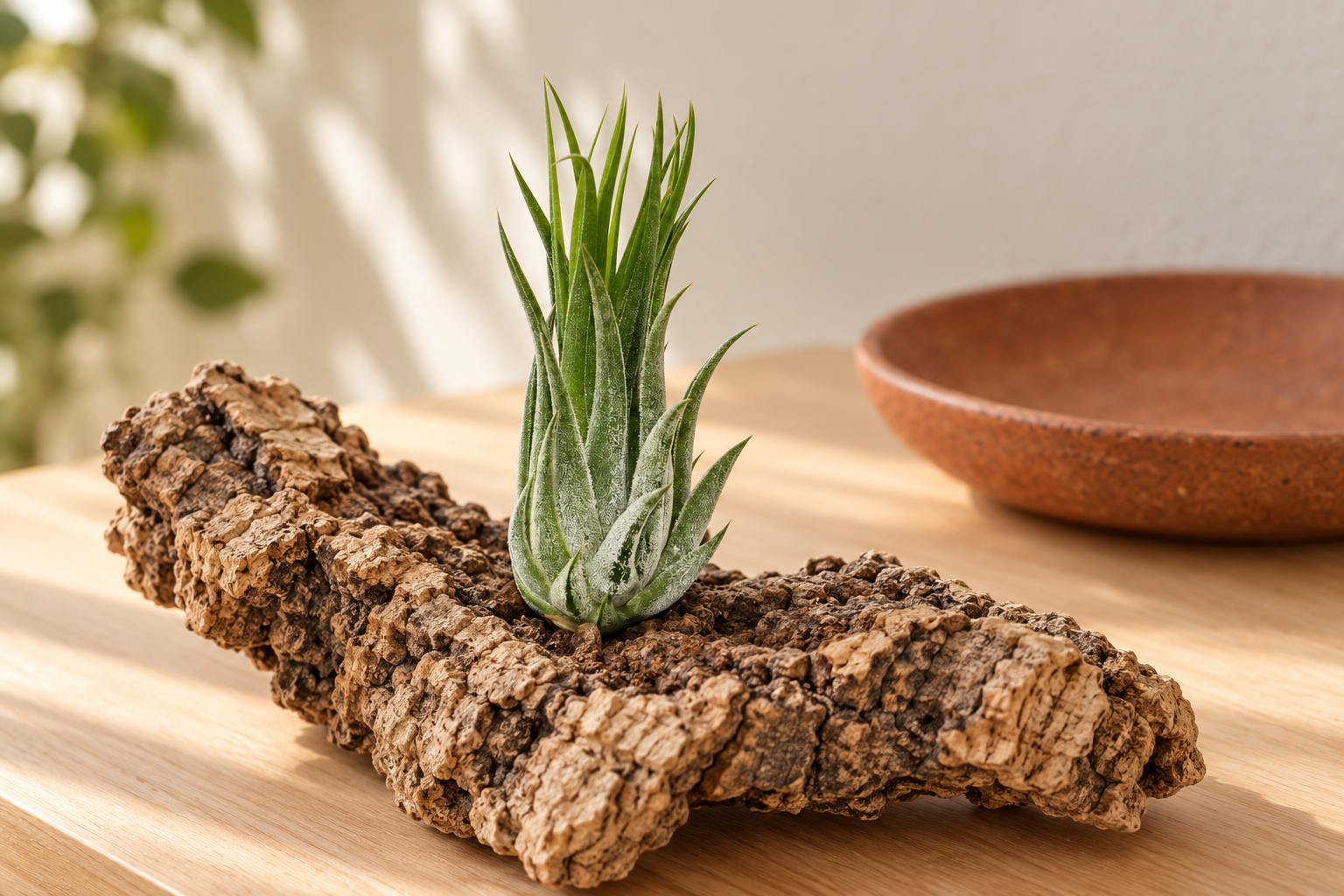
This plant at Exotenherz
Check the shop offer for current availability, price and what is included.
Product and delivery details are given in the individual offer.
Your care table
| Topic | What to do | Why it helps |
|---|---|---|
| Light | Choose a bright seat with filtered daylight. | The small rosette needs light, not a hot closed glass niche. |
| Water | Wet thoroughly or bathe suitably with room-temperature low-lime water. | Absorbing scales on leaves take up moisture. |
| Drying | Shake out excess carefully and let the rosette dry tilted downwards. | Water should not stand in tightly fitting leaf bases. |
| Support | Lay loosely and airily, keep removable for care. | Do not push the base into moist soil or wet moss. |
| Leaves | Do not rub off silvery scales. | The pale surface has an important function. |
| Nutrients | During growth, use suitable tillandsia fertiliser very sparingly according to label. | High concentrations are unnecessary for the small rosette. |
| Temperature | Keep warm enough, frost-free and without cold draughts. | Wet leaves must dry again in suitable conditions. |
| Offspring | Let side rosettes strengthen first. | Well-developed offsets continue the plant’s life cycle. |
Take the tillandsia off its support. Do not rub the leaves; preserve the delicate silvery scales.
Use low-lime water at room temperature. The care table explains whether thorough misting or a short soak is suitable.
Gently shake off the water. Tilt rosettes downwards, hang loose strands without bunching them together and allow them to dry with good airflow.
A narrow tuft with a silver surface
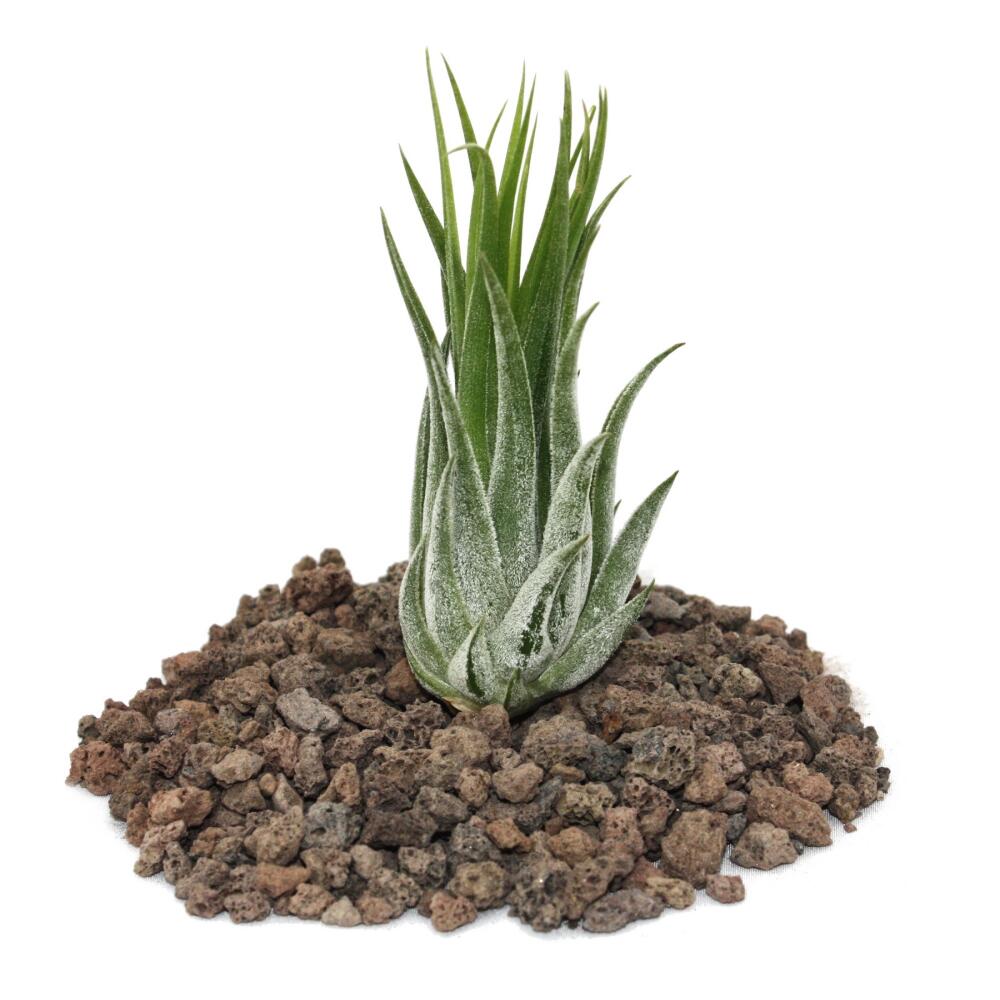
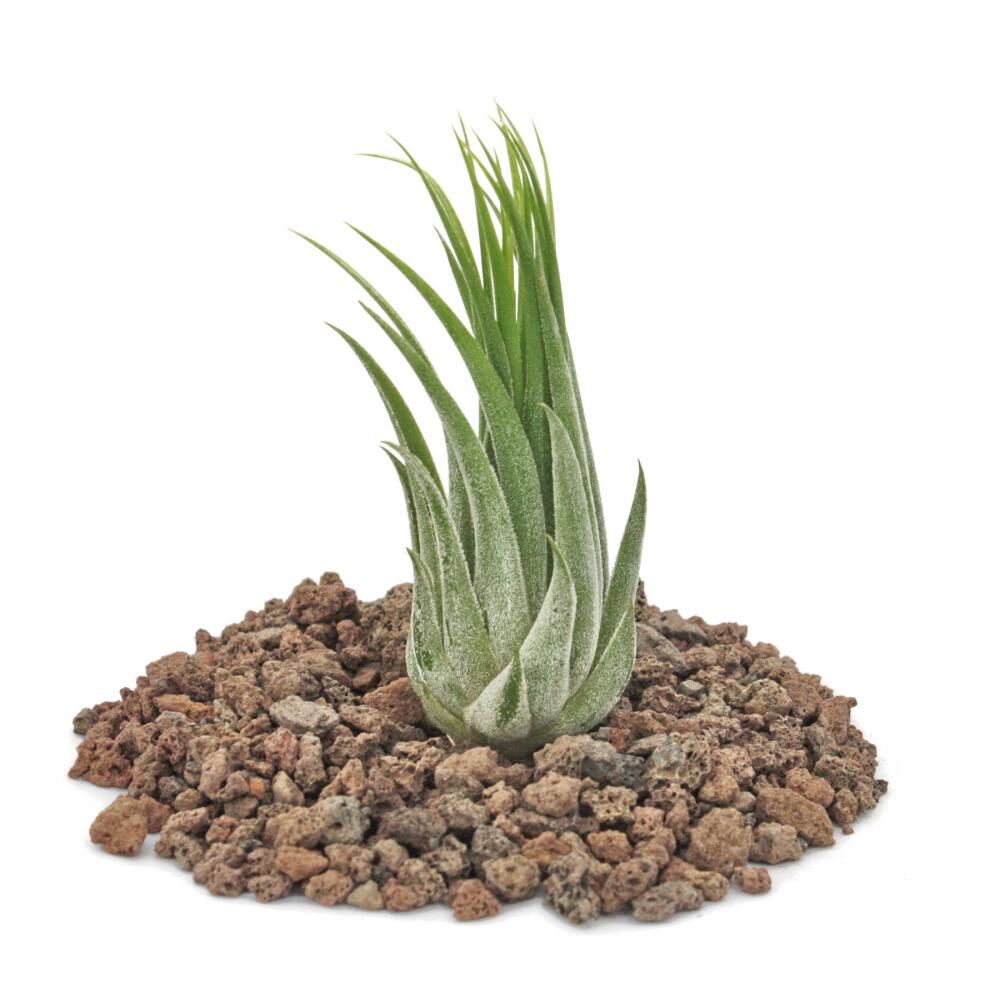
The original photograph shows a small upright rosette: narrow grey-green leaves stand closely together and end in fine tips. Their silvery coating comes from absorbing scales, not dust. The shop calls this plant Tillandsia scarposa. Specialist sources use scaposa; Kew lists Tillandsia scaposa as a synonym of Tillandsia kolbii. This name connection stays visible for finding it again. The plant is described as its own air plant, not simply a new pot size of another tillandsia. Its delicate silhouette is best seen standing freely.
Six to eight centimetres need no large stage
The offer is a loose plant roughly 6 to 8 cm in size. This measures the plant, not pot and decoration. A small dry cork piece can provide support; the rosette must not disappear into a constantly damp hollow. Gently pick it up beneath the base when unpacking rather than pulling individual tips. Accessibility matters more than spectacular attachment for its first position. If easily lifted for watering, fine leaves stay better protected during routine care.
Air and daylight belong together
Epiphytic tillandsias use other surfaces as seats. Their anchoring roots therefore need no ordinary soil pot. An open bright place with filtered daylight and air movement suits. A closed decorative glass changes air exchange and drying; a dark display cabinet is not automatically suitable despite attractive lighting. A position directly in heater airflow can also dry the little rosette severely. In warm summer, a sheltered outdoor position is possible after acclimatisation. Bring it in before cold nights and also check outside that wind does not carry the loose plant off its support.
Watering starts with reachable leaves
Remove the rosette from its seat for care. Wet it thoroughly with room-temperature low-lime water; a limited bath can be practical. Individual sprays do not replace adequate supply. Lime-rich water can leave deposits on the scaled surface. Warmth, air movement and humidity help determine when watering is needed again. Observe leaf firmness and development rather than copying a rigid rhythm. A little bowl in the scene remains decoration, not a permanently filled water reservoir beneath the plant. More frequent brief condition checks are useful in a warm room.
Drying is the second part of the same care
After watering, shake excess water out gently and hold the leaf opening tilted downwards. Then let it dry airily. Only afterwards return the rosette to its seat. Closely fitting lower leaf parts in particular should not trap permanent water remains. A dark softening base is not answered with more baths. Check air exchange, temperature and fastening together. Neither blow-dry the plant hot nor force leaves apart. An accessible dry support makes it easier to truly complete this important end of every watering.
Preserve silver scales and young side rosettes
Keep the fine leaf surface unpolished; rub across it as little as possible during care too. Use suitable tillandsia fertiliser very sparingly according to label only in growth. The plant may flower later, but flowering is not promised for loose delivery. A bromeliad rosette gradually ages after flowering while side rosettes may continue the group. Let young offsets grow on the mother first. Once strong enough, they can be separated gently. A small established group may also stay together while cared for airily and dried completely.
A winter position where care remains clear
Less light and cooler air can slow drying; dry heater air acts differently. Check the particular seat rather than blindly changing only water quantity. Keep frost-free and protected from cold draughts. Reduce nutrients with little growth. Look for irregular deposits or animals at the base without constantly moving leaves. Note in the plant book how you water and how the rosette dries afterwards. The decorative little tuft remains a plant whose needs you can genuinely understand.
One plant, several views

Good to know
Why do three names appear?
The shop uses scarposa. The specialist spelling scaposa is listed at Kew as a synonym of Tillandsia kolbii; search names remain visible.
Must I pot the tillandsia?
No. This loose epiphytic tillandsia is cared for airily without ordinary potting soil.
Are silver scales dust?
No. They belong to leaves and serve water uptake. Do not rub off or treat with leaf shine.
Are a few sprays enough?
Thorough suitable watering is necessary. Warmth and humidity determine need; the plant must dry well afterwards.
Why does it dry with its opening downwards?
This lets remaining water drain from tight leaf bases instead of standing in the rosette centre.
May I separate little offsets immediately?
Let them strengthen first. A sufficiently developed little group can also keep growing together.
Sources and editorial note
- Exotenherz: offer and original photographs (03.10.2026)
- Kew – Tillandsia kolbii and synonyms (03.10.2026)
- RHS – caring for air plants (03.10.2026)
- Clemson Extension – bromeliads and tillandsias (03.10.2026)
Shop offer, article number, GTIN, availability and original photographs checked directly on 02.10.2026; specialist acceptance 03.10.2026. Specialist sources read directly. Shop offer and both originals checked directly 03.10.2026. Kew Tillandsia kolbii profile read directly; synonyms scaposa and ionantha var. scaposa confirmed there. Shop spelling scarposa visibly retained. RHS air plants and Clemson bromeliads read fully directly; no tank-bromeliad rule transferred to loose tillandsia. No flower colour or exact final size invented. 6–8 cm means loose plant size. Comparison with complete published tillandsia-ionantha-guide and haworthiopsis-fasciata-guide.