
This plant at Exotenherz
Check the shop offer for current availability, price and what is included.
Check the shop for the price, current availability and what is included.
Your care table
| Topic | What to do | Why it helps |
|---|---|---|
| Light | Very bright to sunny; build sun gradually. | Strong growth needs sufficient brightness. |
| Water | Water after the root ball dries well. | Fleshy leaves hold reserves. |
| Rosette | Apply water directly to the soil. | Avoid water standing between leaves. |
| Compost | Well-drained mix loosened with mineral components. | Roots need air and reliable drainage. |
| Fertiliser | Moderately during growth following product instructions. | Pause during rest. |
| Winter | Bright and safely frost-free, with less water. | Potted roots are at greater risk than established ground-planted specimens. |
| Repotting | As needed in spring into a stable container. | Root development and compost structure decide. |
| Handling | Mind leaf margins; do not use as a home remedy. | The aloe offered is an ornamental plant. |
Check the compost and pot weight. The care table explains how far the compost may dry.
Water only when needed. The water should reach the root ball without spilling over the rim.
Remove surplus water from the saucer or cachepot. Then return the plant to a suitable position.
An aloe with its own growth form
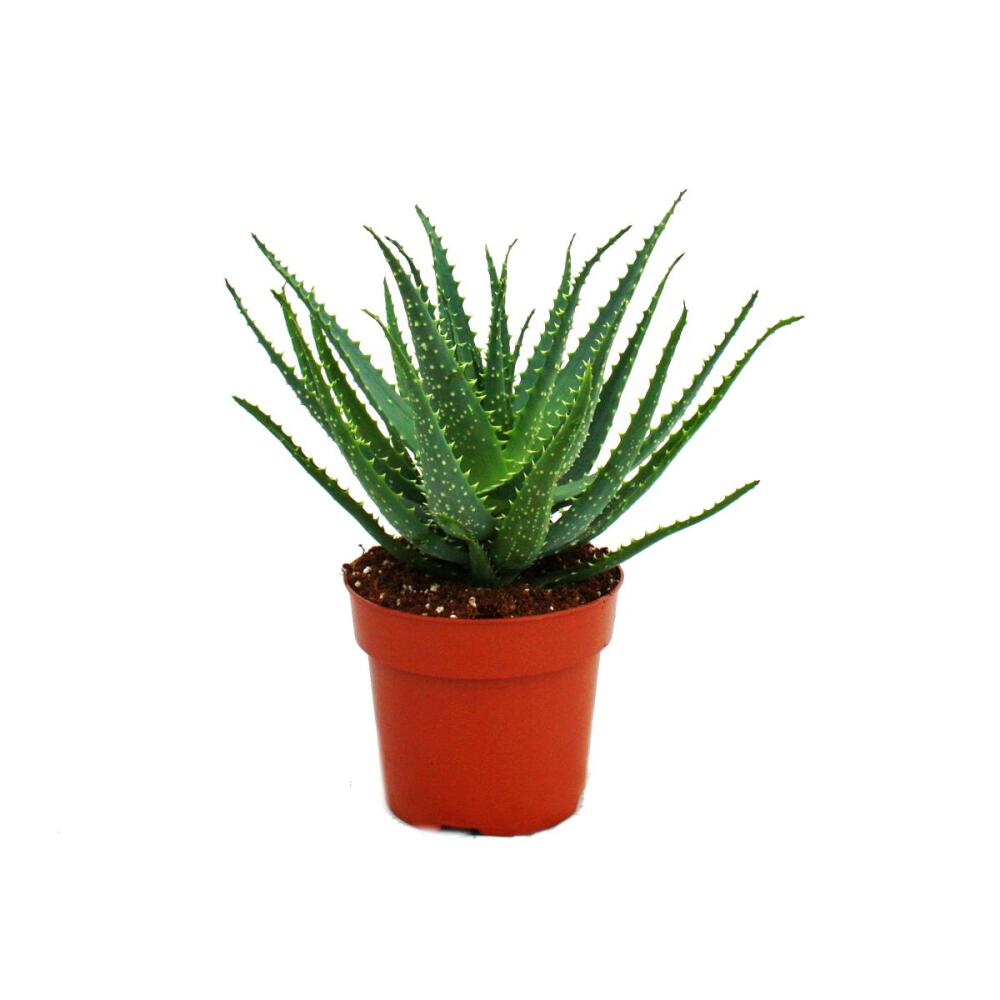
Aloe arborescens comes from southern Africa and belongs to Asphodelaceae. Pointed fleshy leaves form rosettes and carry prominent marginal teeth. Over years the species may branch and develop a strong shrubby structure. The name tree aloe describes this later possibility, not the delivery state of every young plant. The plant offered initially shows a compact rosette structure. It is also not automatically equivalent to Aloe vera. Names and uses of different aloe species must not be freely interchanged.
A manageable specimen plant to start with
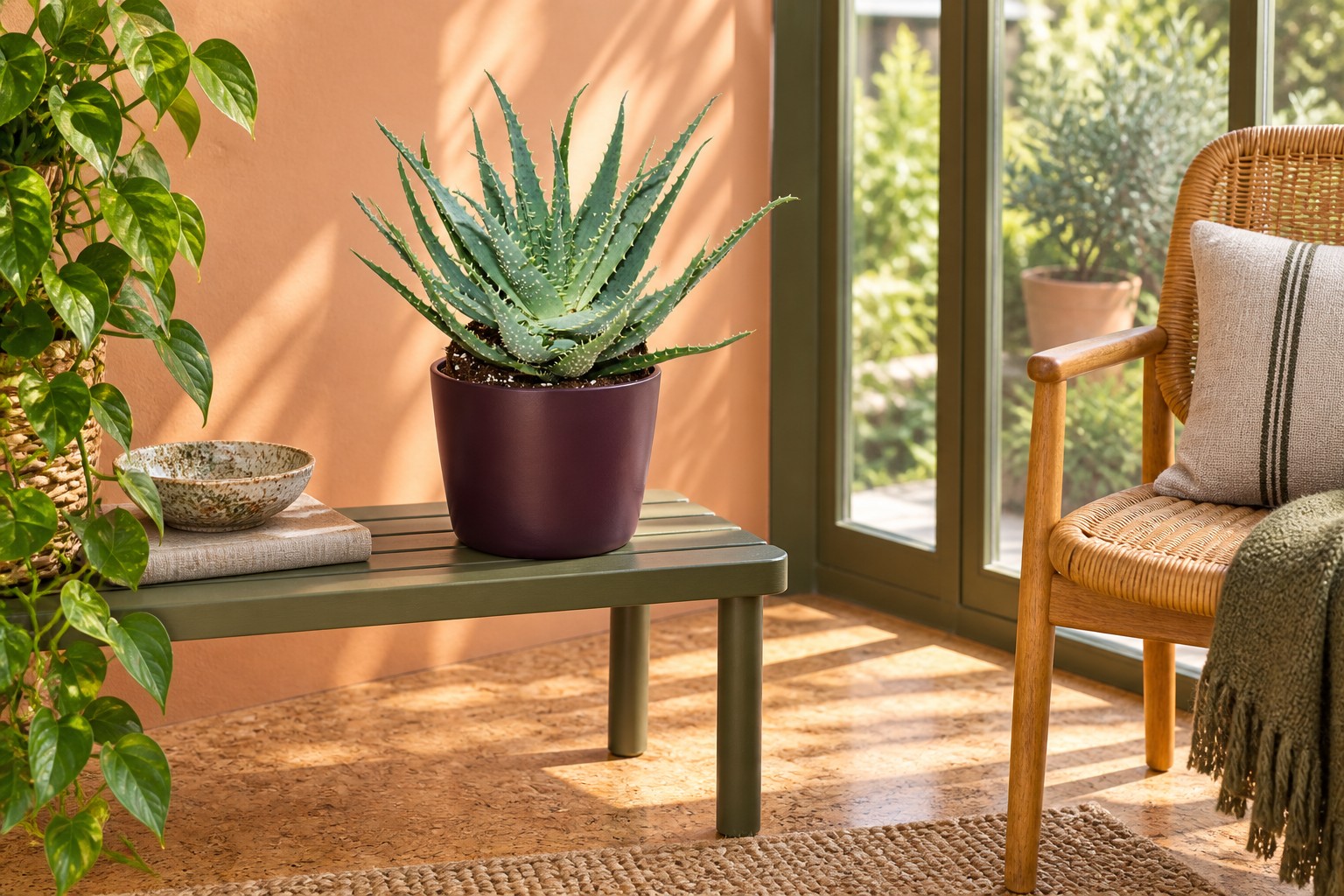
The offer states a 19 cm pot and about 35 to 45 cm overall height. This needs a stable well-lit position with space around leaves. A low bright side table or sheltered sunny terrace in summer may display its form. Toothed margins are less suitably placed beside narrow walking paths. Do not pull individual leaves after unpacking. Check root ball and stability. Natural leaf number and arrangement may differ from the photograph without making the plant faulty.
Gradually make sunlight part of everyday life
Plenty of light matters for a strong tree aloe. Build stronger direct sun gradually, especially after transport or a darker winter phase. A sheltered outdoor stay is possible in summer. Avoid prolonged rain, a permanently full saucer and suddenly cold nights. Bring it inside in time and choose a bright frost-free winter position. Frost tolerance of individual established ground-planted specimens in mild regions is no reliable guarantee for a 19 cm pot freezing through on a German balcony.
Supply the root ball rather than flood the leaves
During growth, water after good drying. Water should reach the roots and then drain. The rosette centre does not need filling with water. Check especially in decorative cover pots whether liquid remains at the bottom. A well-drained mix loosened with mineral components helps avoid prolonged wetness. Wrinkled foliage may indicate missing water, but damaged roots may give similar signals. Check the root ball first before watering more. In a low-light winter with little growth, supply much more sparingly.
Repot and support shoots developing later
Feed moderately during active growth following product instructions and pause at rest. Spring repotting is sensible if root development or compost structure requires it, not simply because a calendar page has changed. The new container needs drainage and sufficient stability. Healthy side shoots may later be used for propagation when they can be separated appropriately. The young rosette need not be divided early for this. Clean tools, gentle working and injuries healing dry matter more than the largest possible number of new plants.
Ornamental value without healing promises
Older strong plants may develop striking reddish to orange flower spikes. Their formation depends on age and cultivation and is not part of guaranteed delivery contents. Inspect leaf bases for mealybugs and the base for soft dark changes. Remove dry old leaves gently if needed. Tree aloe remains an ornamental here. Reports of traditional uses are no instruction to eat leaves, extract juice or undertake home treatments. Healthy growth and the living rosette form already offer enough reasons to value this aloe.
One plant, several views

Good to know
Will an aloe with a tree trunk be delivered?
The offer describes about 35 to 45 cm overall height in a 19 cm pot. Later shrubby structure develops only with growth.
Is Aloe arborescens the same as Aloe vera?
No. They are different species. Names and uses must not be equated.
Can it stand outdoors in summer?
Yes, after gradual acclimatisation to sun and protected from prolonged rain. Bring inside before cold in time.
Must it be repotted every spring?
No. Repotting is sensible when roots use the space or compost loses structure.
Sources and editorial note
Sources checked: 15 September 2026. Product information and delivery contents follow the linked shop offer. Care has been checked against the stated specialist sources and remains subject to plant condition, position and season.
