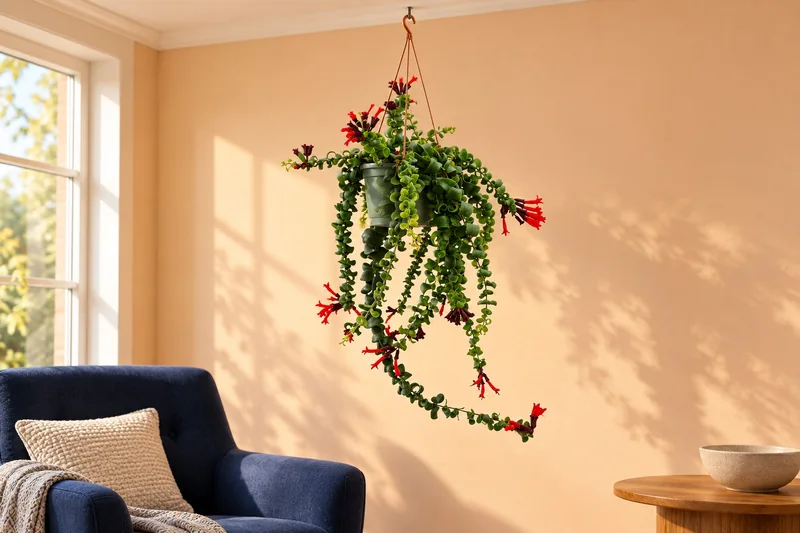
This plant at Exotenherz
Check the shop offer for current availability, price and what is included.
Check the shop for the price, current availability and what is included.
Your care table
| Topic | What to do | Why it helps |
|---|---|---|
| Light | Bright, filtered and without hot direct sun. | Pale leaf areas need protection while still receiving enough light. |
| Water | Let upper compost dry slightly; keep the root ball moderately moist. | Persistent wetness is as unfavourable as repeated complete drying. |
| Drainage | Let water drain after watering. | Roots continue to need air. |
| Position | Warm without strong temperature changes. | Draughts and radiator proximity can encourage leaf drop. |
| Compost | Choose a loose humus-rich structurally stable mix. | Epiphytic roots are unsuited to compact heavy compost. |
| Feed | Sparingly during active growth. | Overfeeding does not improve leaf pattern. |
| Pruning | Selectively remove weak or obstructive stems only. | Healthy trailing stems and buds should be able to keep growing. |
| Inspection | Regularly check leaf bases for pests. | Dense stems can hide aphids and mealybugs. |
Check the compost and pot weight. The care table explains how far the compost may dry.
Water only when needed. The water should reach the root ball without spilling over the rim.
Remove surplus water from the saucer or cachepot. Then return the plant to a suitable position.
The trade name and its botanical link
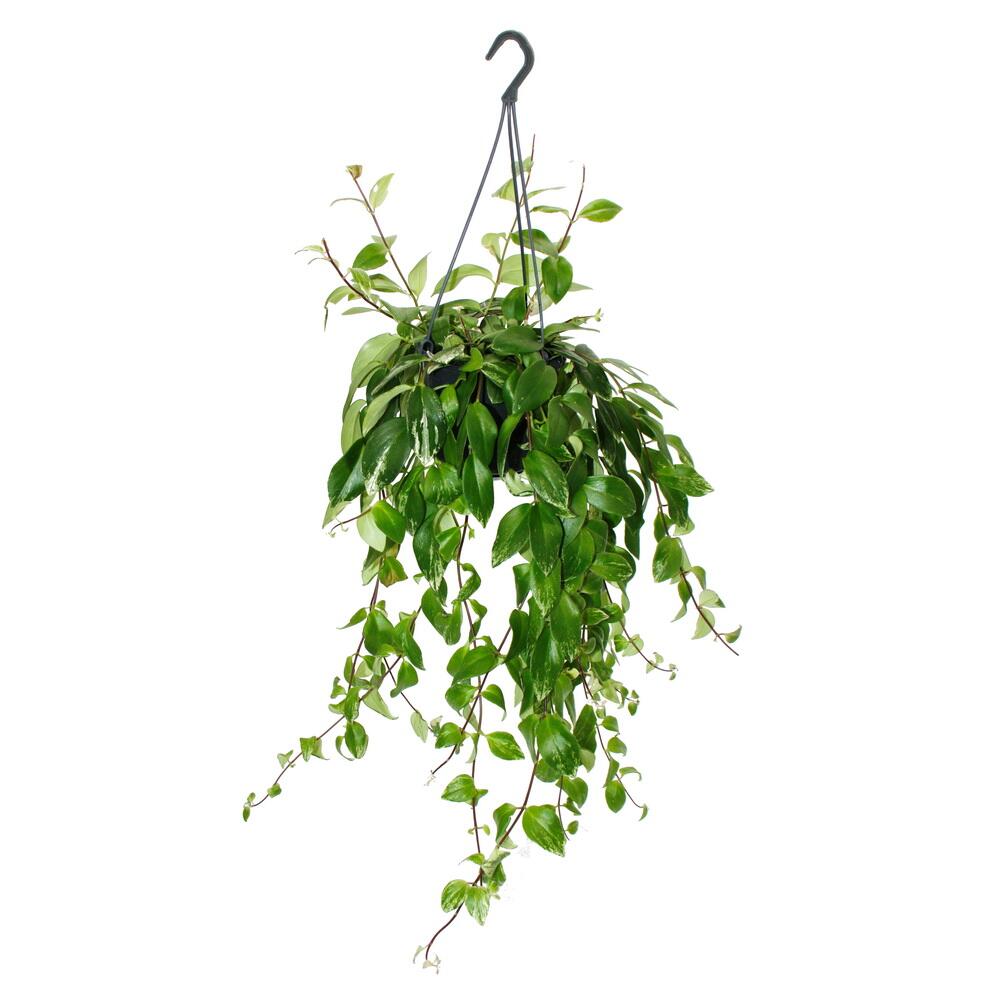
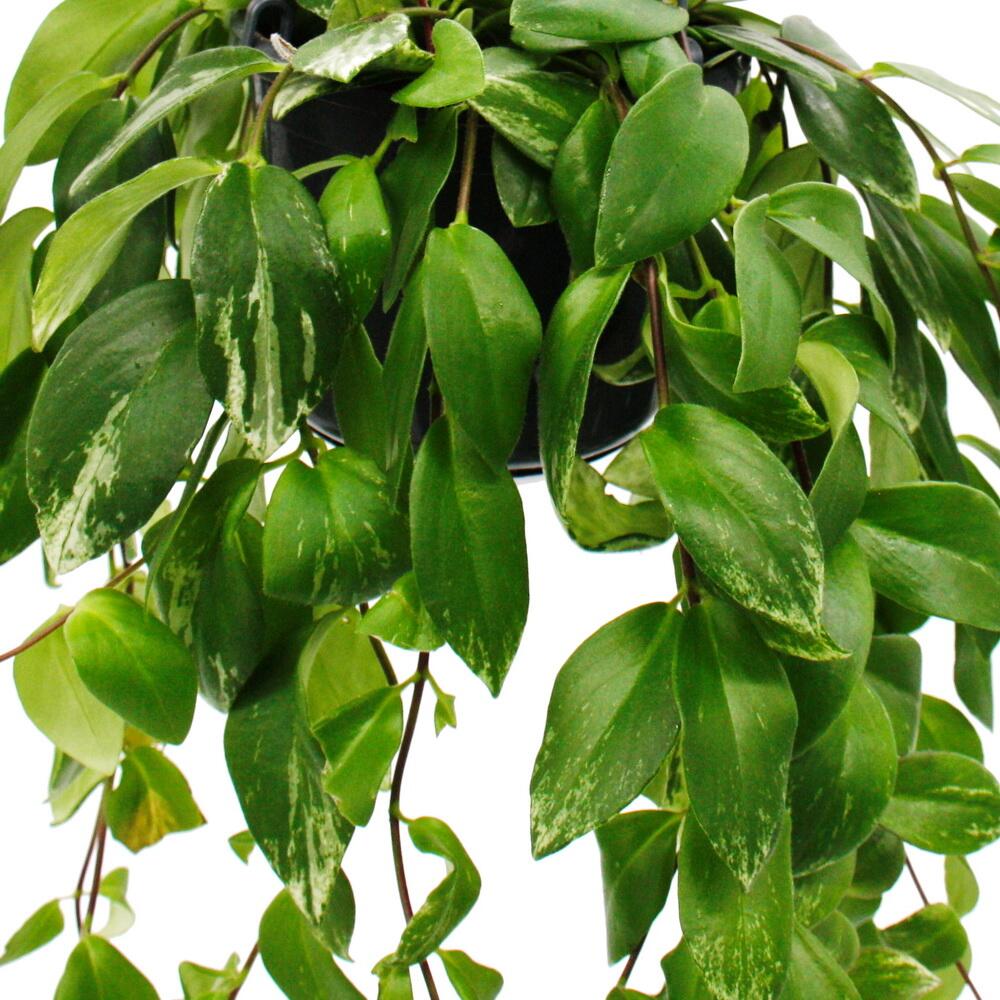
The RHS lists Aeschynanthus lobbianus as a synonym of Aeschynanthus pulcher. The offer calls a variegated commercial form Variegatus. Its oval pointed leaves carry green surfaces with irregular cream edges or patches. Not every leaf must show the same proportions. The plant belongs to the Gesneriaceae and is readily distinguished from Rasta’s very differently shaped leaves and Pink Polka’s green appearance.
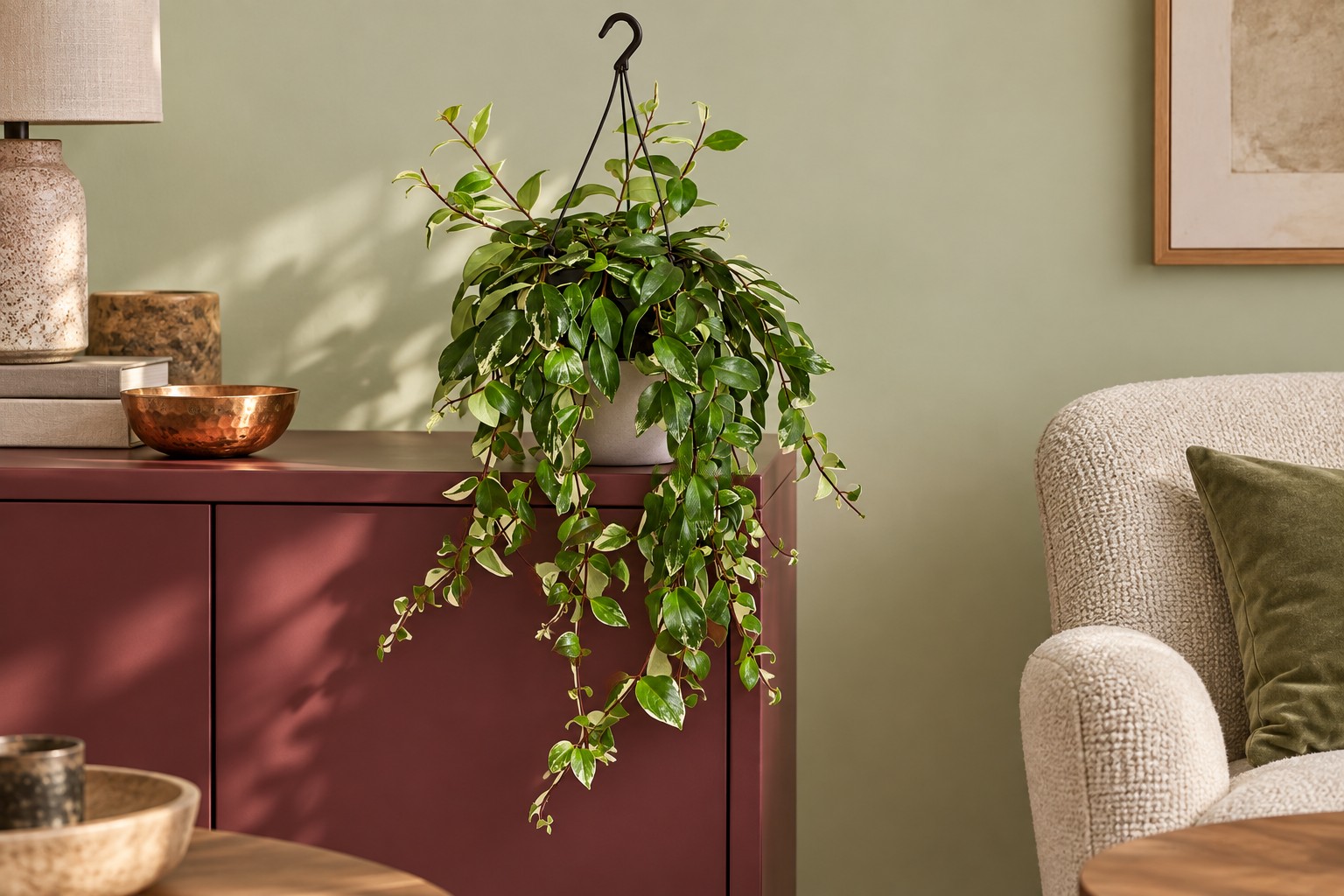
A living transition from a furniture edge into the room
The shop states a 15 cm hanging pot and approximately 50 to 60 cm total length. A secure hanging pot or bright raised position lets stems trail freely. The scene shows such placement at a furniture edge. Water must be safely caught beneath the pot without leaving the plant standing in it. Do not trap trailing stems between furniture and wall. Natural leaf pattern and stem number may differ from the photograph; particular decoration is not automatically included in delivery.
Pale areas need balanced light
A bright position with filtered light supports dense growth. Hot direct sun may particularly stress paler leaf areas. At the same time, deep darkness is no good compromise for a variegated plant. Settle it slowly after shipping and choose a position as consistent as possible. For warm cultivation, protection from cold draughts and distance from strong radiator heat make sense. Suitable positioning supports leaf pattern, but feed cannot set it at will on every leaf.
Grow moderately moist and let excess drain
Check upper compost before watering. Once it dries a little, supply the root ball then let drain. Even measured moisture suits growth. In winter with less light and reduced new growth, demand falls; water correspondingly less often. Small daily sips or spraying alone cannot replace a well-watered root ball. With unusual leaf drop, consider both dryness and wet roots as well as temperature changes.
Repot and prune as little as necessary
A loose humus-rich mix with stable coarse components suits life as an epiphyte. Repot only slightly larger when needed and treat the root ball gently. Feed with restraint during active growth. Overly long or weak stems can be shortened; healthy trailing stems need not continually be brought to a fixed length. Watch wholly green new shoots and address them selectively if retaining variegation is desired, without heavily cutting back the entire plant.
Support flowers and healthy new stems
The species group can produce striking tubular flowers. Whether and when the offered young variegated plant flowers depends on its conditions. Avoid needless moves and heavy cutting during bud development. Suitable healthy stem cuttings can be used for propagation. Check between leaves for aphids and mealybugs and assess new abnormalities early. Humid air helps, but continuously wet foliage in still air is not desirable.
One plant, several views
Good to know
Why is it sometimes called lobbianus and sometimes pulcher?
The RHS lists lobbianus as a synonym of pulcher. Variegatus denotes the variegated commercial form here.
Does every leaf have equal amounts of cream?
No. Proportion and distribution of pale areas can vary within the same plant.
Can it stand on a tall cupboard?
Yes, if enough filtered light reaches it, stems trail freely and water drains safely.
Does every delivery flower?
Flowering is not guaranteed. It depends on developmental stage and growing conditions.
Sources and editorial note
- Product and delivery contents: Exotenherz
- Royal Horticultural Society: plant and care knowledge
- The Gesneriad Society: genus knowledge and cultivation
Sources checked: 15 September 2026. Product information and delivery contents follow the linked shop offer. Care has been checked against the stated specialist sources and remains subject to plant condition, position and season.