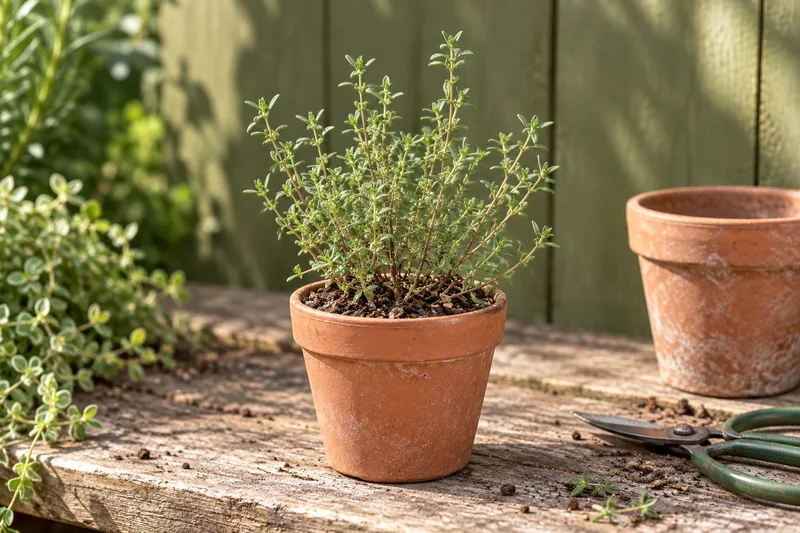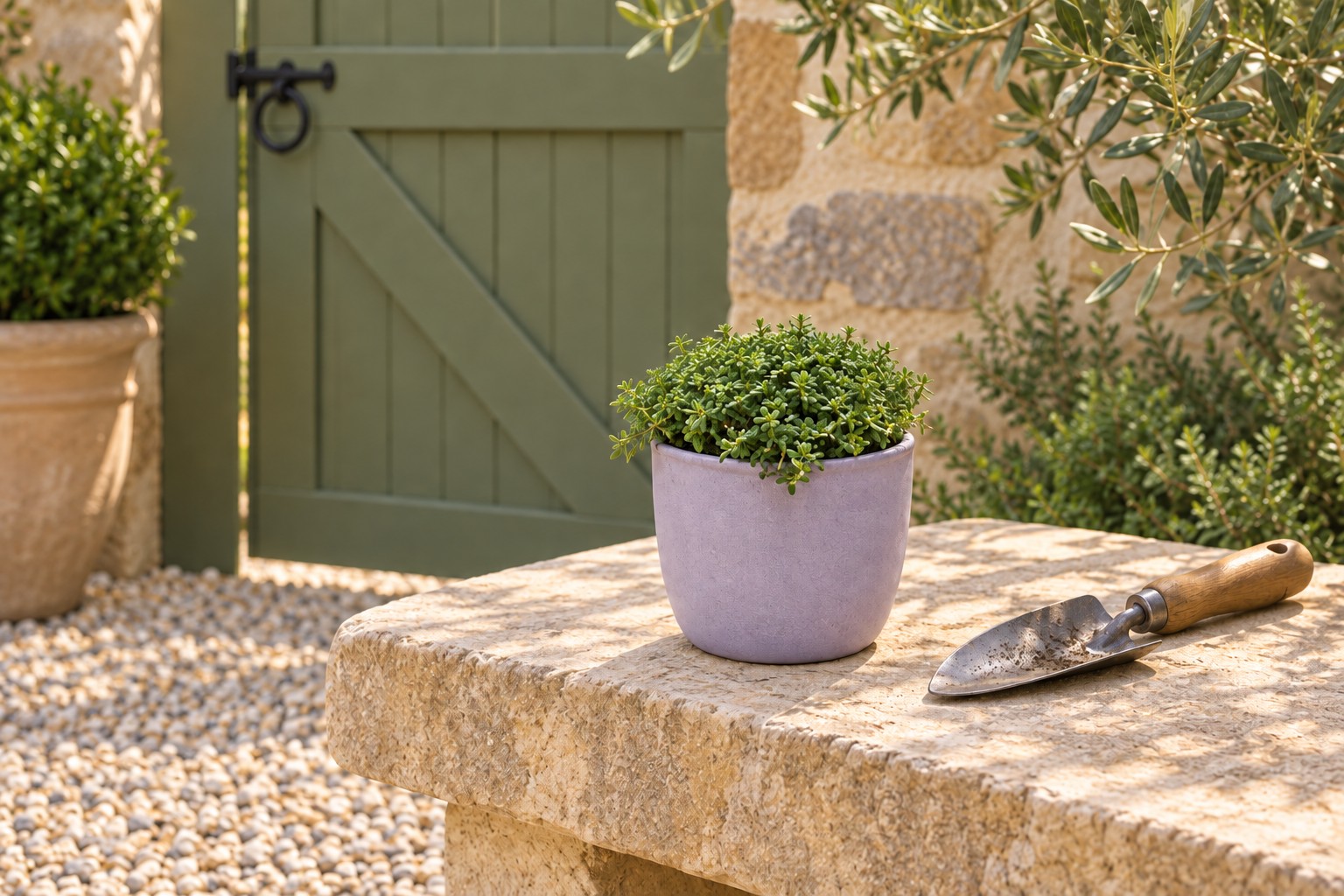
This plant at Exotenherz
Check the shop offer for current availability, price and what is included.
Check the shop for the price, current availability and what is included.
Your care table
| Topic | What to do | Why it helps |
|---|---|---|
| Position | Plant sunny and as open as possible. | Insufficient light loosens cushion growth. |
| Soil | Lean, free-draining and preferably neutral to lime-rich. | Constantly moist heavy soil suits roots poorly. |
| Establishment | Initially check and supply small root balls regularly. | Drought tolerance requires good establishment. |
| Watering | Later allow drying between waterings. | Constant moisture favours cushion damage. |
| Fertiliser | Give sparingly only for actual need. | Strong soft growth reduces compact form. |
| Pruning | Trim only lightly after flowering. | Bare old wood does not always regrow reliably. |
| Winter | Avoid winter wet and shelter small pots. | Frost and a wet root ball act together. |
| Wear | Do not plan as permanently walkable lawn. | Delicate shoots cannot withstand constant use. |
Check the compost and pot weight. The care table explains how far the compost may dry.
Water only when needed. The water should reach the root ball without spilling over the rim.
Remove surplus water from the saucer or cachepot. Then return the plant to a suitable position.
A low thyme with white flowers
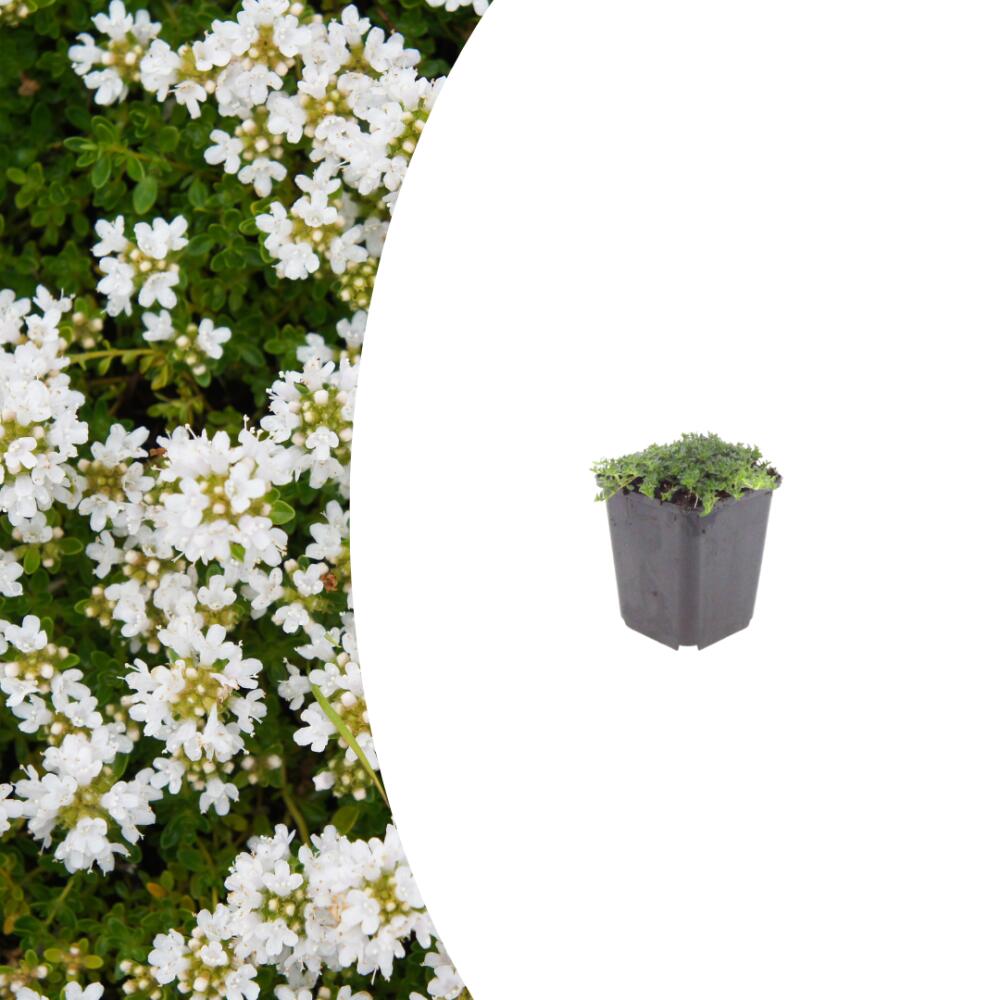
A white-flowering creeping thyme is offered under Thymus praecox Albiflorus. The RHS lists the name as a synonym with other horticultural placements. For care here, the low-growing small-leaved thyme form is decisive. Shoots may lie over the ground and gradually form small dense areas. White flowers belong to the seasonal summer appearance; abundantly flowering delivery in early spring is not assumed.
The offer contains selectable plant sets
Sets of 6, 12, 24, 48 or 60 plants in 9 cm pots can be selected in the shop. The scene shows only one young plant to illustrate proportions. It does not represent the entire delivery contents of a set. The shop’s approximately 10 to 25 cm is size guidance; a young cushion may initially be very low. Before planting, distribute pots across the area and consider later sideways spread.
Sun above, loose soil beneath roots
A sunny warm site with free-draining sandy or stony soil suits well. Neutral to lime-rich soil is generally more suitable than acidic constantly moist soil. A shallow hollow in heavy clay cannot be turned into a good site simply through gravel at the bottom. What matters is that water drains from the whole root area. In a container, choose structurally stable free-draining mix and unobstructed drainage holes.
Drought tolerance comes after establishment
Freshly planted small root balls must not immediately dry completely. Water in and check according to weather in the first weeks. Once roots explore surrounding soil, drier periods are better tolerated. The water reserve remains limited in a pot. Water directly onto soil, drain excess and do not keep the cushion permanently wet. Generous nitrogen-rich feeding encourages soft loose growth and is usually unnecessary for this undemanding plant.
Gently keep shape after flowering
A light trim of spent tips may support compact form. Do not cut deeply into old bare woody areas: reliable regrowth is not guaranteed there. Suitable divisions or cuttings may propagate it; seedlings need not reproduce the same white garden form. An established cushion may tolerate occasional careful stepping, but is no robust lawn for regular playing or foot traffic.
Watch moisture and the pot in winter
Creeping thyme is an outdoor plant. Overwintering nevertheless depends strongly on soil wetness, site and root space. Shelter small pots with reliable drainage. A wet dense packet of leaves on the cushion is no good winter covering. Carefully remove dry shoot parts in spring and observe which areas regrow. Brown bare patches may result from age, wetness or wear; check the cause before giving more water or fertiliser.
One plant, several views
Good to know
Will I receive one or several plants?
The offer contains selectable sets of 6 to 60 plants. The exact number depends on your shop selection.
Is delivery already flowering white?
That depends on season and development stage. The scene deliberately shows a young green plant.
Can it replace a playing lawn?
No. A cushion may tolerate occasional light contact but is no hard-wearing substitute for regularly used lawn.
Why is the cushion brown inside?
Old woody areas, excessive moisture or wear are possible. Check soil and living shoot tips before changing care.
Sources and editorial note
Sources checked: 15 September 2026. Product information and delivery contents follow the linked shop offer. Care has been checked against the stated specialist sources and remains subject to plant condition, position and season.