
This plant at Exotenherz
Check the shop offer for current availability, price and what is included.
Check the shop for the price, current availability and what is included.
Your care table
| Topic | What to do | Why it helps |
|---|---|---|
| Light | Bright to lightly shaded, without scorching midday sun. | A dark room still provides too little light. |
| Water | Let the root ball dry well between waterings. | Storage leaves bridge dry intervals. |
| Compost | Well-drained succulent mix opened with mineral components. | Protect root space from persistent wetness. |
| Rosette | Do not leave water standing between leaves permanently. | Sheltered leaf bases should dry again. |
| Fertiliser | Weakly dosed during growth following product instructions. | Give no further nutrition during rest. |
| Winter | Bright, frost-free and watered more sparingly. | Light and growth determine demand. |
| Markings | Do not scrape or polish raised white bands. | They belong to the natural leaf surface. |
| Checks | Inspect additional cotton-like nests at the base. | Distinguish mealybugs from regular leaf markings. |
Check the compost and pot weight. The care table explains how far the compost may dry.
Water only when needed. The water should reach the root ball without spilling over the rim.
Remove surplus water from the saucer or cachepot. Then return the plant to a suitable position.
The stripes sit on the surface
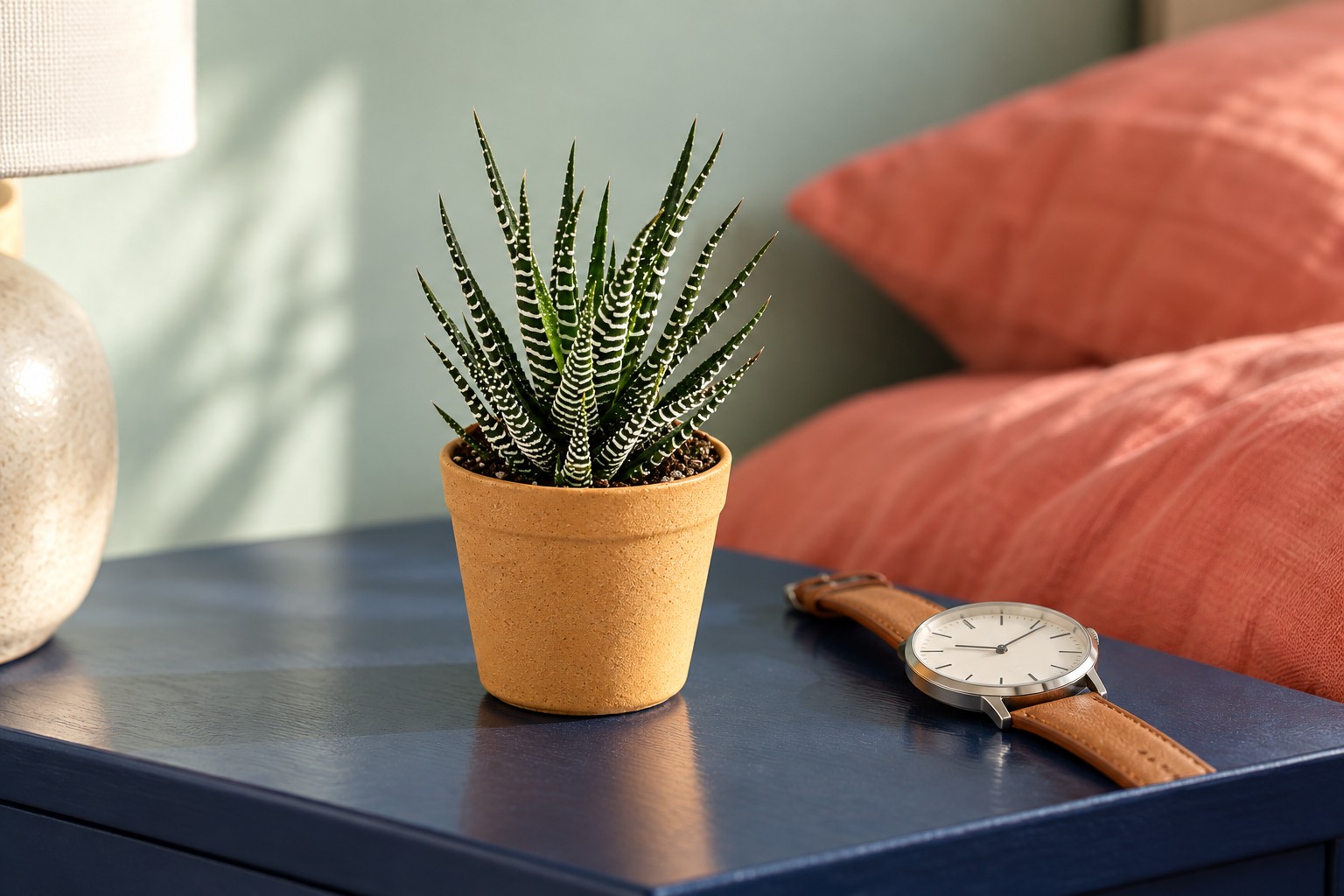
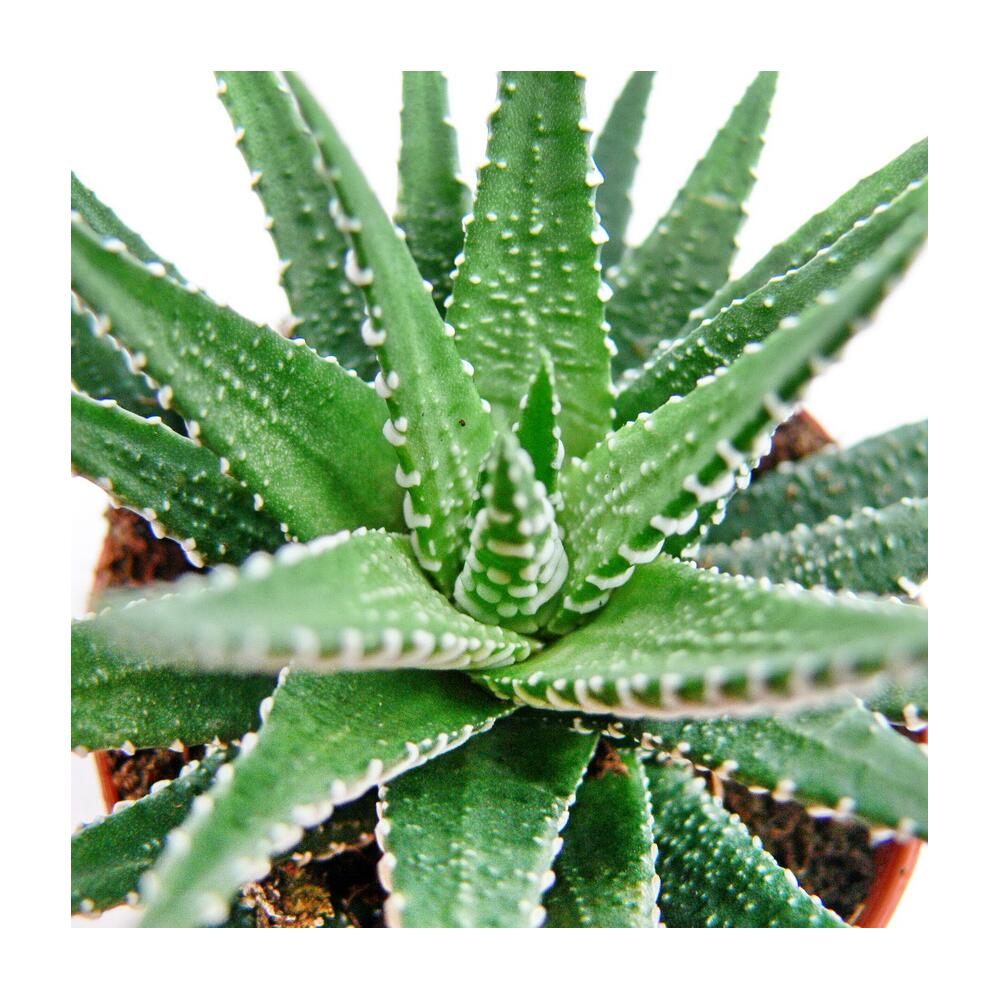
White markings consist of raised structures on dark green succulent leaves. Together they form a small pointed-leaved rosette. It belongs to Haworthiopsis, a genus formerly included within Haworthia. The shop offer is called Haworthia fasciata. However, this trade name is also often used for similar-looking zebra haworthias. No final species identification is therefore claimed here from the sales name alone. Care follows the visible rosette type and verified cultivation needs of this plant group.
Small, but with remarkably clear markings
The stated size is a 5.5 cm pot and approximately 6 to 8 cm overall height, at an age of about two years. This is a young miniature, not a large aloe. Firm leaf arrangement makes it a calm companion on a bright table or shelf. Ensure pointed leaves do not project into walking or reaching paths. Side offsets may develop over time. A freshly bought small pot need not be divided immediately for this. First get to know its growth and water needs in your own position.
Brightness without constant hot sunlight
A bright to lightly shaded position is suitable. Needing less light than many sunny desert cacti does not mean a windowless room. Persistently dark cultivation may loosen and weaken growth. Avoid fierce midday sun behind glass, especially after a move. For a summer place outdoors, begin sheltered and lightly shaded. Reddish or brownish colour changes may relate to light and stress. Check position before treating every colour change as disease. Burns or soft areas require a closer look.
A few clear waterings are better than daily drops
Water only when the root ball has dried well. Then water should run through the compost and all surplus must be removed. A well-drained succulent mix and a pot with drainage make care easier. Avoid water sitting long in the rosette centre. Intervals lengthen in cooler weather or slower growth. Nevertheless, a small pot may dry quickly in a warm bright position. Do not leave the plant unchecked for weeks. Leaf firmness, soil and pot weight together give more information than a rigid calendar rule.
Distinguish stripes from pests
Regular recurring raised white dots and bands belong to the plant and must not be scraped off. Mealybugs instead form additional irregular cotton-like clusters, often at sheltered junctions. Occasionally check the rosette base without forcing healthy leaves apart. Repot only as needed into a moderately larger container. During active growth, give weakly dosed fertiliser following product instructions; pause at rest. Remove dry outer leaves only when they come away easily. A healthy small rosette gains more from suitable cultivation than frequent cleaning or cutting.
A naming detail for curious plant enthusiasts
In Haworthiopsis fasciata, the upper inner leaf surface is typically smooth. H. attenuata also carries raised dots there. This distinction explains why plants with similar zebra stripes appear under different names. Reliable identification of this particular offer remains open without further checking; search names are nevertheless considered. Keep bright and frost-free in winter, watering less during reduced growth. Strong offsets may later be removed with their own roots. Separate gently and only once the mother plant has developed sufficiently.
One plant, several views

Good to know
Are the white markings a fungus?
Regular raised stripes belong to the plant. New irregular cotton-like clusters should instead be checked.
Is the offer certainly Haworthiopsis fasciata?
The shop uses that name. Zebra haworthias are often confused, however; no final species identification is made here from the offer alone.
Can it stand entirely without daylight?
No. A bright to lightly shaded position is suitable, but not a permanently dark room.
Must I remove the small offsets?
No. They may initially grow together. Later separation is possible with strong rooted offsets.
Sources and editorial note
- Product and delivery contents: Exotenherz
- SANBI PlantZAfrica: plant profile and cultivation
- NC State Extension: plant profile
Sources checked: 15 September 2026. Product information and delivery contents follow the linked shop offer. Care has been checked against the stated specialist sources and remains subject to plant condition, position and season.
