This plant at Exotenherz
Check the shop offer for current availability, price and what is included.
Check the selected shop offer for price, availability and delivery contents.
Your care table
| Topic | What to do | Why it helps |
|---|---|---|
| Light | Bright filtered daylight reaching the entire crown. | Pots above a window can remain dark. |
| Warmth | Warm consistent position without cold draughts or hot heater airflow. | Delicate tips respond to direct air currents. |
| Moisture check | Compare upper layer and pot weight according to position. | These signs help assess actual root-ball needs. |
| Watering | Apply water evenly as needed after the surface dries somewhat. | Avoid prolonged complete dryness and constantly wet substrate. |
| Drainage | Remove the hanging pot safely, water and drain fully. | This protects roots, furniture and floor. |
| Substrate | Loose draining mix; only a suitably larger pot when necessary. | A large wet reserve makes moisture harder to control. |
| Feeding | Modest label-based feeding during new growth. | Nutrition accompanies growth without forcing flowers. |
| Pruning | Cleanly shorten weak or awkward shoots moderately. | Retain healthy parts and prevent shoots catching. |
| Checking | Inspect leaf undersides, nodes and hook. | Pests and mechanical damage are noticed early. |
Check the compost and pot weight. The care table explains how far the compost may dry.
Water only when needed. The water should reach the root ball without spilling over the rim.
Remove surplus water from the saucer or cachepot. Then return the plant to a suitable position.
Pale edges on narrow leaf pairs
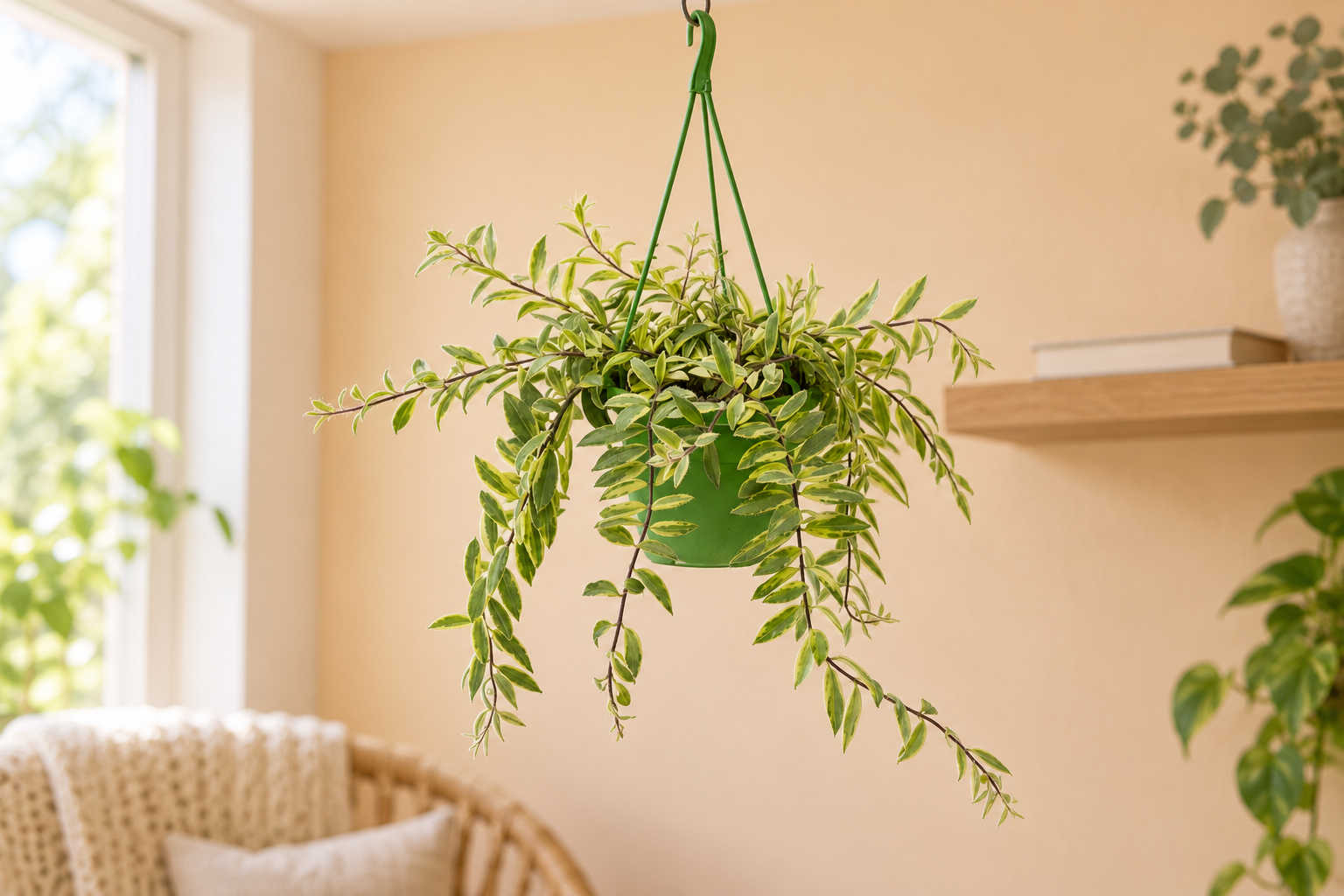
Bicolor has a light, finely articulated appearance. Narrow pointed pairs follow thin reddish-brown stems. Grey-green leaf centres have irregular cream-yellow margins, with some paler patches reaching inward too. Close viewing reveals fine hairs along stems and edges. This foliage looks less glossy than that of some broad-leaved lipstick plants. Short upright and trailing shoots make a loose young crown. A calm pale wall brings out the contrasts. Keep a distance from doors, curtains and regularly used shelves: fragile tips can catch on them.
Understand Bicolor as a particular trade form
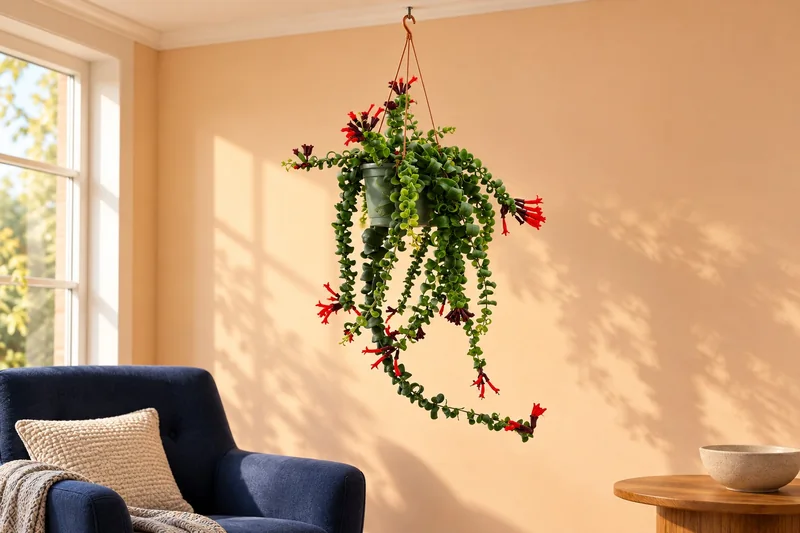
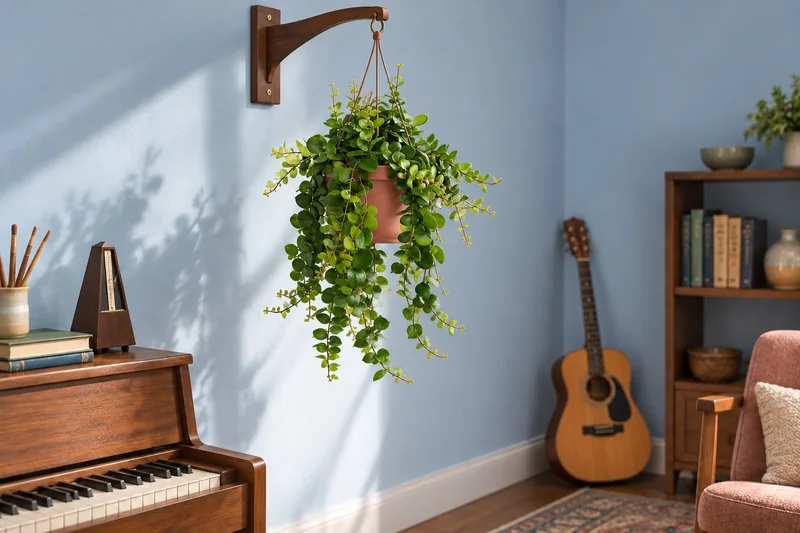
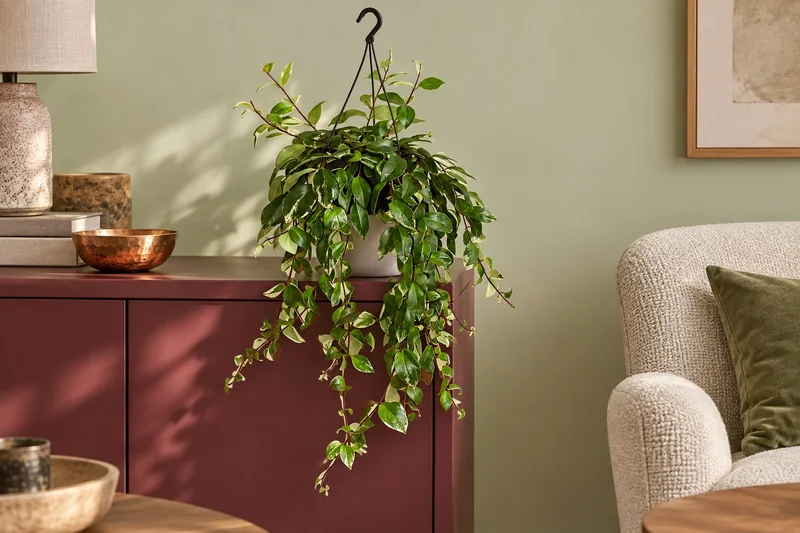
The shop names the plant Aeschynanthus Bicolor, a selected named variegated form with narrow cream-edged foliage. No additional wild species or breeder lineage is established from that name here. The offer specifies a fourteen-centimetre hanging pot and approximately twenty-five centimetres overall height excluding the hanger, expressly without buds or flowers. This portrait therefore concerns our foliage. Growth lengthens its outline. Chair, wall and shelf in the AI scene are decoration. The detail view enlarges leaves without representing a second delivery size.
A bright position for the entire pot
Choose a warm place with plenty of filtered daylight. High hanging pots can be dark above a window or behind curtains. Check light at the crown and pot rim, not just on lower shoots. Shield from direct hot summer sun without moving into a dark corner. Secure the hook for the weight of a freshly watered pot. An appropriate temporary watering bowl protects furniture and floor. Hanging plants can also catch cold ventilation air or hot heater airflow. Keep a consistent position and watch new leaf pairs.
Check root-ball moisture rather than the calendar
Remove or hold the pot by its container, never the thin branches. Compare the upper layer and pot weight with their state after thorough watering. A slightly dried surface and lighter pot indicate a need to assess. Avoid both prolonged complete drying of the root ball and constantly wet substrate. Apply room-temperature water evenly when needed, then let surplus drain freely. Light, warmth, foliage mass and mixture change drying speed; the weekday does not decide. Limp foliage does not automatically mean more water: inspect whether the root ball is dry or already moist first.
Preserve an airy root zone and free drainage
Use a loose, well-drained mix. Keep holes free and empty water standing in any outer container. Compacted persistently wet substrate can give uneven moisture. Repot gently only when roots have actually filled the pot or mixture structure deteriorates, preferably with active roots. Choose a suitably slightly larger size and loosen the root ball without tearing fine live roots. A large wet substrate reserve offers no advantage. New leaf pairs at tips show active growth; modest houseplant feeding according to the label may accompany it. Extra food replaces neither light nor drainage.
Accompany young shoots and wait for a possible display
This young plant is not yet a finished curtain of long vines. Let it develop undisturbed, avoiding shoots trapped in the hanger or pulled against walls and shelves. Weak or inconveniently long branches can be shortened cleanly and moderately while retaining healthy parts. The genus can flower, but no date or particular appearance is promised for this budless offer. In dimmer months evaporation decreases: adjust water to actual root-ball checks. Available material does not justify automatically cooling this form.
Inspect the fine leaf bases attentively
Changes can be subtle between small pairs. Occasionally inspect undersides, nodes and pot rim. Cotton-like nests or new sticky patches call for closer pest checks. Normal variegated cream differs from new dry brown areas, which need assessment alongside position and moisture. Avoid leaving foliage wet in cool still air. Misting does not replace root watering. Hang securely again after checks with enough room around the plant. Cream margins remain visible in daily life; care always follows actual condition.
One plant, several views
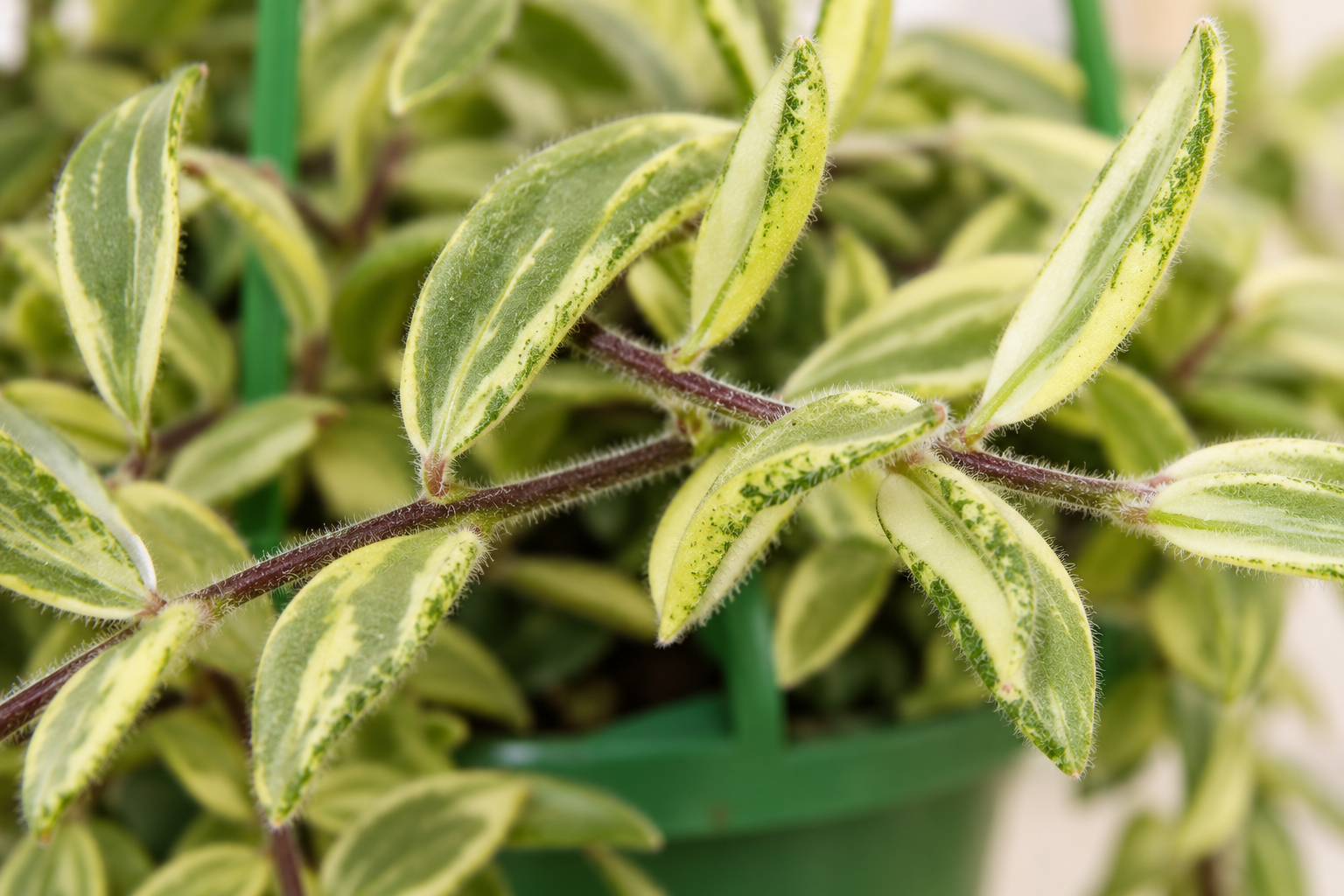
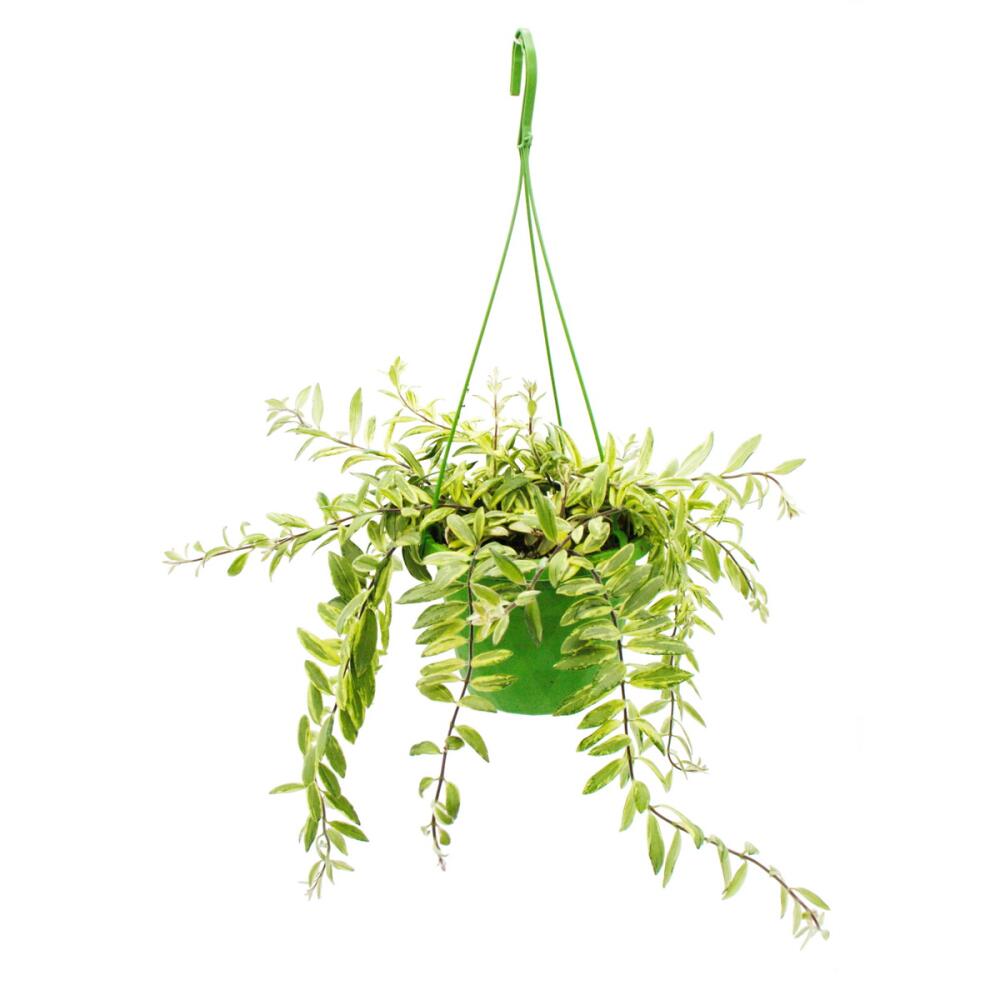
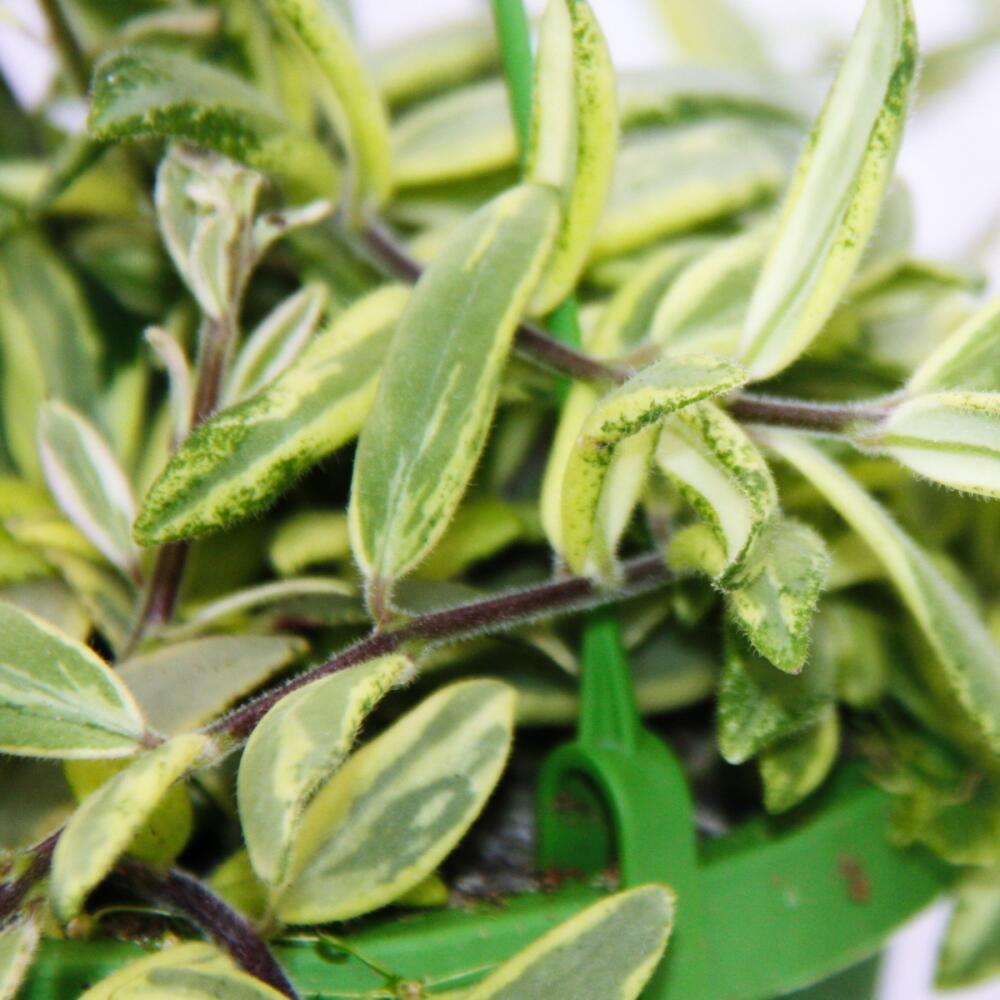
Good to know
Is Bicolor a separate species?
Here the name denotes the named variegated trade form; no extra wild species or additional cultivar is inferred.
How is height measured?
The hanging pot is fourteen centimetres and overall height approximately twenty-five centimetres excluding the hanger. Shoots keep growing.
Are cream edges normal?
Yes, they appear in our originals. New brown areas should be assessed separately.
Is the plant supplied flowering?
The offer is expressly without buds or flowers. This portrait shows foliage.
When should I water?
Once the surface has dried somewhat and the pot feels lighter, assess actual need. There is no fixed day.
How do I water a hanging plant?
Remove or hold it safely, supply water with control and drain fully. Avoid furniture drips and standing water in outer pots.
Does it need a cool winter rest?
No general cool value is assigned to this form. Keep bright and warm, adapting water to reduced evaporation.
Sources and editorial note
- Exotenherz: own offer and originals (4 October 2026)
- RHS: Aeschynanthus, bounded general growing guidance (4 October 2026)
- Gesneriad Society Gleanings, December 2025: comparable foliage material, page 6 (4 October 2026)
Shop offer, originals and specialist sources checked on 4 October 2026. Check current shop availability.